Contemporary Realism · 1874
Forgiven (Thomas Faed, 1874)
Thomas Faed (1826–1900) maakte Forgiven. Het dateert uit 1874. Het behoort tot de Contemporary Realism-stroming. Het is gemaakt van Oil On Canvas. Het is te vinden in Guildhall Art Gallery in Londen, Verenigd Koninkrijk. De afmetingen zijn 36 × 48 cm.
- 1874
- Oil On Canvas
- 36 × 48 cm
- Guildhall Art Gallery, Londen

 Voorvertoning

 Met de hand geschilderd olieverfwerk
 Verstuur
 Delen
 Informatieblad


 Download
 Vergelijkbare items
 Röntgenonderzoek
 Diavoorstelling
 Vraag & antwoord

 Statistieken
Forgiven, in het kort
- Titel
- Forgiven
- Kunstenaar
- Thomas Faed (1826–1900)
- Geboren in [jaar]
- Gatehouse of Fleet, Verenigd Koninkrijk
- Datum
- 1874
- Medium
- Oil On Canvas
- Afmetingen
- 36 × 48 cm
- Te zien in
- Guildhall Art Gallery, Londen, Verenigd Koninkrijk
- Beweging
- Contemporary Realism
- Periode
- 19th Century
- Onderwerp
- family portrait, domestic scene, victorian era, warmth, rural life, intimate moment
Wat stelt Forgiven voor?
Identification of Forgiven by Thomas Faed
In this intimate oil on canvas, titled Forgiven, the Scottish artist Thomas Faed explores the quietude of domestic life. Created in 1874, the work offers a glimpse into the sentimental realism that defined much of Faed's career. The piece is modest in scale, measuring 36 x 48 cm, which encourages a close, personal encounter with the figures depicted.
Faed, born in 1826 in Gatehouse of Fleet, United Kingdom, possessed a particular sensitivity to the textures of everyday existence. Through Forgiven, he captures a specific moment of familial connection, utilizing the medium of oil to build a sense of warmth within a humble setting. The work remains a significant example of his ability to translate human emotion into a visual narrative.
The Composition and Visual Elements
The scene unfolds within a dimly lit, rustic interior, capturing a quiet moment of domesticity. At the center of the composition, a family group is gathered around a table, consisting of an older man, a woman, and a young child. The arrangement feels somewhat cluttered, with various objects scattered throughout the space to suggest a lived-in, humble setting. This density of detail creates a sense of immediacy, as if we have stumbled upon a private, unposed instance of daily life.
Lighting is used with great subtlety here. The primary source of illumination emanates from a fireplace located on the left side of the frame, casting soft light across the figures and creating deep shadows that provide a sense of volume. This interplay of light and shadow allows for a clear sense of depth, achieved through the careful layering of the figures and the surrounding furniture. The atmosphere remains somber and quiet, grounded by a color palette dominated by muted greens, browns, and grays.
Technique and Style
The work is executed in oil on canvas, utilizing a painterly technique that prioritizes the immediate sensation of the scene. You can see the visible brushstrokes throughout the composition, which lend a sense of immediacy to the domestic setting. The lines are predominantly organic and slightly loose, avoiding the rigid precision of more academic works. This approach allows the forms to settle into the space with a natural, unforced quality.
The lighting is subdued, emanating from a fireplace to the side, which has a profound effect on how the shapes are perceived. Because of this soft illumination, the edges of the figures and objects lack sharpness; instead, they appear somewhat softened, blending gently into the shadows. This creates a palpable sense of volume and depth within the rustic interior. You can feel the tactile nature of the environment through the way the paint is applied to the rough wooden surfaces and the heavy folds of the fabric.
Where to See This Work Today
You may find this work at the Guildhall Art Gallery in London, United Kingdom. It is part of the collection held by the City of London, England. The gallery is situated within the Moorgate area, offering a quiet space to observe the nuances of Faed's brushwork.
The museum itself is housed in a stone building designed in a semi-Gothic style. It provides a dignified setting for such intimate domestic scenes. If you find yourself in the city, the architecture of the gallery complements the historical weight of the pieces within its walls.
Related Works by Thomas Faed
To understand the breadth of Faed's output, one might look toward his earlier compositions, such as His Only Pair, which dates from about 1860. This period of his career also produced Listeners Ne'er Hear Any Good Of Themselves, a work that reflects his interest in the nuances of human interaction. His ability to handle narrative was further demonstrated in The Last of the Clan, completed in 1865. These pieces offer a glimpse into the development of his specific approach to genre painting and the quietude of domestic life.
Several of his most significant paintings are held in permanent collections, allowing for a deeper study of his technical skill. The Silken Gown is part of the collection at the Tate Gallery. In the Aberdeen Art Gallery, one can find both Highland Mary and The Reaper. These works, alongside celebrated pieces like The Motherless Bairn and Scott and His Literary Friends at Abbotsford, illustrate the range of his subject matter, from intimate studies to more expansive, literary-inspired scenes.
In welk museum bevindt Forgiven zich?
Guildhall Art Gallery
Londen, Verenigd Koninkrijk
Een Weefgetouw van de Tijd: Waar Victoriaanse Pracht Romeinse Echo's Ontmoet In het kloppende hart van het historische City-district van Londen biedt de Guildhall Art Gallery veel meer dan slechts een beschouwing van doeken; het biedt een diepgaande zintuiglijke reis door de lagen van de menselijke beschaving. Een voet binnen de muren zetten is het betreden van een ruimte waar de verfijnde elegantie van het Victoriaanse tijdperk ademt naast de ruige, onverwoestbare stenen van het Romeinse Brittannië. Deze unieke instelling bereikt een zeldzame prestatie in de museumwereld door de delicate penseelstreken van negentiende-eeuwse meesters naadloos te verweven met de tastbare, ondergrondse echo's van een eeuwenoud imperium.

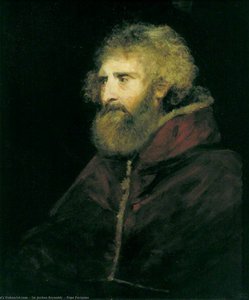

Hoogwaardige afbeeldingen van Forgiven
Publiek domein: de kunstenaar is overleden in 1900.
Thomas Faed, Forgiven (1874), Guildhall Art Gallery. Publiek domein
Veelgestelde vragen over Forgiven
Waar kan ik het originele werk "Forgiven" door Thomas Faed bewonderen?
Het originele werk "Forgiven" is te bewonderen in Guildhall Art Gallery, Londen, Verenigd Koninkrijk.
In welk jaar werd "Forgiven" gemaakt?
"Forgiven" door Thomas Faed werd gemaakt in 1874.
Met welk medium is "Forgiven" door Thomas Faed uitgevoerd?
Thomas Faed gebruikte de Oil On Canvas-techniek voor "Forgiven". De techniek bepaalt de materiële aard van het originele werk.
Wat zijn de werkelijke afmetingen van "Forgiven" door Thomas Faed?
Het originele werk "Forgiven" door Thomas Faed heeft de afmetingen 36 x 48 cm.
Wat stelt "Forgiven" voor?
De thema's die aanwezig zijn in "Forgiven" door Thomas Faed omvatten family portrait, domestic scene, victorian era, warmth, rural life, intimate moment, family bonds, soft lighting. Samen vatten zij de onderwerpen van het kunstwerk samen.
Is "Forgiven" vrij van auteursrecht?
"Forgiven" door Thomas Faed valt onder bevindt zich in het publiek domein - de auteursrechten zijn verlopen. Deze status bepaalt hoe de afbeelding van het werk mag worden gereproduceerd.
Wie heeft "Forgiven" gemaakt?
"Forgiven" wordt toegeschreven aan Thomas Faed.
Bij welke kunststroming behoort "Forgiven" door Thomas Faed?
"Forgiven" door Thomas Faed behoort tot de Contemporary Realism-stroming. Deze stroming biedt de stilistische context van het werk.
In welke periode van de carrière van Thomas Faed valt "Forgiven"?
"Forgiven" vertegenwoordigt de Mature Period van Thomas Faed.
Over de kunstenaar, Thomas Faed

1826–1900, Verenigd Koninkrijk
Thomas Faed
Een Erfenis van Schotse Sentimenten Thomas Faed neemt een unieke plaats in binnen de annalen van de Schotse kunst, vaak beschreven met de diepe eerbied die men zou kunnen voelen voor de impact van Robert Burns op het Schotse lied. Geboren in Kirkcudbrightshire bij Barlay Mill, maakte Faed deel uit van een opmerkelijke familie van makers; zijn broers James en John, samen met zijn zus Susan, deelden allen deze diepe artistieke roeping. Zijn vroege leven was gewortende in het ruige, prachtige landschap van Galloway, een omgeving die ongetwijfeld de warmte en huiselijkheid voedde die we terugvinden in zijn meest dierbare werken. Na zijn formele kunstopleiding aan de school voor ontwerp in Edinburgh, begon hij een reis die hem van het hart van Schotland naar de prestigieuze ateliers van Londen zou leiden.
Ook van Thomas Faed
 Worn Out
 Highland Mary1857
 Faults on Both Sides1861
 The Doctor's Visit1889
Essays over Forgiven
 The Timeless Beauty of Oil on Canvas: A Masterclass in Texture, Impasto, and Artistic MasteryDiscover the profound allure of oil on canvas. Explore the mastery of impasto textures, the science of pigment longevity, and expert guides…
 Masterpieces of Quinten Metsys: The Top 25 Essential ArtworksExplore 25 iconic works by Quinten Metsys, the master of the Antwerp School. Discover his Flemish Renaissance gems on OriginalUniqueArt.com.
 Masterpieces of Realism: The Top 25 Artworks by Thomas EakinsExplore the top 25 masterpieces of American Realism by Thomas Eakins. Discover his iconic works and find curated art on OriginalUniqueArt.c…