Hudson River School · 1847
Prometheus Bound (Thomas Cole, 1847)
Thomas Cole (1801–1848) maakte Prometheus Bound. Het dateert uit 1847. Het behoort tot de Hudson River School-stroming. Het is gemaakt van Oil. Het is te vinden in Fine Arts Museums of San Francisco in San Francisco, Verenigde Staten van Amerika. De afmetingen zijn 162 × 243 cm.
- 1847
- Oil
- 162 × 243 cm
- Fine Arts Museums of San Francisco

 Voorvertoning

 Met de hand geschilderd olieverfwerk
 Verstuur
 Delen
 Informatieblad


 Download
 Vergelijkbare items
 Röntgenonderzoek
 Diavoorstelling
 Vraag & antwoord

 Statistieken
Prometheus Bound, in het kort
- Titel
- Prometheus Bound
- Kunstenaar
- Thomas Cole (1801–1848)
- Geboren in [jaar]
- Bolton, Verenigd Koninkrijk
- Datum
- 1847
- Medium
- Oil
- Afmetingen
- 162 × 243 cm
- Te zien in
- Fine Arts Museums of San Francisco, San Francisco, Verenigde Staten van Amerika
- Beweging
- Hudson River School
- Onderwerp
- landscape, prometheus, mythology, mountains, allegory, romanticism
Wat stelt Prometheus Bound voor?
The Weight of Myth: Thomas Cole’s “Prometheus Bound”
Thomas Cole's "Prometheus Bound," painted in 1847, isn’t merely a landscape; it’s a profound meditation on defiance, punishment, and the enduring human spirit. This monumental canvas, now residing within the Fine Arts Museums of San Francisco, transcends its subject matter to become a powerful allegory for the struggles inherent in challenging authority and forging one's own destiny. Cole, a pivotal figure in the Hudson River School movement, masterfully blends Romanticism with an underlying moral urgency, creating an image that continues to resonate deeply with viewers today.
The scene depicts Prometheus, chained to a towering rock formation amidst a desolate, snow-laden mountainscape. The composition is strikingly dramatic – a vast expanse of jagged peaks dominates the background, dwarfing the solitary figure of the Titan and emphasizing his isolation and vulnerability. A vulture circles overhead, a constant reminder of Zeus’s relentless retribution, while a subtle hint of Jupiter, the Roman equivalent of Zeus, watches from above, embodying the cold indifference of divine power. Cole's use of light is particularly masterful; a diffused, almost ethereal glow illuminates the scene, casting long shadows and creating an atmosphere of both grandeur and despair. The color palette—primarily cool blues, grays, and whites—reinforces this sense of bleakness, punctuated by the fiery red underpaint used to render the snow-covered mountains – a deliberate choice that subtly hints at Prometheus’s stolen fire.
A Myth Made Manifest: Exploring the Narrative
The painting draws directly from Aeschylus's Greek tragedy, “Prometheus Bound,” a story of rebellion against the gods. Prometheus, in this narrative, is not simply a titan but a symbol of humanity’s relentless pursuit of knowledge and progress. He steals fire from Mount Olympus, gifting it to mankind – an act of defiance that ultimately earns him eternal torment at the hands of Zeus. Cole doesn't shy away from the brutality of the punishment; the stark depiction of Prometheus’s chains and the looming threat of the vulture vividly convey the weight of his transgression. However, within this scene of suffering, there is also a palpable sense of resilience. Prometheus’s gaze, fixed upon the viewer, exudes an almost defiant serenity—a refusal to succumb to despair.
The inclusion of the chorus, comprised of figures emerging from the depths of the mountains, adds another layer of complexity to the narrative. They represent the forces of nature, witnesses to Prometheus's plight, and perhaps even a subtle acknowledgment of his heroic struggle. Their hesitant approach, marked by curiosity and apprehension, suggests that even those seemingly untouched by divine wrath recognize the significance of Prometheus’s actions.
The Hudson River School: A New American Vision
“Prometheus Bound” is a quintessential example of the Hudson River School's artistic philosophy. Unlike earlier European landscape paintings that often focused on idyllic pastoral scenes, Cole sought to capture the raw power and sublime beauty of the American wilderness. He employed a technique known as “atmospheric perspective,” subtly blurring distant elements to create a sense of depth and vastness. This approach wasn’t simply about replicating reality; it was about conveying an emotional response—a feeling of awe and reverence for nature's grandeur.
Cole’s work also reflects the burgeoning American identity of the mid-19th century, grappling with themes of independence, self-reliance, and the relationship between humanity and the natural world. The painting can be interpreted as a metaphor for America’s own struggle to assert its sovereignty against established powers – a sentiment particularly relevant in the context of westward expansion and the nation's growing tensions with European empires.
A Timeless Masterpiece: Reproduction & Beyond
Reproductions of “Prometheus Bound” offer an exceptional opportunity to bring this powerful image into any setting. The meticulous detail, evocative atmosphere, and profound symbolism ensure that a high-quality reproduction will serve as both a beautiful work of art and a compelling conversation piece. Consider framing the artwork in a manner that complements its dramatic scale and reinforces its thematic resonance – perhaps within a contemporary interior space to juxtapose the ancient myth with modern life.
For those seeking an authentic experience, exploring the original painting at the Fine Arts Museums of San Francisco is highly recommended. It’s a truly immersive encounter with one of America's most significant artistic achievements—a testament to Thomas Cole’s genius and a timeless exploration of human courage in the face of overwhelming adversity.
In welk museum bevindt Prometheus Bound zich?
Fine Arts Museums of San Francisco
San Francisco, Verenigde Staten van Amerika
De geschiedenis van de Fine Arts Museums of San Francisco Het verhaal van de Fine Arts Museums of San Francisco vindt zijn oorsprong in het jaar 1871. De instelling groeide gestaag door de opening van het de Young Museum in 1895 en de Legion of Honor in 1924. Deze twee afzonderlijke entiteiten opereerden decennialang onafhankelijk van elkaar, totdat ze in 1972 onder het leiderschap van Ian McKibbin White formeel werden samengevoegd tot één geheel.


Hoogwaardige afbeeldingen van Prometheus Bound

Publiek domein: de kunstenaar is overleden in 1848.
Andere formaten, uitsneden en citatie →Thomas Cole, Prometheus Bound (1847), Fine Arts Museums of San Francisco. Publiek domein
Vragen over Prometheus Bound, beantwoord
Waar kan ik het originele werk "Prometheus Bound" door Thomas Cole bewonderen?
Het originele "Prometheus Bound" door Thomas Cole wordt bewaard in Fine Arts Museums of San Francisco, San Francisco, Verenigde Staten van Amerika. Een reproductie maakt het mogelijk om het werk thuis tentoon te stellen.
In welk jaar werd "Prometheus Bound" door Thomas Cole gemaakt?
"Prometheus Bound" door Thomas Cole werd gecreëerd in 1847.
Met welke techniek is "Prometheus Bound" gemaakt?
Thomas Cole gebruikte de Oil-techniek voor "Prometheus Bound". De techniek bepaalt de materiële aard van het originele werk.
Wat zijn de afmetingen van het originele "Prometheus Bound" door Thomas Cole?
Het originele werk "Prometheus Bound" door Thomas Cole heeft de afmetingen 243 x 162 cm.
Wat stelt "Prometheus Bound" door Thomas Cole voor?
De onderwerpen van "Prometheus Bound" zijn landscape, prometheus, mythology, mountains, allegory, romanticism, wilderness.
Behoort "Prometheus Bound" door Thomas Cole tot het publiek domein?
Wat betreft het auteursrecht valt "Prometheus Bound" onder bevindt zich in het publiek domein - de auteursrechten zijn verlopen.
Aan welke kunstenaar wordt "Prometheus Bound" toegeschreven?
De kunstenaar achter "Prometheus Bound" is Thomas Cole. Het werk is gecatalogiseerd onder de naam van Thomas Cole.
Bij welke kunststroming behoort "Prometheus Bound" door Thomas Cole?
"Prometheus Bound" door Thomas Cole behoort tot de Hudson River School-stroming. Deze stroming biedt de stilistische context van het werk.
Uit welke fase van de carrière van Thomas Cole is "Prometheus Bound"?
Binnen de carrière van Thomas Cole valt "Prometheus Bound" in de Late Period. Deze fase helpt om het werk te vergelijken met andere werken van de kunstenaar.
Over de kunstenaar, Thomas Cole

1801–1848, Verenigd Koninkrijk
Thomas Cole
Het Leven en de Kunst van Thomas Cole Geboren op 1 februari 1801 in Bolton le Moors, Lancashire, Engeland, begon het leven van Thomas Cole ver verwijderd van de landschappen die uiteindelijk zijn naam zouden definiëren. In 1818 emigreerde zijn familie naar de Verenigde Staten, op zoek naar een nieuw begin in een land van uitgestrekte, onontdekte territoria. In die vroege jaren was hij een man van vele ambachten; hij werkte als graveur en vond vanaf 1822 uiteindelijk stabiel werk als portretschilder. Hij was grotendeels autodidact en ontwikkelde zijn oog door observatie en het bestuderen van boeken, in plaats van door een formele academische opleiding.
Ook van Thomas Cole
 De Oxbow
 De droom van de architect1840
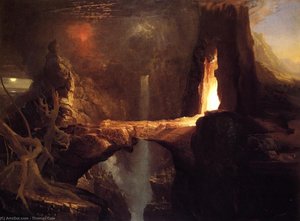 Verdrijving. Maan en Licht1828
 Een uitzicht op Florence vanuit San Miniato1837

Essays over Prometheus Bound
 Masterpieces of Light: The Top 25 Artworks by Duccio di BuoninsegnaJourney through the Sienese brilliance of Duccio di Buoninsegna. Explore 25 iconic masterpieces, from the Rucellai Madonna to the Maestà, f…
 Nature's Nation: The Hudson River School and the Art of the American SublimeExplore the spiritual depth of the Hudson River School through its masters. Discover the power of the American Sublime today.
 Top 10 Renaissance Meesterwerken: Kunstgeschiedenis voor uw Interieur | OriginalUniqueArt.comOntdek de 10 meest iconische Renaissance meesterwerken van Leonardo da Vinci, Michelangelo & Rafaël. Leer over hun techniek en betekenis. M…