De Stijl · 1930
Simultaneous Counter Composition. (Theo van Doesburg, 1930)
Theo van Doesburg (1883–1931) maakte Simultaneous Counter Composition.. Het dateert uit 1930. Het behoort tot de De Stijl-stroming. Het is gemaakt van Painting. Het is te vinden in MoMA - Museum of Modern Art in New York City, Verenigde Staten van Amerika. De afmetingen zijn 50 × 49 cm.
- 1930
- Painting
- 50 × 49 cm
- MoMA - Museum of Modern Art, New York City

 Voorvertoning

 Met de hand geschilderd olieverfwerk
 Verstuur
 Delen
 Informatieblad


 Download
 Vergelijkbare items
 Röntgenonderzoek
 Diavoorstelling
 Vraag & antwoord

 Statistieken
Simultaneous Counter Composition., in het kort
- Titel
- Simultaneous Counter Composition.
- Kunstenaar
- Theo van Doesburg (1883–1931)
- Geboren in [jaar]
- Utrecht, Nederland
- Datum
- 1930
- Medium
- Painting
- Afmetingen
- 50 × 49 cm
- Te zien in
- MoMA - Museum of Modern Art, New York City, Verenigde Staten van Amerika
- Beweging
- De Stijl
- Onderwerp
- abstract art, geometric shapes, primary colors, compositional study, modernism, de stijl
Wat stelt Simultaneous Counter Composition. voor?
The Geometry of Inner Harmony: Exploring Theo van Doesburg's Abstraction
To stand before Theo van Doesburg’s Simultaneous Counter Composition is not merely to observe paint on canvas; it is to step into a meticulously constructed intellectual space where color and form engage in a vibrant, calculated dialogue. This piece, dating from 1930, stands as a powerful testament to the revolutionary spirit of De Stijl, the movement that sought to purify art down to its most essential geometric truths. Van Doesburg, an architect of abstraction, believed that true reality could be found not in the messy chaos of visible nature, but in the underlying harmony of pure lines and primary colors. The painting immediately envelops the viewer in a field of structured energy, inviting the eye to wander across its carefully balanced quadrants.
A Masterclass in Primary Structure
The composition itself is breathtaking in its deliberate organization. Divided into distinct yet interconnected sections—left, center, and right—the canvas pulses with a controlled chromatic symphony. We see the bold interplay of red, yellow, blue, black, and white, colors that carry immense symbolic weight within modernist thought. These hues are not simply placed side-by-side; they interact, their adjacency creating optical vibrations. The varying sizes and shapes of the squares suggest a dynamic tension, as if opposing forces—structure versus fluidity, chaos versus order—are locked in a perfect, silent negotiation. It is an exercise in visual equilibrium, where every seemingly arbitrary block contributes to the whole.
Historical Echoes: De Stijl's Vision
Understanding this work requires acknowledging its historical cradle: the fervor of Neoplasticism. Van Doesburg was instrumental in guiding art away from mere representation and toward a universal language built on abstraction. This painting embodies that quest for universal harmony, echoing the philosophical underpinnings of the early 20th century desire to rebuild culture after periods of immense upheaval. The rigid geometry is not a limitation, but rather an assertion of underlying cosmic order—a belief that even in the most abstract arrangement, there exists profound, discernible beauty and balance.
Bringing Geometric Vibrancy Home
For the collector or designer seeking to infuse a space with intellectual depth and vibrant energy, Simultaneous Counter Composition offers unparalleled impact. Its bold, graphic nature means it functions as both a striking piece of art and a powerful architectural accent. Reproducing this work allows one to bring the disciplined passion of early modernism into contemporary living. Imagine its clean lines juxtaposed against soft furnishings or rich wood tones; the painting acts as a brilliant focal point, demanding contemplation while simultaneously providing visual rest through its inherent balance.
Emotional Resonance and Technique
The emotional impact of this piece is one of exhilarating clarity. It feels both rigorously intellectual and deeply soulful. The technique, characterized by flat planes of color meeting at sharp, decisive edges, celebrates the purity of the painted surface. When considering a reproduction, note how the vibrancy of these primary colors—the way they seem to vibrate against each other—is crucial. Owning this piece is owning a conversation between structure and spirit, a vibrant reminder that even in apparent complexity, perfect harmony can be found.
In welk museum bevindt Simultaneous Counter Composition. zich?
MoMA - Museum of Modern Art
New York City, Verenigde Staten van Amerika
Oorsprong en geschiedenis van MoMA - Museum of Modern Art De fundamenten van MoMA - Museum of Modern Art werden gelegd in 1929. Geconcipieerd door Abby Aldrich Rockefeller, Lillie P. Bliss en Mary Quinn Sullivan, ontstond de instelling tijdens een periode van diepgaande mondiale transitie.


Hoogwaardige afbeeldingen van Simultaneous Counter Composition.

Publiek domein: de kunstenaar is overleden in 1931.
Andere formaten, uitsneden en citatie →Theo van Doesburg, Simultaneous Counter Composition. (1930), MoMA - Museum of Modern Art. Publiek domein
Vragen over Simultaneous Counter Composition., beantwoord
Waar kan ik het originele werk "Simultaneous Counter Composition." door Theo van Doesburg bewonderen?
"Simultaneous Counter Composition." door Theo van Doesburg is te zien in MoMA - Museum of Modern Art, New York City, Verenigde Staten van Amerika. De vermelding van het museum heeft betrekking op het originele werk, niet op reproducties.
In welk jaar werd "Simultaneous Counter Composition." door Theo van Doesburg gemaakt?
"Simultaneous Counter Composition." dateert uit 1930. Deze datum plaatst het werk binnen de carrière van Theo van Doesburg en het betreffende tijdperk.
Met welke techniek is "Simultaneous Counter Composition." door Theo van Doesburg vervaardigd?
"Simultaneous Counter Composition." is uitgevoerd in Painting.
Wat zijn de werkelijke afmetingen van "Simultaneous Counter Composition." door Theo van Doesburg?
De afmetingen van "Simultaneous Counter Composition." door Theo van Doesburg zijn 50 x 49 cm. Reproducties kunnen in andere formaten worden besteld met behoud van dezelfde verhoudingen.
Wat stelt "Simultaneous Counter Composition." door Theo van Doesburg voor?
De onderwerpen van "Simultaneous Counter Composition." zijn abstract art, geometric shapes, primary colors, compositional study, modernism, de stijl.
Behoort "Simultaneous Counter Composition." door Theo van Doesburg tot het publiek domein?
Wat betreft het auteursrecht valt "Simultaneous Counter Composition." onder bevindt zich in het publiek domein - de auteursrechten zijn verlopen.
Aan welke kunstenaar wordt "Simultaneous Counter Composition." toegeschreven?
"Simultaneous Counter Composition." wordt toegeschreven aan Theo van Doesburg.
Tot welke stijl behoort "Simultaneous Counter Composition."?
"Simultaneous Counter Composition." door Theo van Doesburg behoort tot de De Stijl-stroming. Deze stroming biedt de stilistische context van het werk.
In welke periode van de carrière van Theo van Doesburg valt "Simultaneous Counter Composition."?
"Simultaneous Counter Composition." vertegenwoordigt de Neoplasticism Period van Theo van Doesburg.
Over de kunstenaar, Theo van Doesburg

1883–1931, Nederland
Theo van Doesburg
The Architect of Abstraction: A Life in Geometric Harmony Theo van Doesburg, born Christian Emil Marie Küpper in Utrecht on August 30, 1883, wasn’t merely a painter; he was a revolutionary force who fundamentally reshaped the landscape of modern art. His journey began not within the familiar embrace of Impressionism or Post-Impressionism, but amidst their fading echoes – initially mirroring styles reminiscent of Vincent van Gogh, both in the raw emotion conveyed and the directness of his brushstrokes. However, this early phase served as a crucial, almost instinctive, prelude, a necessary stepping stone towards the radical transformation that would define his enduring legacy. A pivotal moment arrived in 1913 with an encounter that irrevocably altered his artistic trajectory: Wassily Kandinsky’s *Rückblicke*.
Ook van Theo van Doesburg
 Counter composition XV1925
 Rhythm of a Russian Dance
 Troelstra1910
 Study for Composition VIII (The Cow)1918

Essays over Simultaneous Counter Composition.
 Beyond Color: Why Monochromatic Art is the Ultimate High-Impact Trend for Modern InteriorsDiscover why monochromatic art is the ultimate high-impact trend for modern spaces. Explore how bold textures and minimalist aesthetics cre…
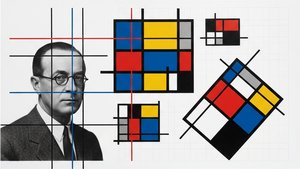 Theo van Doesburg: Pioneering De Stijl & the Evolution of Neo-PlasticismExplore the revolutionary De Stijl movement & Neo-Plasticism with our expert guide. Discover Piet Mondrian, Theo van Doesburg, and the last…
 Drie Perspectieven, Één Ziel: De Emotionele Impact van Keuze in KunstreproductiesOntdek de emotionele impact van kunst! Lees over de psychologie achter reproducties en hoe kleur onze gevoelens beïnvloedt. Hoogwaardige ku…