
 Voorvertoning
 Verstuur
 Delen
Delen
 Details bekijken

 Download
 Vergelijkbare items
 Röntgenonderzoek
 Diavoorstelling
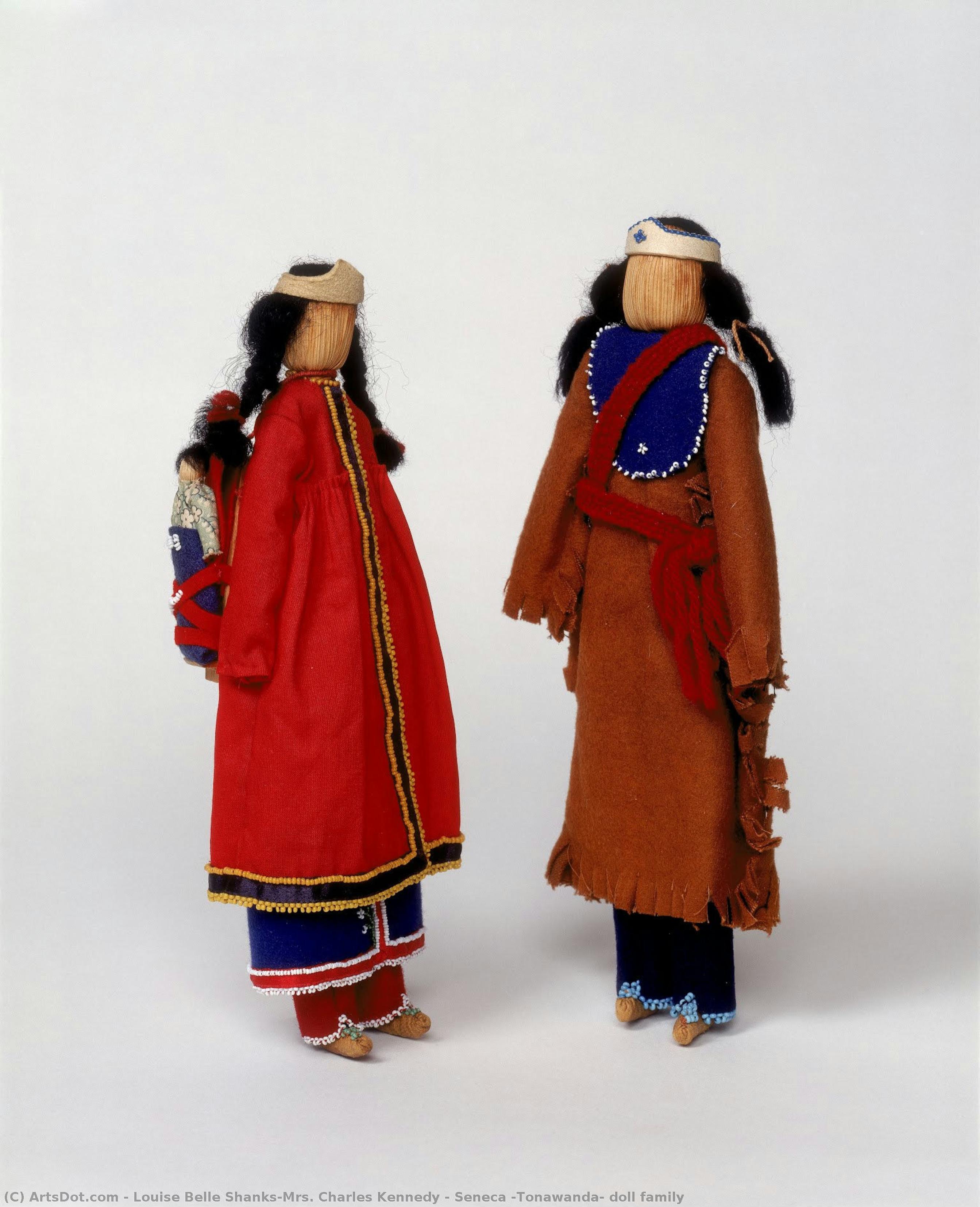
Familiebeeld van een Seneca-doosje
 Acryl op canvas
- Wanddecoratie
- Modern Abstract Expressionism
 1930
1930 24.0 x 11.0 cm
 National Museum of the American Indian
 Lees meer
Handgemaakte olieverfreproductie
Met de hand geschilderd in olieverf op canvas in uw gewenste maat en lijst, op bestelling gemaakt door onze kunstenaars. ( Bestel print Koop afbeelding)




P118B $10

P118H $10

P118W $10

P438Z $10

P508JH $12

P508YH $12

P805H $10

P805Z $10

P919BZ $10

P919G $10

P919XJ $10

P959ZH $10

P968JZ $12

W106C $8

W218G $10

W218JH $8

W218Y $10

W307PJ $10

W316G $10

W316PJ $8

W316Y $10

W398PJ $8

W4111J $10

W500HY $15

W500JH $15

W692G $12

W849H $8

W940BG $15

W953PJ $8




Kies uit onze vooraf ingestelde maten die overeenkomen met de originele verhoudingen van het kunstwerk.

U kunt uw eigen afmetingen invoeren om in een specifieke lijst of ruimte te passen. Als de door u gekozen maat niet overeenkomt met de verhoudingen van het originele beeld, zullen we het kunstwerk bijsnijden of het schilderij uitbreiden met extra handgeschilderde elementen. Een digitale mockup wordt ter goedkeuring naar u verzonden voordat de productie begint.
Houd er rekening mee dat de preview op het scherm niet de werkelijke uitsnede of uitbreiding weergeeft. Alleen de mockup toont de uiteindelijke compositie nauwkeurig.
Hoewel aangepaste afmetingen mogelijk zijn, raden we aan een maat uit de vooraf gedefinieerde lijst te selecteren om de originele verhoudingen te behouden.
Na de bestelling zal het team van OriginalUniqueArt.com per e-mail contact opnemen met de klant voor instructies en een mockup-voorbeeld sturen.
Wereldwijde levering () binnen 3 tot 4 weken in plaats van de standaard 5 weken. (14 augustus). Zonder concessies aan de kwaliteit.

Gratis wereldwijde expressverzending

Hoogwaardig linnen canvas

Volledige verzendverzekering

Garantie op terugbetaling van invoerrechten

Garantie op exacte kleurweergave

Retourbeleid van 60 dagen (alleen bij defecten)

100% Geld-terug-garantie

Korting bij meerdere afnames
 De optie voor glas is alleen beschikbaar bij een formaat kleiner dan 110 cm.

Familiebeeld van een Seneca-doosje
Druktechniek
Afmetingen reproductie
-


Eindtotaal
$ 300
Beschrijving kunstwerk
Een Fascinerende Snapshot van Seneca Cultuur
Deze prachtige zwart-wit fotografie uit 1930, getiteld “Seneca (Tonawanda) Doll Family,” biedt een unieke kijk op het leven en de kunsttraditie van de Seneca tribün. Geproduceerd door Louise Belle Shanks/Mrs. Charles Kennedy, een belangrijke kunstenaar afkomstig uit Tonawanda Reservation, is dit werk een bijzonder waardevol stuk kunstgeschiedenis en een prachtige aanvulling voor elke kunstcollectie of woondecoratie. ### Onderwerpen en Context De afbeelding bestaat uit twee zorgvuldig gehouwen houten poppen die naast elkaar staan tegen een eenvoudige witte achtergrond aan. Deze poppen vertegenwoordigen een belangrijk onderdeel van Seneca cultuur, waarbij de aandacht wordt besteed aan het gebruik van traditionele stoffen en sieraden om hun kleding te versieren. De fotografie dient als een directe documentatie van deze kunstvorm en biedt een prachtige manier om de schoonheid van Seneca kunstgeschiedenis vast te leggen. Een zoektocht naar informatie over deze poppen heeft aangetoond dat ze een belangrijke rol spelen bij het behoud van de lokale geschiedenis en identiteit binnen de Seneca gemeenschap. De afbeelding is gepubliceerd op Smithsonian Institution, waar je meer kunt lezen over de historische context van dit kunstwerk. ### Stijl en Techniek Shanks’ stijl is kenmerkend voor documentaire fotografie uit zijn tijd – een techniek die gericht is op nauwkeurige reproductie zonder enige vorm van artistieke embellishment. Een macro lens werd gebruikt om gedetailleerde afbeeldingen te maken van de poppen en hun kleding, waarbij het licht gelijkmatig wordt verdeeld om schaduwen te minimaliseren en de texturen van hout en stof optimaal weer te geven. De compositie is symmetrisch, wat bijdraagt aan een gevoel van balans en rust. Deze eenvoudige maar effectieve stijl onderstreept de schoonheid van het onderwerp zelf en laat zien hoe kunstenaars kunnen werken met een directe manier om hun observaties vast te leggen. Een vergelijkbare afbeelding kan worden gevonden op OriginalUniqueArt.com, waar je een hoogwaardige reproductie kunt aanschaffen voor jouw thuis of kantoor. ### Symbolisme en Emotionele Impact De gekozen witte achtergrond benadrukt de poppen zelf en draagt bij aan een gevoel van sereniteit en contemplatie. De rode en bruine kleuren van de kleding, versierd met prachtige beadwork en fringe, verwijzen naar traditionele Seneca kunstpraktijken en symboliseren vaak kracht en bescherming binnen deze gemeenschap. Daarnaast zijn de lange haarspelden een teken van respect voor natuurlijke schoonheid en een manier om de historische oorsprong van het kunstwerk te onderstrepen. Het beeld roept emoties op van nostalgie en waardering voor cultureel erfgoed, waardoor het een bijzonder aangename ervaring is voor iedereen die geïnteresseerd is in kunstgeschiedenis en kunstdecoratie. Een prachtige reproductie kan een prachtige manier zijn om Seneca cultuur naar huis te brengen!Biografie van de kunstenaar
Piet Mondrian: Architect of Abstraction
Piet Mondrian, a name synonymous with modern art’s radical shift towards abstraction, was far more than simply a painter; he was a theorist, an architect of visual language, and a fervent believer in the power of art to transcend the mundane. Born Pieter Cornelis Mondriaan on March 7, 1872, in Amersfoort, Netherlands, his artistic journey began within a family steeped in tradition – his father, a schoolmaster, and uncle, an artist associated with the Hague School’s landscape movement. This grounding in both practical education and artistic heritage would profoundly shape his later approach to art. Initially pursuing a career in teaching, Mondrian's passion for painting ultimately led him to Amsterdam’s Rijksakademie, where he honed his skills and began experimenting with various styles before arriving at the revolutionary aesthetic that would define his legacy. His life, tragically cut short by illness on February 1, 1944, in New York City, remains a testament to an artist relentlessly pursuing a vision of universal harmony through pure form.Early Influences and the Transition to Abstraction
Mondrian’s early artistic development was marked by a fascination with landscape painting, mirroring his family's connection to the Hague School. However, around 1908, he began to explore new avenues, influenced by movements like Pointillism and Symbolism. A pivotal moment arrived in 1911 when he encountered Cubism – particularly the work of Picasso and Braque – at an exhibition in Amsterdam. This encounter proved transformative, challenging his understanding of representation and laying the groundwork for his eventual embrace of abstraction. He recognized that Cubism’s fragmentation of form offered a pathway to stripping away superfluous detail and revealing the underlying structure of objects. Crucially, Mondrian didn't simply adopt Cubist techniques; he pushed them further, moving beyond mere imitation towards a purely abstract language. This shift wasn’t arbitrary; it was driven by a deeply held belief that art should transcend the limitations of the physical world and express universal truths.The Development of Neo-Plasticism
Following his relocation to Paris in 1914, Mondrian embarked on a period of intense experimentation and refinement. The outbreak of World War I disrupted his life, forcing him to settle in Domburg, where he spent five years developing what he termed “Neo-Plasticism” (Neoplasticisme). This wasn’t merely a style but a philosophy – a systematic reduction of artistic elements to their most essential components. Mondrian distilled his visual vocabulary to the absolute minimum: straight lines, right angles, primary colors (red, blue, and yellow), and black, white, and gray. He believed that these simple forms could represent the underlying structure of reality, offering a pathway to spiritual enlightenment. His paintings during this period – works like *Composition with Red, Blue and Yellow* – are characterized by their stark geometric arrangements and intense color contrasts. This rigorous approach was further solidified through his involvement in *De Stijl*, an international art movement founded with Theo van Doesburg that championed these principles of abstraction and universal harmony.Key Works and Lasting Legacy
Mondrian’s most iconic works, including *Broadway Boogie Woogie* (1942-43) and *Composition with Red, Blue and Yellow* (1920-21), are instantly recognizable for their dynamic yet balanced compositions. *Broadway Boogie Woogie*, painted during his time in New York, reflects the energy of the city while simultaneously adhering to the principles of Neo-Plasticism. The painting’s fragmented lines and vibrant colors create a sense of movement and rhythm, suggesting an exploration of urban space and its underlying structure. Similarly, *Composition with Red, Blue and Yellow* exemplifies his belief in the power of color to evoke universal emotions and spiritual truths. Throughout his career, Mondrian produced a significant body of work that profoundly influenced generations of artists. His emphasis on abstraction paved the way for movements like Constructivism and Minimalism, while his theoretical writings provided a framework for understanding abstract art as a means of achieving a higher level of aesthetic experience. His legacy extends beyond painting, impacting architecture, design, and even fashion, demonstrating the enduring influence of his radical vision.A Universalist’s Vision
Piet Mondrian's artistic journey wasn't simply about creating beautiful images; it was a quest for universal harmony and spiritual truth. He believed that art should be independent of reality, offering a direct path to the “spiritual” realm. His relentless pursuit of this ideal led him to systematically reduce his visual vocabulary, ultimately arriving at the austere geometric forms that define his most celebrated works. He famously declared in 1914: "Art is higher than reality and has no direct relation to reality. To approach the spiritual in art, one will make as little use as possible of reality, because reality is opposed to the spiritual." This conviction fueled his lifelong dedication to abstraction, solidifying his place as a pivotal figure in the history of modern art – an architect who designed a visual language for a more harmonious world.
louise belle shanks/mrs. charles kennedy
1872 - 1952 , United States of America
Belangrijkste feiten
- Artistic Movement Or Style:
- Neo-Plasticism
- De Stijl
- Abstract art
- Artists Or Movements Influenced By This Artist:
- Vasily Kandinsky
- Kazimir Malevich
- Artists Who Influenced This Artist:
- Simon Mans
- Abraham Kuyper
- Date Of Birth: March 7, 1872
- Date Of Death: February 1, 1944
- Full Name: Pieter Cornelis Mondriaan
- Nationality: Dutch
- Notable Artworks:
- Composition with Red Blue and Yellow
- Broadway Boogie Woogie
- Victory Boogie Woogie
- Place Of Birth: Amersfoort, Netherlands
Gerelateerde artikelen

Gordon Parks: A Poetic Lens on American Life – Photography, Social Justice & Storytelling
Explore the profound work of Gordon Parks, a groundbreaking photographer who documented American life with unparalleled empathy and artistry. Discover his iconic images & lasting impact on social justice through Life magazine & beyond.

Beyond the Lens: Photography's Enduring Influence on Modern & Contemporary Art
Explore photography's pivotal role in shaping modern & contemporary art. Discover key movements, influential artists like Stieglitz, and expert collecting advice from OriginalUniqueArt.

Grant Wood & American Regionalism: Identity, Myth & the Rural Landscape
Explore the world of Grant Wood & American Regionalism with OriginalUniqueArt. Discover the symbolism behind 'American Gothic', recurring themes, and the movement's lasting impact on art history. High-quality reproductions available.
Shadow Catcher: Edward S. Curtis & the Ethnographic Portraiture of a Vanishing West
Explore the life & work of Edward S. Curtis, the 'Shadow Catcher,' and his groundbreaking photographic documentation of Native American cultures. Discover iconic images from *The North American Indian* and a critical look at his lasting legacy.

Monochrome Visions: Exploring the Aesthetic & Historical Significance of Black & White Photography
Explore the rich history & artistic power of black and white photography. From early techniques to iconic masters like Ansel Adams, discover why monochrome continues to captivate art lovers today. Expert insights for collectors.


