Cubism · 1912
Window (Robert Delaunay, 1912)
Robert Delaunay (1885–1941) maakte Window. Het dateert uit 1912. Het behoort tot de Cubism-stroming. Het is gemaakt van Oil. Het is te vinden in Tate Liverpool in Liverpool, Verenigd Koninkrijk.
- 1912
- Oil
- Tate Liverpool

 Voorvertoning

 Met de hand geschilderd olieverfwerk
 Verstuur
 Delen
 Informatieblad


 Download
 Vergelijkbare items
 Röntgenonderzoek
 Diavoorstelling
 Vraag & antwoord

 Statistieken
Window, in het kort
- Titel
- Window
- Kunstenaar
- Robert Delaunay (1885–1941)
- Geboren in [jaar]
- Parijs, Frankrijk
- Datum
- 1912
- Medium
- Oil
- Te zien in
- Tate Liverpool, Liverpool, Verenigd Koninkrijk
- Beweging
- Cubism
- Periode
- Modern
- Onderwerp
- abstract, geometric shapes, color palette, window motif, orphism influence, luminosity
Wat stelt Window voor?
A Symphony of Light and Geometry
In the early twentieth century, as the world stood on the precipice of profound transformation, Robert Delaunay captured a moment of pure, luminous transcendence in his 1912 masterpiece, "Window." This work is far more than a mere depiction of a windowpane; it is an invitation to witness the birth of Orphism, a movement that sought to liberate color from the constraints of representational form. To gaze upon this painting is to step into a realm where light does not simply illuminate objects but becomes the subject itself. Delaunay masterfully distills the sensory experience of perception, transforming a simple architectural element into a complex mosaic of interlocking rectangles and vibrant squares that seem to pulse with an internal energy.
The brilliance of "Window" lies in its ability to evoke a sense of rhythmic movement through static shapes. Through a sophisticated technique of layered paint application—often incorporating the rich, tactile quality of encaustic wax alongside traditional oils—Delaunay achieved a depth that feels almost ethereal. The subtle gradations of pigment within each geometric cell create a shimmering effect, reminiscent of sunlight filtering through stained glass. This meticulous manipulation of color density allows the viewer to experience a visual dynamism that transcends the flat surface of the canvas, making the piece feel as though it is breathing with light.
The Orphic Vision: Color as Emotion
At the heart of this composition lies the radical philosophy of Orphism. Moving away from the analytical fragmentation of Cubism, Delaunay and his contemporaries embraced a more lyrical approach, prioritizing the emotional resonance of pure color. In "Window," there is no attempt to replicate the naturalistic world; instead, the artist uses hues of deep blue, radiant yellow, and warm orange to communicate a sense of harmony and cosmic order. This focus on pure abstraction allows the painting to function as an emotional landscape, where the interplay of light and shadow serves as a metaphor for the clarity and chaos of human existence.
For the discerning collector or interior designer, this piece offers a unique opportunity to introduce a focal point of sophisticated energy into a space. The painting’s vibrant palette and structured composition make it an ideal centerpiece for modern, minimalist, or even classical interiors, providing a burst of intellectual and visual stimulation. It does not merely decorate a wall; it transforms the atmosphere of a room, inviting contemplation and a renewed appreciation for the beauty found in geometric precision.
A Legacy of Harmony Amidst Change
The historical context of "Window" adds a layer of profound poignancy to its visual splendor. Created during an era of significant societal upheaval, the painting serves as a radiant antidote to the anxieties of the pre-war period. While much of the art of this time grappled with the fragmentation of reality, Delaunay sought to synthesize it, finding a way to weave disparate elements into a cohesive, beautiful whole. This pursuit of geometric harmony reflects a deep-seated desire for stability and beauty amidst a changing world.
Owning a high-quality reproduction of this seminal work allows one to possess a fragment of art history—a piece that embodies the courage of innovation and the timeless allure of light. "Window" remains a testament to the power of abstraction to touch the human spirit, offering a window not just into a room, but into the very essence of light and color.
In welk museum bevindt Window zich?
Tate Liverpool
Liverpool, Verenigd Koninkrijk
Een baken van moderne kunst te midden van de erfgoed van de dokken Gelegen in de historische hartslag van Liverpools Royal Albert Dock, staat Tate Liverpool als een diepgaand getuigenis van zowel artistieke innovatie als de poëtische schoonheid van adaptief hergebruik. Deze opvallende instelling presenteert een fascinerende juxtapositie, waar de industriële rauwheid van een voormalig pakhuis de verfijnde elegantie van hedendaagse meesterwerken ontmoet. Sinds de oprichting in 1988 fungeert de galerie als een essentieel cultureel baken, een prestatie die werd bereikt door de ambitieuze architectonische visie van James Stirling Architects.

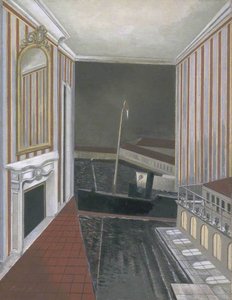

Hoogwaardige afbeeldingen van Window

Publiek domein: de kunstenaar is overleden in 1941.
Andere formaten, uitsneden en citatie →Robert Delaunay, Window (1912), Tate Liverpool. Publiek domein
Vragen over Window, beantwoord
Waar is "Window" door Robert Delaunay tegenwoordig te zien?
Het originele "Window" door Robert Delaunay wordt bewaard in Tate Liverpool, Liverpool, Verenigd Koninkrijk. Een reproductie maakt het mogelijk om het werk thuis tentoon te stellen.
In welk jaar werd "Window" door Robert Delaunay gemaakt?
"Window" door Robert Delaunay werd gemaakt in 1912.
Met welke techniek is "Window" door Robert Delaunay vervaardigd?
Het medium van "Window" door Robert Delaunay is Oil. Reproducties zijn bedoeld om de uitstraling van deze techniek weer te geven.
Wat wordt er afgebeeld in "Window" door Robert Delaunay?
De onderwerpen van "Window" zijn abstract, geometric shapes, color palette, window motif, orphism influence, luminosity, composition.
Is "Window" vrij van auteursrecht?
De auteursrechtelijke status van "Window" door Robert Delaunay: het werk is bevindt zich in het publiek domein - de auteursrechten zijn verlopen. Dit bepaalt of reproducties van de afbeelding vrijelijk mogen worden gemaakt.
Aan welke kunstenaar wordt "Window" toegeschreven?
De kunstenaar achter "Window" is Robert Delaunay. Het werk is gecatalogiseerd onder de naam van Robert Delaunay.
Tot welke stijl behoort "Window"?
De kunststroming die verbonden is aan "Window" door Robert Delaunay is Cubism. Deze classificatie plaatst het werk binnen een context van verwante kunstenaars en kunstwerken.
Uit welke fase van de carrière van Robert Delaunay is "Window"?
"Window" vertegenwoordigt de Mature Period van Robert Delaunay.
Op welke leeftijd maakte Robert Delaunay "Window"?
Robert Delaunay maakte "Window" op 27-jarige leeftijd. De kunstenaar werd geboren in 1885 en het werk dateert uit 1912.
Over de kunstenaar, Robert Delaunay

1885–1941, Frankrijk
Robert Delaunay
Robert Delaunay (1885-1941): A Pioneer of Abstract Color Robert Victor Félix Delaunay, born in Paris on April 12, 1885, emerged as a pivotal figure in the radical artistic shifts of the early twentieth century. Though initially drawn to more traditional forms of painting—primarily decorative arts—his journey swiftly propelled him toward an exploration of color and light that would ultimately define his legacy and contribute significantly to the birth of abstract art. Delaunay wasn’t merely interested in *representing* the world; he sought to capture its very essence through a vibrant language of geometric shapes and luminous hues, co-founding the Orphism movement with his wife, Sonia Delaunay, and others who shared their vision. His early life was marked by instability—his parents divorced when he was young, and he was raised by relatives—but this perhaps fostered an independent spirit that would serve him well in challenging artistic conventions.
Ook van Robert Delaunay
 De Stad Parijs1912
 De Eiffeltoren1914
 The Eiffel Tower1910
 The Three Graces1912
Essays over Window
 Top 10 Meesterwerken van de Geometrische Abstractie | OriginalUniqueArt.nlOntdek de 10 meest invloedrijke meesterwerken van de geometrische abstractie! Van Mondriaan tot Malevich, leer over kunstenaars, technieken…
 Mastering the Post-Impressionist Vision: A Definitive Guide to the Geometric Soul of Cézanne’s ArtistryExplore the profound legacy of Paul Cézanne. Discover how his mastery of geometric forms and vibrant color bridged Impressionism and Cubism…
 Orphism vs Synchromism: Distinguishing Color, Light, and FormMaster the distinction between Orphism and Synchromism through expert analysis of color and form. Explore the roots of abstraction now.