Cattle (Richard Barrett Davis)
Richard Barrett Davis (1782–1854) maakte Cattle.

 Voorvertoning

 Met de hand geschilderd olieverfwerk
 Verstuur
 Delen
 Informatieblad


 Download
 Vergelijkbare items
 Röntgenonderzoek
 Diavoorstelling
 Vraag & antwoord

 Statistieken
Cattle, in het kort
- Titel
- Cattle
- Kunstenaar
- Richard Barrett Davis (1782–1854)
- Geboren in [jaar]
- Watford, United Kingdom
- Onderwerp
- animals
Hoogwaardige afbeeldingen van Cattle
Publiek domein: de kunstenaar is overleden in 1854.
Richard Barrett Davis, Cattle. Publiek domein
Vragen over Cattle, beantwoord
Wat stelt "Cattle" door Richard Barrett Davis voor?
"Cattle" door Richard Barrett Davis toont: animals.
Is de afbeelding van "Cattle" door Richard Barrett Davis vrij van auteursrecht?
Wat betreft het auteursrecht valt "Cattle" onder bevindt zich in het publiek domein - de auteursrechten zijn verlopen.
Wie heeft "Cattle" gemaakt?
"Cattle" wordt toegeschreven aan Richard Barrett Davis.
Behoort "Cattle" van Richard Barrett Davis tot het publiek domein, en zo ja, waarom?
"Cattle" door Richard Barrett Davis is bevindt zich in het publiek domein - de auteursrechten zijn verlopen. De auteursrechtelijke bescherming loopt vanaf het overlijden van de kunstenaar, dat plaatsvond in 1854.
Over de kunstenaar, Richard Barrett Davis

1782–1854, United Kingdom
Richard Barrett Davis
The Master of the Royal Stud: The Life and Art of Richard Barrett Davis In the golden age of British sporting art, few names resonate with as much prestige and anatomical precision as Richard Barrett Davis. Born in 1782 in the quiet town of Watford, Hertfordshire, Davis was destined for a life intertwined with the grandeur of the English countryside and the nobility of the equine form. His early years were steeped in the atmosphere of the hunt; his father served as a huntsman to King George III, an association that likely planted the seeds of his lifelong fascination with the spirited movement of horses and the rugged beauty of the wild. This connection to the monarchy would later manifest in a career defined by royal patronage and a profound ability to capture the majesty of both domesticated and untamed creatures.
Over Richard Barrett Davis Bekende werken van Richard Barrett Davis
Ook van Richard Barrett Davis
 'Maria' held by a Groom with James Robinson and a Pony1828
 The Coronation Procession of William IV (I)1831
 Star1831
 Julius1846
Essays over Cattle
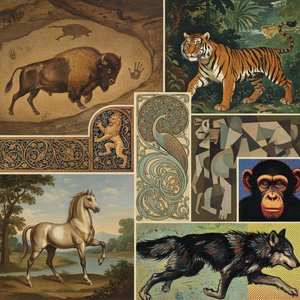 Beastly Brushstrokes: A Historical Journey Through Animal Painting & Aesthetic MovementsExplore the rich history of animal painting across cultures & movements. Discover iconic artists, symbolism, collecting trends & expert art…
 Masterpieces of the Equine Artist: The Top 25 Alfred Munnings ArtworksExplore 25 iconic Alfred Munnings masterpieces. From equine studies to landscapes, discover the full collection online at OriginalUniqueArt…
 Sir Alfred James Munnings: Top 25 Meesterwerken voor Kunstliefhebbers | OriginalUniqueArt.nlOntdek de top 25 schilderijen van Sir Alfred James Munnings, meester van paardenkunst & Engelse impressionisme. Leer over zijn leven, techn…