- Home

- Reproductie van olieverfschilderij
- Marc Chagall
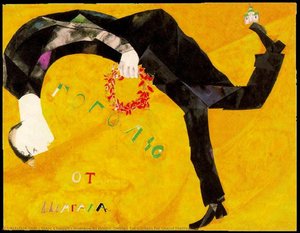
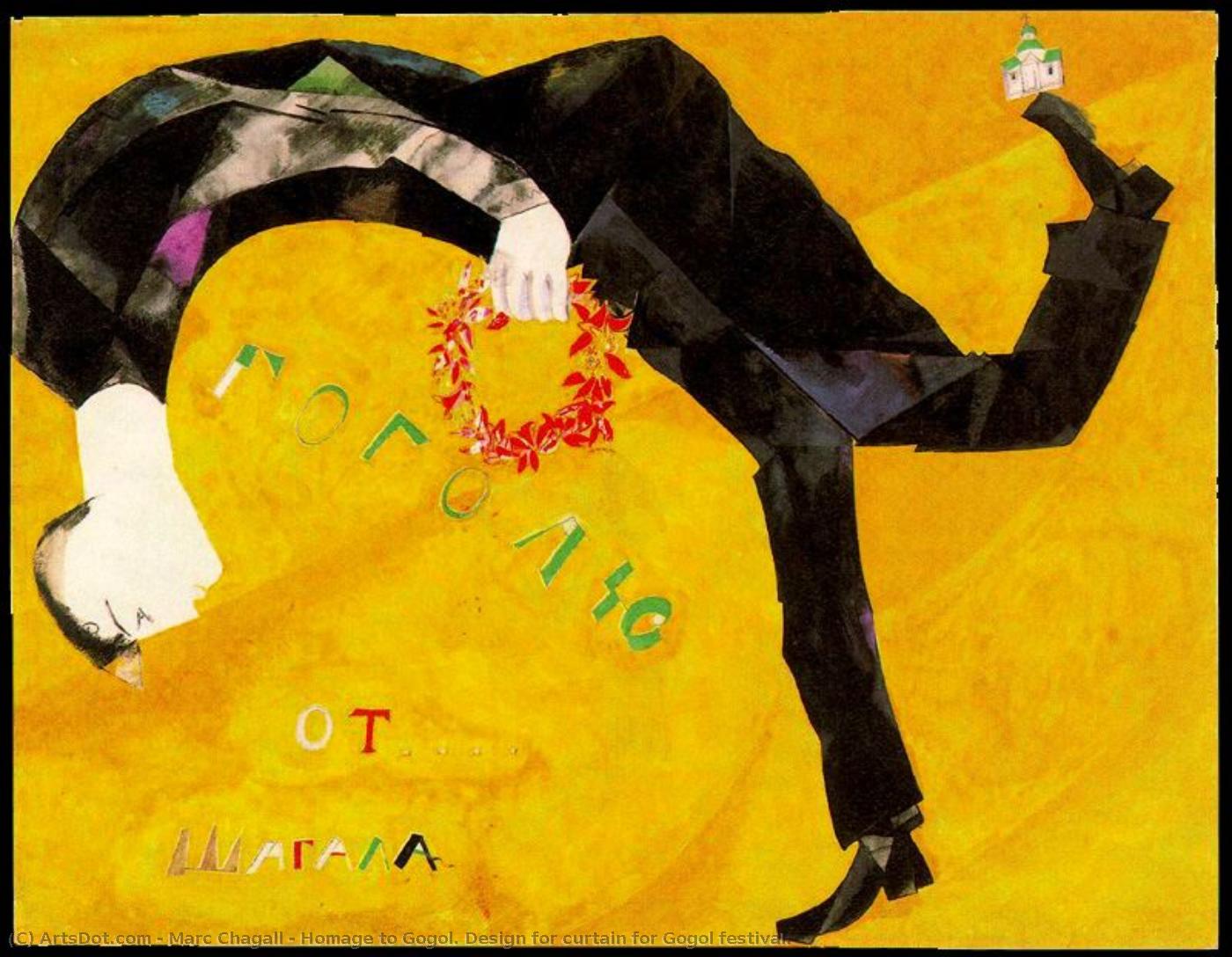
- Hommage aan Gogol. Ontwerp voor gordijn voor het Gogolfestival.
 Print kopen Koop afbeelding in hoge resolutie
 Verstuur
 Delen
Delen
 Details bekijken
 Toevoegen aan favorieten

 Download
 Vergelijkbare werken
 Röntgenonderzoek
 Diavoorstelling
Hommage aan Gogol. Ontwerp voor gordijn voor het Gogolfestival.
 Acryl op canvas
- Wandkunst
- Kubistisch Ontwerp
 1917
1917- Vroege Middeleeuwen
 39.0 x 50.0 cm
 Museum of Modern Art
 Lees meer
Handgemaakte olieverfreproductie
Met de hand geschilderd in olieverf op canvas in uw gewenste maat en lijst, op bestelling gemaakt door onze kunstenaars.




P118B $10

P118H $10

P118W $10

P438Z $10

P508JH $12

P508YH $12

P805H $10

P805Z $10

P919BZ $10

P919G $10

P919XJ $10

P959ZH $10

P968JZ $12

W106C $8

W218G $10

W218JH $8

W218Y $10

W307PJ $10

W316G $10

W316PJ $8

W316Y $10

W398PJ $8

W4111J $10

W500HY $15

W500JH $15

W692G $12

W849H $8

W940BG $15

W953PJ $8




Kies uit onze vooraf ingestelde maten die overeenkomen met de originele verhoudingen van het kunstwerk.

U kunt uw eigen afmetingen invoeren om in een specifieke lijst of ruimte te passen. Als de door u gekozen maat niet overeenkomt met de verhoudingen van het originele beeld, zullen we het kunstwerk bijsnijden of het schilderij uitbreiden met extra handgeschilderde elementen. Een digitale mockup wordt ter goedkeuring naar u verzonden voordat de productie begint.
Houd er rekening mee dat de preview op het scherm niet de werkelijke uitsnede of uitbreiding weergeeft. Alleen de mockup toont de uiteindelijke compositie nauwkeurig.
Hoewel aangepaste afmetingen mogelijk zijn, raden we aan een maat uit de vooraf gedefinieerde lijst te selecteren om de originele verhoudingen te behouden.
Na de bestelling zal het team van OriginalUniqueArt.com per e-mail contact opnemen voor instructies en een mockup-voorbeeld sturen.
Wereldwijde levering () binnen 3/4 weken in plaats van de standaard 5 weken. (16 juli). Geen concessies aan de kwaliteit.

Gratis wereldwijde expressverzending

Hoogwaardig linnen canvas

Volledige verzendverzekering

Garantie op terugbetaling van invoerrechten

Garantie op exacte kleurweergave

60 dagen retourbeleid (alleen bij defecten)

100% Geld-terug-garantie

Korting bij meerdere afnames
 De optie voor glas is alleen beschikbaar bij een formaat kleiner dan 110 cm.

Hommage aan Gogol. Ontwerp voor gordijn voor het Gogolfestival.
Techniek reproductie
Afmetingen reproductie
-


Eindtotaal
-
Beschrijving kunstwerk
De Geboorte van een Gordijn – Hommage aan Gogol
Marc Chagalls “Hommage to Gogol,” bedacht als ontwerp voor een gordijn bestemd voor het Gogolfestival, is niet slechts een decoratief element; het is een levendige destillatie van herinnering, geloof en de diepgewortelde Joodse identiteit van de kunstenaar. Geschilderd in 1917 tijdens een periode van intense artistieke experimentatie – specifiek zijn omarming van het Kubisme – overstijgt dit werk zijn beoogde functie als toneeldecor en wordt een krachtig visueel gedicht. Het jaar zelf was cruciaal; Rusland balanceerde op de rand van revolutie, en Chagalls persoonlijke leven werd gekenmerkt door zowel diep geluk als hartverscheurende verlies, ervaringen die ongetwijfeld de emotionele resonantie van dit stuk hebben gevormd.
- Stijl & Techniek: Het schilderij is een meesterlijk voorbeeld van Kubisme, hoewel duidelijk Chagalliaans. Geometrische vormen zijn gefragmenteerd en opnieuw samengesteld, waardoor een illusionistische diepte ontstaat die de kijker tegelijkertijd in de scène trekt en een gevoel van gefragmenteerde observatie behoudt. Het gebruik van gouache, aquarel en potlood op papier geeft een delicate luminositeit aan de felle kleuren, wat subtiele gradaties en atmosferische effecten toelaat.
- Kleurpalet: Het dominante geel – een tint die doet denken aan zowel zonlicht als oud perkament – trekt onmiddellijk de aandacht. Het wordt naast scherpe zwart- en grijstinten geplaatst, wat een dramatisch contrast creëert dat de vorm van de figuur benadrukt en bijdraagt aan het algehele gevoel van dynamiek van het schilderij. De vermelding van rood in de hand die de bloem vasthoudt, introduceert een vitaal element van leven en passie binnen deze anderszins contemplatieve compositie.
Een Figuur Geworteld in Herinnering
In het hart van “Hommage to Gogol” staat een krachtig weergegeven mensachtige figuur, belichaming van Chagalls eigen herinneringen aan Vitebsk – zijn geboorteplaats en levenslange muze. De langgerekte ledematen, de licht vervormde gelaatstrekken en de omhoog reikende arm roepen een gevoel van verlangen en spirituele elevatie op. Het figuur wordt niet simpelweg afgebeeld; het voelt alsof het naar iets buiten het doek reikt, misschien een verbinding met het verleden of een glimp van een denkbaar toekomstig bestaan. Merk op hoe de houding van het figuur zowel beweging als stilstand suggereert – een visuele weergave van de complexe wisselwerking tussen geheugen en tijd.
Symboliek & Context:- De Rode Bloem: Vaak geïnterpreteerd als symbool van leven, liefde of herinnering, de bloem in de hand van het figuur dient als een aangrijpend herinnering aan Chagalls persoonlijke ervaringen en zijn blijvende band met zijn vaderland.
- Architectonisch Detail: De kleine groene structuur die lijkt op een huis of gebouw met een puntig dak is niet louter decoratief; het verwijst subtiel naar Vitebsk zelf, waardoor het schilderij verankerd wordt in zijn specifieke geografische en culturele context.
De Echo's van Gogol & Chagalls Nalatenschap
De titel “Hommage to Gogol” plaatst het werk onmiddellijk binnen een rijke literaire traditie. Chagalls keuze om de Russische auteur te eren, bekend om zijn aangrijpende portretten van het Joodse leven en folklore, spreekt boekdelen over de erfgoed van de kunstenaar zelf en zijn verlangen om zich te verbinden met bredere culturele narratieven. De tekst “Design for curtain for Gogol festival” verduidelijkt verder het beoogde doel van dit kunstwerk, en benadrukt zijn rol als theatrale element. De handtekening “Marc Chagall” in de rechterbenedenhoek vestigt stevig de hand en nalatenschap van de kunstenaar binnen de kunstwereld.
Voorbij zijn directe context blijft "Hommage to Gogol" een getuigenis van Chagalls unieke artistieke visie – een synthese van persoonlijke herinnering, culturele identiteit en innovatieve formele technieken. Het is een schilderij dat uitnodigt tot contemplatie, waarbij vragen worden opgeroepen over de aard van tijd, de kracht van het herinneren en de blijvende nalatenschap van kunst.
Biografie van de kunstenaar
A Life Painted in Dreams: The World of Marc Chagall
Marc Chagall, born Moishe Shagal in 1887 in the small Belarussian town of Liozna near Vitebsk, wasn’t merely a painter; he was a poet of color, a weaver of dreams, and a chronicler of memory. His life, spanning nearly a century, mirrored the tumultuous currents of the twentieth century, yet his art remained steadfastly rooted in a deeply personal vision—one infused with the folklore of his Hasidic Jewish upbringing and an unwavering belief in the power of imagination. Vitebsk itself was more than just a birthplace; it became the emotional core of his artistic universe, a recurring motif populated by flying figures, whimsical animals, and the vibrant hues of remembered landscapes. The town’s unique blend of cultures—Russian Orthodox churches alongside bustling Jewish marketplaces—forged an aesthetic sensibility that would defy easy categorization throughout his long career. Though he sought formal training first with a local sign painter and later in St. Petersburg under Léon Bakst, and then in Paris at the Académie de la Grande Chaumière, Chagall never fully embraced any single artistic movement. He absorbed elements of Cubism, Symbolism, and Fauvism, but always filtered them through his own intensely personal lens, creating a style that was uniquely, unmistakably Chagall.Early Influences and Artistic Beginnings
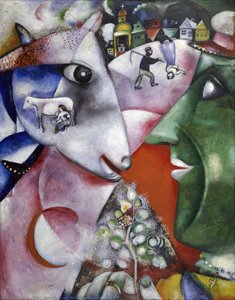
Chagall’s formative years were marked by the traditions of Vitebsk’s Jewish community—a vibrant tapestry woven with religious rituals, folk tales, and ancestral memories. These influences would permeate his artistic vision throughout his life, informing his use of symbolism and his fascination with biblical narratives. His initial training was modest, focusing on practical skills as a sign painter – a craft that instilled in him an appreciation for visual communication and meticulous attention to detail. However, he quickly recognized the limitations of realism and sought inspiration in the expressive techniques championed by Impressionists like Léon Bakst, whose theatrical productions captivated him with their bold colors and dynamic compositions. This exposure to avant-garde aesthetics broadened his artistic horizons and propelled him toward experimentation with new forms of expression. His early canvases—such as I and the Village (1911)—already demonstrated his ability to distill complex emotions into simplified visual language, prioritizing feeling over precise representation. The village isn’t rendered realistically but as a fragmented collection of recollections, imbued with symbolic meaning – a technique that would become central to his distinctive style.The Symbolism of Flight and Memory
Chagall's artistic breakthrough arrived in the wake of World War I, during which he served briefly in the Russian army. This experience instilled in him a profound awareness of human suffering and loss—themes that would recur throughout his oeuvre. His paintings from this period are characterized by an ethereal quality, achieved through masterful use of color and perspective. Figures float effortlessly against backgrounds of luminous hues, defying gravity and logic – a deliberate departure from traditional artistic conventions. This fascination with flight symbolizes liberation from earthly constraints and represents Chagall’s yearning for transcendence—a recurring motif that appears in numerous works throughout his career. Equally important is his preoccupation with memory—the way in which past experiences shape our perceptions of the present. Landscapes are often depicted as dreamlike visions, blending elements of reality with fantastical imagery – reflecting Chagall's belief that art can capture the elusive essence of human experience.Exploring Formal Movements and Personal Vision
Despite rejecting rigid artistic doctrines, Chagall remained attuned to developments in European modernism. He experimented with Cubist techniques—particularly in his early portraits—to dissect forms and explore multiple viewpoints simultaneously. However, he quickly abandoned this approach in favor of a more expressive style that prioritized emotional impact over intellectual rigor. His embrace of Fauvist color palettes – bold splashes of pigment divorced from naturalistic representation – further solidified his artistic identity. Yet, Chagall’s true genius lay in his ability to synthesize these influences into a wholly original vision—one rooted in his Jewish heritage and informed by the spiritual traditions of Vitebsk. He sought to convey not just what he saw but what he felt—a quest for beauty and truth that permeated every aspect of his artistic practice.Later Years and Legacy
The Russian Revolution profoundly impacted Chagall’s life, returning him to Vitebsk where he established an art school dedicated to fostering creativity and cultural exchange. This period was marked by both artistic productivity and political disillusionment—a tension that would continue to shape his creative output. Following the outbreak of World War II, Chagall fled occupied France for New York City, where he found refuge amidst a thriving artistic community. During his time in America, he produced some of his most ambitious canvases – monumental works that explored themes of exile and displacement. He received numerous prestigious commissions, including the ceiling of the Paris Opera (1964), which showcased his unparalleled mastery of color and form—a testament to his enduring influence on subsequent generations of artists. Chagall’s stained glass windows for Jerusalem's Hadassah Hebrew University Medical Center synagogue stand as a poignant reminder of his commitment to Jewish faith and culture. His art continues to inspire awe and wonder, inviting viewers to contemplate the mysteries of existence and celebrating the transformative power of imagination. Marc Chagall died in 1985 at the age of 97, leaving behind an unparalleled legacy—a body of work that transcends stylistic boundaries and speaks directly to the human spirit.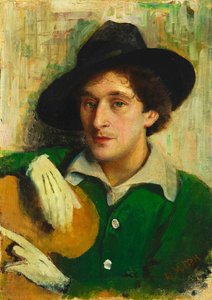
Marc Chagall
1887 - 1985 , Belarus
Belangrijkste feiten
- Artistic Movement Or Style: Modernisme, Cubisme
- Artists Or Movements Influenced By This Artist:
- Surrealisme
- Kunstenaars
- Artists Who Influenced This Artist:
- Bakst
- Delaunay
- Borovikovsky
- Date Of Birth: 6 juli 1887
- Date Of Death: 28 maart 1985
- Full Name: Marc Chagall
- Nationality: Russisch, later Frans
- Notable Artworks:
- I en het dorp
- Over Vitebsk
- Het witte kruis
- Place Of Birth: Liozna, Belarus
Gerelateerde artikelen
Top 10 Cubistische Meesterwerken: Kunstgeschiedenis voor aan de Muur | OriginalUniqueArt
Ontdek de 10 meest invloedrijke kubistische meesterwerken van Picasso, Braque & meer. Leer over kunstgeschiedenis en technieken achter deze iconische werken. Museumkwaliteit reproducties op OriginalUniqueArt.com!
Top 10 Cubistische Meesterwerken: Kunstgeschiedenis voor uw Interieur | OriginalUniqueArt.com
Ontdek de 10 baanbrekende meesterwerken van het Cubisme, met iconische werken van Picasso & Braque. Leer over kunstgeschiedenis en vind museumkwaliteit reproducties voor uw interieur op OriginalUniqueArt.com.

Gefragmenteerde Perspectieven, Verenigende Ruimtes: De Integratie van Kubistisch Geïnspireerde Kunst in Modern Villa Ontwerp – Een Gids voor Esthetische Innovatie en Juridische Overwegingen
Ontdek hoe u kubistische principes succesvol integreert in modern villaontwerp. Expertgids over esthetiek, juridische aspecten & duurzaamheid. Laat uw woning stralen!

The Roaring Twenties Revisited: Art Deco & Modernist Expressions for the Discerning Collector
Explore the glamour of Art Deco & the innovation of Modernism! Discover key artists, investment potential, and expert guidance for collecting 1920s art. Enhance your space with timeless masterpieces.

Top 25 MoMA Meesterwerken: Kunstgeschiedenis voor aan de Muur | OriginalUniqueArt
Ontdek de 25 meest iconische meesterwerken van het MoMA in New York! Van Van Gogh's Starry Night tot Picasso’s kubisme. Leer over kunstgeschiedenis, technieken & emoties achter deze schilderijen. Museumkwaliteit reproducties op OriginalUniqueArt.com.