Expressionism
Carnival (Lyonel Feininger)
Lyonel Feininger (1871–1956) maakte Carnival. Het behoort tot de Expressionism-stroming. Het is gemaakt van Oil On Canvas.
- Oil On Canvas

 Voorvertoning

 Met de hand geschilderd olieverfwerk
 Verstuur
 Delen
 Informatieblad


 Download
 Vergelijkbare items
 Röntgenonderzoek
 Diavoorstelling
 Vraag & antwoord

 Statistieken
Carnival, in het kort
- Titel
- Carnival
- Kunstenaar
- Lyonel Feininger (1871–1956)
- Geboren in [jaar]
- New York, Verenigde Staten
- Medium
- Oil On Canvas
- Beweging
- Expressionism
- Periode
- Early Modern
- Onderwerp
- people, figures, street scene, building, clock tower, umbrella
Wat stelt Carnival voor?
Identification of Carnival by Lyonel Feininger
The street comes alive in Carnival, a spirited oil on canvas work by Lyonel Feininger. Created in 1911, this piece captures a moment of public celebration. The scene unfolds with a sense of movement, as if the viewer has just stepped into the middle of a bustling procession. People move through the space, their presence adding a layer of human energy to the urban setting.
Lyonel Feininger brings this specific vision to life through his unique handling of the medium. The oil paint carries the weight of the figures and the architecture, grounding the festive atmosphere in a tangible reality. Every brushstroke contributes to the feeling of a city in motion, caught in the middle of a joyful, crowded event. It is a window into a specific time and place, preserved through the artist's hand.
Composition and Visual Elements
A lively street scene unfolds before the eyes, filled with the restless energy of a crowd in motion. At least nine individuals populate the thoroughfare, each caught in a private moment of transit. One figure carries an umbrella against the sky, while another relies on a cane to navigate the pavement. Some travelers shoulder handbags or backpacks, their bodies angled as they move through the urban space. The figures appear to drift past one another, creating a sense of constant, rhythmic movement through the heart of the city.
In the background, the architecture looms with a sense of permanence. A building with a prominent clock tower watches over the pedestrians, its structure anchoring the bustling activity below. The composition draws the eye through the layers of the street, where the interplay of people and buildings creates a complex, layered perspective. The arrangement of the crowd suggests a spontaneous gathering, a slice of daily life where every person contributes to the collective pulse of the scene.
Technique and Artistic Style
The oil on canvas pulses with a restless energy, capturing a moment of movement through a lens of Expressionism. Colors collide and dance across the surface, refusing to settle into quietude. There is a palpable sense of rhythm in the way the pigments are applied, mirroring the lively street scene unfolding before us. The brushwork feels alive, driven by a desire to translate the emotional heat of a public celebration into visible, tactile strokes.
A subtle tension exists between the emotional intensity of Expressionism and the structural discipline of Cubist influence. While the colors scream with life, the underlying forms suggest a more calculated, geometric arrangement. This intersection of styles creates a visual language where the chaos of a crowd meets the organized logic of modernism. The figures move through a space that feels both spontaneous and carefully constructed, as if the artist is balancing the raw feeling of the moment with a precise, architectural eye.
Where to See This Artwork Today
The lively energy of this scene remains preserved within the walls of the Art Institute of Chicago. Visitors traveling to Chicago, IL, US, find this piece held within the institution's permanent collection. It resides there as a part of the Joseph Winterbotham Collection, waiting for those who wander through the museum's galleries to encounter its movement.
The painting stays housed in the Art Institute of Chicago, Chicago. It exists in this specific space, allowing the colors and the figures to remain part of the city's cultural landscape. One can find it among the many works that populate the museum's halls, where the spirit of the carnival continues to exist in its physical form.
Hoogwaardige afbeeldingen van Carnival

Publiek domein: de kunstenaar is overleden in 1956.
Andere formaten, uitsneden en citatie →Lyonel Feininger, Carnival. Publiek domein
Vragen over Carnival, beantwoord
Met welke techniek is "Carnival" gemaakt?
Het medium van "Carnival" door Lyonel Feininger is Oil On Canvas. Reproducties zijn bedoeld om de uitstraling van deze techniek weer te geven.
Wat stelt "Carnival" door Lyonel Feininger voor?
"Carnival" door Lyonel Feininger toont: people, figures, street scene, building, clock tower, umbrella, cane, handbags.
Is "Carnival" vrij van auteursrecht?
Wat betreft het auteursrecht valt "Carnival" onder bevindt zich in het publiek domein - de auteursrechten zijn verlopen.
Aan welke kunstenaar wordt "Carnival" toegeschreven?
"Carnival" is gemaakt door Lyonel Feininger. De informatie op deze pagina beschrijft het originele werk van Lyonel Feininger.
Bij welke kunststroming behoort "Carnival" door Lyonel Feininger?
"Carnival" is een werk uit de Expressionism. De stroming geeft de artistieke traditie aan waartoe het werk behoort.
In welke periode van de carrière van Lyonel Feininger valt "Carnival"?
"Carnival" vertegenwoordigt de Early Period van Lyonel Feininger.
Waarom heeft het kunstwerk "Carnival" deze auteursrechtelijke status?
"Carnival" door Lyonel Feininger is bevindt zich in het publiek domein - de auteursrechten zijn verlopen. De auteursrechtelijke bescherming loopt vanaf het overlijden van de kunstenaar, dat plaatsvond in 1956.
Wat deelt "Carnival" met het overige oeuvre van Lyonel Feininger?
Binnen het oeuvre van Lyonel Feininger past "Carnival" binnen de Expressionism-stijl, samen met de thema's van expressionism and cubism influence, urban life exploration, pivotal early career work, transition to fine art.
Hoe verhoudt het onderwerp van "Carnival" zich tot de gebruikelijke thema's van Lyonel Feininger?
Binnen de bekende thema's van Lyonel Feininger - expressionism and cubism influence, urban life exploration, pivotal early career work, transition to fine art - legt "Carnival" een eigen focus op people, figures, street scene, building, clock tower, umbrella, cane, handbags.
Over de kunstenaar, Lyonel Feininger

1871–1956, Verenigde Staten
Lyonel Feininger
Het vroege leven en de carrière: Van karikaturist naar beeldend kunstenaar Geboorte en familie: Lyonel Charles Adrian Feininger werd geboren op 17 juli 1871 in New York City. Zijn vader, Karl Feındadır, was een Duits-Amerikaanse violist en componist, en zijn moeder, Elizabeth Feininger, was een Amerikaanse zangeres. Deze artistieke achtergrond had een diepgaande invloed op zijn vroege ontwikkeling. Vroege educatie en Europese reizen: In 1887, op de leeftijd van 16 jaar, reisde Feininger naar Europa om muziek te studeren, maar hij verschoof zijn focus al snel naar de kunst.
Ook van Lyonel Feininger
 The honeymooners
 Boats1917
 Sailing Boats
 Blue Coast

Essays over Carnival
 Lyonel Feininger: Bridging Expressionism & Cubism – A Study of Spiritual GeometryExplore the captivating world of Lyonel Feininger, a pivotal figure bridging Expressionism & Cubism. Discover his architectural visions, Ba…
 The Architecture of the Crowd: Examining Human Presence in Urban CompositionsExplore the evolution of urban art from Caillebotte to modern street murals. Discover the pulse of the city through masterworks.
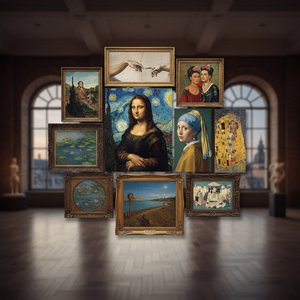 Top 10 Meesterwerken Olieverf die de Kunst voorgoed Veranderden | OriginalUniqueArt.nlOntdek de 10 meest legendarische olieverf meesterwerken die kunstgeschiedenis schreven! Van Van Gogh tot Rembrandt, leer over iconische tec…