Romanticism · 1819
Het Witte Paard (John Constable, 1819)
John Constable (1776–1837) maakte Het Witte Paard. Het dateert uit 1819. Het behoort tot de Romanticism-stroming. Het is gemaakt van Olieverf op canvas. Het is te vinden in The Frick Collection in New York City, Verenigde Staten van Amerika.
- 1819
- Olieverf op canvas
- The Frick Collection, New York City

 Voorvertoning

 Met de hand geschilderd olieverfwerk
 Verstuur
 Delen
 Informatieblad


 Download
 Vergelijkbare items
 Röntgenonderzoek
 Diavoorstelling
 Vraag & antwoord

 Statistieken
Het Witte Paard, in het kort
- Titel
- Het Witte Paard
- Kunstenaar
- John Constable (1776–1837)
- Geboren in [jaar]
- East Bergholt, Verenigd Koninkrijk
- Datum
- 1819
- Medium
- Olieverf op canvas
- Te zien in
- The Frick Collection, New York City, Verenigde Staten van Amerika
- Beweging
- Romanticism
- Periode
- 19e eeuw
- Onderwerp
- landschap, rivierbed, platteland, engelse natuur, pastorale, rust
Wat stelt Het Witte Paard voor?
A Pastoral Vision: Unveiling John Constable’s ‘The White Horse’
“Painting is but another word for feeling.” – John Constable. This sentiment perfectly encapsulates the essence of ‘The White Horse,’ a pivotal work by one of Britain's most beloved landscape artists, completed in 1819. More than just a depiction of rural life, this painting offers a window into Constable’s deeply personal connection with the English countryside and his revolutionary approach to landscape art.Subject & Composition: A Moment of Tranquil Industry
‘The White Horse’ presents a serene scene along the River Stour in Suffolk – an area intimately known as “Constable Country.” The painting centers around a tow-horse, patiently awaiting its task of pulling a barge upstream. Tied to the riverbank, a small boat gently reflects in the water, mirroring the lush vegetation that dominates the left side of the composition. To the right, a cluster of buildings and trees anchors the scene, providing a sense of human presence within this natural setting. The balanced arrangement, with a strong horizon line, creates a harmonious visual experience. This is one of six large-scale landscapes Constable painted – known as his ‘Six-Footers’ - intended to showcase the grandeur of the English countryside on an ambitious scale.Style & Technique: Romanticism Infused with Realism
Constable firmly established himself within the Romantic tradition, yet he infused it with a remarkable degree of realism. While embracing the dramatic lighting and emotional resonance characteristic of Romanticism, he meticulously observed and rendered details of everyday life. The painting is executed in oil on canvas, utilizing loose brushstrokes that create a textured surface and suggest movement – particularly evident in the water and sky. Atmospheric perspective plays a crucial role; distant elements are paler and less defined, enhancing the sense of depth. Constable’s technique wasn't about precise imitation but capturing the feeling of a place, its atmosphere, and its light.Historical Context & Artistic Innovation
In 1819, landscape painting was often viewed as secondary to historical or portraiture work. Constable challenged this hierarchy by elevating the humble English countryside to the level of high art. ‘The White Horse’ marked a turning point in his career and garnered significant attention at the Royal Academy exhibition that year, leading to his election as an Associate. Interestingly, while initially underappreciated in England, Constable's work profoundly influenced French artists, particularly those associated with the Barbizon School, who embraced his naturalistic approach.Symbolism & Emotional Impact: Harmony and Nostalgia
Beyond its aesthetic beauty, ‘The White Horse’ carries symbolic weight. The scene suggests a harmonious relationship between humanity and nature – a gentle industry coexisting peacefully within the landscape. The tow-horse itself can be interpreted as a symbol of labor and perseverance. The overall effect is one of tranquility, nostalgia, and an idealized vision of rural life. Constable wasn't simply recording what he saw; he was conveying his deep affection for the land and its traditions.Collecting & Interior Design Considerations
‘The White Horse’ – or a high-quality reproduction – lends itself beautifully to a variety of interior design schemes. Its muted palette of greens, blues, and browns creates a calming atmosphere, making it ideal for living rooms, studies, or bedrooms. The painting's scale demands attention, serving as a focal point in any space. For collectors, owning a print of this work is acquiring a piece of British art history – a testament to Constable’s enduring legacy and his ability to capture the soul of the English countryside.- Style: Romanticism with Realist elements
- Medium: Oil on Canvas
- Period: 19th Century (1819)
- Current Location: The Frick Collection, New York City
In welk museum bevindt Het Witte Paard zich?
The Frick Collection
New York City, Verenigde Staten van Amerika
Oorsprong en geschiedenis van The Frick Collection The Frick Collection vindt haar oorsprong in de persoonlijke acquisities van Henry Clay Frick, een Amerikaanse industrieel, financier en kunstpatroon. Zijn collectie werd samengesteld door een scherp oog voor Europese kunst, wat uiteindelijk de basis vormde voor een publieke instelling. In 1920 richtten de beheerders van zijn nalatenschap The Frick Collection Inc.


Hoogwaardige afbeeldingen van Het Witte Paard

Publiek domein: de kunstenaar is overleden in 1837.
Andere formaten, uitsneden en citatie →John Constable, Het Witte Paard (1819), The Frick Collection. Publiek domein
Vragen over Het Witte Paard, beantwoord
Waar is "Het Witte Paard" door John Constable tegenwoordig te zien?
Het originele werk "Het Witte Paard" is te bewonderen in The Frick Collection, New York City, Verenigde Staten van Amerika.
In welk jaar werd "Het Witte Paard" gemaakt?
"Het Witte Paard" door John Constable werd gemaakt in 1819.
Met welke techniek is "Het Witte Paard" gemaakt?
Het medium van "Het Witte Paard" door John Constable is Olieverf op canvas. Reproducties zijn bedoeld om de uitstraling van deze techniek weer te geven.
Wat wordt er afgebeeld in "Het Witte Paard" door John Constable?
De onderwerpen van "Het Witte Paard" zijn landschap, rivierbed, platteland, engelse natuur, pastorale, rust, atmosfeer, nostalgie.
Is de afbeelding van "Het Witte Paard" door John Constable vrij van auteursrecht?
De auteursrechtelijke status van "Het Witte Paard" door John Constable: het werk is bevindt zich in het publiek domein - de auteursrechten zijn verlopen. Dit bepaalt of reproducties van de afbeelding vrijelijk mogen worden gemaakt.
Aan welke kunstenaar wordt "Het Witte Paard" toegeschreven?
"Het Witte Paard" wordt toegeschreven aan John Constable.
Bij welke kunststroming behoort "Het Witte Paard" door John Constable?
"Het Witte Paard" door John Constable behoort tot de Romanticism-stroming. Deze stroming biedt de stilistische context van het werk.
In welke periode van de carrière van John Constable valt "Het Witte Paard"?
Binnen de carrière van John Constable valt "Het Witte Paard" in de Volwassen Periode. Deze fase helpt om het werk te vergelijken met andere werken van de kunstenaar.
Op welke leeftijd maakte John Constable "Het Witte Paard"?
John Constable maakte "Het Witte Paard" op 43-jarige leeftijd. De kunstenaar werd geboren in 1776 en het werk dateert uit 1819.
Over de kunstenaar, John Constable
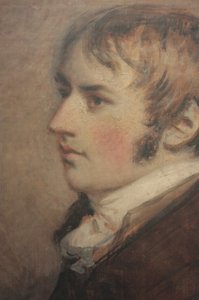
1776–1837, Verenigd Koninkrijk
John Constable
Vroege Leven, Familie en Opleiding John Constable werd geboren in 1776 in het dorp East Bergholt, in het graafschap Suffolk. Als tweede zoon van Golding en Ann (Watts) Constable groeide hij op in een omgeving die diep geworteld was in de lokale gemeenschap. Zijn vader was een welvarende graan- en kolenhandelaar die de eigenaar was van Flatford Mill. Deze nauwe verbondenheid met de rivier en de lokale handel betekende dat het ritme van het water en de constante beweging van goederen een integraal onderdeel vormden van het dagelijks leven in zijn huishouden.
Ook van John Constable
 De Hay Wain1821
 Zicht op de kathedraal van Salisbury vanaf het terrein van de bisschop1823
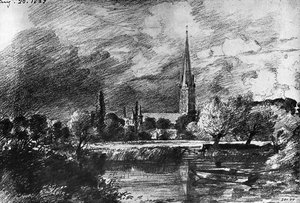 Salisbury Kathedraal
 De Hooiwagen (detail)1821

Essays over Het Witte Paard
 Mastering the English Landscape: The Top 25 Artworks by John ConstableImmerse yourself in the soul of the English countryside with our curated guide to John Constable's top 25 masterpieces. Explore the emotive…
 Capturing the English Landscape: The Timeless Mastery and Romantic Legacy of John ConstableExplore the profound legacy of John Constable. Discover how his mastery of light, atmosphere, and the English landscape redefined Romantici…
 British artworks of the 1820sBritish Romanticism in the 1820s features the iconic works of J.M.W. Turner, John Constable, and William Blake. View the full collection at…