Expressionism
The Bad Doctors (James Ensor)
James Ensor (1860–1949) maakte The Bad Doctors. Het behoort tot de Expressionism-stroming. Het is gemaakt van Oil On Panel. Het is te vinden in Fin-de-Siècle Museum in Brussels, Belgium.
- Oil On Panel
- Fin-de-Siècle Museum, Brussels

 Voorvertoning

 Met de hand geschilderd olieverfwerk
 Verstuur
 Delen
 Informatieblad


 Download
 Vergelijkbare items
 Röntgenonderzoek
 Diavoorstelling
 Vraag & antwoord

 Statistieken
The Bad Doctors, in het kort
- Titel
- The Bad Doctors
- Kunstenaar
- James Ensor (1860–1949)
- Geboren in [jaar]
- Oostende, België
- Medium
- Oil On Panel
- Te zien in
- Fin-de-Siècle Museum, Brussels, Belgium
- Beweging
- Expressionism
- Periode
- 19th Century
- Onderwerp
- doctors, horror, grotesque, time, symbolism, decay
Wat stelt The Bad Doctors voor?
A Descent into Grotesque Symbolism
James Ensor’s The Bad Doctors is far more than a mere depiction of a room; it is a chilling, visceral descent into the depths of societal anxiety. Completed in the late nineteenth century, this masterpiece serves as a darkly satirical panorama, pulling the viewer into a claustrophobic interior that feels less like a physical space and more like a psychological trap. Within this unsettling scene, Ensor orchestrates a collection of distorted figures that seem to emerge from a fever dream, populated by characters that reflect his profound critique of the medical profession and the broader human condition. The composition is intentionally oppressive, with couches and chairs arranged in a way that hems in the viewer, mirroring the suffocating weight of moral decay and corruption that Ensor so masterfully captured.The Visceral Power of Expressionist Technique
To behold this work is to experience the raw power of early Expressionism. Ensor eschews objective reality in favor of a more profound, emotional truth, utilizing thick, palpable brushstrokes that lend a heavy, textural quality to the surface. The artist’s palette is deliberately jarring, dominated by sickly yellows, bruised reds, and murky greens—hues that evoke the very essence of illness and psychological distress. This use of color does not merely decorate the scene; it infects it, creating an atmosphere where decay feels almost tangible. Every stroke contributes to a sense of disorientation, as if the very air within the painting is thick with the scent of mortality and unrest.Symbolism and the Weight of Time
Beyond its striking visual impact, The Bad Doctors is laden with potent symbols that demand deep contemplation. Most haunting are the multiple clocks scattered throughout the room—reminders of time's relentless, indifferent march toward death. A large clock hangs prominently above a physician, acting as a silent witness to the inevitable confrontation with mortality that haunts every figure in the frame. For the discerning collector or interior designer, this piece offers an unparalleled opportunity to introduce a work of immense intellectual and emotional depth into a space. It is a painting that does not merely sit upon a wall; it commands the room, inviting conversation through its complex layers of meaning, from the grotesque masks of identity to the haunting shadows of social critique.In welk museum bevindt The Bad Doctors zich?
Fin-de-Siècle Museum
Brussels, Belgium
The Fin-de-Siècle Museum Overview Located at 1, place Royale/Koningsplein in Brussels, Belgium, the Fin-de-Siècle Museum occupies a significant position within the Royal Museums of Fine Arts of Belgium. The institution was inaugurated on 6 December 2013. It is partly housed in the former halls of the Royal Museum of Modern Art, creating a physical connection between different eras of Belgian creative expression.


Hoogwaardige afbeeldingen van The Bad Doctors

Publiek domein: de kunstenaar is overleden in 1949.
Andere formaten, uitsneden en citatie →James Ensor, The Bad Doctors, Fin-de-Siècle Museum. Publiek domein
Vragen over The Bad Doctors, beantwoord
In welk museum is het originele werk "The Bad Doctors" te zien?
Het originele werk "The Bad Doctors" is te bewonderen in Fin-de-Siècle Museum, Brussels, Belgium.
Met welke techniek is "The Bad Doctors" door James Ensor vervaardigd?
Het medium van "The Bad Doctors" door James Ensor is Oil On Panel. Reproducties zijn bedoeld om de uitstraling van deze techniek weer te geven.
Wat stelt "The Bad Doctors" door James Ensor voor?
De onderwerpen van "The Bad Doctors" zijn doctors, horror, grotesque, time, symbolism, decay, medicine.
Is de afbeelding van "The Bad Doctors" door James Ensor vrij van auteursrecht?
Wat betreft het auteursrecht valt "The Bad Doctors" onder bevindt zich in het publiek domein - de auteursrechten zijn verlopen.
Wie heeft "The Bad Doctors" gemaakt?
"The Bad Doctors" wordt toegeschreven aan James Ensor.
Bij welke kunststroming behoort "The Bad Doctors" door James Ensor?
"The Bad Doctors" door James Ensor behoort tot de Expressionism-stroming. Deze stroming biedt de stilistische context van het werk.
Uit welke fase van de carrière van James Ensor is "The Bad Doctors"?
Binnen de carrière van James Ensor valt "The Bad Doctors" in de Mature Period. Deze fase helpt om het werk te vergelijken met andere werken van de kunstenaar.
Waarom heeft het kunstwerk "The Bad Doctors" deze auteursrechtelijke status?
"The Bad Doctors" door James Ensor is bevindt zich in het publiek domein - de auteursrechten zijn verlopen. De auteursrechtelijke bescherming loopt vanaf het overlijden van de kunstenaar, dat plaatsvond in 1949.
Is "The Bad Doctors" gebleven in het geboorteland van de kunstenaar?
Nee - het kunstwerk wordt in het buitenland bewaard. Het geboorteland van James Ensor is België, en het museum waar het origineel van "The Bad Doctors" zich bevindt, ligt in Belgium.
Over de kunstenaar, James Ensor

1860–1949, België
James Ensor
Vroege Leven, Familie en Artistieke Vorming James Ensor werd geboren op 13 april 1860 in Oostende, België. Zijn identiteit werd gevormd door een unieke culturele kruisbestuiving: zijn vader, James Frederic Ensor, was in Brussel geboren uit Engelse ouders, terwijl zijn moeder, Maria Catherina Haegheman, Belgisch was. Deze dubbele afkomst vormde de basis voor een perspectief dat zich vaak buiten de nauwe grenzen van de lokale traditie bevond. Tijdens zijn jeugd groeide de kunstenaar op tussen de muren van een souvenirwinkel die zijn ouders in Oostende runden.
Ook van James Ensor
 De Intrede van Christus in Brussel1888
 Portret met Maskers1899
 De Baden te Oostende
 Skeletten die zich opwarmen1889

Essays over The Bad Doctors
 Emotional Transmutation in Visual Art: A Study of Affective Representation Through Color, Form, and TextureExplore the fascinating intersection of art & emotion! Discover how color, form, and texture convey feelings in masterpieces. Expert analys…
 The Visceral Canvas: A Collector's Guide to the Emotional Power of ExpressionismMaster the emotional depth of Expressionism through expert analysis of color and form. Explore this visceral movement today.
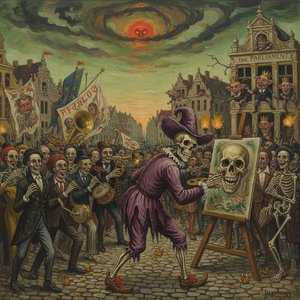 James Ensor's Grotesque Visions: Social Commentary & Artistic InnovationExplore the unsettling yet captivating world of James Ensor, a pioneer of Expressionism. Discover his satirical masterpieces, symbolic imag…