Expressionism · 1915
Marching (Marc Chagall, 1915)
Marc Chagall (1887–1985) maakte Marching. Het dateert uit 1915. Het behoort tot de Expressionism-stroming. Het is gemaakt van Acrylic On Canvas.
- 1915
- Acrylic On Canvas

 Voorvertoning

 Met de hand geschilderd olieverfwerk
 Verstuur
 Delen
 Informatieblad


 Download
 Vergelijkbare items
 Röntgenonderzoek
 Diavoorstelling
 Vraag & antwoord

 Statistieken
Marching, in het kort
- Titel
- Marching
- Kunstenaar
- Marc Chagall (1887–1985)
- Geboren in [jaar]
- Liozna, Wit-Rusland
- Datum
- 1915
- Medium
- Acrylic On Canvas
- Beweging
- Expressionism
- Onderwerp
- uniform, roof, sky, clock, figures, folklore
Wat stelt Marching voor?
A Symphony of Color and Memory: Exploring Marc Chagall's "I Am Alone"
Marc Chagall’s “I Am Alone,” painted in 1915, isn’t merely a depiction of solitude; it’s an embodiment of existential angst rendered in the breathtaking language of Expressionism. Created during the turbulent years preceding World War I—a period marked by anxieties about national identity and impending conflict—the painting transcends its immediate historical context to speak to universal themes of isolation and longing. It's housed in the Musée d'Orsay, Paris, a testament to Chagall’s enduring influence on modern art.- Subject Matter: The canvas portrays a man standing alone on a rooftop amidst a swirling panorama of fantastical figures—a woman with outstretched arms, a child perched precariously on the edge of the roof, and several other stylized individuals drifting upwards into the heavens.
- Style: Chagall’s style is unmistakably Expressionist. Rejecting representational accuracy in favor of emotional intensity, he employs bold colors—primarily yellows, blues, and reds—to convey mood and feeling rather than to faithfully reproduce reality. The figures themselves are distorted and stylized, imbued with a dreamlike quality that defies logical interpretation.
Technique: Bold Brushstrokes and Layered Color
Chagall’s technique is characterized by thick, impasto brushstrokes—meaning the paint is applied in layers so thickly that it stands up prominently from the surface of the canvas. This textural approach contributes significantly to the painting's dramatic impact, creating a palpable sense of movement and conveying the artist’s emotional state directly onto the artwork. The colors are blended strategically to create luminous washes and vibrant accents, enhancing the overall visual richness.- Color Palette: The dominant hues—golden yellows symbolizing warmth and optimism juxtaposed with deep blues representing melancholy and uncertainty—are deliberately chosen to evoke specific emotions. Chagall’s masterful use of color underscores the painting's psychological depth.
- Composition: The rooftop setting serves as a focal point, anchoring the swirling figures and emphasizing the man’s isolation. The upward trajectory of the figures symbolizes aspiration but also hints at vulnerability—a yearning for connection amidst overwhelming circumstances.
Symbolism: Folklore and Existential Concerns
“I Am Alone” is replete with symbolic references drawn from Jewish folklore and Kabbalah—the mystical tradition of Judaism. The woman with outstretched arms represents compassion and maternal care, while the child symbolizes innocence and vulnerability. The swirling figures embody the chaotic forces of fate and the anxieties surrounding impending war. More broadly, the painting explores profound existential questions about human existence—questions concerning identity, purpose, and the inevitability of suffering.Ultimately, Chagall’s “I Am Alone” transcends its historical origins to resonate with viewers across generations. It's a hauntingly beautiful meditation on solitude, loss, and the enduring quest for meaning—a masterpiece that continues to inspire awe and provoke contemplation decades after its creation.
Hoogwaardige afbeeldingen van Marching

Protected by copyright: these files are for personal reference, not a licence to republish.
Marc Chagall, Marching (1915).
Vragen over Marching, beantwoord
In welk jaar werd "Marching" door Marc Chagall gemaakt?
"Marching" door Marc Chagall werd gecreëerd in 1915.
Met welke techniek is "Marching" door Marc Chagall vervaardigd?
"Marching" is uitgevoerd in Acrylic On Canvas.
Wat wordt er afgebeeld in "Marching" door Marc Chagall?
"Marching" door Marc Chagall toont: uniform, roof, sky, clock, figures, folklore, dreams.
Is de afbeelding van "Marching" door Marc Chagall vrij van auteursrecht?
De auteursrechtelijke status van "Marching" door Marc Chagall: het werk is nog steeds auteursrechtelijk beschermd. Dit bepaalt of reproducties van de afbeelding vrijelijk mogen worden gemaakt.
Wie heeft "Marching" gemaakt?
De kunstenaar achter "Marching" is Marc Chagall. Het werk is gecatalogiseerd onder de naam van Marc Chagall.
Bij welke kunststroming behoort "Marching" door Marc Chagall?
De kunststroming die verbonden is aan "Marching" door Marc Chagall is Expressionism. Deze classificatie plaatst het werk binnen een context van verwante kunstenaars en kunstwerken.
In welke periode van de carrière van Marc Chagall valt "Marching"?
"Marching" behoort tot de Mature Period in de carrière van Marc Chagall. Deze classificatie plaatst het werk in de context van de ontwikkeling van de kunstenaar.
Hoe oud was Marc Chagall bij het creëren van "Marching" in 1915?
Marc Chagall maakte "Marching" op 28-jarige leeftijd. De kunstenaar werd geboren in 1887 en het werk dateert uit 1915.
Behoort "Marching" van Marc Chagall tot het publiek domein, en zo ja, waarom?
De auteursrechtstatus van "Marching" - nog steeds auteursrechtelijk beschermd - is gebaseerd op het overlijden van de kunstenaar in 1985.
Over de kunstenaar, Marc Chagall
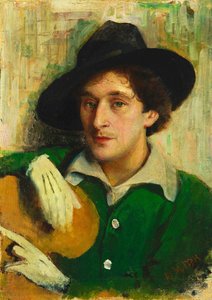
1887–1985, Wit-Rusland
Marc Chagall
Het Vroege Leven, Familie en Opleiding Marc Chagall kwam op 7 juli 1887 ter wereld in Vitebsk, in het Russische Rijk, geboren als Moishe Segal. Als eerste van negen kinderen in een bescheiden Joods gezin werd zijn leven gevormd door de ritmes van arbeid en kleinschalige handel. Zijn vader, Khatskel Segal, werkte als haringenpijper in een pakhuis, terwijl zijn moeder, Feïga-Ita Tchernina, een kleine kruidenierij runde. Deze vroege jaren zijn diep geworteld in de specifieke texturen van een provinciestad, waar de grenzen van zijn wereld werden bepaald door de behoeften van een groot huishouden en de rijke tradities van zijn gemeenschap.
Ook van Marc Chagall
 Ik en het Dorp1911
 Witte Kruisiging1938
 Het Verjaartje1915
 Over de stad1918
Essays over Marching
 The Language of Brushstrokes: How Artistic Technique Expresses Emotion and EraExplore the profound connection between artistic technique and emotion. From the heavy impasto of Van Gogh to classical mastery, learn how …
 Dreaming in Color: The 25 Most Iconic Masterpieces by Marc ChagallStep into the dreamlike world of Marc Chagall. Explore 25 iconic masterpieces, from vibrant surrealist tales to soulful folklore. Find insp…
 Marc Chagall’s Masterpieces: Exploring the Magic, Color, and Surrealist Legacy of a Modernist IconEmbark on a journey through the dreamlike masterpieces of Marc Chagall. Explore the profound symbolism and vibrant colors of this Surrealis…