Romanticism · 1790
Painters (Hubert Robert, 1790)
Hubert Robert (1733–1808) maakte Painters. Het dateert uit 1790. Het behoort tot de Romanticism-stroming. Het is gemaakt van Acrylic On Canvas. Het is te vinden in Hermitage Museum in Sint-Petersburg, Rusland. De afmetingen zijn 24 × 32 cm.
- 1790
- Acrylic On Canvas
- 24 × 32 cm
- Hermitage Museum, Sint-Petersburg

 Voorvertoning

 Met de hand geschilderd olieverfwerk
 Verstuur
 Delen
 Informatieblad


 Download
 Vergelijkbare items
 Röntgenonderzoek
 Diavoorstelling
 Vraag & antwoord

 Statistieken
Painters, in het kort
- Titel
- Painters
- Kunstenaar
- Hubert Robert (1733–1808)
- Geboren in [jaar]
- Parijs, Frankrijk
- Datum
- 1790
- Medium
- Acrylic On Canvas
- Afmetingen
- 24 × 32 cm
- Te zien in
- Hermitage Museum, Sint-Petersburg, Rusland
- Beweging
- Romanticism
- Onderwerp
- landscapes, ruins, figures, daytime, field, workers
Wat stelt Painters voor?
Hubert Robert’s “Painters”: A Vision of Ruin and Remembrance
Hubert Robert's "Painters," painted in 1790, isn’t merely a depiction of laborers at work; it’s a carefully constructed meditation on labor, time, and the enduring power of memory. The scene unfolds within a rugged, almost theatrical landscape – a dramatic vista dominated by a towering rock formation, its weathered surface hinting at centuries of exposure to the elements. Two figures, rendered with a subtle realism that belies Robert's penchant for romanticized ruins, are engaged in the arduous task of carving stone. One, positioned atop the rock, directs the work with a commanding presence, while the other, lower down, meticulously shapes the material beneath him. The composition isn’t about capturing a specific moment; it’s about evoking a feeling – a sense of timelessness and the relentless passage of time, beautifully intertwined with the human effort to impose order upon nature.
Robert's style is distinctly rooted in the Neoclassical tradition, yet infused with the burgeoning Romantic sensibility that was beginning to challenge its rigid formality. He masterfully employs atmospheric perspective – the subtle blurring and darkening of distant elements – to create a profound sense of depth and space. The light, diffused and golden, washes over the scene, casting long shadows and highlighting the textures of the rock and the figures’ clothing. Notice how Robert utilizes loose brushstrokes, particularly in the depiction of the landscape, creating an impressionistic effect that anticipates later developments in art history. This deliberate softness contrasts with the sharper detail given to the men themselves, suggesting a focus on their individual struggles within the grand scheme of nature.
The Context of Labor and Ruin
To fully appreciate “Painters,” it’s crucial to understand Robert's artistic interests – particularly his fascination with ruins. Following the upheavals of the French Revolution, a renewed interest in antiquity and the past emerged, fueled by archaeological discoveries and a desire to reconnect with a perceived lost sense of order and stability. Robert, like many artists of his time, found inspiration in the decaying grandeur of Roman temples and medieval castles, transforming these remnants into evocative landscapes – ‘capriccios’ as he called them. These weren't simply artistic exercises; they were explorations of memory, loss, and the cyclical nature of history. The very act of painting ruins became a way to preserve a fading past, imbuing it with new life and meaning.
The figures depicted in “Painters” represent a specific segment of 18th-century French society – laborers engaged in essential but often overlooked work. Robert’s choice to portray them within such a dramatic landscape elevates their status, suggesting that even the most humble tasks are worthy of artistic attention. The scene subtly critiques the social hierarchies of the time, presenting these men not as mere workers, but as active participants in shaping the world around them. The rock formation itself can be interpreted as a symbol of enduring strength and resilience – a testament to the power of human labor against the forces of nature.
Symbolism and Emotional Resonance
Beyond its straightforward depiction of work, “Painters” is rich in symbolic meaning. The towering rock formation, with its weathered surface, represents the weight of history and the passage of time. The figures’ focused expressions convey a sense of dedication and perseverance, but also hint at the physical strain of their labor. Robert's use of color – predominantly earthy tones punctuated by flashes of gold – evokes feelings of warmth, nostalgia, and perhaps even melancholy. The overall effect is one of quiet contemplation, inviting the viewer to reflect on the relationship between humanity and nature, work and memory.
The inclusion of animals—a horse and a dog—adds another layer of complexity to the scene. Animals have long been associated with labor and service in art, symbolizing loyalty, strength, and connection to the natural world. Their presence reinforces the theme of human interaction with the environment, suggesting a harmonious coexistence – albeit one marked by hard work and enduring effort. “Painters” is not simply a landscape; it’s a carefully orchestrated tableau that speaks volumes about the values and anxieties of its time.
A Timeless Masterpiece: Reproduction Considerations
Reproductions of Hubert Robert's “Painters” offer a remarkable opportunity to bring this evocative artwork into your home or office. The meticulous detail captured by Robert’s brushstrokes, combined with his masterful use of light and shadow, translates beautifully to high-quality reproductions. When selecting a reproduction, pay close attention to the texture and color accuracy – features that are crucial for capturing the painting's atmospheric depth and emotional resonance. OriginalUniqueArt offers meticulously crafted hand-painted reproductions that faithfully recreate Robert’s original vision, ensuring that you experience the full impact of this timeless masterpiece.
In welk museum bevindt Painters zich?
Hermitage Museum
Sint-Petersburg, Rusland
Oorsprong en geschiedenis van het Hermitage Museum De geschiedenis van het Hermitage Museum vindt haar oorsprong in het jaar 1764. Het fundament van deze prestigieuze instelling werd gelegd met de verwerving van een collectie van 225 schilderijen, aangekocht bij de Berlijnse koopman Johann Ernst Gotzkowsky. Het was de visionaire impuls van Catharina de Grote die deze collectie de aanzet gaf, waarmee zij de eerste contouren schetste van wat een monumentale aanwezigheid in Sint-Petersburg, Rusland, zou worden.


Hoogwaardige afbeeldingen van Painters

Publiek domein: de kunstenaar is overleden in 1808.
Andere formaten, uitsneden en citatie →Hubert Robert, Painters (1790), Hermitage Museum. Publiek domein
Vragen over Painters, beantwoord
Waar kan ik het originele werk "Painters" door Hubert Robert bewonderen?
"Painters" door Hubert Robert is te zien in Hermitage Museum, Sint-Petersburg, Rusland. De vermelding van het museum heeft betrekking op het originele werk, niet op reproducties.
In welk jaar werd "Painters" door Hubert Robert gemaakt?
"Painters" dateert uit 1790. Deze datum plaatst het werk binnen de carrière van Hubert Robert en het betreffende tijdperk.
Met welke techniek is "Painters" door Hubert Robert vervaardigd?
Hubert Robert gebruikte de Acrylic On Canvas-techniek voor "Painters". De techniek bepaalt de materiële aard van het originele werk.
Wat zijn de afmetingen van het originele "Painters"?
"Painters" heeft in zijn originele vorm de afmetingen 24 x 32 cm. De originele afmetingen dienen als een handig referentiepunt bij het kiezen van de juiste afmeting voor een reproductie.
Wat wordt er afgebeeld in "Painters" door Hubert Robert?
"Painters" door Hubert Robert toont: landscapes, ruins, figures, daytime, field, workers, composition, xviii century.
Is "Painters" vrij van auteursrecht?
"Painters" door Hubert Robert valt onder bevindt zich in het publiek domein - de auteursrechten zijn verlopen. Deze status bepaalt hoe de afbeelding van het werk mag worden gereproduceerd.
Wie is de kunstenaar achter "Painters"?
"Painters" wordt toegeschreven aan Hubert Robert.
Bij welke kunststroming behoort "Painters" door Hubert Robert?
"Painters" is een werk uit de Romanticism. De stroming geeft de artistieke traditie aan waartoe het werk behoort.
Tot welke periode in de carrière van Hubert Robert behoort "Painters"?
"Painters" vertegenwoordigt de Mature Period van Hubert Robert.
Over de kunstenaar, Hubert Robert
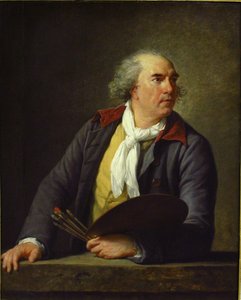
1733–1808, Frankrijk
Hubert Robert
Het Vroege Leven, de Familie en de Artistieke Vorming Geboren in Parijs in 1733, trad Hubert Robert een wereld binnen waarin de sociale status van zijn familie onlosmakelijk verbonden was met de dienstbaarheid aan anderen. Zijn vader, Nicolas Robert, bekleedde een positie in het huishouden van een vooraanstaand figuur, een connectie die uiteindelijk de weg zou vrijmaken voor de bewegingen van de jonge man door de hogere kringen van de Franse samenleving. Deze vroege stabiliteit vormde het fundament voor een formele opvoeding, die hij voortzette binnen de gestructureerde omgeving van het Collège de Navarre. Tegen 1751 had hij zijn studie bij de jezuïeten voltooid, waarmee hij een gedisciplineerde intellectuele achtergrond verwierf voordat hij zijn aandacht volledig op de beeldende kunsten richtte.
Ook van Hubert Robert
 The Pont du Gard1787
 The Finding of the Laocoön1773
 Le port de Ripetta
 PROJET D'AMENAGEMENT DE LA GRANDE GALERIE DU LOUVRE

Essays over Painters
 Top 10 Impressionistische Meesterwerken: Kunst die de Wereld Veranderde | OriginalUniqueArtOntdek de 10 meest iconische meesterwerken van het Impressionisme! Van Monet tot Renoir, leer over de kunstenaars, technieken & kleuren die…
 Hubert Robert: Picturing Ruins, Preserving Memory – A Study of Romantic Antiquarianism & Artistic InnovationExplore the captivating world of Hubert Robert, master of Romantic landscape painting & 'capriccio' ruins. Discover his historical context,…
 Emotion vs. Observation: A Guide to Romanticism and RealismMaster the differences between Romanticism and Realism through expert analysis. Discover the art of emotion versus observation now.