Dutch Golden Age · 1632
Heraklith (Gerard Dou, 1632)
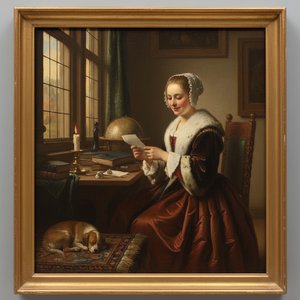
Gerard Dou (1613–1675) maakte Heraklith. Het dateert uit 1632. Het behoort tot de Dutch Golden Age-stroming. Het is gemaakt van Oil On Canvas. Het is te vinden in Hermitage Museum in Sint-Petersburg, Rusland. De afmetingen zijn 61 × 51 cm.
- 1632
- Oil On Canvas
- 61 × 51 cm
- Hermitage Museum, Sint-Petersburg

 Voorvertoning

 Met de hand geschilderd olieverfwerk
 Verstuur
 Delen
 Informatieblad


 Download
 Vergelijkbare items
 Röntgenonderzoek
 Diavoorstelling
 Vraag & antwoord

 Statistieken
Heraklith, in het kort
- Titel
- Heraklith
- Kunstenaar
- Gerard Dou (1613–1675)
- Geboren in [jaar]
- Leiden, Nederland
- Datum
- 1632
- Medium
- Oil On Canvas
- Afmetingen
- 61 × 51 cm
- Te zien in
- Hermitage Museum, Sint-Petersburg, Rusland
- Beweging
- Dutch Golden Age
- Periode
- Early Modern
- Onderwerp
- portrait, scholar, globe, knowledge, wisdom, age
Wat stelt Heraklith voor?
Heraklith: A Portrait of Scholarly Reflection
“Heraklith,” painted in 1632 by Gerrit Dou, stands as a testament to the Dutch Golden Age’s fascination with realism and psychological depth. More than just a depiction of an elderly man—likely a scholar or astronomer—it's a carefully constructed tableau designed to convey wisdom, contemplation, and the profound influence of knowledge.
- Subject Matter: The artwork portrays a dignified gentleman seated at a table before him, illuminated by candlelight. His gaze is downward, focused on a globe – a potent symbol representing exploration, scientific inquiry, and an awareness of the vastness of the universe.
- Style & Technique: Dou’s signature ‘fijnschilder’ style—characterized by meticulous detail and masterful chiaroscuro—is evident throughout. The artist employs subtle shading to sculpt the man's face and torso, creating a palpable sense of volume and texture. This technique elevates the portrait beyond mere representation, imbuing it with emotional resonance.
- Composition & Perspective: The oval frame lends an air of formality to the scene, while the shallow perspective draws the viewer’s eye directly to the central figure. Lines delineate facial features and clothing folds, guiding the gaze and reinforcing the composition's balance.
- Color Palette: Dominated by muted browns, creams, and dark reds, the color palette contributes to an atmosphere of solemn dignity. The subdued hues underscore the subject’s intellectual pursuits and evoke a feeling of quiet contemplation.
Exploring Dou’s Mastery of Light & Shadow
Gerrit Dou's unparalleled skill in chiaroscuro—the dramatic interplay between light and shadow—is arguably his most distinctive achievement. As seen prominently in “Heraklith,” this technique isn’t merely decorative; it serves to heighten the emotional impact of the portrait. The candlelight casts a soft glow upon the man’s face, highlighting wrinkles and emphasizing the contours of his features – details that reveal not only physical appearance but also the passage of time and experience.
- Symbolism: Beyond its aesthetic qualities, “Heraklith” carries significant symbolic weight. The globe represents intellectual curiosity and a desire to understand the world around us. It speaks to Dou’s belief in the transformative power of knowledge and invites viewers to consider the profound implications of scientific discovery.
- Historical Context: Painted during the Dutch Golden Age, “Heraklith” reflects the era's burgeoning interest in humanist ideals and its celebration of intellectual achievement. Dou’s work aligns with a broader artistic movement that sought to capture human psychology and emotion with unprecedented accuracy.
A Legacy of Detail & Emotion
"Heraklith" exemplifies Gerrit Dou’s dedication to capturing the essence of his subjects—both physically and psychologically. The artist's meticulous brushwork ensures that every nuance is rendered faithfully, creating a portrait that transcends mere likeness. It’s a piece that invites viewers to pause and contemplate the complexities of human experience, reminding us of the enduring beauty found in quiet reflection and intellectual pursuit.
- Collecting & Inspiration: Reproductions of “Heraklith” offer an opportunity to appreciate Dou's artistic genius and bring a touch of Dutch Golden Age elegance into any interior space. Explore similar artworks at WikiArt.org for further inspiration!
In welk museum bevindt Heraklith zich?
Hermitage Museum
Sint-Petersburg, Rusland
Oorsprong en geschiedenis van het Hermitage Museum De geschiedenis van het Hermitage Museum vindt haar oorsprong in het jaar 1764. Het fundament van deze prestigieuze instelling werd gelegd met de verwerving van een collectie van 225 schilderijen, aangekocht bij de Berlijnse koopman Johann Ernst Gotzkowsky. Het was de visionaire impuls van Catharina de Grote die deze collectie de aanzet gaf, waarmee zij de eerste contouren schetste van wat een monumentale aanwezigheid in Sint-Petersburg, Rusland, zou worden.


Hoogwaardige afbeeldingen van Heraklith

Publiek domein: de kunstenaar is overleden in 1675.
Andere formaten, uitsneden en citatie →Gerard Dou, Heraklith (1632), Hermitage Museum. Publiek domein
Vragen over Heraklith, beantwoord
In welk museum is het originele werk "Heraklith" te zien?
Het originele "Heraklith" door Gerard Dou wordt bewaard in Hermitage Museum, Sint-Petersburg, Rusland. Een reproductie maakt het mogelijk om het werk thuis tentoon te stellen.
In welk jaar werd "Heraklith" gemaakt?
"Heraklith" door Gerard Dou werd gecreëerd in 1632.
Met welk medium is "Heraklith" door Gerard Dou uitgevoerd?
Gerard Dou gebruikte de Oil On Canvas-techniek voor "Heraklith". De techniek bepaalt de materiële aard van het originele werk.
Wat zijn de afmetingen van het originele "Heraklith" door Gerard Dou?
De afmetingen van "Heraklith" door Gerard Dou zijn 61 x 51 cm. Reproducties kunnen in andere formaten worden besteld met behoud van dezelfde verhoudingen.
Wat stelt "Heraklith" door Gerard Dou voor?
De onderwerpen van "Heraklith" zijn portrait, scholar, globe, knowledge, wisdom, age, reflection, chiaroscuro.
Is de afbeelding van "Heraklith" door Gerard Dou vrij van auteursrecht?
"Heraklith" door Gerard Dou valt onder bevindt zich in het publiek domein - de auteursrechten zijn verlopen. Deze status bepaalt hoe de afbeelding van het werk mag worden gereproduceerd.
Aan welke kunstenaar wordt "Heraklith" toegeschreven?
"Heraklith" wordt toegeschreven aan Gerard Dou.
Bij welke kunststroming behoort "Heraklith" door Gerard Dou?
"Heraklith" is een werk uit de Dutch Golden Age. De stroming geeft de artistieke traditie aan waartoe het werk behoort.
In welke periode van de carrière van Gerard Dou valt "Heraklith"?
"Heraklith" behoort tot de Mature Period in de carrière van Gerard Dou. Deze classificatie plaatst het werk in de context van de ontwikkeling van de kunstenaar.
Over de kunstenaar, Gerard Dou

1613–1675, Nederland
Gerard Dou
Vroege jaren, familie en opleiding Gerrit Dou werd geboren op 7 april 1613 in Leiden, Nederland. Hij groeide op in een huishouden waar licht en glas de kern vormden van het dagelijks leven, aangezien zijn vader werkzaam was als glasblazer en glaspenseelwerker. Deze vroege blootstelling aan de delicate manipulatie van licht door glas heeft waarschijnlijk zijn ontwikkelende oog gevormd. Zijn vader gaf hem de eerste lessen en plantte een gevoel voor precisie in dat de rest van zijn jaren zou definiëren.
Ook van Gerard Dou
 A Fisherman's Wife1653
 Self-Portrait1640
 An Evening School1655
 Portrait of an old woman reading1635

Essays over Heraklith
 Master of Shadows: The Top 25 Iconic Artworks by Gustave DoréExplore Gustave Doré's legendary engravings and dark Romanticism. Discover all masterpieces on OriginalUniqueArt.com.
 Master of Emotion: The 25 Greatest Artworks by Rogier van der WeydenImmerse yourself in the profound emotion of Rogier van der Weyden. Explore 25 iconic Early Netherlandish masterpieces, from intricate textu…
 Gerrit Dou: Intimacy & Light in the Dutch Golden AgeExplore the exquisite world of Gerrit Dou, a master of Dutch Golden Age painting. Discover his intimate genre scenes, signature use of ligh…