- Home

- Reproductie van olieverfschilderij
- El Greco
- Christ as Saviour
 Print kopen Koop afbeelding in hoge resolutie
 Verstuur
 Delen
Delen
 Details bekijken
 Toevoegen aan favorieten

 Download
 Vergelijkbare werken
 Röntgenonderzoek
 Diavoorstelling
Christ as Saviour
 Acryl op canvas
- Wanddecoratie
- Baroque
 1610
1610- Renaissance
 99.0 x 79.0 cm
 Museo del Greco
 Lees meer
Handgemaakte olieverfreproductie
Met de hand geschilderd in olieverf op canvas in uw gewenste maat en lijst, op bestelling gemaakt door onze kunstenaars.




P118B $10

P118H $10

P118W $10

P438Z $10

P508JH $12

P508YH $12

P805H $10

P805Z $10

P919BZ $10

P919G $10

P919XJ $10

P959ZH $10

P968JZ $12

W106C $8

W218G $10

W218JH $8

W218Y $10

W307PJ $10

W316G $10

W316PJ $8

W316Y $10

W398PJ $8

W4111J $10

W500HY $15

W500JH $15

W692G $12

W849H $8

W940BG $15

W953PJ $8




Kies uit onze vooraf ingestelde maten die overeenkomen met de originele verhoudingen van het kunstwerk.

U kunt uw eigen afmetingen invoeren om in een specifieke lijst of ruimte te passen. Als de door u gekozen maat niet overeenkomt met de verhoudingen van het originele beeld, zullen we het kunstwerk bijsnijden of het schilderij uitbreiden met extra handgeschilderde elementen. Een digitale mockup wordt ter goedkeuring naar u verzonden voordat de productie begint.
Houd er rekening mee dat de preview op het scherm niet de werkelijke uitsnede of uitbreiding weergeeft. Alleen de mockup toont de uiteindelijke compositie nauwkeurig.
Hoewel aangepaste afmetingen mogelijk zijn, raden we aan een maat uit de vooraf gedefinieerde lijst te selecteren om de originele verhoudingen te behouden.
Na de bestelling zal het team van OriginalUniqueArt.com per e-mail contact opnemen voor instructies en een mockup-voorbeeld sturen.
Wereldwijde levering () binnen 3/4 weken in plaats van de standaard 5 weken. (21 juli). Geen concessies aan de kwaliteit.

Gratis wereldwijde expressverzending

Hoogwaardig linnen canvas

Volledige verzendverzekering

Garantie op terugbetaling van invoerrechten

Garantie op exacte kleurweergave

60 dagen retourbeleid (alleen bij defecten)

100% Geld-terug-garantie

Korting bij meerdere afnames
 De optie voor glas is alleen beschikbaar bij een formaat kleiner dan 110 cm.

Christ as Saviour
Techniek reproductie
Afmetingen reproductie
-


Eindtotaal
-
Beschrijving kunstwerk
Christ as Saviour by El Greco
Doménikos Theotokópoulos, universally known as El Greco (meaning “The Greek”), stands as one of the most singular figures in the history of Western art—a painter, sculptor, and architect who defied convention and forged a profoundly personal artistic vision. Born in Crete around 1541, under Venetian rule, El Greco’s early life was steeped in Byzantine traditions, shaping his formative training as an icon painter within the rigorous discipline of religious imagery and precise technique. This foundational influence would permeate his entire oeuvre, resulting in works that resonate with both spiritual depth and stylistic innovation.His journey to Italy around 1567 marked a pivotal moment, immersing him in the vibrant currents of Mannerism and Venetian Renaissance—movements characterized by dramatic poses, exaggerated proportions, and an exploration of psychological complexity. These influences coalesced into El Greco’s distinctive style: elongated figures rendered with luminous colors and imbued with an expressive dynamism that distinguishes him from his contemporaries.
- Style: Mannerist & Venetian Renaissance
- Medium: Oil on Canvas
- Dimensions: 99 x 79 cm
- Location: Museo de El Greco, Toledo, Spain
The Artistic Style of El Greco
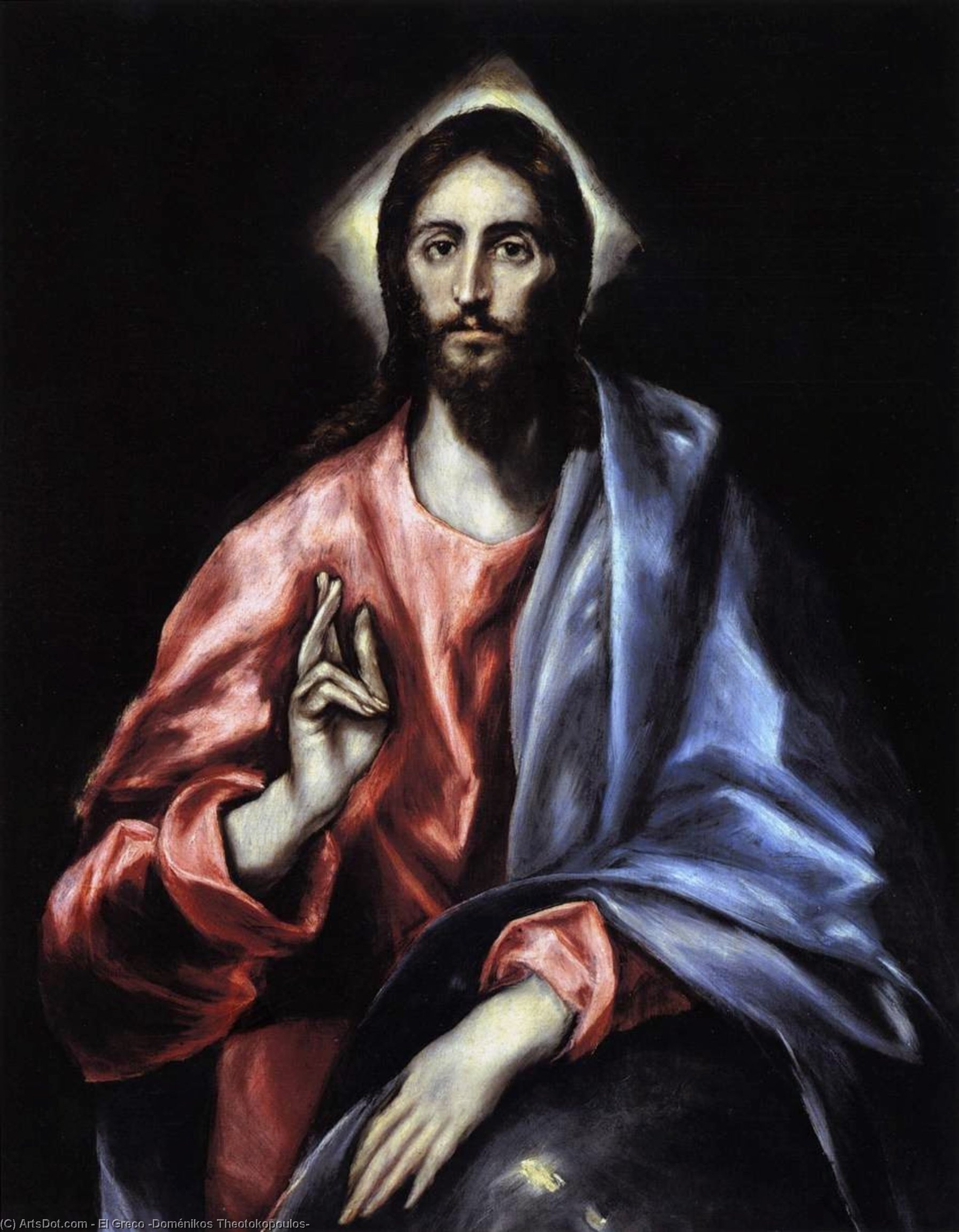
El Greco’s artistic signature lies in his masterful manipulation of form and color. He achieved an unparalleled sense of movement through elongated figures—a technique that departs dramatically from the idealized proportions prevalent in Renaissance art—creating images brimming with emotional intensity. The artist's palette is equally remarkable, favoring vibrant hues—particularly reds, yellows, and blues—that heighten the dramatic effect and convey a palpable spiritual fervor. This stylistic boldness reflects El Greco’s desire to transcend mere representation, aiming instead for an evocative portrayal of inner experience.Consider the pose of Christ in Christ as Saviour—his outstretched hand signifies blessing or pointing towards salvation, juxtaposed against a dark background that amplifies the figure’s prominence and underscores its symbolic significance.
Historical Context and Significance
El Greco's artistic output coincided with the Counter-Reformation, a period of fervent religious revival in Europe following the Protestant Reformation. This context profoundly influenced his work—particularly his depictions of saints and biblical narratives—driving him to explore themes of faith, suffering, and redemption with uncompromising conviction. His paintings are not merely aesthetically pleasing; they serve as powerful expressions of spiritual belief.Furthermore, El Greco’s influence extends far beyond the confines of his time. He anticipated developments in modern art movements such as Expressionism and Cubism—artists who sought to convey emotion and psychological states through distorted forms and unconventional color schemes—demonstrating a visionary grasp of artistic possibilities that foreshadowed future trends.
Symbolism and Emotional Impact
The darkened background surrounding Christ’s figure in Christ as Saviour is deliberately symbolic—representing the obscurity of divine grace and highlighting the luminosity of Christ’s face as a beacon of hope amidst darkness. The artist's meticulous attention to detail—particularly in rendering the folds of Christ’s robe—contributes to the painting’s palpable sense of realism, grounding its spiritual message in tangible form.
Ultimately, Christ as Saviour remains a testament to El Greco’s artistic genius—a masterpiece that embodies his singular style and invites contemplation on the profound mysteries of faith.
- Featured Technique: Light and Shadow Manipulation
- Color Palette: Vibrant Reds, Yellows & Blues
- Symbolism: Divine Grace, Redemption
For those seeking to experience El Greco’s artistic legacy firsthand, reproductions of Christ as Saviour are available at Museo de El Greco in Toledo, Spain. Explore more about El Greco’s life and work on Wikipedia: Wikipedia.
Biografie van de kunstenaar
Doménikos Theotokópoulos, called El Greco
Doménikos Theotokópoulos, known to the world as El Greco – “the Greek” – was a painter whose life and work defied easy categorization. Born in Crete, Greece (1541), his artistic journey took him through Venice and Rome before finding its ultimate expression in the spiritual heartland of Spain: Toledo. El Greco wasn’t merely a product of these places; he synthesized their influences into something wholly unique, a style that anticipated the emotional intensity of Expressionism and the fragmented forms of Cubism centuries later. His early training within the Byzantine tradition instilled in him a meticulous attention to detail and a profound understanding of religious iconography. This foundation, however, wouldn’t confine him. He signed his works in Greek, often appending “Krḗs” – Cretan – as a proud declaration of his origins, even as he ventured into new artistic territories. The seeds of his distinctive style were sown not just in technique but also in the fervent religious climate of his homeland and the rich tapestry of Venetian art.Early Life and Artistic Training
Doménikos Theotokópoulos was born in Fodele (modern Candia), Crete, which at that time belonged to the Republic of Venice. His father, Nikolaos Zacharias Kantakopoulos, was a wealthy merchant and administrator, providing him with a privileged upbringing. From a young age, Doménikos demonstrated an exceptional talent for drawing and painting, mastering the techniques of Byzantine icon painting – a tradition deeply rooted in Orthodox Christianity – under the tutelage of Eustathios Symonds, a renowned Cretan iconographer. This formative experience instilled in him a reverence for detail, a mastery of color palettes derived from Byzantine iconography, and a profound understanding of religious symbolism. The influence of Byzantium is palpable throughout his early oeuvre, particularly in works depicting saints and biblical figures rendered with serene dignity and luminous colors.Venetian Influence: Embracing Innovation
Around 1567, Doménikos moved to Venice, the epicenter of Renaissance artistic innovation. He immersed himself in the vibrant Venetian art scene, studying the masterpieces of Titian, Tintoretto, and Veronese – artists who had revolutionized painting with their mastery of color, composition, and dramatic lighting. Recognizing the limitations of Byzantine tradition alone, El Greco eagerly embraced the Venetian approach, loosening his brushwork and experimenting with oil paint—a medium previously unfamiliar to Cretan painters. This Venetian influence is vividly evident in *St. Sebastian* (1600), where anatomical detail blends seamlessly with an almost theatrical use of light and shadow. He absorbed the dynamism and expressive fervor characteristic of Venetian painting, preparing himself for a transformative encounter with Mannerism in Rome.Roman Years: Seeking Recognition Amidst Competition
In 1570, Doménikos traveled to Rome, hoping to gain recognition within the competitive artistic milieu of the papal court. However, he struggled to secure commissions and faced considerable challenges navigating the complex social dynamics of Roman art life. Despite his talent, El Greco’s style—characterized by elongated figures, distorted perspectives, and stylized draperies—didn't align with the prevailing aesthetic sensibilities of Mannerism, which favored elegance and refinement. Nevertheless, he continued to hone his craft, absorbing influences from artists like Giulio Romano and Andrea Palladio, broadening his artistic horizons and experimenting with new techniques. His Roman years were marked by a period of artistic introspection and stylistic evolution—a quest for personal expression amidst the pressures of patronage and artistic convention.Toledo: A Synthesis of Tradition and Vision
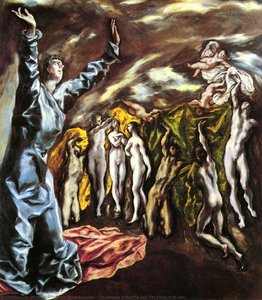
By 1577, Doménikos settled in Toledo, Spain – a city steeped in religious fervor during the Counter-Reformation and home to numerous churches eager for monumental artworks. This relocation proved decisive for El Greco’s artistic development. He received prestigious commissions from influential patrons—including Cardinal Juan Ruiz Zafra—and produced his most celebrated paintings: *The Burial of the Count of Orgaz*, *View of Toledo*, *The Opening of the Fifth Seal*, and *Christ Cleansing the Temple*. In Toledo, El Greco achieved a remarkable synthesis of Byzantine tradition and Venetian innovation, forging a style that was both deeply rooted in religious faith and strikingly original. His paintings are imbued with an emotional intensity unparalleled in Western art history—a testament to his profound spiritual vision and his unwavering commitment to artistic excellence. He became a symbol of Spanish Renaissance art, and his legacy continues to inspire artists today.
El Greco
1541 - 1614 , Griekenland
Belangrijkste feiten
- Artistic Movement Or Style: Renaissance en Barok
- Artists Who Influenced This Artist:
- Titian
- Tintoretto
- Date Of Birth: 1541
- Full Name: Doménikos Theotokópoulos
- Nationality: Grieks
- Notable Artworks:
- De Begrafenis van Graaf Orgaz
- Een uitzicht op Toledo
- Het Openen van de Vijfde Sleutel
- Place Of Birth: Crete, Greece
Gerelateerde artikelen

El Greco's Top 25 Meesterwerken: Kunst, Geschiedenis & Decoratie voor Uw Huis
Ontdek de top 25 meesterwerken van El Greco! Duik in het leven en werk van deze renaissance schilder, zijn spirituele kunst & dramatische stijl. Vind museumkwaliteit reproducties voor uw interieur op OriginalUniqueArt.com.

Claude Monet's Top 25 Meesterwerken: Kleur, Licht & Impressionisme | OriginalUniqueArt
Ontdek de 25 meest iconische werken van Claude Monet! Duik in de wereld van impressionisme, kleur en licht. Van Waterlelies tot Zonsopgang – bekijk de meesterwerken & vind perfecte kunst voor jouw interieur op OriginalUniqueArt.com.

Top 25 Meesterwerken: Kunstgeschiedenis herbeleven in de National Gallery London | OriginalUniqueArt
Ontdek de 25 meest iconische meesterwerken van de National Gallery London! Van Van Gogh tot Monet – leer het verhaal achter elk schilderij en vind perfecte kunst reproducties voor uw interieur. OriginalUniqueArt.com: museumkwaliteit prints & decoratie.
Top 25 Meesterwerken: Kunstcollectie Museum of Fine Arts, Boston | OriginalUniqueArt.nl
Ontdek de top 25 kunstwerken van het Museum of Fine Arts, Boston! Van Monet tot Rembrandt – verhalen achter iconische schilderijen, technieken & kleuren. Vind museumkwaliteit reproducties en interieurinspiratie op OriginalUniqueArt.com.
Marianne North's Top 25 Meesterwerken: Bloemenpracht & Reisverslagen | OriginalUniqueArt
Ontdek de top 25 schilderijen van Marianne North, een Victoriaanse kunstenares die reisverslagen vastlegde in prachtige botanische kunst. Bewonder kleurrijke tropische flora en bestel museumkwaliteit reproducties op OriginalUniqueArt.com. Interieurinspiratie & decoratieve prints.