Rococo · 1764
Soap Bubbles (Charles Amédée Philippe Van Loo, 1764)
Charles Amédée Philippe Van Loo (1719–1795) maakte Soap Bubbles. Het dateert uit 1764. Het behoort tot de Rococo-stroming. Het is gemaakt van Oil On Canvas. Het is te vinden in National Gallery of Art in Washington, Verenigde Staten. De afmetingen zijn 89 × 89 cm.
- 1764
- Oil On Canvas
- 89 × 89 cm
- National Gallery of Art, Washington

 Voorvertoning

 Met de hand geschilderd olieverfwerk
 Verstuur
 Delen
 Informatieblad


 Download
 Vergelijkbare items
 Röntgenonderzoek
 Diavoorstelling
 Vraag & antwoord

 Statistieken
Soap Bubbles, in het kort
- Titel
- Soap Bubbles
- Kunstenaar
- Charles Amédée Philippe Van Loo (1719–1795)
- Geboren in [jaar]
- Aix-en-Provence, Frankrijk
- Datum
- 1764
- Medium
- Oil On Canvas
- Afmetingen
- 89 × 89 cm
- Te zien in
- National Gallery of Art, Washington, Verenigde Staten
- Beweging
- Rococo
- Periode
- Early Modern
- Onderwerp
- children, soap bubbles, chair, mirror, portrait
Wat stelt Soap Bubbles voor?
A Moment Suspended in Time
In the delicate dance of light and air captured within Charles Amédée Philippe Van Loo’s Soap Bubbles, we find ourselves transported to the heart of the 18th-century Rococo era. This exquisite oil on canvas, painted in 1764, is far more than a mere depiction of childhood play; it is a masterclass in capturing the ephemeral. The scene centers on three children, their faces alight with the pure, unadulterated joy of a fleeting moment. As they blow iridescent spheres into the atmosphere, the bubbles catch the light, shimmering with a spectrum of colors that seem to defy the stillness of the frame. Van Loo employs a breathtaking trompe-l'oeil technique, presenting the children through what appears to be an oval window, creating an intimate sense of peering into a private, enchanted world.
The composition is balanced with a sophisticated grace characteristic of the French school. To the left, a solitary chair anchors the scene, while a mirror in the background provides a subtle depth, reflecting the room and expanding the viewer's perception of space. This clever use of reflection not only adds dimension but also invites us to contemplate the layers of reality presented within the painting. The soft, luminous textures of the children's clothing and the translucent quality of the bubbles demonstrate Van Loo’s extraordinary command over oil pigments, allowing him to manipulate light to create a sense of tactile softness and ethereal brilliance.
The Poignant Symbolism of the Vanitas
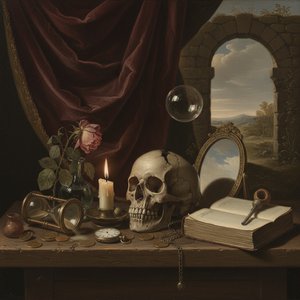
Beyond its surface beauty, Soap Bubbles carries a profound philosophical weight. To the discerning eye, the bubbles serve as a classic Vanitas motif—a symbolic reminder of the transience of life and the impermanence of earthly pleasures. Just as a soap bubble is beautiful yet destined to burst in an instant, so too are the moments of youth and human existence. This layer of melancholy hidden beneath the playful exterior provides a captivating tension that elevates the work from a charming genre painting to a deep meditation on mortality. It is this duality—the celebration of life alongside the recognition of its fragility—that gives the piece such enduring emotional resonance.
For collectors and decorators alike, this painting offers a unique opportunity to introduce a narrative of depth into a living space. The artwork’s historical prestige, having once graced the collections of the Prussian imperial family, brings an air of aristocratic elegance to any interior. Whether placed in a sun-drenched morning room or a sophisticated study, a high-quality reproduction of this masterpiece serves as a conversation piece that invites contemplation. It is a work that does not merely decorate a wall; it breathes life, history, and a touch of poetic nostalgia into the very soul of a home.
In welk museum bevindt Soap Bubbles zich?
National Gallery of Art
Washington, Verenigde Staten
Oorsprong en geschiedenis van de National Gallery of Art De National Gallery of Art werd in 1937 in privé werd opgericht voor het Amerikaanse volk. De oprichting volgde op een gezamenlijk besluit van het Amerikaanse Congres. De instelling werd bedacht door Andrew W.


Hoogwaardige afbeeldingen van Soap Bubbles

Publiek domein: de kunstenaar is overleden in 1795.
Andere formaten, uitsneden en citatie →Charles Amédée Philippe Van Loo, Soap Bubbles (1764), National Gallery of Art. Publiek domein
Vragen over Soap Bubbles, beantwoord
In welk museum is het originele werk "Soap Bubbles" te zien?
"Soap Bubbles" door Charles Amédée Philippe Van Loo is te zien in National Gallery of Art, Washington, Verenigde Staten. De vermelding van het museum heeft betrekking op het originele werk, niet op reproducties.
In welk jaar werd "Soap Bubbles" door Charles Amédée Philippe Van Loo gemaakt?
"Soap Bubbles" dateert uit 1764. Deze datum plaatst het werk binnen de carrière van Charles Amédée Philippe Van Loo en het betreffende tijdperk.
Met welke techniek is "Soap Bubbles" door Charles Amédée Philippe Van Loo vervaardigd?
Het medium van "Soap Bubbles" door Charles Amédée Philippe Van Loo is Oil On Canvas. Reproducties zijn bedoeld om de uitstraling van deze techniek weer te geven.
Wat zijn de afmetingen van het originele "Soap Bubbles"?
De afmetingen van "Soap Bubbles" door Charles Amédée Philippe Van Loo zijn 89 x 89 cm. Reproducties kunnen in andere formaten worden besteld met behoud van dezelfde verhoudingen.
Wat stelt "Soap Bubbles" voor?
"Soap Bubbles" door Charles Amédée Philippe Van Loo toont: children, soap bubbles, chair, mirror, portrait.
Is "Soap Bubbles" vrij van auteursrecht?
"Soap Bubbles" door Charles Amédée Philippe Van Loo valt onder bevindt zich in het publiek domein - de auteursrechten zijn verlopen. Deze status bepaalt hoe de afbeelding van het werk mag worden gereproduceerd.
Wie is de kunstenaar achter "Soap Bubbles"?
"Soap Bubbles" wordt toegeschreven aan Charles Amédée Philippe Van Loo.
Tot welke stijl behoort "Soap Bubbles"?
"Soap Bubbles" door Charles Amédée Philippe Van Loo behoort tot de Rococo-stroming. Deze stroming biedt de stilistische context van het werk.
Tot welke periode in de carrière van Charles Amédée Philippe Van Loo behoort "Soap Bubbles"?
"Soap Bubbles" vertegenwoordigt de Mature Period van Charles Amédée Philippe Van Loo.
Over de kunstenaar, Charles Amédée Philippe Van Loo

1719–1795, Frankrijk
Charles Amédée Philippe Van Loo
Charles Amédée Philippe Van Loo: Een Meester van Rococo-elegantie en Dramatisch Narratief De wereld van de 18e-eeuwse Franse kunst wordt vaak geassocieerd met opulente grandeur, ingewikkelde details en een diep gevoel van theatricaliteit. In het hart van deze levendige scène stond Charles Amédée Philippe Van Loo (1719 – 1795), een schilder wiens carrière decennia besloeg en een opmerkelijke variëteit aan onderwerpen omvatte—van allegorische scènes vol mythologische figuren tot opvallend realistische portretten die de essentie van zijn aristocratische opdrachtgevers vingen. Meer dan slechts een bekwame ambachtsman, was Van Loo een meesterlijke verhalenverteller die narratieven van macht, deugd en menselijk drama verweefde in elk canvas dat hij aanraakte. Geboren in Aix-en-Provence, begon de artistieke reis van Van Loo onder de begeleiding van zijn vader, Jean-Baptiste van Loo—zelf een gerespecteerd schilder—in Turijn en Rome.
Over Charles Amédée Philippe Van Loo Bekende werken van Charles Amédée Philippe Van Loo
Ook van Charles Amédée Philippe Van Loo
 Presumed Portrait of Livio Vernet (1747 - after 1827) lawyer, son of Joseph Vernet1750
 Amor is disarmed by Diana1750
 Erigone, also called Autumn1750
 The Satyrs1761

Essays over Soap Bubbles
 25 Must-See Masterpieces at the Kröller-Müller Museum: A Van Gogh PilgrimageExplore 25 iconic Van Gogh and modern masterpieces at Kröller-Müller Museum. Discover the full collection online at OriginalUniqueArt.com.
 Charles-André van Loo: A Study in Rococo Portraiture & the French Court's Artistic DynamicsExplore the elegant world of Charles-André van Loo, a master of Rococo portraiture at the French court. Discover his life, techniques, and …
 The Memento Mori Aesthetic: Decoding the Profound Symbolism of Vanitas ArtExplore the profound symbolism of Vanitas art. From Dutch Golden Age masterpieces to the haunting beauty of Memento Mori, uncover how class…