

 Verstuur
 Delen
Delen
 Details bekijken
 Gids
Gids

 Download
 Vergelijkbare items
 Diavoorstelling
 Statistieken
Salt Cellar (8)
 Gold Leaf
- Sculpture
- Mannerist Gold Smithery
 1540
1540 26.0 x 33.0 cm
 Kunsthistorisches Museum
 Lees meer
Giclée / Kunstafdrukken
Giclée- of canvasafdruk van museumkwaliteit met een snelle productie en flexibele afwerkingsmogelijkheden. ( Bestel handgeschilderde reproductie Schakel over naar digitale afbeeldingen)




































Kies uit onze vooraf ingestelde maten die overeenkomen met de originele verhoudingen van het kunstwerk.

Voer de gewenste breedte en hoogte in, passend bij uw lijst of muur. Een afdruk kan alleen worden ingekort en nooit groter worden gemaakt dan het origineel; een formaat met andere verhoudingen zal daarom een deel van de afbeelding verliezen. Wij sturen u een digitaal mockup ter goedkeuring voordat we tot drukwerk overgaan. De afbeelding op deze pagina toont niet de werkelijke uitsnede — dit is alleen te zien op het mockup.
Wereldwijde levering () binnen 2 weken in plaats van de standaard 4/5 weken. (27 oktober)

Gratis wereldwijde expressverzending

Hoogwaardig linnen canvas

Volledige verzendverzekering

Garantie op terugbetaling van invoerrechten

Garantie op exacte kleurweergave

Retourbeleid van 100 dagen (alleen bij defecten)

100% Geld-terug-garantie

Korting bij meerdere afnames
 De optie voor glas is alleen beschikbaar bij een formaat kleiner dan 110 cm.

Salt Cellar (8)
Giclée / Kunstafdrukken
Afmetingen reproductie
-


Eindtotaal
€ 71
A Gilded Echo of Myth and Power
Benvenuto Cellini's “Salt Cellar” (Saliera), completed in 1543 for King Francis I of France, isn’t merely a container for seasoning; it’s a shimmering embodiment of the Renaissance spirit—a testament to artistic ambition, technical mastery, and the potent symbolism that shaped European courts. More than just a beautiful object, this gold, enamel, and ivory sculpture invites us into a world of mythological allegory, royal power, and the very essence of human creativity. It's a piece that continues to captivate centuries later, offering a glimpse into the opulent heart of 16th-century France.
The story behind the Salt Cellar is as compelling as its appearance. Commissioned during Francis I’s reign, it represents a pivotal moment in Cellini's career – a shift from his established role as a coin maker to one of the most celebrated goldsmiths and sculptors of his time. The celler was originally designed for Cardinal Ippolito d'Este, but after being reworked by Cellini, it became a gift for King Francis I. The piece’s creation coincided with a period of intense artistic patronage in France, fueled by the king’s desire to elevate his court and project an image of unparalleled wealth and sophistication. The celler was intended not just as a functional object but as a powerful symbol of royal authority—a miniature world reflecting the grandeur of the French monarchy.
The Dance of Earth and Sea
At first glance, the Salt Cellar appears to be an intricate display of luxurious materials. However, beneath its shimmering surface lies a carefully constructed allegory. The sculpture’s central figures—Neptune, god of the sea, and Ceres, goddess of agriculture—are depicted in a dynamic embrace, reclining on a shell-shaped base. This pairing isn't accidental; it represents the fundamental forces that shaped Renaissance thought: the interplay between nature and civilization, abundance and restraint. Neptune, with his trident and surrounded by marine creatures, embodies the untamed power of the sea – a source of both sustenance and potential danger. Ceres, on the other hand, symbolizes the fertility of the earth, offering a bounty of grain and prosperity. The positioning of these figures—facing each other in a state of apparent conflict yet intertwined—suggests that true harmony can only be achieved through a delicate balance between opposing forces.
Further enriching this symbolic narrative are the details meticulously incorporated into the sculpture’s design. A miniature Ionic temple, representing Ceres' domain, stands at the base, while dolphins and sea horses frolic around Neptune, reinforcing his dominion over the ocean. The use of contrasting materials—the warm glow of gold against the cool sheen of enamel—adds to the visual drama and underscores the thematic tension between earth and sea. Cellini’s mastery lies not only in his technical skill but also in his ability to imbue a seemingly simple object with layers of meaning.
A Testament to Mannerist Art
The Salt Cellar is a quintessential example of Mannerism, a style that flourished during the late Renaissance. Characterized by elongated figures, dramatic poses, and an emphasis on elegance and sophistication, Mannerism rejected the idealized forms of High Renaissance art in favor of a more expressive and emotionally charged aesthetic. In this piece, Cellini’s figures are rendered with a heightened sense of dynamism—their limbs stretched and contorted into improbable positions—creating a visual effect that is both captivating and unsettling. The use of perspective and foreshortening adds to the sculpture's dramatic impact, drawing the viewer's eye towards the central figures and immersing them in their world.
Cellini’s innovative techniques are evident throughout the Salt Cellar. He employed a unique method of hammering gold into shape, creating intricate details with remarkable precision. The enamel work is equally impressive—vibrant colors and delicate patterns applied to the surface of the gold, adding depth and richness to the sculpture's overall appearance. The integration of ivory for the temple’s columns further demonstrates Cellini’s versatility as a goldsmith, showcasing his ability to master a wide range of materials and techniques.
A Legacy in Gold
Today, the Salt Cellar resides in the Kunsthistorisches Museum in Vienna, where it continues to inspire awe and admiration. Its theft in 2003 brought international attention to its beauty and value, but its subsequent recovery underscored its enduring significance as a masterpiece of Renaissance art. More than just a decorative object, the Salt Cellar represents a pivotal moment in artistic history—a testament to the creativity, ambition, and technical skill of Benvenuto Cellini. It’s a piece that invites us to contemplate the complex relationship between art, power, and symbolism, offering a timeless glimpse into the heart of the Renaissance.
Veelgestelde vragen
Zijn er werken die lijken op "Salt Cellar (8)"?
Ontdek vergelijkbare werken voor "Salt Cellar (8)" op de Vergelijkbare werken-pagina van dit kunstwerk.
Hoe populair is "Salt Cellar (8)" binnen Mannerist Gold Smithery?
Binnen de Mannerist Gold Smithery-stroming heeft "Salt Cellar (8)" een Iconic populariteitsniveau.
Wat is de dominante kleur van "Salt Cellar (8)" door Benvenuto Cellini?
De dominante kleur van "Salt Cellar (8)" door Benvenuto Cellini is Celadon (#c1b9a6).
Biografie kunstenaar
Benvenuto Cellini: Een Renaissance Genie
Benvenuto Cellini, geboren in Florence in 1500 en overleden in 1571, was meer dan slechts een kunstenaar; hij belichaamde de geest van de Italiaanse renaissance. Een goudsmid, beeldhouwer, soldaat, musicus én schrijver – zijn leven was een bruisende mix van passie, ambitie en avontuur, vastgelegd in een autobiografie die even kleurrijk is als zijn kunstwerken. Cellini staat symbool voor het maniërisme, een stijlperiode die volgde op de hoogrenaissance en zich kenmerkte door dramatische flair, complexe composities en een verfijnde elegantie.
Van Muziek naar Metaal: Een Artistieke Opleiding
Cellini’s jeugd was doordrenkt van muziek; zijn vader was een befaamd musicus en instrumentmaker. Aanvankelijk toonde hij zelf ook muzikale aanleg, maar op vijftienjarige leeftijd koesterde hij een onwrikbare passie voor het goudsmidwerk. Tegen de bedenkingen van zijn vader in, werd hij leerling bij Antonio di Sandro, beter bekend als Marcone. Deze beslissing zou zijn leven vormgeven. Zijn vroege jaren waren niet zonder tegenslag; een schermutseling op zestienjarige leeftijd leidde tot ballingschap uit Florence en een periode werken onder de goudsmid Fracastoro in Siena. Deze ervaringen, hoewel turbulent, scherpten zijn vaardigheden en versterkten zijn vastberadenheid.
Meesterwerken in Goud en Brons: De Kunst van Cellini
Cellini’s artistieke nalatenschap is rijk en divers. Zijn goudwerk, met name het beroemde zoutvat voor koning Franciscus I van Frankrijk, getuigt van een ongeëvenaarde beheersing van detail en compositie. Het zoutvat, nu te bewonderen in het Kunsthistorisches Museum in Wenen, is meer dan slechts een functioneel object; het is een sculpturale tour de force vol dynamische figuren en ingewikkelde decoraties. Maar Cellini’s bekendste werk blijft wellicht ‘Perseus met het hoofd van Medusa’, een bronzen beeldhouwwerk dat in de Loggia dei Lanzi in Florence staat. Dit monumentale kunstwerk, gegoten in één stuk – een technisch hoogstandje – toont Perseus triomfantelijk over de verslagen Medusa. De expressie van beweging en emotie die Cellini wist vast te leggen in het metaal is werkelijk adembenemend.
Een Leven Vol Avontuur: Soldaat, Schrijver en Self-Made Man
Cellini was niet alleen een kunstenaar; hij was ook een soldaat, die deelnam aan belegeringen en beweerde een cruciale rol te hebben gespeeld bij de verdediging van Rome. Hij was een begaafd musicus, die cornett en fluit bespeelde aan het pauselijk hof. Maar het is zijn autobiografie die hem echt onderscheidt. Dit openhartige en soms opschepperige verslag biedt een unieke kijk op de kunstwereld, de cultuur en de samenleving van de renaissance. Het boek is gevuld met anekdotes over beschermheren, rivalen en persoonlijke avonturen, waardoor we een levendig beeld krijgen van het leven van deze uitzonderlijke man.
Een Erfenis voor de Eeuwen: Cellini’s Plaats in de Geschiedenis
Benvenuto Cellini stierf in 1571 en liet een onuitwisbare indruk achter op de kunstwereld. Zijn technische vaardigheid, zijn artistieke innovatie en zijn boeiende autobiografie blijven kunstenaars en liefhebbers inspireren. Hij belichaamt het ideale van de renaissance: een veelzijdig genie, gedreven door ambitie en niet bang om zijn individualiteit te uiten. Zijn werken worden bewonderd om hun schoonheid, vakmanschap en dramatische kracht, waardoor hij terecht wordt beschouwd als een sleutelfiguur in de westerse kunstgeschiedenis.

Benvenuto Cellini
1500 - 1571 , Italië
Belangrijkste feiten
- Artistic Movement Or Style: Maniërisme
- Artists Who Influenced This Artist: ['Michelangelo']
- Date Of Birth: 1 november 1500
- Date Of Death: 13 februari 1571
- Full Name: Benvenuto Cellini
- Nationality: Italiaans
- Notable Artworks:
- Zoutvat
- Perseus met Medusa
- Leda en de Zwaan
- Place Of Birth: Florence, Italië
Gerelateerde artikelen
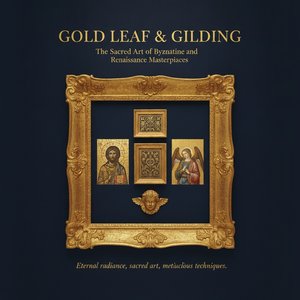
The Sacred Glow: Mastering Gold Leaf and Gilding in Byzantine Art
Explore the divine mastery of Byzantine gold leaf and gilding. Discover how ancient artisans used gold ground and mosaics to create celestial light, a timeless legacy of spiritual splendor and technical excellence in sacred art history.

Benvenuto Cellini: Renaissance Goldsmith, Sculptor & Master of Self-Fashioning
Explore the life & art of Benvenuto Cellini, Renaissance goldsmith & sculptor. Discover his iconic 'Perseus,' masterful techniques, and enduring legacy – a collector's essential guide.

Golden Splendor: An Editorial Journey Through Art's Most Radiant Masterpieces
Embark on a visual journey through the world's most radiant masterpieces. Discover how gold leaf, impasto textures, and gilded tones define luxury in fine art, from Byzantine icons to modern abstracts. Explore the eternal allure of gold in curated, museum-quality art collections.

Golden Glow: How to Use Metallic Gold Artworks to Elevate Your Home Decor with Timeless Luxury
Discover how to elevate your home with the timeless elegance of metallic gold artworks. From sculptural metal pieces to gilded oil paintings, learn expert interior design tips for integrating luxurious gold accents into your space with sophistication and grace.

The Allure of Gold in Art History: Symbolism, Technique & Cultural Significance
Explore the rich history of gold in art! Discover symbolism, techniques & cultural significance from ancient civilizations to Klimt's masterpieces. Expert insights for collectors at OriginalUniqueArt.
