Fauvism · 1911
Vegetable fields (August Macke, 1911)
August Macke (1887–1914) maakte Vegetable fields. Het dateert uit 1911. Het behoort tot de Fauvism-stroming. Het is gemaakt van Oil On Canvas. Het is te vinden in Kunstmuseum Bonn in Bonn, Duitsland. De afmetingen zijn 47 × 64 cm.
- 1911
- Oil On Canvas
- 47 × 64 cm
- Kunstmuseum Bonn

 Voorvertoning

 Met de hand geschilderd olieverfwerk
 Verstuur
 Delen
 Informatieblad


 Download
 Vergelijkbare items
 Röntgenonderzoek
 Diavoorstelling
 Vraag & antwoord

 Statistieken
Vegetable fields, in het kort
- Titel
- Vegetable fields
- Kunstenaar
- August Macke (1887–1914)
- Geboren in [jaar]
- Meschede, Duitsland
- Datum
- 1911
- Medium
- Oil On Canvas
- Afmetingen
- 47 × 64 cm
- Te zien in
- Kunstmuseum Bonn, Bonn, Duitsland
- Beweging
- Fauvism
- Onderwerp
- rural landscape, haystacks, blue flowers, path, roads, color field
Wat stelt Vegetable fields voor?
August Macke’s ‘Vegetable Fields’: A Fauvist Echo of Rural Melancholy
This captivating oil painting, “Vegetable Fields,” created in 1911 by August Macke, offers a potent glimpse into the burgeoning world of German Expressionism. Measuring 47 x 64 cm, this work transcends a simple depiction of a rural landscape; it’s an intensely felt experience rendered through bold color and simplified forms – hallmarks of the Fauvist movement. Macke, tragically cut short by the First World War at just 27, was already producing art that resonated with a raw emotionality, anticipating the full force of Expressionism while still retaining traces of Impressionist influence.
- Subject Matter: The scene unfolds in a stylized countryside, dominated by haystacks, fields ablaze with blue flowers, and a prominent pathway leading the viewer’s eye into the distance. This isn't a meticulous rendering of reality; rather, it’s an interpretation filtered through Macke’s emotional lens.
- Style & Technique: The painting firmly embraces Fauvist principles – prioritizing color over precise representation. Thick impasto brushstrokes build texture and physicality onto the canvas, creating a vibrant, almost tactile surface. Lines are deliberately expressive, guiding the viewer's gaze and contributing to the overall sense of movement.
Decoding the Emotional Landscape
Macke’s use of color is particularly striking. The dominant blues and greens evoke a feeling of tranquility, yet they’re punctuated by jarring yellows and reds, creating an underlying tension. This deliberate dissonance reflects the anxieties and uncertainties of the era – a world on the cusp of profound change. The flattened perspective, prioritizing emotional impact over realistic spatial illusion, further intensifies this effect. It's as if Macke is inviting us to step into his subjective experience, rather than simply observing a landscape.
- Symbolism: The diverging paths in the distance are rich with symbolic potential, representing choices, journeys, or perhaps the fragmented nature of modern life. The isolated setting contributes to a sense of melancholy, hinting at themes of loneliness and contemplation.
- Historical Context: Created in 1911, “Vegetable Fields” sits squarely within the period of experimentation that preceded the full flowering of German Expressionism. Macke’s work foreshadowed the movement's emphasis on subjective emotion and distorted form, while still retaining a connection to earlier artistic traditions.
A Masterclass in Texture and Light
The painting’s technical brilliance lies not just in its color palette but also in Macke’s masterful manipulation of light and texture. The diffuse lighting suggests an overcast day, eliminating harsh shadows and contributing to the overall mood of quiet contemplation. The thick impasto technique – applying paint thickly to create a textured surface – is particularly evident in the haystacks and fields, adding a remarkable physicality to the composition. This deliberate roughness further emphasizes the emotional intensity of the work.
Collecting this Powerful Image
A hand-painted reproduction of “Vegetable Fields” offers an exceptional opportunity to bring this evocative artwork into your home or office. OriginalUniqueArt’s meticulous reproductions capture the essence of Macke's vision, faithfully recreating the painting’s vibrant colors and expressive brushwork. This piece is more than just a decoration; it’s a window into the soul of a brilliant artist and a poignant reflection on the human condition.
In welk museum bevindt Vegetable fields zich?
Kunstmuseum Bonn
Bonn, Duitsland
Een Heiligdom van Expressie: De Ziel van het Kunstmuseum Bonn Gelegen in het historische hart van Bonn, een stad waar de echo's van Beethovens composities nog in de lucht hangen, ligt het Kunstmuseum Bonn —een diepgaand toevluchtsoord voor wie op zoek is naar de rauwe, emotionele kracht van het modernisme. Een voet binnen deze instelling zetten is een reis door de turbulente maar prachtige psyche van de twintigste eeuw. Geboren uit de noodzaak om niet alleen muren, maar ook een culturele identiteit te herbouwen tijdens het transformerende tijdperk van de naoorlogse wederopbouw, is het museum sindsdien uitgegroeid tot een wereldwijd baken voor het Rijnlands Expressionisme .

Hoogwaardige afbeeldingen van Vegetable fields

Publiek domein: de kunstenaar is overleden in 1914.
Andere formaten, uitsneden en citatie →August Macke, Vegetable fields (1911), Kunstmuseum Bonn. Publiek domein
Vragen over Vegetable fields, beantwoord
Waar is "Vegetable fields" door August Macke tegenwoordig te zien?
Het originele werk "Vegetable fields" is te bewonderen in Kunstmuseum Bonn, Bonn, Duitsland.
In welk jaar werd "Vegetable fields" door August Macke gemaakt?
"Vegetable fields" dateert uit 1911. Deze datum plaatst het werk binnen de carrière van August Macke en het betreffende tijdperk.
Met welk medium is "Vegetable fields" door August Macke uitgevoerd?
Het medium van "Vegetable fields" door August Macke is Oil On Canvas. Reproducties zijn bedoeld om de uitstraling van deze techniek weer te geven.
Wat zijn de werkelijke afmetingen van "Vegetable fields" door August Macke?
Het originele werk "Vegetable fields" door August Macke heeft de afmetingen 47 x 64 cm.
Wat stelt "Vegetable fields" door August Macke voor?
"Vegetable fields" door August Macke toont: rural landscape, haystacks, blue flowers, path, roads, color field, expressionism, geometric forms.
Is "Vegetable fields" vrij van auteursrecht?
Wat betreft het auteursrecht valt "Vegetable fields" onder bevindt zich in het publiek domein - de auteursrechten zijn verlopen.
Aan welke kunstenaar wordt "Vegetable fields" toegeschreven?
De kunstenaar achter "Vegetable fields" is August Macke. Het werk is gecatalogiseerd onder de naam van August Macke.
Bij welke kunststroming behoort "Vegetable fields" door August Macke?
"Vegetable fields" is een werk uit de Fauvism. De stroming geeft de artistieke traditie aan waartoe het werk behoort.
Tot welke periode in de carrière van August Macke behoort "Vegetable fields"?
"Vegetable fields" vertegenwoordigt de Mature Period van August Macke.
Over de kunstenaar, August Macke
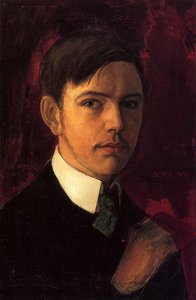
1887–1914, Duitsland
August Macke
Vroege jaren, familie en opleiding Het verhaal van August Macke begint in het Duitse stadje Meschede, waar hij op 3 januari 1887 werd geboren. Hij was de enige zoon van August Friedrich Hermann Macke, een aannemer en amateurkunstenaar, en Maria Florentine. Zijn jeugd werd gevormd door de wisselende fortuinen van het bedrijf van zijn vader, wat de familie naar Keulen en later naar Bonn bracht. Al als kleine jongen was de drang naar visuele expressie duidelijk voelbaar; hij bracht zijn vroege jaren door met het schetsen en ontwerpen van decors voor schooltoneelstukken, waarmee hij al een manier vond om zijn omgeving op papier te vertalen, lang voordat hij ooit een formele academie zou betreden.
Ook van August Macke
 Vrouw in een groene jas1913
 Bathing Girls with Town in Background1913
 De Hut1913
 Portrait of the Artist's Wife with Hat1909

Essays over Vegetable fields
 August Macke: Expressionist Visions of Harmony & Modern LifeExplore the vibrant Expressionist paintings of August Macke (1887-1914). Discover his key role in Der Blaue Reiter, Fauvist influences, and…
 Top 10 Expressionistische Meesterwerken: Kunst die Échte Emotie Spreekt | OriginalUniqueArt.nlOntdek de 10 meest iconische Expressionistische meesterwerken! Van Munch's 'De Schreeuw' tot Kandinsky's abstractie. Leer over de kunstenaa…
 Brushes of Anguish: The Psychological Landscape of Emotional Distress in Post-Impressionist ArtExplore the profound psychological depth of Post-Impressionist masters. Discover how color and form mirror human emotion.