Expressionism · 1914
Tightrope walker (August Macke, 1914)
August Macke (1887–1914) maakte Tightrope walker. Het dateert uit 1914. Het behoort tot de Expressionism-stroming. Het is gemaakt van Acrylic On Canvas. Het is te vinden in Kunstmuseum Bonn in Bonn, Duitsland. De afmetingen zijn 82 × 60 cm.
- 1914
- Acrylic On Canvas
- 82 × 60 cm
- Kunstmuseum Bonn

 Voorvertoning

 Met de hand geschilderd olieverfwerk
 Verstuur
 Delen
 Informatieblad


 Download
 Vergelijkbare items
 Röntgenonderzoek
 Diavoorstelling
 Vraag & antwoord

 Statistieken
Tightrope walker, in het kort
- Titel
- Tightrope walker
- Kunstenaar
- August Macke (1887–1914)
- Geboren in [jaar]
- Meschede, Duitsland
- Datum
- 1914
- Medium
- Acrylic On Canvas
- Afmetingen
- 82 × 60 cm
- Te zien in
- Kunstmuseum Bonn, Bonn, Duitsland
- Beweging
- Expressionism
- Onderwerp
- circus, performance, tightrope, color, harmony, landscape
Wat stelt Tightrope walker voor?
August Macke: A Symphony of Color Amidst Modern Anxiety
August Robert Ludwig Macke (1887-1914), a name etched in the annals of German Expressionism, embodies the poignant beauty born from fleeting moments and shadowed realities. His tragically premature demise during World War I robbed the art world of a prodigious talent—one who relentlessly pursued new artistic horizons while simultaneously grappling with profound existential questions. Macke’s journey began in Meschede, Westphalia, where he absorbed the influences of Impressionism and Post-Impressionism before decisively embracing Fauvist color palettes and Orphic abstraction, cementing his place as a pivotal figure within Der Blaue Reiter—a revolutionary artistic collective dedicated to exploring psychological landscapes and challenging conventional aesthetic norms.- Subject Matter: Macke’s canvases frequently depict scenes of rural life – farmers tending their fields, children playing outdoors – yet these seemingly idyllic subjects are imbued with an underlying tension reflecting the anxieties of a rapidly changing era. The tightrope walker embodies this duality; he performs his task with grace and precision against a backdrop of towering buildings, symbolizing humanity's precarious balance between tradition and progress.
- Style: Macke’s distinctive style is characterized by bold simplification and flattened perspective—techniques borrowed from Fauvist painters like Matisse. He eschewed meticulous detail in favor of expressive brushstrokes that prioritize color and tonal harmony, creating images brimming with vitality and emotional resonance.
Technique: Bold Color & Textured Surfaces
Macke’s masterful manipulation of pigment is central to his artistic vision. Utilizing thick impasto—a technique involving applying paint in textured layers—he achieved remarkable depth and luminosity, capturing the physicality of the subject matter with palpable immediacy. His color choices are deliberately vibrant and unrestrained, eschewing naturalistic hues for emotionally charged shades that convey mood and atmosphere. The use of complementary colors – blues against reds, yellows against greens – intensifies visual impact and contributes to the overall dynamism of his compositions.- Color Palette: Macke’s palette leans heavily into warm tones—ochres, reds, yellows—contrasting sharply with cooler blues and greens. This deliberate juxtaposition underscores the tension between stability and disruption inherent in the depicted environment.
- Brushwork: Macke's brushstrokes are loose and energetic, conveying movement and spontaneity. He employed a technique known as “Alla Prima,” applying paint directly onto the canvas without underpainting—a bold decision that maximized textural richness and expressive potential.
Historical Context & Symbolism: Facing Uncertainty
Macke’s artistic output coincided with the turbulent years leading up to World War I, a period marked by social unrest and intellectual ferment. The Expressionist movement sought to articulate the psychological realities of the time—the anxieties surrounding impending conflict, the disillusionment following Nietzschean philosophy—and Macke's work reflects this preoccupation. The tightrope walker itself serves as a potent symbol: representing precariousness, balance, and the constant struggle for survival amidst overwhelming forces. It speaks to the human condition – vulnerable yet striving for mastery – mirroring the broader anxieties of a society grappling with profound transformations.Emotional Impact & Legacy
“Tightrope walker” transcends mere visual representation; it resonates deeply with viewers through its evocative color palette and expressive brushwork. Macke’s ability to convey emotion—a palpable sense of tension mingled with beauty—solidifies his position as one of the most influential artists of his generation. His legacy continues to inspire contemporary painters and designers who appreciate the power of bold color and textural innovation, reminding us that art can illuminate not only what we see but also what we feel – a testament to Macke’s enduring artistic brilliance.In welk museum bevindt Tightrope walker zich?
Kunstmuseum Bonn
Bonn, Duitsland
Een Heiligdom van Expressie: De Ziel van het Kunstmuseum Bonn Gelegen in het historische hart van Bonn, een stad waar de echo's van Beethovens composities nog in de lucht hangen, ligt het Kunstmuseum Bonn —een diepgaand toevluchtsoord voor wie op zoek is naar de rauwe, emotionele kracht van het modernisme. Een voet binnen deze instelling zetten is een reis door de turbulente maar prachtige psyche van de twintigste eeuw. Geboren uit de noodzaak om niet alleen muren, maar ook een culturele identiteit te herbouwen tijdens het transformerende tijdperk van de naoorlogse wederopbouw, is het museum sindsdien uitgegroeid tot een wereldwijd baken voor het Rijnlands Expressionisme .

Hoogwaardige afbeeldingen van Tightrope walker

Publiek domein: de kunstenaar is overleden in 1914.
Andere formaten, uitsneden en citatie →August Macke, Tightrope walker (1914), Kunstmuseum Bonn. Publiek domein
Vragen over Tightrope walker, beantwoord
Waar is "Tightrope walker" door August Macke tegenwoordig te zien?
"Tightrope walker" door August Macke is te zien in Kunstmuseum Bonn, Bonn, Duitsland. De vermelding van het museum heeft betrekking op het originele werk, niet op reproducties.
In welk jaar werd "Tightrope walker" gemaakt?
"Tightrope walker" door August Macke werd gemaakt in 1914.
Met welk medium is "Tightrope walker" door August Macke uitgevoerd?
Het medium van "Tightrope walker" door August Macke is Acrylic On Canvas. Reproducties zijn bedoeld om de uitstraling van deze techniek weer te geven.
Wat zijn de werkelijke afmetingen van "Tightrope walker" door August Macke?
Het originele werk "Tightrope walker" door August Macke heeft de afmetingen 82 x 60 cm.
Wat wordt er afgebeeld in "Tightrope walker" door August Macke?
De onderwerpen van "Tightrope walker" zijn circus, performance, tightrope, color, harmony, landscape, people.
Is de afbeelding van "Tightrope walker" door August Macke vrij van auteursrecht?
Wat betreft het auteursrecht valt "Tightrope walker" onder bevindt zich in het publiek domein - de auteursrechten zijn verlopen.
Wie is de kunstenaar achter "Tightrope walker"?
"Tightrope walker" wordt toegeschreven aan August Macke.
Bij welke kunststroming behoort "Tightrope walker" door August Macke?
De kunststroming die verbonden is aan "Tightrope walker" door August Macke is Expressionism. Deze classificatie plaatst het werk binnen een context van verwante kunstenaars en kunstwerken.
Tot welke periode in de carrière van August Macke behoort "Tightrope walker"?
Binnen de carrière van August Macke valt "Tightrope walker" in de Mature Period. Deze fase helpt om het werk te vergelijken met andere werken van de kunstenaar.
Over de kunstenaar, August Macke
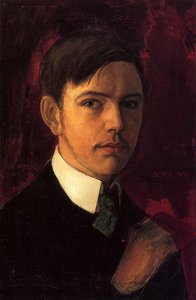
1887–1914, Duitsland
August Macke
Vroege jaren, familie en opleiding Het verhaal van August Macke begint in het Duitse stadje Meschede, waar hij op 3 januari 1887 werd geboren. Hij was de enige zoon van August Friedrich Hermann Macke, een aannemer en amateurkunstenaar, en Maria Florentine. Zijn jeugd werd gevormd door de wisselende fortuinen van het bedrijf van zijn vader, wat de familie naar Keulen en later naar Bonn bracht. Al als kleine jongen was de drang naar visuele expressie duidelijk voelbaar; hij bracht zijn vroege jaren door met het schetsen en ontwerpen van decors voor schooltoneelstukken, waarmee hij al een manier vond om zijn omgeving op papier te vertalen, lang voordat hij ooit een formele academie zou betreden.
Ook van August Macke
 Vrouw in een groene jas1913
 Bathing Girls with Town in Background1913
 De Hut1913
 Portrait of the Artist's Wife with Hat1909
Essays over Tightrope walker
 The Magic of Impasto: Capturing Light and Tactile Depth in Impressionist MasterpiecesDiscover the breathtaking beauty of impasto. Explore how Impressionist masters used thick, textured brushstrokes to capture light and emoti…
 Fauvism vs German Expressionism: Distinguishing Color and EmotionMaster the differences between Fauvism and German Expressionism through expert analysis. Learn to decode the emotion behind the color today.
 August Macke: Expressionist Visions of Harmony & Modern LifeExplore the vibrant Expressionist paintings of August Macke (1887-1914). Discover his key role in Der Blaue Reiter, Fauvist influences, and…