Romanticism · 1890
Honeymoon (Arnold Böcklin, 1890)
Arnold Böcklin (1827–1901) maakte Honeymoon. Het dateert uit 1890. Het behoort tot de Romanticism-stroming. Het is gemaakt van Oil On Canvas. Het is te vinden in Städel Museum in Frankfurt, Duitsland. De afmetingen zijn 72 × 52 cm.
- 1890
- Oil On Canvas
- 72 × 52 cm
- Städel Museum, Frankfurt

 Voorvertoning

 Met de hand geschilderd olieverfwerk
 Verstuur
 Delen
 Informatieblad


 Download
 Vergelijkbare items
 Röntgenonderzoek
 Diavoorstelling
 Vraag & antwoord

 Statistieken
Honeymoon, in het kort
- Titel
- Honeymoon
- Kunstenaar
- Arnold Böcklin (1827–1901)
- Geboren in [jaar]
- Bazel, Zwitserland
- Datum
- 1890
- Medium
- Oil On Canvas
- Afmetingen
- 72 × 52 cm
- Te zien in
- Städel Museum, Frankfurt, Duitsland
- Beweging
- Romanticism
- Periode
- 19th Century
- Onderwerp
- romantic landscape, mountain view, intimate scene, atmospheric art, detailed texture, ethereal mood
Wat stelt Honeymoon voor?
A Moment of Sublime Romance: Arnold Böcklin’s “Honeymoon”
Arnold Böcklin's "Honeymoon," painted in 1890, is more than just a picturesque landscape; it’s a carefully constructed meditation on love, aspiration, and the profound connection between humanity and nature. Measuring 72 x 52 cm, this oil-on-canvas work exemplifies Böcklin's signature style within the Symbolist movement – a style characterized by its evocative mood, symbolic resonance, and meticulous attention to detail. The scene depicts a young couple perched atop a rugged rock formation, overlooking a vast, hazy expanse that speaks of both beauty and mystery. It’s a tableau designed not merely to represent a romantic encounter but to evoke a deeply felt emotion within the viewer.
Romanticism's Embrace: Composition and Technique
- Compositional Strength: The figures, centrally placed yet subtly distanced, draw the eye immediately, establishing a powerful focal point. The horizontal thrust of the rocky outcrop anchors the scene while simultaneously directing the gaze towards the distant landscape. This deliberate arrangement creates a sense of depth and stability, crucial elements within Böcklin’s approach.
- Meticulous Brushwork: Böcklin's technique is immediately apparent in the incredibly detailed brushwork. Layer upon layer of oil paint has been skillfully applied to build up the textures of the stone – rough, weathered, and undeniably ancient – as well as the flowing drapery of the woman’s dress and the delicate strands of her hair. This painstaking process imbues the painting with a remarkable tactile quality.
- Atmospheric Perspective: The use of atmospheric perspective—the subtle blurring of details in the background to suggest distance—further enhances the illusion of depth, transporting the viewer into this serene, almost dreamlike setting.
Symbolic Layers: Interpretation and Meaning
“Honeymoon” is rich with symbolic meaning, reflecting Böcklin’s fascination with themes of mortality, mythology, and the human condition. The elevated position of the figures on the rocky outcrop can be interpreted as a representation of aspiration – a desire to reach for something beyond the mundane. The vast landscape behind them symbolizes the immensity of emotion or experience, suggesting that love is both intensely personal and profoundly connected to the wider world. The muted color palette—browns, ochres, and greens—contributes to the painting’s melancholic yet hopeful mood, reminiscent of Romanticism's exploration of intense feelings and the sublime.
A Masterpiece of the Symbolist Era
Painted in 1890, “Honeymoon” stands as a testament to Arnold Böcklin’s mastery of the Symbolist style. His ability to capture not just visual beauty but also profound emotional and symbolic resonance is evident in every detail. This artwork offers a glimpse into the heart of the Symbolist movement – a movement that sought to express ideas and emotions through evocative imagery, rather than literal representation. A hand-painted reproduction of “Honeymoon” would bring this timeless piece into any interior space, offering a touch of Romantic elegance and contemplative beauty.
In welk museum bevindt Honeymoon zich?
Städel Museum
Frankfurt, Duitsland
Oorsprong en geschiedenis van het Städel Museum De wortels van het Städel Museum gaan terug naar de persoonlijke collectie van Johann Friedrich Städel, een bankier uit Frankfurt en een ware mecenas van de kunsten. Wat in 1815 begon als een burgerlijke stichting, werd in 1817 formeel een instituut. Het diepste verlangen van Städel was om zijn kostbare bezittingen te bewaren en het publiek toegang te bieden tot de kunstwerken die hij gedurende zijn reizen en zakelijke avonturen had verzameld.


Hoogwaardige afbeeldingen van Honeymoon

Publiek domein: de kunstenaar is overleden in 1901.
Andere formaten, uitsneden en citatiegegevens →Arnold Böcklin, Honeymoon (1890), Städel Museum. Publiek domein
Veelgestelde vragen over Honeymoon
Waar is "Honeymoon" door Arnold Böcklin tegenwoordig te zien?
Het originele "Honeymoon" door Arnold Böcklin wordt bewaard in Städel Museum, Frankfurt, Duitsland. Een reproductie maakt het mogelijk om het werk thuis tentoon te stellen.
In welk jaar werd "Honeymoon" door Arnold Böcklin gemaakt?
"Honeymoon" door Arnold Böcklin werd gemaakt in 1890.
Met welke techniek is "Honeymoon" door Arnold Böcklin vervaardigd?
Het medium van "Honeymoon" door Arnold Böcklin is Oil On Canvas. Reproducties zijn bedoeld om de uitstraling van deze techniek weer te geven.
Wat zijn de afmetingen van het originele "Honeymoon" door Arnold Böcklin?
De afmetingen van "Honeymoon" door Arnold Böcklin zijn 72 x 52 cm. Reproducties kunnen in andere formaten worden besteld met behoud van dezelfde verhoudingen.
Wat stelt "Honeymoon" voor?
De onderwerpen van "Honeymoon" zijn romantic landscape, mountain view, intimate scene, atmospheric art, detailed texture, ethereal mood, symbolism, vintage painting.
Behoort "Honeymoon" door Arnold Böcklin tot het publiek domein?
Wat betreft het auteursrecht valt "Honeymoon" onder bevindt zich in het publiek domein - de auteursrechten zijn verlopen.
Wie heeft "Honeymoon" gemaakt?
"Honeymoon" is gemaakt door Arnold Böcklin. De informatie op deze pagina beschrijft het originele werk van Arnold Böcklin.
Tot welke stijl behoort "Honeymoon"?
"Honeymoon" door Arnold Böcklin behoort tot de Romanticism-stroming. Deze stroming biedt de stilistische context van het werk.
Uit welke fase van de carrière van Arnold Böcklin is "Honeymoon"?
"Honeymoon" behoort tot de Mature Period in de carrière van Arnold Böcklin. Deze classificatie plaatst het werk in de context van de ontwikkeling van de kunstenaar.
Over de kunstenaar, Arnold Böcklin
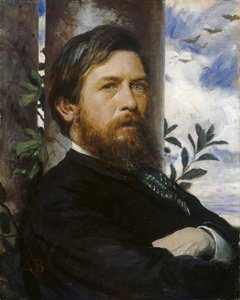
1827–1901, Zwitserland
Arnold Böcklin
De Schaduw van het Eiland Basel, Zwitserland, vormt het vertrekpunt voor een leven dat wordt gedefinieerd door de spanning tussen het tastbare en het spectrale. Geboren op 16 oktober 1827, als zoon van Christian Frederick Böcklin en Ursula Lippe, zou de jonge man zich uiteindelijk bewegen van de zijdehandel van zijn vader naar de rigoureuze zalen van de Düsseldorf Academy. Onder de begeleiding van Schirmer begon hij de taal van het landschap te absorberen, een vaardigheid die later zou worden gebruikt om de geografie van de menselijke ziel in kaart te brengen. Hij schilderde niet louter decor, hij creëerde werelden waarin het klassieke en het macabere met elkaar botsen.
Ook van Arnold Böcklin
 Het eiland der doden (Eerste versie)1880
 Zelfportret met de dood die viool speelt
 De Oorlog1896
 Eiland der Doden (Versie 5)1886

Essays over Honeymoon
 German artworks of the 1890sGerman Symbolism in the 1890s features masterpieces by Franz von Stuck, Wilhelm Leibl, and Fritz von Uhde. View the full collection at Orig…
 Beauty or Meaning? Distinguishing Aestheticism from SymbolismMaster the nuances between Aestheticism and Symbolism with our expert art history guide. Learn to decode the secrets of these movements now.
 Swiss artworks of the 1890sSwiss Symbolism in the 1890s features the iconic works of Félix Vallotton and Arnold Hodler. View the full collection online at OriginalUni…