School of Paris · 1928
Rita van Leer (André Derain, 1928)
André Derain (1880–1954) maakte Rita van Leer. Het dateert uit 1928. Het behoort tot de School of Paris-stroming. Het is gemaakt van Oil On Panel. De afmetingen zijn 41 × 34 cm.
- 1928
- Oil On Panel
- 41 × 34 cm

 Voorvertoning

 Met de hand geschilderd olieverfwerk
 Verstuur
 Delen
 Informatieblad


 Download
 Vergelijkbare items
 Röntgenonderzoek
 Diavoorstelling
 Vraag & antwoord

 Statistieken
Rita van Leer, in het kort
- Titel
- Rita van Leer
- Kunstenaar
- André Derain (1880–1954)
- Geboren in [jaar]
- Chatou, Frankrijk
- Datum
- 1928
- Medium
- Oil On Panel
- Afmetingen
- 41 × 34 cm
- Beweging
- School of Paris
- Periode
- Modern
- Onderwerp
- woman, portrait, face, shoulders, gray, black
Wat stelt Rita van Leer voor?
The Portrait of Rita van Leer
In this intimate portrait, André Derain turns his attention to Rita van Leer. Created about 1928, the work moves away from the loud colorism of his earlier years, focusing instead on the quiet presence of the sitter. There is a certain stillness here, a moment captured in a way that prioritizes her character over a mere photographic likeness. She meets the viewer with a directness that feels both personal and somewhat guarded.
André Derain captures the subject with an expressive likeness, favoring the essence of her personality over rigid, academic precision. The portrait focuses on the head and shoulders, stripping away unnecessary distractions to ensure the viewer's attention remains fixed upon her gaze. It is a study of a person rather than a mere likeness, offering a glimpse into a specific, fleeting moment of her life.
Composition and Visual Elements
The composition is centered entirely upon the woman’s face, which occupies the majority of the frame. Presented in a close-up view, the subject's head and shoulders emerge from a dark, minimalist background. This lack of environmental detail ensures that the viewer's attention remains fixed on the sitter. Her head is slightly tilted, a subtle movement that introduces a sense of dynamism to an otherwise still moment.
There is a directness in her gaze, as she looks straight toward the viewer. This connection is established through the careful placement of her features and the use of tonal variations rather than sharp, photographic lines. Light and shadow work together to define the contours of her face, creating a sense of three-dimensionality through the layering of different shades.
Technique and Artistic Style
The work is characteristic of early modern art, leaning into the expressive possibilities of Fauvism and Expressionism. Rather than seeking photographic accuracy, the artist employs a loose and gestural application of paint to capture the sitter. There is a palpable sense of immediacy here, driven by the visible brushstrokes that define the form. This approach prioritizes the emotional essence of the subject over a strictly realistic representation.
One notices how the artist uses short, choppy strokes to build up the features of the face and the contours of the hair. This method creates a textured, almost rugged surface. The use of thick impasto is particularly evident, providing a physical depth that makes the paint feel sculptural. These heavy applications of pigment allow the light to catch the ridges of the brushwork, adding a sense of movement to the portrait.
Materials and Physical Properties
This work is executed in oil paint, applied with a deliberate and textured hand. The artist has worked upon a surface of either canvas or panel, a choice that supports the heavy impasto visible throughout the piece. Such tactile application allows the paint to hold its form, creating a physical presence that catches the light in subtle ways. The dimensions of the work are 41 x 34 cm, a scale that invites a close, intimate inspection of the surface.
The palette is notably restrained, eschewing the riotous color often associated with the artist's earlier years. Instead, we find a monochromatic arrangement of gray, black, and white. These tones are layered to build depth and define the contours of the subject. The interplay of light and shadow is achieved through these varying shades, providing a sense of volume without the need for chromatic intensity. It is a quiet, disciplined approach to the medium.
Hoogwaardige afbeeldingen van Rita van Leer
Publiek domein: de kunstenaar is overleden in 1954.
André Derain, Rita van Leer (1928). Publiek domein
Vragen over Rita van Leer, beantwoord
In welk jaar werd "Rita van Leer" door André Derain gemaakt?
"Rita van Leer" door André Derain werd gecreëerd in 1928.
Met welk medium is "Rita van Leer" door André Derain uitgevoerd?
Het medium van "Rita van Leer" door André Derain is Oil On Panel. Reproducties zijn bedoeld om de uitstraling van deze techniek weer te geven.
Wat zijn de afmetingen van het originele "Rita van Leer" door André Derain?
De afmetingen van "Rita van Leer" door André Derain zijn 41 x 34 cm. Reproducties kunnen in andere formaten worden besteld met behoud van dezelfde verhoudingen.
Wat stelt "Rita van Leer" door André Derain voor?
De onderwerpen van "Rita van Leer" zijn woman, portrait, face, shoulders, gray, black, white.
Is "Rita van Leer" vrij van auteursrecht?
De auteursrechtelijke status van "Rita van Leer" door André Derain: het werk is bevindt zich in het publiek domein - de auteursrechten zijn verlopen. Dit bepaalt of reproducties van de afbeelding vrijelijk mogen worden gemaakt.
Wie heeft "Rita van Leer" gemaakt?
De kunstenaar achter "Rita van Leer" is André Derain. Het werk is gecatalogiseerd onder de naam van André Derain.
Bij welke kunststroming behoort "Rita van Leer" door André Derain?
De kunststroming die verbonden is aan "Rita van Leer" door André Derain is School of Paris. Deze classificatie plaatst het werk binnen een context van verwante kunstenaars en kunstwerken.
In welke periode van de carrière van André Derain valt "Rita van Leer"?
"Rita van Leer" vertegenwoordigt de Late Period van André Derain.
Hoe oud was André Derain toen "Rita van Leer" werd gemaakt?
André Derain maakte "Rita van Leer" op 48-jarige leeftijd. De kunstenaar werd geboren in 1880 en het werk dateert uit 1928.
Over de kunstenaar, André Derain
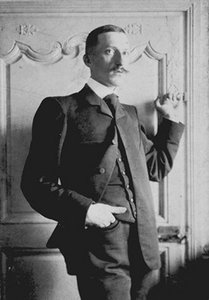
1880–1954, Frankrijk
André Derain
Het Vroege Leven, Familie en Opleiding In het jaar 1880 kwam André Derain ter wereld in Chatou, een dorpje dat genesteld ligt in de Franse regio Yvelines. Zijn vroege jaren werden gevormd door de verstilde landschappen van de Île-de-France, waar een natuurlijke nieuwsgierigheid naar zijn omgeving langzaam wortel schoot. Tegen 1895 was hij al begonnen met zelfstudie, waarbij hij probeerde de visuele wereld te begrijpen door zijn eigen ogen, in plaats van via een formele opleiding. Deze periode van zelfgestuurd onderzoek stelde hem in staat om een persoonlijke manier van kijken te ontwikkelen, nog voordat de strengheid van een academie zijn wil had kunnen opleggen.
Ook van André Derain
 badende vrouwen1907
 London Bridge1906
 Charing Cross from sw1906
 Landscape at L'Estaque1906
Essays over Rita van Leer
 Fauvism vs German Expressionism: Distinguishing Color and EmotionMaster the differences between Fauvism and German Expressionism through expert analysis. Learn to decode the emotion behind the color today.
 Dutch artworks of the 1860s1860s Dutch masterpieces by Vincent van Gogh, Gerard Bilders, and August Allebé. View the full collection online at OriginalUniqueArt.com.
 The Silent Dialogue: Examining Intimacy and Psychological Depth in Classical PortraitureExplore the psychological depth of classical portraiture through masters like Rembrandt and Vermeer. Discover the power of the gaze today.