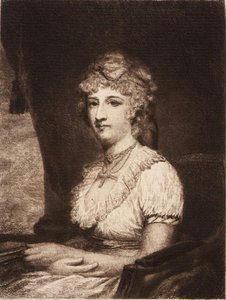
Portret van Stephen James Ferris

De 2 bekendste schilderijen van Stephen James Ferris, een selectie uit de galerie

Bijgewerkt in oktober 2026 · gerangschikt op basis van onze populariteitsscore (zoekopdrachten, bezoeken en bestellingen per kunstwerk) · 2 werken van Stephen James Ferris in onze catalogus

Kortom

Van alle originele werken die Stephen James Ferris heeft nagelaten, is Mevrouw Philip Nicklin het bekendst, in de collectie van het Smithsonian American Art Museum, Washington, D.C.. Onze catalogus bevat 2 werken van Stephen James Ferris; de galerie heeft de 2 meest bewonderde werken ter wereld bewaard, elk voorzien van de datum, het museum en het verhaal erachter.

1835 – 1915, Plattsburgh Meeste werken: Smithsonian American Art Museum

De top 10 schilderijen van Stephen James Ferris: de selectie van de galerie

1
Mevrouw Philip Nicklin door Stephen James Ferris

Mevrouw Philip Nicklin

Acryl op canvas · Smithsonian American Art Museum, Washington, D.C.

Een Elegante Portret van Een Dame Door Stephen James Ferris Stephen James Ferris’s *Mrs. Philip Nicklin*, een prachtige lijntekening uit ongeveer 1880, biedt een fascinerende kijk op zowel kunstenaarschap als de stijlvolle atmosfeer van het Victoriaanse tijdperk. Deze werkstuk werd oorspronkelijk gecreëerd door Gilbert Stuart en vervolgens opnieuw uitgevoerd door Ferris, waardoor een combinatie van klassieke schoonheid en persoonlijke interpretatie voortkomt. Het beeld wordt gekenmerkt door een gedetailleerde weergave van…

2
Portret van mevrouw J. Coleman Drayton door Stephen James Ferris

Portret van mevrouw J. Coleman Drayton

Acryl op canvas · Smithsonian American Art Museum, Washington, D.C.

Het werk onder de titel ‘Portrait of Mrs. J. Coleman Drayton’ is een prachtige zwart-wit ets uitgevoerd door Stephen James Ferris, een kunstenaar die zich bijzonder verdiepte in het verbinden van impressionisme en het Schotse landschap. Deze afbeelding biedt een fascinerende blik op een tijdperk waarin schoonheid en natuurlijke grandeur werden hoog gestaagd.

De onderwerpen die de aandacht van Stephen James Ferris troffen

De vier onderwerpen die het meest voorkomen in deze originelen, elk met zijn mooiste voorbeeld.

De musea waar de originele werken van Stephen James Ferris worden bewaard

Het museum met de meeste schilderijen op deze pagina.

Museum Stad Werken van Stephen James Ferris Schilderijen uit deze lijst
Smithsonian American Art Museum, Washington, D.C.Smithsonian American Art Museum Washington, D.C. 2 Mevrouw Philip Nicklin, Portret van mevrouw J. Coleman Drayton

Vragen van verzamelaars over de schilderijen van Stephen James Ferris

Waar is Stephen James Ferris het meest bekend om?Onthul het antwoord

Mevrouw Philip Nicklin

Hoeveel schilderijen heeft Stephen James Ferris nagelaten?Onthul het antwoord

Onze catalogus bevat 2 werken van Stephen James Ferris.

In welke musea hangen de meesterwerken van Stephen James Ferris?Onthul het antwoord

Voornamelijk in Smithsonian American Art Museum (Washington, D.C.). De bovenstaande museumtabel bevat een volledig overzicht.

Welke techniek gebruikte Stephen James Ferris het meest?Onthul het antwoord

Acryl op canvas, voor 2 van de 2 werken op deze pagina.

Welke werken van Stephen James Ferris hangen in het Smithsonian American Art Museum?Onthul het antwoord

Mevrouw Philip Nicklin en Portret van mevrouw J. Coleman Drayton: het Smithsonian American Art Museum, Washington, D.C. herbergt 2 van de werken op deze pagina.

Stephen James Ferris: leven en werk

A Legacy of Precision and Portraiture

Stephen James Ferris stands as a distinguished figure in the landscape of American art, particularly within the vibrant artistic community of Philadelphia. An influential painter and etcher, his work is characterized by a profound dedication to portraiture and figure studies. His artistic journey was shaped by rigorous training, having studied at the Pennsylvania Academy and later refining his craft in Paris under the guidance of Jean Leon Gerome. This exposure to European traditions allowed him to bring a sophisticated level of technical mastery back to the United States, where he established a considerable reputation for his ability to capture both the physical likeness and the inner character of his subjects.

The essence of Ferris's work often lies in its delicate execution and its connection to the aesthetic ideals of his era. As an etcher, he possessed a remarkable ability to manipulate light and shadow, utilizing techniques such as multi-plate etching on copper to achieve complex tonal gradations. His etchings, such as the Portrait of Mrs. J. Coleman Drayton, demonstrate a masterful command of texture and atmosphere, echoing the subtle influences of Impressionism while maintaining a sense of Victorian elegance. Through his meticulous use of acid resistance and fine lines, he could render the soft glow of skin or the intricate details of floral arrangements with an almost poetic sensitivity.

Artistic Influences and Technical Mastery

The development of Ferris's style was deeply intertwined with the masters who preceded him. In his portraiture, one can observe a profound reverence for the legacy of Gilbert Stuart, particularly in his pursuit of idealized realism. Much like Stuart, Ferris sought to transcend mere superficial likeness, aiming instead to imbue his subjects with a sense of dignity and grace. This approach is evident in works like Mrs. Philip Nicklin, where the artist employs precise etching techniques to capture a subject that feels both present and timeless, embodying the refined aesthetic values prevalent during the reign of Queen Victoria.

Beyond his technical skill, Ferris's life was deeply embedded in the fabric of the American art world. His contributions extended beyond the studio; for many years, he shared his expertise as a teacher at the Philadelphia School of Design for Women. This role as an educator highlights his commitment to the continuity of artistic excellence and his broader interest in the cultivation of design and fine art. His work remains a significant contribution to American art history, preserved in esteemed institutions such as the Smithsonian American Art Museum and the National Gallery of Art, serving as a testament to his enduring impact on the portraiture tradition.