


1


Bijgewerkt in oktober 2026 · gerangschikt op basis van onze populariteitsscore (zoekopdrachten, bezoeken en bestellingen per kunstwerk) · 48 werken van Othon Friesz in onze catalogus
Kortom
Scene in a Parisian Brasserie (1906) is het schilderij van Othon Friesz dat de meeste aandacht trekt; het origineel bevindt zich in het Museum Barberini, Potsdam. Daarna gaat de blik naar The Bathers of Andelys (1908) en Interior (1914). Van de 48 werken van Othon Friesz in onze catalogus zijn dit de 48 bekendste, elk een uniek origineel gepresenteerd met het jaar, het museum en de reden waarom het blijft voortbestaan.


The oil on canvas titled Temptation (Adam and Eve) was painted by Othon Friesz in 1910. This work measures 73 x 60 cm. It captures a moment of profound weight through the figures of Adam and Eve. The scene is held within the permanent collection of the Hermitage Museum.


 Nude Reclining
12
 The CreekSan Diego Museum of Art
13
 The Harbour in Honfleur1907 · National Museum of Art, Architecture and Design
14
 Flowers (Tulips and Daisies)1910 · Hermitage Museum
15
 Vue du château Fallet1907 · Musée d'Unterlinden
16
 The Sunken Road in Winter1913 · Statens Museum for Kunst
17
 The Arbour in the Pine Wood1914 · Statens Museum for Kunst
18
 Still Life with Brioches1916 · Statens Museum for Kunst
19
 Still Life with Apples1915 · Statens Museum for Kunst
20
 Terrace with Palms1914 · Statens Museum for Kunst
21
 The Cliff at Sainte Marguerite1914 · Statens Museum for Kunst
22
 The Peaches1914 · Statens Museum for Kunst
23
 Spring1913 · Statens Museum for Kunst
24
 The Harbour of Le Havre1921 · Koninklijk Museum voor Schone Kunsten Antwerpen
25
 Under the Fig1922 · Statens Museum for Kunst
26
 The Mountain Coudon Seen from Cap BrunKoninklijk Museum voor Schone Kunsten Antwerpen
27
 The ramparts of Saint-MaloMusée Toulouse-Lautrec
28
 Port
29
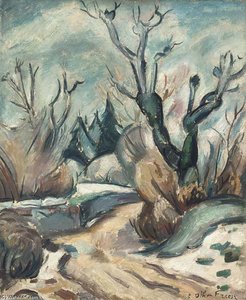 The Jura
30
 Landscape
31
 Port Of Toulon
32
 Baigneuses
33
 Flowers
34
 Construction Of Sheds At Istres
35
 Window On The Port Of Toulon
36
 Bateau Et Coquillages
37
 Seated Woman
38
 Nature Morte
39
 Landscape At Home
40
 A Village Street
41
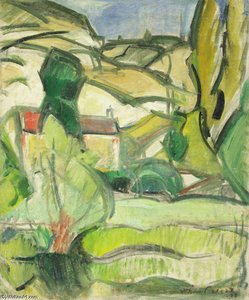 Landscape -
42
 A Still Life With Flowers In A Vase
43
 Drawings for ceramic platesMuseu do Caramulo
44
 Landscape of La Ciotat1907 · Centre Pompidou
45
 The Port of Anvers1906 · La Boverie
46
 Autumn Work1908 · National Museum of Art, Architecture and Design
47
 Roofs and Cathedral in Rouen1908 · Hermitage Museum
48
 Le Havre, Bassin du Roy1906
De vier onderwerpen die het meest voorkomen in deze originelen, elk met zijn mooiste voorbeeld.
De 8 musea met de meeste schilderijen op deze pagina.
| Museum | Stad | Werken van Othon Friesz | Schilderijen uit deze lijst |
|---|---|---|---|
 Statens Museum for Kunst |
Kopenhagen | 13 | Interior, Mother's Love, The Lady on the Terrace |
 Hermitage Museum |
Sint-Petersburg | 3 | Temptation (Adam and Eve), Flowers (Tulips and Daisies), Roofs and Cathedral in Rouen |
 National Museum of Art, Architecture and Design |
Oslo | 2 | The Harbour in Honfleur, Autumn Work |
 Koninklijk Museum voor Schone Kunsten Antwerpen |
Antwerpen | 2 | The Harbour of Le Havre, The Mountain Coudon Seen from Cap Brun |
 Museum Barberini |
Potsdam | 1 | Scene in a Parisian Brasserie |
 Musee du Petit Palais |
Geneva | 1 | The Bathers of Andelys |
 Israël Museum |
Jeruzalem | 1 | The Decorated Cruiser, Antwerp |
 San Diego Museum of Art |
San Diego | 1 | The Creek |
Kies een decennium om het origineel te zien dat dit tijdperk definieert.
Scene in a Parisian Brasserie (1906), Museum Barberini, Potsdam. The Bathers of Andelys (1908) en Interior (1914) volgen.
27 jaar oud: Scene in a Parisian Brasserie dateert uit 1906, en Othon Friesz werd geboren in 1879.
Scene in a Parisian Brasserie, The Bathers of Andelys, Interior, Mother's Love, The Lady on the Terrace, Female Nude, Temptation (Adam and Eve), The Decorated Cruiser, Antwerp, Le Havre Port en Nude Lying in a Landscape. De bovenstaande ranglijst vermeldt het jaar en het museum van elk werk.
Onze catalogus bevat 48 werken van Othon Friesz, daterend van 1903 tot 1923.
Voornamelijk in Statens Museum for Kunst (Kopenhagen), Hermitage Museum (Sint-Petersburg) en National Museum of Art, Architecture and Design (Oslo). De bovenstaande museumtabel bevat een volledig overzicht.
In 1910s: 13 van de 48 werken op deze pagina werden toen gemaakt, waaronder Interior.
Op deze pagina is het vroegste Le Havre Port (1903) en het laatste Female Nude (1923).
Flowers (2) en Landscape (2), verspreid over de 48 werken op deze pagina.
Interior, Mother's Love en The Lady on the Terrace: het Statens Museum for Kunst, Kopenhagen herbergt 13 van de werken op deze pagina.