


1


Bijgewerkt in november 2026 · gerangschikt op basis van onze populariteitsscore (zoekopdrachten, bezoeken en bestellingen per kunstwerk) · 12 werken van Nicolas-Pierre Loir in onze catalogus
Kortom
Prudence and Temperance (1660) is het schilderij van Nicolas-Pierre Loir dat de meeste aandacht trekt; het origineel bevindt zich in het Musée Cognacq-Jay, Parijs. Daarna gaat de blik naar Saint Paul Blinds the False Prophet Barjesu Sketch (or reduction) for the "may" of Notre-Dame of 1650 (1650) en Saint-Paul blinds the prophet Barjesu and converts the proconsul Serge. (1650). Van de 12 werken van Nicolas-Pierre Loir in onze catalogus zijn dit de 12 bekendste, elk een uniek origineel gepresenteerd met het jaar, het museum en de reden waarom het blijft voortbestaan.


De 8 musea met de meeste schilderijen op deze pagina.
| Museum | Stad | Werken van Nicolas-Pierre Loir | Schilderijen uit deze lijst |
|---|---|---|---|
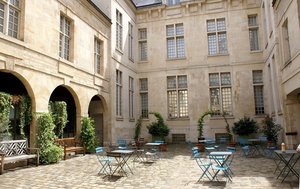 Musée Cognacq-Jay |
Parijs | 1 | Prudence and Temperance |
 Musée Carnavalet |
Parijs | 1 | Saint Paul Blinds the False Prophet Barjesu Sketch (or reduction) for the "may" of Notre-Dame of 1650 |
 Statens Museum for Kunst |
Kopenhagen | 1 | The Rest on the Fligth into Egypt |
 Opera House |
Versailles | 1 | Allegory of the Progress of the Drawing Arts under the Reign of Louis XIV |
 Yale University Art Gallery |
New Haven | 1 | The Adoration of the Sheperd |
 Musée d'art et d'histoire de Narbonne |
Narbonne | 1 | Holy family |
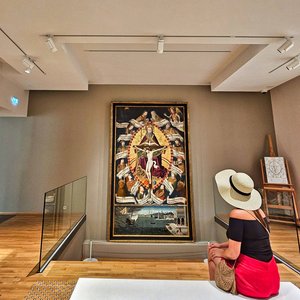 Musée Hyacinthe Rigaud |
Perpignan | 1 | Minerva and the Arts |
 National Gallery of Ireland |
Dublin | 1 | Rebecca at the Well |
Kies een decennium om het origineel te zien dat dit tijdperk definieert.
Prudence and Temperance (1660), Musée Cognacq-Jay, Parijs. Saint Paul Blinds the False Prophet Barjesu Sketch (or reduction) for the "may" of Notre-Dame of 1650 (1650) en Saint-Paul blinds the prophet Barjesu and converts the proconsul Serge. (1650) volgen.
36 jaar oud: Prudence and Temperance dateert uit 1660, en Nicolas-Pierre Loir werd geboren in 1624.
Prudence and Temperance, Saint Paul Blinds the False Prophet Barjesu Sketch (or reduction) for the "may" of Notre-Dame of 1650, Saint-Paul blinds the prophet Barjesu and converts the proconsul Serge., The Rest on the Fligth into Egypt, Allegory of the Progress of the Drawing Arts under the Reign of Louis XIV, The Adoration of the Sheperd, Holy family, Minerva and the Arts, Jupiter and Juno en Taking of the Habit of Saint William of Aquitaine. De bovenstaande ranglijst vermeldt het jaar en het museum van elk werk.
Onze catalogus bevat 12 werken van Nicolas-Pierre Loir, daterend van 1650 tot 1675.
Voornamelijk in Musée Cognacq-Jay (Parijs), Musée Carnavalet (Parijs) en Statens Museum for Kunst (Kopenhagen). De bovenstaande museumtabel bevat een volledig overzicht.
In 1660s: 5 van de 12 werken op deze pagina werden toen gemaakt, waaronder Prudence and Temperance.
Op deze pagina is het vroegste Saint Paul Blinds the False Prophet Barjesu Sketch (or reduction) for the "may" of Notre-Dame of 1650 (1650) en het laatste Jupiter and Juno (1675).
In the vibrant tapestry of the seventeenth-century French art scene, few names evoke the refined elegance of the Baroque era quite like Nicolas-Pierre Loir. Born in Paris in 1624, Loir emerged from a lineage of craftsmanship, being the son of a goldsmith, a background that perhaps instilled in him a meticulous eye for detail and a profound respect for structured composition. His journey through the world of fine art was shaped by the prestigious studios of his era, where he studied under the masterful hands of Sébastien Bourdon and Simon Vouet. These mentors provided him with more than just technical skill; they introduced him to the grand language of religious and historical allegories, a genre that would become the cornerstone of his creative identity.
Loir’s artistic development was significantly enriched by his travels, most notably his sojourn to Italy between 1647 and 1649. This period of immersion in the sun-drenched landscapes and the weight of classical antiquity allowed him to absorb the profound intellectual clarity found in the works of masters like Nicolas Poussin. Upon his return to Paris in 1650, Loir began to weave these diverse influences into a singular, cohesive style. His work became a bridge between the lush, emotive textures of the early Baroque and a more disciplined, classical approach that favored line, logic, and moral gravity. He possessed a rare ability to transform a canvas into a stage where mythological figures and historical events were not merely depicted, but staged with a sense of eternal order.
The essence of Loir’s artistry lies in his mastery of the draughtsman's art. As noted by the contemporary critic Roger de Piles, Loir was an exceptionally gifted draughtsman, a quality that allowed him to navigate the complexities of historical narrative with ease. His paintings often serve as visual treatises, where every gesture and shadow is placed with deliberate intention to convey deeper philosophical truths. Whether he was exploring the divine mysteries of religious scenes or the dramatic tension of classical myths, his compositions maintained a certain sacred geometry that invited viewers to contemplate the virtues and tragedies of the human condition.
Though his life ended in Paris in 1679, the historical significance of Nicolas-Pierre Loir remains etched in the annals of French art history. He was a painter who understood that art could be both a window into the past and a mirror for the soul. In an era often characterized by movement and drama, Loir offered a sanctuary of stability through his commitment to balance and classical reason. His works continue to resonate as testament to a period when art sought to harmonize the earthly struggle with the eternal beauty of the divine.

