Portret van Moretto Da Brescia

De 100 beroemdste schilderijen van Moretto Da Brescia, elk uniek

Bijgewerkt in november 2026 · gerangschikt op basis van onze populariteitsscore (zoekopdrachten, bezoeken en bestellingen per kunstwerk) · 108 werken van Moretto Da Brescia in onze catalogus

Kortom

Count Fortunato Martinengo Cesaresco (1542) is het schilderij van Moretto Da Brescia dat de meeste aandacht trekt; het origineel bevindt zich in het National Gallery, Londen. Daarna gaat de blik naar Pietà (1520) en Portrait of a Man (1520). Van de 108 werken van Moretto Da Brescia in onze catalogus zijn dit de 100 bekendste, elk een uniek origineel gepresenteerd met het jaar, het museum en de reden waarom het blijft voortbestaan.

1498 – 1554, Brescia Renaissance Meeste werken: National Gallery

Top 10 schilderijen van Moretto Da Brescia, door de ogen van de galerie

1
Count Fortunato Martinengo Cesaresco (1542) door Moretto Da Brescia

Count Fortunato Martinengo Cesaresco

1542 · Oil On Canvas · National Gallery, Londen

To stand before this portrait is to step directly into the rarefied atmosphere of 16th-century Italian aristocracy. Alessandro Bonvicino, known to us as Moretto da Brescia, has captured not merely a likeness, but an entire persona—that of Count Fortunato Martinengo Cesaresco. The subject dominates the composition, enveloped in the rich textures and imposing grandeur of his costume, particularly the magnificent fur coat adorned with what appears to be a stylized…

2
Pietà (1520) door Moretto Da Brescia

Pietà

1520 · Oil On Panel · National Gallery of Art, Washington

Michelangelo’s Pietà, residing within the heart of Saint Peter's Basilica in Vatican City, is not merely a sculpture; it’s an experience—a profound meditation on grief, loss, and the enduring power of maternal love. Completed around 1498-1499 during the nascent stages of the High Renaissance, this marble masterpiece transcends its material form to become a timeless symbol of human suffering and divine compassion. The sculpture captures a pivotal moment in Christian…

3
Portrait of a Man (1520) door Moretto Da Brescia

Portrait of a Man

1520 · Oil On Canvas · Szépművészeti Múzeum, Boedapest

Moretto da Brescia’s “Portrait of a Man,” painted around 1526, isn't merely a depiction of an individual; it’s a carefully constructed meditation on time, contemplation, and the quiet dignity of Renaissance man. This painting, currently residing in the National Gallery, London, offers a rare glimpse into the artistic sensibilities of a master often overshadowed by his Venetian contemporaries, yet possessing a uniquely profound and enduring quality.

4
St. John the Baptist in the Wilderness (1535) door Moretto Da Brescia

St. John the Baptist in the Wilderness

1535 · Oil On Panel · Los Angeles County Museum of Art, Los Angeles

The oil on panel painting titled St. John the Baptist in the Wilderness captures a moment of solitary devotion. Created circa 1535 in Italy, the work focuses on the figure of John the Baptist. He is positioned within a rugged landscape, his gaze directed toward a celestial light. The composition centers on this singular, prayerful presence amidst the shadows of the natural world.

5
Mary Magdalene (1545) door Moretto Da Brescia

Mary Magdalene

1545 · Oil On Canvas · Art Institute of Chicago, Chicago

The oil on canvas titled Mary Magdalene is a work by the Italian artist Moretto da Brescia. Created around 1545, this portrait captures the subject in her role as the post-conversion Mary Magdalene, depicted as a penitent saint. The figure emerges from a quiet, atmospheric space to present a moment of profound spiritual stillness.

6
Virgin and Child, with Two Donors (1528) door Moretto Da Brescia

Virgin and Child, with Two Donors

1528 · Oil On Panel · Philadelphia Museum of Art, Philadelphia

Alessandro Bonvicino, known as Moretto da Brescia, captures a quiet intersection between the divine and the earthly in this c. 1528-1530 altarpiece. The composition is structured around a central pyramidal arrangement, centering the Madonna and the Christ Child. Flanking this sacred group, a husband and wife kneel in a state of prayerful contemplation. Their presence transforms the religious scene into an intimate exchange, bridging the gap between the viewer and…

7
Portrait of Eleonora Averoldi (1530) door Moretto Da Brescia

Portrait of Eleonora Averoldi

1530 · Oil On Panel · Philadelphia Museum of Art, Philadelphia

The Portrait of Eleonora Averoldi presents a three-quarter length view of a young woman positioned slightly off-center. She gazes toward the left of the frame, her expression characterized by a sense of stillness. The composition relies on a palette of muted, earthy tones, where creams, whites, and golds emerge from a dark, indeterminate background. Light enters from the upper left, casting soft shadows across the contours of her face and…

8
Saint Bonaventure and Saint Anthony of Padua (1525) door Moretto Da Brescia

Saint Bonaventure and Saint Anthony of Padua

1525 · Oil

The oil painting titled Saint Bonaventure and Saint Anthony of Padua presents two figures held within a quiet, arched frame. Created by the artist Moretto da Brescia, the work captures a moment of stillness between two holy men. One figure is draped in heavy, saturated red and gold ecclesiastical robes, while the other wears a simple, greyish-brown Franciscan habit. They exist together against a receding landscape of soft blues and…

9
Saint Bernardino of Siena and Saint Louis of Toulouse (1525) door Moretto Da Brescia

Saint Bernardino of Siena and Saint Louis of Toulouse

1525 · Oil On Panel

The air in the painting feels still, held in a suspended moment of prayer. Two figures occupy the vertical space, their presence defined by the weight of their garments and the soft light that brushes their faces. On the left, Saint Bernardino of Siena is draped in a coarse, grey Franciscan habit. He holds a circular blue medallion, a small sun of color inscribed with the letters IHS. To his…

10
Coronation of the Virgin (1523) door Moretto Da Brescia

Coronation of the Virgin

1523 · Oil

In this Coronation of the Virgin, Moretto da Brescia centers the composition on two primary figures positioned amidst a sea of soft, billowing clouds. From the upper left, Jesus leans forward, his muscular, partially draped torso covered in a pale pink cloth, to place a golden crown upon the head of the Virgin. She is shown in a state of humble devotion, kneeling with her hands crossed over her chest.…

De beroemde schilderijen van Moretto Da Brescia, nummer 11 tot 100

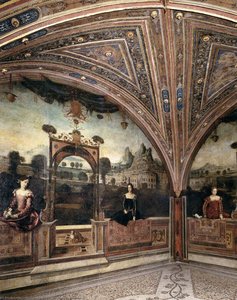
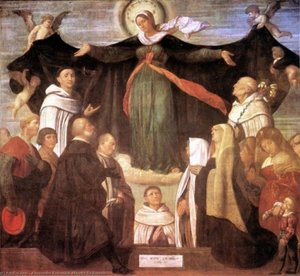
11The Adoration of the Shepherds (1542) door Moretto Da BresciaThe Adoration of the Shepherds1542 · Gemäldegalerie 12Virgin and Child Enthroned with Saints Anthony Abbot and Sebastian (1540) door Moretto Da BresciaVirgin and Child Enthroned with Saints Anthony Abbot and Sebastian1540 · Städel Museum 13Head of a woman. (1540) door Moretto Da BresciaHead of a woman.1540 · Nationaal Museum in Warschau 14Mary, Elisabeth, the child and the young st. John in glory, adored by two monks in white religious costume (1541) door Moretto Da BresciaMary, Elisabeth, the child and the young st. John in glory, adored by two monks in white religious costume1541 · Gemäldegalerie 15Female portraits in front of landscapes (1543) door Moretto Da BresciaFemale portraits in front of landscapes1543 · Palazzo Martinengo-Salvadego 16The Annunciation (1550) door Moretto Da BresciaThe Annunciation1550 · Bonnefanten Museum 17Supper in the House of Simon Pharisee (1550) door Moretto Da BresciaSupper in the House of Simon Pharisee1550 · Santa Maria Calchera 18Assumption (1530) door Moretto Da BresciaAssumption1530 · Pinacoteca di Brera 19A Saint Monk (1530) door Moretto Da BresciaA Saint Monk1530 · Szépművészeti Múzeum 20Madonna with Child and St Anthony (1540) door Moretto Da BresciaMadonna with Child and St Anthony1540 · Liechtenstein Museum 21Madonna with Child and the Young St John (1550) door Moretto Da BresciaMadonna with Child and the Young St John1550 · Liechtenstein Museum 22Portrait of a Man (1520) door Moretto Da BresciaPortrait of a Man1520 · Metropolitan Museum of Art 23Portrait of a Boy with his Nurse (1547) door Moretto Da BresciaPortrait of a Boy with his Nurse1547 · Hermitage Museum 24The Entombment (1554) door Moretto Da BresciaThe Entombment1554 · Metropolitan Museum of Art 25Pietà, Detalj 1, NG (1520) door Moretto Da BresciaPietà, Detalj 1, NG1520 26Pietà, Detalj 3, NG (1520) door Moretto Da BresciaPietà, Detalj 3, NG1520 27Pietà, Detalj 5, NG (1520) door Moretto Da BresciaPietà, Detalj 5, NG1520 28The Drunkenness of Noah (1530) door Moretto Da BresciaThe Drunkenness of Noah1530 29Portrait of a Dominican, Presumed to be Girolamo Savonarola (1524) door Moretto Da BresciaPortrait of a Dominican, Presumed to be Girolamo Savonarola1524 · Castelvecchio Museum 30Female portraits in front of landscapes (1543) door Moretto Da BresciaFemale portraits in front of landscapes1543 · Palazzo Martinengo-Salvadego 31Portrait of Tullia d'Aragona as Salome (detail) (1537) door Moretto Da BresciaPortrait of Tullia d'Aragona as Salome (detail)1537 · Pinacoteca Tosio Martinengo 32Portrait of a Gentleman (1526) door Moretto Da BresciaPortrait of a Gentleman1526 · National Gallery 33St Roch with an Angel (1545) door Moretto Da BresciaSt Roch with an Angel1545 · Szépművészeti Múzeum 34St. Justina door Moretto Da BresciaSt. Justina 35Christ and the ..unleserlich..of Emmaus door Moretto Da BresciaChrist and the ..unleserlich..of Emmaus 36Moses and the burning bush door Moretto Da BresciaMoses and the burning bushFondazione Brescia Musei 37An adoring angel door Moretto Da BresciaAn adoring angelNational Gallery 38Female portraits in front of landscapes 1 door Moretto Da BresciaFemale portraits in front of landscapes 1 39Christ in the Wilderness door Moretto Da BresciaChrist in the WildernessMetropolitan Museum of Art 40Praying Man with a Long Beard door Moretto Da BresciaPraying Man with a Long BeardNational Gallery 41Allegory of Faith (1540) door Moretto Da BresciaAllegory of Faith1540 · Hermitage Museum 42Saint jerome door Moretto Da BresciaSaint jerome 43Mary with Child on a Cloud Bench above Saint Catherine, Anthony the Hermit, Mark, Peter and Paul door Moretto Da BresciaMary with Child on a Cloud Bench above Saint Catherine, Anthony the Hermit, Mark, Peter and PaulGemäldegalerie 44The annunciation door Moretto Da BresciaThe annunciation 45Portrait of a Lady in White d3 door Moretto Da BresciaPortrait of a Lady in White d3 46Portrait of a Lady in White d4 door Moretto Da BresciaPortrait of a Lady in White d4 47An adoring angel door Moretto Da BresciaAn adoring angelNational Gallery 48Portrait of a Lady in White d1 door Moretto Da BresciaPortrait of a Lady in White d1 49Saint joseph door Moretto Da BresciaSaint josephNational Gallery 50Portrait of a Lady in White door Moretto Da BresciaPortrait of a Lady in WhiteNational Gallery of Art 51The Madonna and Child with Saints door Moretto Da BresciaThe Madonna and Child with Saints 52The Adoration of the Shepherds door Moretto Da BresciaThe Adoration of the ShepherdsFondazione Brescia Musei 53Holy Family door Moretto Da BresciaHoly FamilyAccademia Carrara 54The Madonna and Child with Saints door Moretto Da BresciaThe Madonna and Child with SaintsNational Gallery 55Nativity with Shepherds, St. Jerome and a Donor door Moretto Da BresciaNativity with Shepherds, St. Jerome and a DonorFondazione Brescia Musei 56Christ blessing Saint John the Baptist door Moretto Da BresciaChrist blessing Saint John the BaptistNational Gallery 57Pietà, Detalj 2, NG (1520) door Moretto Da BresciaPietà, Detalj 2, NG1520 · National Gallery of Art 58Virgin and Child (1540) door Moretto Da BresciaVirgin and Child1540 · Pinacoteca di Brera 59Polyptych of Assumption (1529) door Moretto Da BresciaPolyptych of Assumption1529 · Pinacoteca di Brera 60The Virgin of Carmel (1522) door Moretto Da BresciaThe Virgin of Carmel1522 · Gallerie dell'Accademia di Venezia 61St. Nicholas of Bari presents Galeazzo Rovellio’s students to the enthroned Virgin and Child (Rovellio altarpiece (1555) door Moretto Da BresciaSt. Nicholas of Bari presents Galeazzo Rovellio’s students to the enthroned Virgin and Child (Rovellio altarpiece1555 · Fondazione Brescia Musei 62St Justina with the Unicorn (1530) door Moretto Da BresciaSt Justina with the Unicorn1530 · Kunsthistorisches Museum 63Salvation Triptych (1521) door Moretto Da BresciaSalvation Triptych1521 64Madonna of mercy (1520) door Moretto Da BresciaMadonna of mercy1520 65Saints Jerome and Dorothea adore Christ in the tomb (1520) door Moretto Da BresciaSaints Jerome and Dorothea adore Christ in the tomb1520 66Saint Margaret of Antioch with Saints Jerome and Francis (1530) door Moretto Da BresciaSaint Margaret of Antioch with Saints Jerome and Francis1530 67Saint Anthony Abbot (1530) door Moretto Da BresciaSaint Anthony Abbot1530 68Madonna enthroned with child with saints (1525) door Moretto Da BresciaMadonna enthroned with child with saints1525 69Martyrdom of Saint Peter of Verona (1530) door Moretto Da BresciaMartyrdom of Saint Peter of Verona1530 · Pinacoteca Ambrosiana 70Madonna with child in glory with Saints Martin and Catherine (1530) door Moretto Da BresciaMadonna with child in glory with Saints Martin and Catherine1530 71Madonna and child with Saints Roch and Sebastian (1528) door Moretto Da BresciaMadonna and child with Saints Roch and Sebastian1528 · Basilica di Sant'Andrea 72Christ carrying the cross before a kneeling figure (1519) door Moretto Da BresciaChrist carrying the cross before a kneeling figure1519 · Accademia Carrara 73Assumption of the Virgin (1524) door Moretto Da BresciaAssumption of the Virgin1524 74Massacre of the Innocents (1531) door Moretto Da BresciaMassacre of the Innocents1531 75Coronation of the Virgin polyptych (1534) door Moretto Da BresciaCoronation of the Virgin polyptych1534 · Sint Nazarius en Celsuskerk 76Madonna with Child in Glory with Saints Joseph and Francis (1540) door Moretto Da BresciaMadonna with Child in Glory with Saints Joseph and Francis1540 · Basilica di Sant'Andrea 77Madonna with child and saints (1542) door Moretto Da BresciaMadonna with child and saints1542 · Pinacoteca Tosio Martinengo 78The Mystic Marriage of Saint Catherine of Alexandria with Saints Catherine of Siena, Paul and Jerome (1543) door Moretto Da BresciaThe Mystic Marriage of Saint Catherine of Alexandria with Saints Catherine of Siena, Paul and Jerome1543 79Madonna enthroned with child with saints (1536) door Moretto Da BresciaMadonna enthroned with child with saints1536 80Madonna and child in glory with female saints (1540) door Moretto Da BresciaMadonna and child in glory with female saints1540 · San Giorgio in Braida 81Madonna and Child in Glory with Saints Jerome, Francis of Assisi, and Anthony Abbot (1543) door Moretto Da BresciaMadonna and Child in Glory with Saints Jerome, Francis of Assisi, and Anthony Abbot1543 · Pinacoteca di Brera 82Madonna and Child with Four Doctors of the Church (1545) door Moretto Da BresciaMadonna and Child with Four Doctors of the Church1545 · Städel Museum 83Christ in glory with Saints Peter and Paul (1540) door Moretto Da BresciaChrist in glory with Saints Peter and Paul1540 84Christ in Passion with Moses and Solomon (1541) door Moretto Da BresciaChrist in Passion with Moses and Solomon1541 · Sint Nazarius en Celsuskerk 85Christ with the Eucharist and Saints Bartholomew and Roch (1545) door Moretto Da BresciaChrist with the Eucharist and Saints Bartholomew and Roch1545 86Christ with the Eucharist and Saints Cosmas and Damian (1540) door Moretto Da BresciaChrist with the Eucharist and Saints Cosmas and Damian1540 87Dinner in the house of Simon the Pharisee (1544) door Moretto Da BresciaDinner in the house of Simon the Pharisee1544 88Appearance of the Madonna to Filippo Viotti (1534) door Moretto Da BresciaAppearance of the Madonna to Filippo Viotti1534 89Chiesa di San Giovanni Evangelista Organ Case (1535) door Moretto Da BresciaChiesa di San Giovanni Evangelista Organ Case1535 90Adoration of the Shepherds with the Saints Nazario and Celso (1540) door Moretto Da BresciaAdoration of the Shepherds with the Saints Nazario and Celso1540 · Sint Nazarius en Celsuskerk 91Portrait of an Ecclesiastic (1547) door Moretto Da BresciaPortrait of an Ecclesiastic1547 · Bayerische Staatsgemäldesammlungen 92Annunciation door Moretto Da BresciaAnnunciationFondazione Brescia Musei 93Ecce Homo (1550) door Moretto Da BresciaEcce Homo1550 · Pinacoteca Tosio Martinengo 94Portrait of a Lady in White d2 door Moretto Da BresciaPortrait of a Lady in White d2Musée Condé 95Virgin and Child, Saint John with Saints Benedict, Paterius, Eufemia, Giustina door Moretto Da BresciaVirgin and Child, Saint John with Saints Benedict, Paterius, Eufemia, GiustinaFondazione Brescia Musei 96Portrait of Tullia d'Aragona as Salome (1537) door Moretto Da BresciaPortrait of Tullia d'Aragona as Salome1537 · Pinacoteca Tosio Martinengo 97Madonna with child in glory with Saints Roch, Martin, and Sebastian (1525) door Moretto Da BresciaMadonna with child in glory with Saints Roch, Martin, and Sebastian1525 98Coronation of the Virgin with saints (1534) door Moretto Da BresciaCoronation of the Virgin with saints1534 · Sint Nazarius en Celsuskerk 99Count sciarra martinengo cesaresco door Moretto Da BresciaCount sciarra martinengo cesarescoNational Gallery 100The Pentecost door Moretto Da BresciaThe PentecostFondazione Brescia Musei

De beroemde schilderijen van Moretto Da Brescia, periode voor periode

De onderwerpen die de aandacht van Moretto Da Brescia troffen

De vier onderwerpen die het meest voorkomen in deze originelen, elk met zijn mooiste voorbeeld.

De musea waar de originele werken van Moretto Da Brescia worden bewaard

De 8 musea met de meeste schilderijen op deze pagina.

Museum Stad Werken van Moretto Da Brescia Schilderijen uit deze lijst
National Gallery, LondenNational Gallery Londen 9 Count Fortunato Martinengo Cesaresco, Portrait of a Gentleman, An adoring angel
Fondazione Brescia Musei, BresciaFondazione Brescia Musei Brescia 11 Moses and the burning bush, The Adoration of the Shepherds, Nativity with Shepherds, St. Jerome and a Donor
Pinacoteca di Brera, MilaanPinacoteca di Brera Milaan 4 Assumption, Virgin and Child, Polyptych of Assumption
Pinacoteca Tosio Martinengo, BresciaPinacoteca Tosio Martinengo Brescia 4 Portrait of Tullia d'Aragona as Salome (detail), Madonna with child and saints, Ecce Homo
Sint Nazarius en Celsuskerk, BresciaSint Nazarius en Celsuskerk Brescia 4 Coronation of the Virgin polyptych, Christ in Passion with Moses and Solomon, Adoration of the Shepherds with the Saints Nazario and Celso
National Gallery of Art, WashingtonNational Gallery of Art Washington 3 Pietà, Portrait of a Lady in White, Pietà, Detalj 2, NG
Szépművészeti Múzeum, BoedapestSzépművészeti Múzeum Boedapest 3 Portrait of a Man, A Saint Monk, St Roch with an Angel
Gemäldegalerie, BerlijnGemäldegalerie Berlijn 3 The Adoration of the Shepherds, Mary, Elisabeth, the child and the young st. John in glory, adored by two monks in white religious costume, Mary with Child on a Cloud Bench above Saint Catherine, Anthony the Hermit, Mark, Peter and Paul

Moretto Da Brescia door de decennia heen: elk een uniek origineel

Werken per decennium

Kies een decennium om het origineel te zien dat dit tijdperk definieert.

Schilderijen van Moretto Da Brescia: vragen voor de galerie

Wat is het bekendste werk van Moretto Da Brescia?Onthul het antwoord

Count Fortunato Martinengo Cesaresco (1542), National Gallery, Londen. Pietà (1520) en Portrait of a Man (1520) volgen.

Op welke leeftijd creëerde Moretto Da Brescia Count Fortunato Martinengo Cesaresco?Onthul het antwoord

44 jaar oud: Count Fortunato Martinengo Cesaresco dateert uit 1542, en Moretto Da Brescia werd geboren in 1498.

Welke tien schilderijen van Moretto Da Brescia zijn het meest bekend?Onthul het antwoord

Count Fortunato Martinengo Cesaresco, Pietà, Portrait of a Man, St. John the Baptist in the Wilderness, Mary Magdalene, Virgin and Child, with Two Donors, Portrait of Eleonora Averoldi, Saint Bonaventure and Saint Anthony of Padua, Saint Bernardino of Siena and Saint Louis of Toulouse en Coronation of the Virgin. De bovenstaande ranglijst vermeldt het jaar en het museum van elk werk.

Hoeveel werken van Moretto Da Brescia zijn er bekend?Onthul het antwoord

Onze catalogus bevat 108 werken van Moretto Da Brescia, daterend van 1519 tot 1554.

Waar kunnen de beroemdste originelen van Moretto Da Brescia worden bekeken?Onthul het antwoord

Voornamelijk in National Gallery (Londen), Fondazione Brescia Musei (Brescia) en Pinacoteca di Brera (Milaan). De bovenstaande museumtabel bevat een volledig overzicht.

In welke periode creëerde Moretto Da Brescia de bekendste schilderijen?Onthul het antwoord

In 1540s: 26 van de 100 werken op deze pagina werden toen gemaakt, waaronder Count Fortunato Martinengo Cesaresco.

Welk beroemd schilderij van Moretto Da Brescia is de vroegste, en welke de laatste?Onthul het antwoord

Op deze pagina is het vroegste Christ carrying the cross before a kneeling figure (1519) en het laatste The Entombment (1554).

Welke onderwerpen had Moretto Da Brescia de voorkeur?Onthul het antwoord

Woman (12), Landscape (10) en Portraits (8), verspreid over de 100 werken op deze pagina.

Met welke materialen schilderde Moretto Da Brescia het meest?Onthul het antwoord

Oil On Canvas, voor 14 van de 100 werken op deze pagina.

Bij welke stroming behoort het werk van Moretto Da Brescia?Onthul het antwoord

Renaissance, te oordelen aan de originelen op deze pagina.

Welke originele werken van Moretto Da Brescia kan ik zien in het National Gallery?Onthul het antwoord

Count Fortunato Martinengo Cesaresco, Portrait of a Gentleman en An adoring angel: het National Gallery, Londen herbergt 9 van de werken op deze pagina.

Moretto Da Brescia: een portret van de kunstenaar

Alessandro Bonvicino (Moretto da Brescia): Een Serene Voice of the Venetian Renaissance

Alessandro Bonvicino, ook bekend en signerend als Il Moretto da Brescia (Rovato, nabij Brescia, rond 1498 – Brescia, 1554) was een kunstschilder uit de Italiaanse renaissance. Meer in het bijzonder wordt hij gerekend tot de Venetiaanse School.

Leven en Werk

Moretto werd geboren in Rovato en woonde daar tijdens een tijd van bloedige oorlogen, waarbij de stad in 1509 van Venetië overging naar Frankrijk en in 1512 weer terugkwam in Venetiaanse handen. Niettemin bracht Brescia in zijn kunstenaarschap een gevoel voor lokale geschiedenis en traditie voort, wat zich uit in zijn keuze voor onderwerpen en zijn stijl. Hij studeerde eerst onder Floriano Ferramola en Vincenzo Foppa, beide belangrijke kunstenaars actief rond Brescia in de vroege jaren van de 16e eeuw. Deze opleiding gaf hem een diepe waardering voor klassieke vormen en harmonieuze composities – een essentie van de renaissancesfeer die zijn werk zou kleuren. Zijn broers Pietro en Jacopo waren ook schilders, wat suggereert dat hij een kunstenaarsfamilie achter zich had gelaten. Een belangrijke invloed vormde Giovanni Battista Brustolo, een bekroonde beeldhouwer en schilder die hem eenzelfde aandacht schonk aan klassieke vormen en harmonieuze composities. Deze stijl werd verder ontwikkeld onder de begeleiding van Titian, wiens technieken hij zelf zou overnemen en waarmee hij een belangrijke Venetiaanse kunstenaar zou worden. Hij oefende ook zijn kunst uit in het atelier van Lorenzo Lotto, waar hij de stijl van Giorgione en andere grote namen van zijn tijd leerde kennen. Zijn werk werd gekenmerkt door een bijzondere aandacht voor licht en kleur – een essentie van de venetiaanse manier waarop schilderen. Een bijzonder belangrijk voorbeeld hiervan is zijn prachtige afbeelding van Sint Jozef met Sint Anne, die hij schilderde voor de kerk van Santa Maria dei Miracoli. Deze compositie laat zien hoe Moretto klassieke vormen en harmonieuze kleuren wist te combineren om een beeld te creëren dat zowel mooi als spiritueel aangenaam was. Hij verkreeg ook erkenning voor zijn portretten, waaronder het beroemde "Portret van een Jongeman" (Conte Fortunato Martinengo Cesaresco), dat hij rond 1526 schilderde en nu zich bevindt in de Nationale Galerie van Londen. Deze afbeelding onderscheidt zich door zijn serene uitdrukking en nauwkeurige anatomische observatie – een teken van Moretto’s humanistisch perspectief. Een andere belangrijke opdracht was het decoreren van de kerk van San Luca in Brescia met prachtige fresco's, waarin hij de Venetiaanse stijl verder ontwikkelde en nieuwe technieken gebruikte om zijn kunstenaarschap te perfectioneren. Hij bleef actief tot aan zijn dood in 1554, waarbij hij een belangrijke bijdrage leverde aan het kunstgeschiedenis van Brescia en Lombardije.

Stijl en Techniek

Moretto da Brescia’s stijl werd gekenmerkt door een bijzondere combinatie van klassieke vormen en harmonieuze kleuren – een stijl die sterk beïnvloed was door Raphael en andere grote namen van zijn tijd. Hij gebruikte vaak licht en kleur op een manier die zowel mooi als spiritueel aangenaam was, waarbij hij de Venetiaanse manier waarop schilderen perfectioneerde. Een belangrijk kenmerk van zijn werk is het gebruik van *glazen*, een techniek die bijdraagt aan de etherische kwaliteit van zijn kunstwerken. Hij oefende deze techniek met grote precisie en aandacht voor detail, waardoor hij prachtige afbeeldingen kon creëren die een gevoel voor licht en ruimte overbrengen. Zijn altarpieces waren bijzonder indrukwekkend vanwege hun grootte en schoonheid – maar ook vanwege de manier waarop hij klassieke vormen en harmonieuze kleuren gebruikte om een beeld te creëren dat zowel mooi als spiritueel aangenaam was. Een voorbeeld hiervan is zijn afbeelding van Sint Jozef met Sint Anne, die hij schilderde voor de kerk van Santa Maria dei Miracoli. Deze compositie laat zien hoe Moretto klassieke vormen en harmonieuze kleuren wist te combineren om een beeld te creëren dat zowel mooi als spiritueel aangenaam was. Hij oefende zijn kunst uit in het atelier van Giovanni Battista Moroni, wiens stijl hij zelf zou overnemen en waarmee hij een belangrijke bijdrage leverde aan de ontwikkeling van het portretgenre. Zijn werk werd gekenmerkt door een bijzondere aandacht voor licht en kleur – een essentie van de Venetiaanse manier waarop schilderen perfectioneerde. Hij gebruikte vaak licht en kleur op een manier die zowel mooi als spiritueel aangenaam was, waarbij hij de Venetiaanse manier waarop schilderen perfectioneerde. Een belangrijk kenmerk van zijn werk is het gebruik van *glazen*, een techniek die bijdraagt aan de etherische kwaliteit van zijn kunstwerken. Hij oefende deze techniek met grote precisie en aandacht voor detail, waardoor hij prachtige afbeeldingen kon creëren die een gevoel voor licht en ruimte overbrengen. Zijn stijl werd gekenmerkt door een bijzondere combinatie van klassieke vormen en harmonieuze kleuren – een stijl die sterk beïnvloed was door Raphael en andere grote namen van zijn tijd. Hij gebruikte vaak licht en kleur op een manier die zowel mooi als spiritueel aangenaam was, waarbij hij de Venetiaanse manier waarop schilderen perfectioneerde. Een belangrijk kenmerk van zijn werk is het gebruik van *glazen*, een techniek die bijdraagt aan de etherische kwaliteit van zijn kunstwerken. Hij oefende deze techniek met grote precisie en aandacht voor detail, waardoor hij prachtige afbeeldingen kon creëren die een gevoel voor licht en ruimte overbrengen. Zijn stijl werd gekenmerkt door een bijzondere combinatie van klassieke vormen en harmonieuze kleuren – een stijl die sterk beïnvloed was door Raphael en andere grote namen van zijn tijd. Hij gebruikte vaak licht en kleur op een manier die zowel mooi als spiritueel aangenaam was, waarbij hij de Venetiaanse manier waarop schilderen perfectioneerde. Een belangrijk kenmerk van zijn werk is het gebruik van *glazen*, een techniek die bijdraagt aan de etherische kwaliteit van zijn kunstwerken. Hij oefende deze techniek met grote precisie en aandacht voor detail, waardoor hij prachtige afbeeldingen kon creëren die een gevoel voor licht en ruimte overbrengen. Zijn stijl werd gekenmerkt door een bijzondere combinatie van klassieke vormen en harmonieuze kleuren – een stijl die sterk beïnvloed was door Raphael en andere grote namen van zijn tijd. Hij gebruikte vaak licht en kleur op een manier die zowel mooi als spiritueel aangenaam was, waarbij hij de Venetiaanse manier waarop schilderen perfectioneerde. Een belangrijk kenmerk van zijn werk is het gebruik van *glazen*, een techniek die bijdraagt aan de etherische kwaliteit van zijn kunstwerken. Hij oefende deze techniek met grote precisie en aandacht voor detail, waardoor hij prachtige afbeeldingen kon creëren die een gevoel voor licht en ruimte overbrengen. Zijn stijl werd gekenmerkt door een bijzondere combinatie van klassieke vormen en harmonieuze kleuren – een stijl die sterk beïnvloed was door Raphael en andere grote namen van zijn tijd. Hij gebruikte vaak licht en kleur op een manier die zowel mooi als spiritueel aangenaam was, waarbij hij de Venetiaanse manier waarop schilderen perfectioneerde. Een belangrijk kenmerk van zijn werk is het gebruik van *glazen*, een techniek die bijdraagt aan de etherische kwaliteit van zijn kunstwerken. Hij oefende deze techniek met grote precisie en aandacht voor detail, waardoor hij prachtige afbeeldingen kon creëren die een gevoel voor licht en ruimte overbrengen. Zijn stijl werd gekenmerkt door een bijzondere combinatie van klassieke vormen en harmonieuze kleuren – een stijl die sterk beïnvloed was door Raphael en andere grote namen van zijn tijd. Hij gebruikte vaak licht en kleur op een manier die zowel mooi als spiritueel aangenaam was, waarbij hij de Venetiaanse manier waarop schilderen perfectioneerde. Een belangrijk kenmerk van zijn werk is het gebruik van *glazen*, een techniek die bijdraagt aan de etherische kwaliteit van zijn kunstwerken. Hij oefende deze techniek met grote precisie en aandacht voor detail, waardoor hij prachtige afbeeldingen kon creëren die een gevoel voor licht en ruimte overbrengen. Zijn stijl werd gekenmerkt door een bijzondere combinatie van klassieke vormen en harmonieuze kleuren – een stijl die sterk beïnvloed was door Raphael en andere grote namen van zijn tijd. Hij gebruikte vaak licht en kleur op een manier die zowel mooi als spiritueel aangenaam was, waarbij hij de Venetiaanse manier waarop schilderen perfectioneerde. Een belangrijk kenmerk van zijn werk is het gebruik van *glazen*, een techniek die bijdraagt aan de etherische kwaliteit van zijn kunstwerken. Hij oefende deze techniek met grote precisie en aandacht voor detail, waardoor hij prachtige