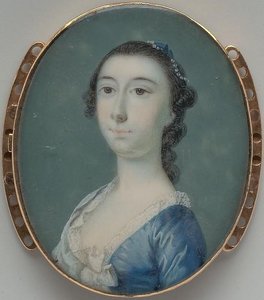
Portret van Jeremiah Theus

Schilderijen van Jeremiah Theus: De 28 bekendste, door de ogen van een galerie

Bijgewerkt in oktober 2026 · gerangschikt op basis van onze populariteitsscore (zoekopdrachten, bezoeken en bestellingen per kunstwerk) · 29 werken van Jeremiah Theus in onze catalogus

Kortom

Volgens de visie van de galerie is het beroemdste schilderij van Jeremiah Theus Captain William Richardson (1743-1786) (1757), waarvan het origineel in het Yale University Art Gallery in New Haven hangt. William Wragg (1750) en Portrait of Amarinthia Elliott (1748) maken het trio compleet dat elk oog herkent. Van de 29 werken van Jeremiah Theus in onze catalogus presenteert de galerie hieronder de 28 bekendste werken, elk een origineel met de jaartal, het museum en wat het uniek maakt.

1716 – 1774, Chur Rococo Meeste werken: Metropolitan Museum of Art

De top 10 schilderijen van Jeremiah Theus in de galerie

1
Captain William Richardson (1743-1786) (1757) door Jeremiah Theus

Captain William Richardson (1743-1786)

1757 · Oil On Canvas · Yale University Art Gallery, New Haven

A formal 18th-century portrait of a young man, presented within an oval vignette against a dark, monochromatic background. Captain William Richardson is depicted from the waist up, positioned at a slight angle while looking toward the viewer. The composition relies on a restrained color palette, dominated by the creamy white of his waistcoat and jacket, which contrasts sharply against a deep blue trim. This trim features intricate silver or gold…

Schilderijen van Jeremiah Theus, gerangschikt van 11 tot 28

De onderwerpen die de aandacht van Jeremiah Theus troffen

De vier onderwerpen die het meest voorkomen in deze originelen, elk met zijn mooiste voorbeeld.

De musea waar de originele werken van Jeremiah Theus worden bewaard

De 8 musea met de meeste schilderijen op deze pagina.

Museum Stad Werken van Jeremiah Theus Schilderijen uit deze lijst
Metropolitan Museum of Art, New YorkMetropolitan Museum of Art New York 4 Mrs. Jacob Motte (Rebecca Brewton), Mrs. John Dart, Gabriel Manigault
National Gallery of Art, WashingtonNational Gallery of Art Washington 3 James Cuthbert (?), Mr. Motte, Mrs. Cuthbert
Gibbes Museum of Art, CharlestonGibbes Museum of Art Charleston 3 Benjamin Smith, Kolonel Barnard Elliott Jr., Mrs. Barnard Elliott, Jr. (Mary Elizabeth Bellinger Elliott)
Detroit Institute of Arts, DetroitDetroit Institute of Arts Detroit 2 William Wragg, Portrait of Amarinthia Elliott
Museum of Fine Arts, BostonMuseum of Fine Arts Boston 2 Mrs. Lionel Chalmers (Martha Logan), Dr. Lionel Chalmers
New York Historical Society, New York CityNew York Historical Society New York City 2 Mrs. Samuel Carne (1740-1805), Samuel Carne, MD (1725-1780)
Yale University Art Gallery, New HavenYale University Art Gallery New Haven 1 Captain William Richardson (1743-1786)
John and Mable Ringling Museum of Art, SarasotaJohn and Mable Ringling Museum of Art Sarasota 1 Portrait of John Faucheraud Grimké

Jeremiah Theus, één iconisch schilderij per decennium

Werken per decennium

Kies een decennium om het origineel te zien dat dit tijdperk definieert.

Schilderijen van Jeremiah Theus: de galerie geeft antwoord

Welk schilderij van Jeremiah Theus is het beroemdste van allemaal?Onthul het antwoord

Captain William Richardson (1743-1786) (1757), Yale University Art Gallery, New Haven. William Wragg (1750) en Portrait of Amarinthia Elliott (1748) volgen.

Hoe oud was Jeremiah Theus bij de voltooiing van Captain William Richardson (1743-1786)?Onthul het antwoord

41 jaar oud: Captain William Richardson (1743-1786) dateert uit 1757, en Jeremiah Theus werd geboren in 1716.

Wat zijn de top 10 schilderijen van Jeremiah Theus?Onthul het antwoord

Captain William Richardson (1743-1786), William Wragg, Portrait of Amarinthia Elliott, Mrs. Thomas Lynch (Elizabeh Allston Lynch), Mrs. Peter Manigault, Portrait of John Faucheraud Grimké, Portrait of Mrs. John Champneys (Anne Livingston, born 1746), Mrs. Lionel Chalmers (Martha Logan), Dr. Lionel Chalmers en Mrs. Samuel Carne (1740-1805). De bovenstaande ranglijst vermeldt het jaar en het museum van elk werk.

Hoeveel werken heeft Jeremiah Theus gemaakt?Onthul het antwoord

Onze catalogus bevat 29 werken van Jeremiah Theus, daterend van 1748 tot 1772.

Waar hangen de beroemdste originele werken van Jeremiah Theus?Onthul het antwoord

Voornamelijk in Metropolitan Museum of Art (New York), National Gallery of Art (Washington) en Gibbes Museum of Art (Charleston). De bovenstaande museumtabel bevat een volledig overzicht.

Wanneer creëerde Jeremiah Theus de beroemdste schilderijen?Onthul het antwoord

In 1760s: 13 van de 28 werken op deze pagina werden toen gemaakt, waaronder Portrait of John Faucheraud Grimké.

Wat zijn de vroegste en laatste beroemde werken van Jeremiah Theus?Onthul het antwoord

Op deze pagina is het vroegste Portrait of Amarinthia Elliott (1748) en het laatste Mrs. John Dart (1772).

Welke onderwerpen keerde Jeremiah Theus het vaakst naar terug?Onthul het antwoord

18th century (4), Portraiture (3) en Colonial era (2), verspreid over de 28 werken op deze pagina.

In welk medium werkte Jeremiah Theus het meest?Onthul het antwoord

Oil On Canvas, voor 2 van de 28 werken op deze pagina.

Bij welke stroming wordt Jeremiah Theus gerekend?Onthul het antwoord

Rococo, te oordelen aan de originelen op deze pagina.

Welke originelen van Jeremiah Theus zijn in de collectie van het Metropolitan Museum of Art?Onthul het antwoord

Mrs. Jacob Motte (Rebecca Brewton), Mrs. John Dart en Gabriel Manigault: het Metropolitan Museum of Art, New York herbergt 4 van de werken op deze pagina.

Jeremiah Theus: de kunstenaar

Jeremiah Theus: Charleston’s Quintessential Portraitist

Jeremiah Theus (1716 – 1774) stands as a singular figure in the artistic landscape of colonial Charleston, South Carolina—a testament to both talent and circumstance. Born in Chur, Switzerland, he arrived in America with his family seeking refuge from religious persecution, establishing himself firmly within the burgeoning commercial hub of the Carolinas. While biographical details remain somewhat elusive, Theus’s legacy rests upon an astonishing output of portraits that captured the essence of Charleston society during its golden age and cemented his reputation as the foremost limner (painter) of his time. ### Early Life and Artistic Training The precise origins of Theus's artistic education are shrouded in obscurity. Unlike many European artists of his era who benefited from formal academies, Theus’s training likely stemmed from informal apprenticeships or self-directed study—a reflection of the limited educational opportunities available to Huguenot immigrants in colonial America. Nevertheless, he possessed an innate aptitude for visual representation and quickly honed his skills through observation and experimentation. His stylistic choices – notably the adoption of English mezzotint techniques – demonstrate a keen awareness of prevailing artistic trends across the Atlantic. ### Charleston and Artistic Recognition By 1740, Theus had established his studio in Charleston’s bustling Market Square, positioning himself at the epicenter of colonial commerce and culture. Recognizing his singular position as Charleston's sole prominent portraitist—a circumstance that would persist for much of his career—he skillfully leveraged this advantage to attract commissions from wealthy planters and influential families. His reputation grew steadily throughout the 1750s and 60s, fueled by collaborations with luminaries like Allan Ramsay and bolstered by patronage from prominent Charlestonians. The Church commissioned him to decorate St. Michael’s Episcopal Church steeple, a project that showcased his technical prowess and cemented his standing within the community. ### Style and Technique: Echoes of Rococo Elegance Theus's artistic style is characterized by understated elegance and meticulous attention to detail—a hallmark of Rococo art. He favored half-length portraits featuring sitters posed with dignified composure, often adorned in opulent attire reflecting the fashions of London. Crucially, he drew inspiration from English mezzotint prints, meticulously replicating poses and decorative elements that were considered fashionable at the time. This stylistic convergence underscores Theus’s commitment to upholding European artistic standards within the American context. His portraits are notable for their subtle shading techniques—a hallmark of Rococo art—and his masterful rendering of fabrics and jewelry. ### Legacy and Influence Jeremiah Theus died in Charleston in 1774, leaving behind a remarkable oeuvre that continues to fascinate scholars and collectors alike. He became the most prolific portraitist of Charleston’s elite during the colonial period, documenting the lives and aspirations of prominent families who shaped the city's social and economic destiny. His influence extended beyond Charleston itself—inspiring subsequent artists and establishing a precedent for blending European artistic traditions with American sensibilities. Today, his paintings reside in museums across North America and Europe, serving as enduring symbols of Charleston’s cultural heritage and demonstrating the transformative power of artistic vision.