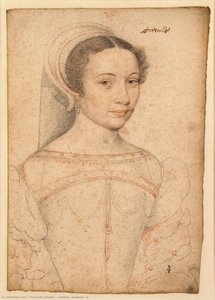
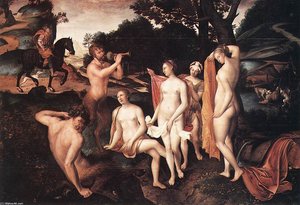
Portret van François Clouet

De 78 beroemdste schilderijen van François Clouet, elk uniek

Bijgewerkt in oktober 2026 · gerangschikt op basis van onze populariteitsscore (zoekopdrachten, bezoeken en bestellingen per kunstwerk) · 80 werken van François Clouet in onze catalogus

Kortom

Mary, Queen of Scots (1542-87) (1560) is het schilderij van François Clouet dat de meeste aandacht trekt; het origineel bevindt zich in het Royal Collection, Londen. Daarna gaat de blik naar Henri II of Valois and Caterina de' Medici, Surrounded by Members of Their Family en Mary, Queen of Scots (1560). Van de 80 werken van François Clouet in onze catalogus zijn dit de 78 bekendste, elk een uniek origineel gepresenteerd met het jaar, het museum en de reden waarom het blijft voortbestaan.

1510 – 1572, Tours Renaissance Meeste werken: Château de Chantilly

Top 10 schilderijen van François Clouet, door de ogen van de galerie

1
Mary, Queen of Scots (1542-87) (1560) door François Clouet

Mary, Queen of Scots (1542-87)

1560 · Acrylic · Royal Collection, Londen

François Clouet's 1560-61 portrait of Mary, Queen of Scots is more than just a likeness; it’s a meticulously crafted window into the turbulent heart of Renaissance Scotland and France. Commissioned during her time as Dauphine of France and later Queen of Scotland, this diminutive painting – a ‘miniature’ in the truest sense – transcends its small scale to embody the complexities of a woman caught between two powerful nations and…

2
Henri II of Valois and Caterina de' Medici, Surrounded by Members of Their Family door François Clouet

Henri II of Valois and Caterina de' Medici, Surrounded by Members of Their Family

Oil On Panel · Galleria degli Uffizi, Florence

In the grand tapestry of the French Renaissance, few works capture the sheer weight of royal lineage as profoundly as François Clouet’s "Henri II of Valois and Caterina de' Medici, Surrounded by Members of Their Family." This is not merely a portrait; it is a monumental tableau of power, a meticulously orchestrated assembly of faces that serves as a window into the heart of the 16th-century Valois court. As one…

3
Mary, Queen of Scots (1560) door François Clouet

Mary, Queen of Scots

1560 · Oil On Panel · Wallace Collection, Londen

The portrait titled Mary, Queen of Scots is a work by the French artist François Clouet. Created in 1560, this Queen's Portrait captures the likeness of Mary, Queen of Scots (1542-87). The image focuses on the sovereign during a period of significant transition in her life.

4
Mary, Queen of Scots (1542-1587) (1559) door François Clouet

Mary, Queen of Scots (1542-1587)

1559 · Oil On Panel · Victoria and Albert Museum, Londen

The subject is a bust-length portrait of a woman, positioned slightly off-center and facing toward the right of the frame. She is depicted with a calm expression and a steady gaze. Her attire consists of a heavy, patterned gown featuring vertical stripes and intricate embroidery. A high, structured collar frames her neck, and her head is adorned with a headpiece containing rounded pearls. A matching necklace of lustrous pearls rests…

5
Portrait of Francis I, King of France (1540) door François Clouet

Portrait of Francis I, King of France

1540 · Oil On Canvas · Galleria degli Uffizi, Florence

In the grand tapestry of the French Renaissance, few images command the eye with such immediate and breathtaking authority as François Clouet’s Portrait of Francis I, King of France. Painted in 1540, this monumental work is far more than a mere likeness of a monarch; it is a profound visual manifesto of power, ambition, and the burgeoning spirit of an era. As the viewer encounters this masterpiece, they are not…

6
Elisabeth of Austria, Queen of France (1571) door François Clouet

Elisabeth of Austria, Queen of France

1571 · Oil On Canvas · Louvre, Parijs

In this oil painting on oak wood, a woman identified as Elisabeth of Austria, Queen of France, occupies the central foreground. She is positioned with her head turned slightly toward the side, her gaze directed away from the viewer. Her hair is long and dark, framing a face marked by a stern expression. Around her neck, she wears a prominent ruffled collar and a necklace that rests against her chest.…

7
A Lady in Her Bath (1571) door François Clouet

A Lady in Her Bath

1571 · Oil On Panel · National Gallery of Art, Washington

In the quiet, luminous atmosphere of François Clouet’s “A Lady in Her Bath,” the viewer is not merely an observer but a silent guest invited into a moment of profound domestic intimacy. Painted around 1571, this masterpiece serves as a breathtaking window into the private lives of the French aristocracy during the late Renaissance. The composition unfolds with a theatrical grace, where heavy red satin drapes are pulled back like…

8
Portrait of Francis I, King of France (1540) door François Clouet

Portrait of Francis I, King of France

1540 · Oil On Canvas · Louvre, Parijs

In the grand tapestry of the French Renaissance, few images command the eye with such immediate and breathtaking authority as François Clouet’s Portrait of Francis I, King of France. Painted in 1540, this monumental oil on canvas is far more than a mere likeness of a monarch; it is a profound visual manifesto of power, ambition, and the burgeoning spirit of an era. As the viewer encounters this work, they…

9
Unknown lady, probably an Italian, known as (1555) door François Clouet

Unknown lady, probably an Italian, known as

1555 · Acrylic On Canvas · Château de Chantilly, Chantilly

The world of 16th-century France was one of opulent courts, shifting alliances, and burgeoning artistic innovation. Within this vibrant landscape emerged François Clouet, a master portraitist whose meticulous skill and subtle psychological insight continue to captivate viewers centuries later. His “Unknown Lady,” painted around 1555, is not merely a likeness; it’s a carefully constructed tableau of observation, hinting at the woman's character and the era she inhabited. The painting, now…

10
Odet de Coligny, Cardinal de Châtillon (1548) door François Clouet

Odet de Coligny, Cardinal de Châtillon

1548 · Oil On Panel · Musée Condé, Chantilly

Odet de Coligny, Cardinal de Châtillon is a portrait executed by François Clouet in 1548. The sitter, a prominent figure of the French Renaissance, held the positions of Bishop of Beauvais and Archbishop of Toulouse. As the nephew of Constable Anne de Montmorency, his social standing is reflected in the formal presentation of the work.

De beroemde schilderijen van François Clouet, nummer 11 tot 78

11Sir William Kirkcaldy of Grange (1570) door François ClouetSir William Kirkcaldy of Grange1570 · Scottish National Portrait Gallery 12King Charles IX of France (1561) door François ClouetKing Charles IX of France1561 · Kunsthistorisches Museum 13Portrait of a Man, so-called "Don Juan". (1555) door François ClouetPortrait of a Man, so-called "Don Juan".1555 · Czartoryski Museum 14Mary, Queen of Scots (1561) door François ClouetMary, Queen of Scots1561 · Scottish National Portrait Gallery 15Portrait of King Charles IX of France (1566) door François ClouetPortrait of King Charles IX of France1566 · Kunsthistorisches Museum 16Charles IX (1570) door François ClouetCharles IX1570 · Birmingham Museum of Art 17Portrait of Catherine de' Medici (1580) door François ClouetPortrait of Catherine de' Medici1580 · Walters Art Museum 18Portrait of a Man (1543) door François ClouetPortrait of a Man1543 · National Gallery 19Elisabeth of Austria, Queen of France (1571) door François ClouetElisabeth of Austria, Queen of France1571 · Musée Condé 20Portrait of Charles IX, King of France (1550-1574) (1562) door François ClouetPortrait of Charles IX, King of France (1550-1574)1562 21Marie de Gaignon, Marquise de Boissy (c. 1524-1565) (1560) door François ClouetMarie de Gaignon, Marquise de Boissy (c. 1524-1565)1560 22Henry II (1519-1559), King of France. (1559) door François ClouetHenry II (1519-1559), King of France.1559 23Claude de Beaune de Semblançay, Lady of Chateaubrun (c. 1530-1571). (1563) door François ClouetClaude de Beaune de Semblançay, Lady of Chateaubrun (c. 1530-1571).1563 24Portrait of Admiral Gaspard II de Coligny (1550) door François ClouetPortrait of Admiral Gaspard II de Coligny1550 · Saint Louis Art Museum 25Marguerite of Valois (1560) door François ClouetMarguerite of Valois1560 · Musée Condé 26Portrait of Claudia de Valois (1547-1575) (1563) door François ClouetPortrait of Claudia de Valois (1547-1575)1563 · Bayerische Staatsgemäldesammlungen 27Louise de Lorraine (1550) door François ClouetLouise de Lorraine1550 · Museum of Fine Arts, Houston 28Mary, Queen of Scots (1542-87) (1559) door François ClouetMary, Queen of Scots (1542-87)1559 · Royal Collection 29François de Lorraine, 2nd Duke de Guise (1519-1563) (1555) door François ClouetFrançois de Lorraine, 2nd Duke de Guise (1519-1563)1555 30Portrait of François de Lorraine (1562) door François ClouetPortrait of François de Lorraine1562 31Mary, Queen of Scots (1561) door François ClouetMary, Queen of Scots1561 32Diane de France, Duchess of Angoulême (1538-1619), natural and legitimized daughter of Henry II, King of France. (1568) door François ClouetDiane de France, Duchess of Angoulême (1538-1619), natural and legitimized daughter of Henry II, King of France.1568 33Portrait "Unknown Lady" on wood, from the school of Francois Clouet, ca. 1570 (1570) door François ClouetPortrait "Unknown Lady" on wood, from the school of Francois Clouet, ca. 15701570 34Portrait of "Elisabeth van Habsburg" on wood, by a follower of Francois Clouet, after 1571 (1571) door François ClouetPortrait of "Elisabeth van Habsburg" on wood, by a follower of Francois Clouet, after 15711571 35Portrait of François de Coligny (1569) door François ClouetPortrait of François de Coligny1569 · Dayton Art Institute 36Portrait of Charles IX (1570) door François ClouetPortrait of Charles IX1570 · Collection Bemberg 37Portrait of François de Scepeaux (1566) door François ClouetPortrait of François de Scepeaux1566 · Indianapolis Museum of Art 38Portrait of a Man, called the Duc d'Alençon (1569) door François ClouetPortrait of a Man, called the Duc d'Alençon1569 · Scottish National Gallery 39The Love Letter (1570) door François ClouetThe Love Letter1570 · Thyssen-Bornemisza Museum 40Françoise Robertet, lady of La Bourdaisière then Countess of Châteauroux (1565) door François ClouetFrançoise Robertet, lady of La Bourdaisière then Countess of Châteauroux1565 · Château de Chantilly 41Portrait of a Lady (1550) door François ClouetPortrait of a Lady1550 · Städel Museum 42A Lady in Her Bath (1571) door François ClouetA Lady in Her Bath1571 · National Gallery of Art 43Hercule François de Valois-Angoulême, Duc d'Alençon et d'Anjou (1555–1584) door François ClouetHercule François de Valois-Angoulême, Duc d'Alençon et d'Anjou (1555–1584)Touchstones Rochdale 44Le bain de Diane détail (1565) door François ClouetLe bain de Diane détail1565 · Musée des Beaux-Arts de Rouen 45Henry d'Albret, King of Navarre (1527) door François ClouetHenry d'Albret, King of Navarre1527 46Henri II (1550) door François ClouetHenri II1550 47Francois Hercule de France, Duke of Alencon (1560) door François ClouetFrancois Hercule de France, Duke of Alencon1560 48Hercule Francois, Duke of Alencon and of Anjou (1561) door François ClouetHercule Francois, Duke of Alencon and of Anjou1561 49Jossine de Pisseleu d (1550) door François ClouetJossine de Pisseleu d1550 · Château de Chantilly 50Jeanne D'Albret, Queen of Navarre (1570) door François ClouetJeanne D'Albret, Queen of Navarre1570 · Musée Condé 51The Lady in Her Bath (1571) door François ClouetThe Lady in Her Bath1571 52Portrait of Claude Gouffier (1568) door François ClouetPortrait of Claude Gouffier1568 · Château de Versailles 53A Lady in Her Bath (detail) (1571) door François ClouetA Lady in Her Bath (detail)1571 · National Gallery of Art 54Isabelle (Isabeau) d (1547) door François ClouetIsabelle (Isabeau) d1547 · Château de Chantilly 55Elisabeth of France, Queen of Spain, known as Isabella of Peace (1550) door François ClouetElisabeth of France, Queen of Spain, known as Isabella of Peace1550 · Château de Chantilly 56Portrait of Henri II (1547) door François ClouetPortrait of Henri II1547 57The Bath of Diana (1550) door François ClouetThe Bath of Diana1550 · Museu de Arte 58Renée de Rieux, Marquise de Nesle, known as Guyonne, Countess of Laval (1560) door François ClouetRenée de Rieux, Marquise de Nesle, known as Guyonne, Countess of Laval1560 · Château de Chantilly 59Marguerite of France, Duchess of Berry and Savoy (1550) door François ClouetMarguerite of France, Duchess of Berry and Savoy1550 · Château de Chantilly 60Portrait of King Charles IX of France (1561) door François ClouetPortrait of King Charles IX of France1561 · Kunsthistorisches Museum 61Portrait of Princess Margarida de Valois (1561) door François ClouetPortrait of Princess Margarida de Valois1561 · Soares dos Reis National Museum 62Portrait of a Lady in a Black Dress with Marie Stuart Coiffure door François ClouetPortrait of a Lady in a Black Dress with Marie Stuart CoiffureBowes Museum 63Female Portrait door François ClouetFemale PortraitBowes Museum 64Diane de Poitiers (1499-1566), Duchess of Valentinois door François ClouetDiane de Poitiers (1499-1566), Duchess of Valentinois 65Portrait of a lady door François ClouetPortrait of a lady 66Henry III (1551–1589), King of France door François ClouetHenry III (1551–1589), King of France 67French, approx. ) (1510) door François ClouetFrench, approx. )1510 68A Nobleman of the Valois Court door François ClouetA Nobleman of the Valois CourtDetroit Institute of Arts 69Henry II (1519–1559), King of France door François ClouetHenry II (1519–1559), King of France 70Henry II of France (detail) door François ClouetHenry II of France (detail) 71Francois I of France on Horseback door François ClouetFrancois I of France on HorsebackUpton House 72Henry II of France on Horseback door François ClouetHenry II of France on HorsebackUpton House 73Charles IX (1550–1574), King of France door François ClouetCharles IX (1550–1574), King of France 74Henriette de Cleves, 4e hertogin van Nevers door François ClouetHenriette de Cleves, 4e hertogin van NeversGovernment Art Collection 75A Lady in Her Bath (1571) door François ClouetA Lady in Her Bath1571 · National Gallery of Art 76Pierre Quthe (1562) door François ClouetPierre Quthe1562 · Louvre 77Guy XVII, Comte de Laval (1540) door François ClouetGuy XVII, Comte de Laval1540 · Timken Museum of Art 78The Bath of Diana (1550) door François ClouetThe Bath of Diana1550 · Musée des Beaux-Arts

De beroemde schilderijen van François Clouet, periode voor periode

De onderwerpen die de aandacht van François Clouet troffen

De vier onderwerpen die het meest voorkomen in deze originelen, elk met zijn mooiste voorbeeld.

De musea waar de originele werken van François Clouet worden bewaard

De 8 musea met de meeste schilderijen op deze pagina.

Museum Stad Werken van François Clouet Schilderijen uit deze lijst
Château de Chantilly, ChantillyChâteau de Chantilly Chantilly 7 Unknown lady, probably an Italian, known as, Françoise Robertet, lady of La Bourdaisière then Countess of Châteauroux, Jossine de Pisseleu d
National Gallery of Art, WashingtonNational Gallery of Art Washington 4 A Lady in Her Bath, A Lady in Her Bath, A Lady in Her Bath (detail)
Musée Condé, ChantillyMusée Condé Chantilly 4 Odet de Coligny, Cardinal de Châtillon, Elisabeth of Austria, Queen of France, Marguerite of Valois
Louvre, ParijsLouvre Parijs 3 Elisabeth of Austria, Queen of France, Portrait of Francis I, King of France, Pierre Quthe
Kunsthistorisches Museum, WenenKunsthistorisches Museum Wenen 3 King Charles IX of France, Portrait of King Charles IX of France, Portrait of King Charles IX of France
Royal Collection, LondenRoyal Collection Londen 2 Mary, Queen of Scots (1542-87), Mary, Queen of Scots (1542-87)
Galleria degli Uffizi, FlorenceGalleria degli Uffizi Florence 2 Henri II of Valois and Caterina de' Medici, Surrounded by Members of Their Family, Portrait of Francis I, King of France
Scottish National Portrait Gallery, EdinburghScottish National Portrait Gallery Edinburgh 2 Sir William Kirkcaldy of Grange, Mary, Queen of Scots

François Clouet door de decennia heen: elk een uniek origineel

Werken per decennium

Kies een decennium om het origineel te zien dat dit tijdperk definieert.

Schilderijen van François Clouet: vragen voor de galerie

Wat is het bekendste werk van François Clouet?Onthul het antwoord

Mary, Queen of Scots (1542-87) (1560), Royal Collection, Londen. Henri II of Valois and Caterina de' Medici, Surrounded by Members of Their Family en Mary, Queen of Scots (1560) volgen.

Op welke leeftijd creëerde François Clouet Mary, Queen of Scots (1542-87)?Onthul het antwoord

50 jaar oud: Mary, Queen of Scots (1542-87) dateert uit 1560, en François Clouet werd geboren in 1510.

Welke tien schilderijen van François Clouet zijn het meest bekend?Onthul het antwoord

Mary, Queen of Scots (1542-87), Henri II of Valois and Caterina de' Medici, Surrounded by Members of Their Family, Mary, Queen of Scots, Mary, Queen of Scots (1542-1587), Portrait of Francis I, King of France, Elisabeth of Austria, Queen of France, A Lady in Her Bath, Portrait of Francis I, King of France, Unknown lady, probably an Italian, known as en Odet de Coligny, Cardinal de Châtillon. De bovenstaande ranglijst vermeldt het jaar en het museum van elk werk.

Hoeveel werken van François Clouet zijn er bekend?Onthul het antwoord

Onze catalogus bevat 80 werken van François Clouet, daterend van 1527 tot 1571.

Waar kunnen de beroemdste originelen van François Clouet worden bekeken?Onthul het antwoord

Voornamelijk in Château de Chantilly (Chantilly), National Gallery of Art (Washington) en Musée Condé (Chantilly). De bovenstaande museumtabel bevat een volledig overzicht.

In welke periode creëerde François Clouet de bekendste schilderijen?Onthul het antwoord

In 1560s: 25 van de 78 werken op deze pagina werden toen gemaakt, waaronder Mary, Queen of Scots (1542-87).

Welk beroemd schilderij van François Clouet is de vroegste, en welke de laatste?Onthul het antwoord

Op deze pagina is het vroegste Henry d'Albret, King of Navarre (1527) en het laatste Elisabeth of Austria, Queen of France (1571).

Welke onderwerpen had François Clouet de voorkeur?Onthul het antwoord

Woman (21), Portrait (17) en Man (17), verspreid over de 78 werken op deze pagina.

Met welke materialen schilderde François Clouet het meest?Onthul het antwoord

Oil On Panel, voor 36 van de 78 werken op deze pagina.

Bij welke stroming behoort het werk van François Clouet?Onthul het antwoord

Renaissance, te oordelen aan de originelen op deze pagina.

Welke originele werken van François Clouet kan ik zien in het Château de Chantilly?Onthul het antwoord

Unknown lady, probably an Italian, known as, Françoise Robertet, lady of La Bourdaisière then Countess of Châteauroux en Jossine de Pisseleu d: het Château de Chantilly, Chantilly herbergt 7 van de werken op deze pagina.

François Clouet: een portret van de kunstenaar

A Legacy of Likeness: The World of François Clouet

François Clouet, a name synonymous with the refined portraiture of the French Renaissance, emerged from a lineage steeped in artistic skill and courtly favor. Born around 1510 in Tours, France, his life unfolded against a backdrop of evolving artistic sensibilities and the opulent world of the Valois monarchy. He wasn’t merely a painter; he was a chronicler of an era, capturing the essence of kings, queens, and courtiers with a meticulousness that continues to captivate viewers today. The shadow of his father, Jean Clouet, loomed large – both artists shared not only a profession but also the familiar nickname ‘Janet,’ leading to occasional confusion in attributing their works across generations. Yet, François carved his own distinct path, blending Flemish naturalism with an emerging Italianate grace, and establishing himself as one of France’s most celebrated portraitists.

Inheriting a Tradition: Early Life and Artistic Formation

The early years of François Clouet remain somewhat veiled in historical obscurity, but his artistic trajectory was undeniably shaped by the legacy of his father. Jean Clouet, originating from the Southern Netherlands, brought with him to the French court the meticulous detail and realistic approach characteristic of Flemish painting. This foundation formed the bedrock of François’s training. A pivotal moment arrived in 1541 when François inherited his father's estate, formally stepping into his artistic inheritance and assuming the responsibilities that came with it. This wasn’t simply a transfer of property; it was an assumption of a role within the very fabric of the French court. The Clouet family also enjoyed a unique connection to the Italian Renaissance through Jean’s time in Amboise, exposing François to the burgeoning ideals and innovative techniques emanating from Italy – a subtle but significant influence that would later manifest in his work. He absorbed not just technique, but an understanding of how art could serve as both documentation and celebration of power and status. He studied under Jean Clouet Sr., diligently honing his skills in drawing and painting—a tradition passed down through generations of artistic excellence.

The Art of Revelation: Style and Major Works

François Clouet’s oeuvre is defined by a remarkable precision and elegance. His portraits weren't merely likenesses; they were insightful studies of character, capturing not only physical features but also the personality and social standing of his subjects. He possessed an extraordinary ability to convey royal authority and sophistication, as evidenced in several notable depictions of Francis I, examples of which reside in prestigious collections like the Uffizi Gallery and the Louvre Museum. Beyond Francis I, Clouet’s brush immortalized other key figures of the era. He likely painted portraits of Catherine de' Medici at Versailles, contributing to a visual record of her influential reign. Perhaps one of his most celebrated achievements is the chalk drawing of Mary, Queen of Scots, held in the Bibliothèque nationale – a work that showcases his mastery of capturing delicate features and conveying emotional depth with astonishing subtlety. Other notable works include portraits of Elizabeth of Austria (Louvre), Marguerite of France (Chantilly), and Charles IX (Château de Chantilly). His meticulous style and attention to detail profoundly influenced subsequent generations of French portraitists, solidifying his place as a pivotal figure in the development of French art. He skillfully employed *chiaroscuro*, creating dramatic contrasts that highlighted the contours of his subjects’ faces and garments—a technique borrowed from Leonardo da Vinci and perfected by Flemish masters.

A Defining Aesthetic: Characteristics of Clouet’s Art

Several hallmarks define François Clouet's distinctive style.
  • Elaborate Detail: A meticulous attention to detail permeates his work, evident in the intricate rendering of clothing, jewelry, and facial features – every element contributing to a sense of realism and opulence.
  • Accurate Drawing: Clouet’s portraits are grounded in precise anatomical rendering and skillful use of line, demonstrating a mastery of draftsmanship that underpinned his artistic vision.
  • Exquisite Completeness: His compositions convey a sense of wholeness and personality, going beyond mere physical representation to capture the inner life of his subjects. He didn’t just paint faces; he painted individuals.
His paintings often possess a quiet dignity, a restrained elegance that reflects the refined sensibilities of the French court. The use of light and shadow – *chiaroscuro* – is subtle yet effective, adding depth and dimension to his portraits without resorting to dramatic contrasts.

A Lasting Impression: Historical Significance and Legacy

François Clouet’s contributions to French Renaissance art are profound. He played a crucial role in establishing portraiture as a prominent genre in France, elevating the status of the artist and providing invaluable visual records of the royal court. He bridged the gap between medieval artistic traditions and the emerging Renaissance ideals, incorporating naturalism and humanistic principles into his work. As a court painter for multiple French monarchs – Francis I, Henry II, Francis II, and Charles IX – he documented the lives and appearances of key figures in French history, creating a visual archive that continues to inform our understanding of this period. His meticulous style and attention to detail profoundly influenced subsequent generations of French portraitists, solidifying his place as a pivotal figure in the development of French art. He died on December 22, 1572, shortly after the tumultuous St. Bartholomew's Day Massacre – a poignant end for an artist who had dedicated his life to immortalizing the world around him. His will offers glimpses into his personal life and financial standing, further cementing his legacy as both an artistic master and a significant figure in French society.