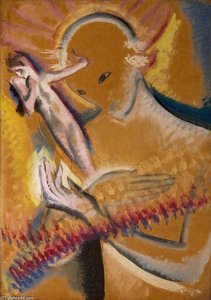
Portret van Charles Henry Sims

De 67 bekendste schilderijen van Charles Henry Sims, een selectie uit de galerie

Bijgewerkt in oktober 2026 · gerangschikt op basis van onze populariteitsscore (zoekopdrachten, bezoeken en bestellingen per kunstwerk) · 67 werken van Charles Henry Sims in onze catalogus

Kortom

Van alle originele werken die Charles Henry Sims heeft nagelaten, is The little faun (1905) in de collectie van het Fitzwilliam Museum de bekendste. Direct daarna volgen Bacchanalia (1900) en Sacrifice (1918). Onze catalogus bevat 67 werken van Charles Henry Sims; de galerie heeft de 67 meest bewonderde werken ter wereld bewaard, elk voorzien van de datum, het museum en het verhaal erachter.

1873 – 1928, Islington Impressionism Meeste werken: Fitzwilliam Museum

De top 10 schilderijen van Charles Henry Sims: de selectie van de galerie

De selectie van Charles Henry Sims gaat verder, van 11 tot 67

De onderwerpen die de aandacht van Charles Henry Sims troffen

De vier onderwerpen die het meest voorkomen in deze originelen, elk met zijn mooiste voorbeeld.

De musea waar de originele werken van Charles Henry Sims worden bewaard

De 5 musea met de meeste schilderijen op deze pagina.

Museum Stad Werken van Charles Henry Sims Schilderijen uit deze lijst
Fitzwilliam MuseumFitzwilliam Museum 2 The little faun, Study Of A Dead Rail
Hermitage Museum, Sint-PetersburgHermitage Museum Sint-Petersburg 1 Bacchanalia
Canadian War Museum, OttawaCanadian War Museum Ottawa 1 Sacrifice
Chartwell, WesterhamChartwell Westerham 1 Two Girls Seated - Diana, And Sarah Churchill
Scottish National Portrait Gallery, EdinburghScottish National Portrait Gallery Edinburgh 1 George V

Charles Henry Sims jaar voor jaar: de originelen die elk jaar definiëren

Van 1900 tot 1918 werkte Charles Henry Sims 19 jaar lang: de selectie volgt deze lange carrière jaar voor jaar, via de mooiste originele werken.

Werken per jaar

Selecteer een jaar om de originele werken te bekijken.

Vragen van verzamelaars over de schilderijen van Charles Henry Sims

Waar is Charles Henry Sims het meest bekend om?Onthul het antwoord

The little faun (1905), Fitzwilliam Museum. Bacchanalia (1900) en Sacrifice (1918) volgen.

Hoe oud was Charles Henry Sims toen The little faun werd gemaakt?Onthul het antwoord

32 jaar oud: The little faun dateert uit 1905, en Charles Henry Sims werd geboren in 1873.

Wat zijn de tien beroemdste schilderijen van Charles Henry Sims?Onthul het antwoord

The little faun, Bacchanalia, Sacrifice, Two Girls Seated - Diana, And Sarah Churchill, My Pain Beneath Thy Sheltering Hand, A Spiritual Idea, Guardian Hands, The Fountain, Saints And Sinners en Aspiration. De bovenstaande ranglijst vermeldt het jaar en het museum van elk werk.

Hoeveel schilderijen heeft Charles Henry Sims nagelaten?Onthul het antwoord

Onze catalogus bevat 67 werken van Charles Henry Sims, daterend van 1900 tot 1918.

In welke musea hangen de meesterwerken van Charles Henry Sims?Onthul het antwoord

Voornamelijk in Fitzwilliam Museum, Hermitage Museum (Sint-Petersburg) en Canadian War Museum (Ottawa). De bovenstaande museumtabel bevat een volledig overzicht.

Wat zijn de eerste en de laatste beroemde originelen van Charles Henry Sims?Onthul het antwoord

Op deze pagina is het vroegste Bacchanalia (1900) en het laatste Sacrifice (1918).

Welke onderwerpen koos Charles Henry Sims het vaakst?Onthul het antwoord

Women (7), Children (5) en Landscape (3), verspreid over de 67 werken op deze pagina.

Bij welke kunststroming behoort Charles Henry Sims?Onthul het antwoord

Impressionism en Expressionism, te oordelen aan de originelen op deze pagina.

Welke werken van Charles Henry Sims hangen in het Fitzwilliam Museum?Onthul het antwoord

The little faun en Study Of A Dead Rail: het Fitzwilliam Museum herbergt 2 van de werken op deze pagina.

Charles Henry Sims: leven en werk

A Life Shrouded in Light and Shadow: The Enigmatic World of Charles Henry Sims

Charles Henry Sims, born in Islington, London, in 1873, remains a compelling figure in British art—a painter whose journey traversed the elegance of Edwardian society to the unsettling depths of personal turmoil and ultimately, outsider artistry. His life was marked by both conventional success and profound tragedy, factors that indelibly shaped his artistic vision. Initially destined for a commercial career within his family’s drapery business, Sims defied expectations, pursuing formal training at South Kensington College of Art before honing his skills in Paris at the prestigious Académie Julian. This early exposure to European artistic currents laid the foundation for his initial acclaim as a portraitist and landscape painter, establishing him within the established art world. However, beneath this veneer of conventional achievement lay a sensibility that would increasingly diverge from accepted norms, particularly after experiencing immense personal loss during World War I.

Early Years and Artistic Training

Sims’ formative years were shaped by his upbringing in a family involved in textiles—a profession that instilled in him an appreciation for meticulous craftsmanship and attention to detail. Despite familial inclinations toward commerce, Sims possessed an unwavering passion for art from a young age. Recognizing this talent, his parents encouraged him to pursue artistic studies, sending him to Paris during 1887-8 to learn commerce, but began full-time art studies at the Royal College of Art in London. This pivotal decision propelled him toward mastering techniques honed at Académie Julian and École des Beaux-Arts—institutions renowned for fostering innovation and challenging established conventions. His artistic education instilled in him a deep understanding of Impressionism and Symbolism, movements that would profoundly influence his subsequent stylistic choices.

Edwardian Portraiture: Delicate Brushwork and Psychological Depth

Sims quickly gained recognition as a portraitist during the Edwardian era—a period characterized by refined sensibilities and aristocratic patronage. His canvases captured the likenesses of prominent figures from London society with remarkable accuracy, yet simultaneously imbued them with subtle psychological nuances that transcended mere representation. He employed delicate brushwork and harmonious palettes—techniques favored by Impressionists—to convey an ethereal quality in his portraits, reflecting the prevailing mood of optimism and grandeur. Critics lauded his ability to capture not only physical appearance but also inner character—a skill that distinguished him from many of his contemporaries. Notable commissions included portraits of members of the Royal Family and influential industrialists, cementing his reputation as one of Britain’s foremost portraitists.

Landscapes Illuminated: The Influence of Impressionism

Alongside his portraiture work, Sims produced a series of landscapes that showcased his mastery of Impressionistic principles. He sought to capture fleeting moments of light and atmosphere—rather than striving for photographic realism—employing broken brushstrokes and vibrant colors to evoke the emotional resonance of natural scenes. His canvases depict idyllic countryside vistas bathed in sunlight—often rendered with hazy blues and greens—creating a sense of tranquility and beauty that embodies the spirit of Impressionism. Landscapes like “Sunshine And Wind” exemplify his ability to transform ordinary subjects into evocative expressions of feeling, demonstrating his profound connection to the natural world.

The Trauma of War: A Shift Towards Symbolism

The outbreak of World War I irrevocably altered Sims’ artistic trajectory—bringing about a devastating personal loss when his son perished in action. This traumatic experience triggered an intense emotional upheaval that propelled him toward exploring themes of grief, spirituality, and mortality—abandoning the polished surfaces of Impressionism for a more expressive and symbolic style. He began incorporating religious imagery into his paintings—often depicting biblical scenes with haunting detail and psychological depth—reflecting his own spiritual quest amidst profound sorrow. This stylistic transformation marked a decisive break from his earlier work, signaling a move toward the realm of outsider art—a genre characterized by unconventional subject matter and emotionally charged visual language.

The ‘Spiritual Ideas’ Series: Controversy and Artistic Vision

Sims' most controversial oeuvre emerged during the years immediately following the war—the ‘Spiritual Ideas’ series. These paintings, executed with a deliberate disregard for conventional artistic standards, depict fantastical landscapes populated by enigmatic figures—often rendered in muted colors and imbued with symbolic imagery. Critics denounced these works as bizarre and disturbing—accusing Sims of indulging in morbid fantasies and rejecting aesthetic beauty altogether. However, proponents argued that the ‘Spiritual Ideas’ series represented a courageous assertion of artistic freedom—a refusal to conform to societal expectations and an unwavering commitment to exploring profound existential questions. Despite widespread disapproval, Sims maintained steadfast belief in his vision—demonstrating an uncompromising dedication to his craft and challenging viewers to confront uncomfortable truths about human experience. His legacy endures as an artist who dared to transcend convention, leaving behind a body of work that continues to provoke debate and inspire contemplation. ##Concluding Remarks: An Artist Beyond Convention Charles Henry Sims’ artistic journey—from Edwardian elegance to Surreal Visions—stands as a testament to the transformative power of personal tragedy and unwavering conviction. He was an artist who defied expectations, rejecting societal norms and embracing unconventional themes—a pioneer in outsider art whose distinctive style continues to resonate with audiences today. His contribution to the Palace of Westminster’s “Building of Britain” series, though initially criticized, now stands as a testament to his bold artistic vision. Sims' story serves as a poignant reminder of the complex relationship between art, life, and the enduring power of individual expression—a legacy secured through the enduring beauty and unsettling profundity of his unforgettable paintings.