A Baroque Revelation in the Heart of Venice
Away from the relentless currents of St. Mark’s Square and the crowded thoroughfares of the Grand Canal lies a sanctuary of profound stillness and artistic splendor: Chiesa di Santa Maria del Giglio . Known to many locals as Santa Maria Zobenigo , this architectural jewel offers a rare, intimate encounter with the soul of Venice. The church’s story is one of remarkable metamorphosis, beginning as a humble 9th-century chapel established by the Jubanico family and evolving into a monumental testament to Venetian maritime prestige. To step before its facade is to witness a dramatic theatricality that defines the Baroque era, where stone and marble are transformed into a narrative of power and devotion.
The exterior of the church serves as a breathtaking prologue to the treasures held within. Reconstructed in the late 17th century under the ambitious patronage of Admiral Antonio Barbaro, the facade—masterfully executed by the architect Giuseppe Sardi—defies traditional religious iconography. Instead of standard hagiographic reliefs, the marble surfaces are adorned with intricate maps and maritime scenes that celebrate Barbaro’s naval triumphs. This unique fusion of secular glory and sacred space creates a striking visual tension, making the church one of the most distinctive architectural landmarks in the Venetian lagoon. For the art lover or interior designer, this facade represents the pinnacle of Venetian Baroque drama, where every carved detail speaks to an era of exploration and aristocratic influence.
A Masterclass in Light and Shadow
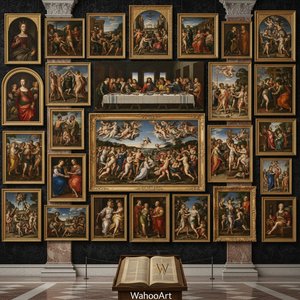
Upon crossing the threshold, the visitor is enveloped by a profound atmosphere of chiaroscuro, where light dances across canvases that define the heights of the Renaissance and Mannerism. The interior serves as a curated gallery of Venetian genius, most notably through the monumental works of Jacopo Tintoretto . His canvases, characterized by their muscular compositions and energetic brushwork, command the nave with a spiritual intensity that seems to vibrate within the very air of the church. These paintings do not merely decorate the space; they animate it, pulling the viewer into dramatic celestial battles and moments of divine revelation.
The collection reaches its zenith in the Molin Chapel, which houses a singular, breathtaking masterpiece by Peter Paul Rubens . This Flemish Baroque treasure provides a magnificent stylistic counterpoint to the Venetian masters, introducing a different richness of color and fleshy vitality that enriches the church's artistic tapestry. Alongside these giants, the works of Giovanni Battista Zanchi offer a contemplative journey through the Via Crucis, adding layers of emotional depth to the sanctuary. For collectors and historians, this convergence of Flemish and Venetian styles within a single sacred space offers an unparalleled opportunity to study the interconnectedness of European Baroque art.
An Enduring Legacy of Faith and Patronage
What truly distinguishes Chiesa di Santa Maria del Giglio is its profound connection to the aristocratic fabric of Venice. The presence of the Barbaro family’s coat of arms serves as a permanent reminder of how private ambition and public piety once intertwined to shape the city's cultural landscape. This sense of history is further enriched by recent exhibitions that have explored the delicate interplay between art, spirituality, and the patronage that allowed such beauty to flourish. The church remains not merely a relic of the past, but a living monument that continues to inspire awe through its seamless blend of architectural grandeur and painterly brilliance.
For those seeking an authentic Venetian experience—one that transcends the typical tourist circuit—this hidden gem offers a tranquil respite. It is a place where one can contemplate the enduring legacy of innovation, from Sardi’s sculptural marble to Rubens’ emotive brushstrokes. Whether you are drawn by the architectural audacity of its facade or the spiritual weight of its collection, Santa Maria del Giglio stands as an essential destination for anyone captivated by the eternal beauty of the Venetian Baroque.