

A Hidden Renaissance Gem: The Camera di San Paolo
Discover a breathtaking example of Renaissance artistry at the Camera di San Paolo in Parma, Italy. This hidden gem offers visitors a unique glimpse into 16th-century monastic life and showcases the masterful illusionistic frescoes of Correggio.
History & Context
The Camera di San Paolo, also known as the Abbess' Chamber, is located within the former Monastery of San Paolo. Originally commissioned in 1519 by Abbess Giovanna Piacenza, the chamber was intended as a private space for the abbess and decorated with frescoes by Alessandro Araldi before Correggio took over the project. The work reflects the wealth and influence of the Benedictine monastery at the time.
Architectural & Artistic Highlights
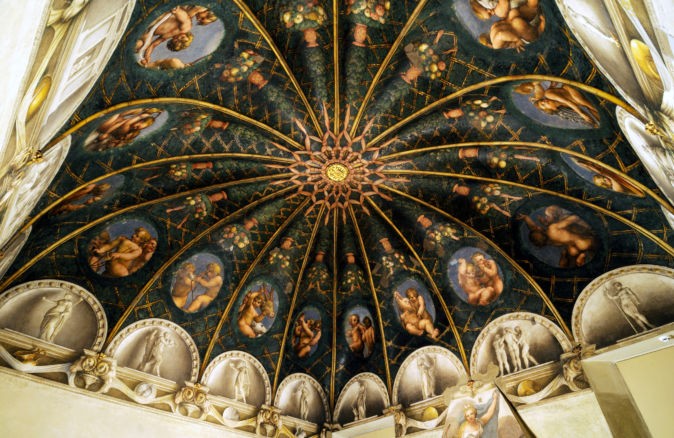
The room itself is relatively small, but its impact is immense. The late-Gothic vault provides a perfect canvas for Correggio’s illusionistic masterpiece. Key features include:
- Illusionistic Frescoes: The frescoes create the impression of a pergola opening to the sky, complete with painted bamboo ribs and playful putti (cherubs) symbolizing hunting.
- Trompe-l'œil Effects: Simulated statues in niches and carefully rendered lighting add depth and realism to the scene.
- Diana Fresco: Above the fireplace, Correggio painted a depiction of the Roman goddess Diana on a chariot, symbolizing purity and alluding to Abbess Giovanna’s qualities.
- Symbolic Imagery: Ram heads and other motifs are interwoven throughout the decoration, potentially referencing zodiac signs and seasonal themes.
What Makes it Unique?
The Camera di San Paolo is remarkable for several reasons:
- Masterful Illusionism: Correggio’s innovative use of perspective and light creates a truly immersive experience.
- Hidden History: The chamber remained largely unknown for two centuries after its completion, preserving its beauty for future generations.
- Influence on Art History: The frescoes significantly influenced other artists of the period, including Parmigianino.
Visiting Information
The Camera di San Paolo is open to the public as part of a museum complex. It offers an intimate and unforgettable encounter with Renaissance art and provides valuable insights into the life and culture of 16th-century Italy. Plan your visit today to experience this extraordinary hidden treasure!