Yun Shouping portretas

Yun Shouping tapiai: 25 garsiausi πίναšiai, galerijos akimis

Atnaujinta lapkritis 2026 · pagal mūsų populiarumumo koeficientą (paieškos, lankytojai ir užsakymai kiekvienam kūriniui) · 25 Yun Shouping darbai mūsų kataloge

Trumpai tariant

Galerijos akimais, garsiausias Yun Shouping tapas yra Untitled (D2X9GB) (701), kurio originalas eksponuojamas Metropolitano meno muziejus, Niujorkas. 清 惲壽平 倣宋元山水圖 冊 Landscapes in the Manner of Song and Yuan Masters (1667) ir Bamboo and Trees in a Rockery (1680) užbaia trio, kurį atpažįsta kiekvienas ž)/\ Iš 25 Yun Shouping darbų mūsų kataloge, galerija žemiau pristato 25 garsiausius – kiekvienas yra originalus, su nurodytu metais, muziejumi bei unikaliu aprašymu.

1633 – 1690, Wujin distriktas Daugiausia darbų: Harvard Art Museums

10 geriausių galerijos Yun Shouping paveikslų

1
Untitled (D2X9GB) (701) aut. Yun Shouping

Untitled (D2X9GB)

701 · Metropolitano meno muziejus, Niujorkas

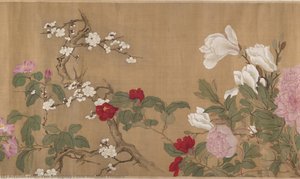
A single flowering branch extends across a muted brown field, its blossoms captured in a moment of quiet expansion. The composition relies on a delicate balance between the dark, fluid lines of the wood and the soft, luminous petals that emerge from it. Through a series of layered ink and watercolor washes, the artist achieves a sense of volume and depth, allowing the flowers to appear as if they possess…

3
Bamboo and Trees in a Rockery (1680) aut. Yun Shouping

Bamboo and Trees in a Rockery

1680 · Ink · Detroito meno institutas, Detroitas

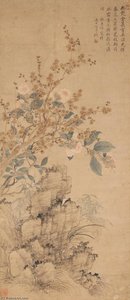
This work, titled Bamboo and Trees in a Rockery, was executed by Yun Shouping. It dates to about 1680, a period during which the artist was establishing his presence as a major figure of the early Chinese Qing dynasty. The painting offers a quiet glimpse into the natural world through the lens of a scholar-painter who found his calling in the intimate details of flora and stone.

4
Herbaceous Peony (1685) aut. Yun Shouping

Herbaceous Peony

1685 · Ink On Paper · Cleveland Museum of Art, Klevlandas

In Herbaceous Peony, Yun Shouping focuses on the botanical essence of the Paeonia lactiflora. The subject matter is purely botanical, centering on the life cycle and form of this perennial plant. Known for its ability to die back to ground level each autumn before reappearing in spring, the peony is a staple of the natural world. In this work, the artist captures the plant's characteristic growth, typically reaching a height…

5
Landscape After Mi Fei (1051-1107) (1683) aut. Yun Shouping

Landscape After Mi Fei (1051-1107)

1683 · Ink On Paper · Harvard Art Museums, Kembrižas

Mist clings to the jagged ridges of the mountains, blurring the line between the earth and the heavens. In this monochrome landscape, the world feels suspended in a quiet, eternal breath. The eye travels upward, guided by a multi-layered perspective that moves from the detailed textures of the foreground through a veil of fog toward towering, peaked summits. Every stroke of ink suggests a mountain's weight or the lightness of…

6
Landscape after Cao Zhibo (1272-1355) (1683) aut. Yun Shouping

Landscape after Cao Zhibo (1272-1355)

1683 · Ink On Paper · Harvard Art Museums, Kembrižas

This traditional Chinese ink wash painting on paper, dated 1683, presents a serene landscape characterized by a delicate and refined style. The composition is anchored in the foreground by several large, weeping willow trees, whose long, slender branches cascade downward in graceful, rhythmic curves. These branches are defined by fine, expressive lines that capture both the texture of the bark and the lightness of the foliage. The color palette remains…

7
Landscape After Li Tang (ca. 1070-ca. 1150) (1683) aut. Yun Shouping

Landscape After Li Tang (ca. 1070-ca. 1150)

1683 · Ink On Paper · Harvard Art Museums, Kembrižas

This monochrome ink wash painting, created in 1683, presents a vertical landscape in the traditional Chinese style. The composition utilizes a high-angle, bird's-eye view to establish an immense sense of depth and scale. The scene is structured across several distinct planes: a foreground composed of large, textured rocks and bamboo-like plants; a middle ground featuring a small structure and a cascading waterfall; and a background of swirling, cloud-like mountain peaks.

8
Landscape After Oubo Laoren (Zhao Mengfu, 1254-1322) (1683) aut. Yun Shouping

Landscape After Oubo Laoren (Zhao Mengfu, 1254-1322)

1683 · Ink On Paper · Harvard Art Museums, Kembrižas

Created in 1683, this work reflects a deep engagement with classical themes, specifically referencing the style of Zhao Mengfu. The painting captures a specific moment of contemplation, where the landscape becomes a vessel for peace. The high-angle view invites a sense of looking down upon a world that is both expansive and intimate. Through the use of soft washes and layered colors, the scene achieves a sense of organic life,…

9
Landscape After Xu Ben (1335-1380) (1683) aut. Yun Shouping

Landscape After Xu Ben (1335-1380)

1683 · Ink On Paper · Harvard Art Museums, Kembrižas

This traditional Chinese landscape painting is executed in monochrome ink on paper or silk, presenting an elegant and lyrical aesthetic. The composition is structured through a clear foreground, middle ground, and background, which establishes a sense of atmospheric depth. In the foreground, slender, stylized trees with delicate branches and clusters of needles or leaves lean toward the center, positioned alongside jagged rock formations on the left and a small waterfall.…

10
Landscape After Wang Meng (ca. 1308-1385) (1683) aut. Yun Shouping

Landscape After Wang Meng (ca. 1308-1385)

1683 · Ink On Paper · Harvard Art Museums, Kembrižas

This traditional Chinese landscape painting, executed in a fine and delicate style, features a vertical composition that utilizes a high-angle perspective to create a sense of immense depth. The scene depicts a mountainous terrain characterized by rocky outcrops, winding paths, and lush vegetation. Small architectural structures are nestled among the cliffs, while figures can be seen traveling through the landscape. The color palette is sophisticated and muted, dominated by earthy…

Yun Shouping tapiai, rangos nuo 11 iki 25

Temos, kurios domino Yun Shouping

Ketverios temos, dažniausiai pasikrausto originaluose, kiekvienos su savo puikiausiu pavyzdžiu.

Muziejai, kuriuose saugomi Yun Shouping originalūs darbai

5 muziejai, kuriuose saugoma daugiausia šioje pusėje esamų paveikslų.

Muzejaus Miestas Yun Shouping darbai Šiojo sąrašo paveikslai
Harvard Art Museums, KembrižasHarvard Art Museums Kembrižas 8 Landscape After Mi Fei (1051-1107), Landscape after Cao Zhibo (1272-1355), Landscape After Li Tang (ca. 1070-ca. 1150)
Metropolitano meno muziejus, NiujorkasMetropolitano meno muziejus Niujorkas 7 Untitled (D2X9GB), 清 惲壽平 倣宋元山水圖 冊 Landscapes in the Manner of Song and Yuan Masters, 清 傳惲壽平 夏夜清荷圖 軸 Lotuses on a Summer Evening
Detroito meno institutas, DetroitasDetroito meno institutas Detroitas 1 Bamboo and Trees in a Rockery
Cleveland Museum of Art, KlevlandasCleveland Museum of Art Klevlandas 1 Herbaceous Peony
National Palace Museum, TaipeisNational Palace Museum Taipeis 1 Peonies

Yun Shouping, pagrindiniai kiekvienų metų paveiksliai

19 metų Yun Shouping kūrybos, nuo 1667 iki 1685: galerija seka jų darbų eigą, pateikdama garsiausius kiekvienų metų originalus.

Darbai pagal metus

Pasirinkite metus, kad pamatytumėte originalus darbus.

Yun Shouping tapyiniai: galerijos atsakymai

Kuris Yun Shouping paveikslas yra pats garsiausias iš visų?Atsakymas

Untitled (D2X9GB) (701), Metropolitano meno muziejus, Niujorkas. Toliau seka 清 惲壽平 倣宋元山水圖 冊 Landscapes in the Manner of Song and Yuan Masters (1667) ir Bamboo and Trees in a Rockery (1680).

Kuriose yra 10 geriausių Yun Shouping paveikslų?Atsakymas

Untitled (D2X9GB), 清 惲壽平 倣宋元山水圖 冊 Landscapes in the Manner of Song and Yuan Masters, Bamboo and Trees in a Rockery, Herbaceous Peony, Landscape After Mi Fei (1051-1107), Landscape after Cao Zhibo (1272-1355), Landscape After Li Tang (ca. 1070-ca. 1150), Landscape After Oubo Laoren (Zhao Mengfu, 1254-1322), Landscape After Xu Ben (1335-1380) ir Landscape After Wang Meng (ca. 1308-1385). Viršuje esančioje reitingo sąraše nurodyta kiekvieno kūrinio metis ir muziejus.

Kiek kūrinių sukūrė Yun Shouping?Atsakymas

Mūsų kataloge yra 25 Yun Shouping darbų, skirtų laikotarpiui nuo 1667 iki 1685.

Kur kabinami garsiausi Yun Shouping originalūs darbai?Atsakymas

Daugiausia – Harvard Art Museums (Kembrižas), Metropolitano meno muziejus (Niujorkas) ir Detroito meno institutas (Detroitas). Viršuje esančiame muziejų sąraše yra visi jie.

Kada Yun Shouping sukūrė savo garsiausias paveikslus?Atsakymas

1683 laikotarpiu: 8 iš 25 šioje pusėje esančių darbų buvo sukurtos tada, iš jų Landscape After Mi Fei (1051-1107).

Kokie yra ankstyviausi ir vėliausi garsieji Yun Shouping kūriniai?Atsakymas

Šioje pusėje seniausias darbas yra 清 惲壽平 倣宋元山水圖 冊 Landscapes in the Manner of Song and Yuan Masters (1667), o naujausias – Herbaceous Peony (1685).

Kurią temą Yun Shouping kūrė dažniausiai?Atsakymas

Trees (10), Mountains (9) ir Rocks (5) iš 25 šioje pusėje esamų darbų.

Kurią techniką Yun Shouping naudojo dažniausiai?Atsakymas

Ink On Paper, iš 25 šios puslapio darbų – 10.

Kurių Yun Shouping originalų turi Harvard Art Museums?Atsakymas

Landscape After Mi Fei (1051-1107), Landscape after Cao Zhibo (1272-1355) ir Landscape After Li Tang (ca. 1070-ca. 1150): Harvard Art Museums, Kembrižas kolekcijoje yra 8 šioje pusėje esančių darbų.

Yun Shouping: menininkas

A Master of Blossoms and Breath

Born in the turbulent year of 1633 in Wujin, Jiangsu province, Yun Shouping—often revered by his sobriquet Nantian—emerged from a period of profound historical upheaval. As the Ming Dynasty crumbled and the Qing era took hold, Yun found himself navigating a world in transition. Though born into an impoverished family that could not afford the formal education required for the civil service examinations, he did not allow circumstance to stifle his spirit. Instead, he turned inward toward the natural world, devoting himself to the pursuit of the three perfections: painting, poetry, and calligraphy. From his earliest years, his soul was entwined with the delicate beauty of nature, a passion famously captured in his childhood compositions of poetry centered around lotus blossoms.

His artistic journey was one of remarkable evolution and profound transformation. While he initially trained in the rigorous traditions of landscape painting, a pivotal encounter with the works of the master Wang Hui altered the course of his career forever. Captivated by new possibilities, Yun transitioned from the grand vistas of mountains and rivers to the intimate, vibrant world of flora and fauna. This shift led to the founding of the Ch'ang-chou school, a movement that would redefine Chinese aesthetics for generations. He became a central figure among the celebrated Six Masters of the early Qing period, standing alongside luminaries such as Wu Li and the Four Wangs, creating a legacy that bridged the gap between classical tradition and a new, expressive vitality.

The Revolution of the Boneless Style

What truly set Yun Shouping apart from his contemporaries was his masterful command of the mogu, or "boneless" technique. Moving away from the rigid, ink-defined outlines that characterized much of traditional Chinese painting, Yun sought to capture the very essence and inner breath of his subjects through soft washes of color and delicate gradations. By imitating the 11th-century methods of Xu Xi, he achieved a sense of organic fluidity that made his flowers and birds appear to pulse with life. His palette was daring for its time; he embraced rich, saturated hues of reds and purples—colors that some traditionalists dismissed as gaudy—to convey the true splendor of a blooming peony or a sun-drenched petal.

This technique allowed him to achieve a breathtaking balance between structure and spontaneity. In his hands, a branch was not merely a line on paper, but a living limb, and a blossom was not just a shape, but a fleeting moment of seasonal beauty. His work often embodied the following characteristics:

  • Expressive Vitality: A profound ability to depict the "spirit resonance" or life force of plants and animals.
  • Coloristic Innovation: The use of vibrant, layered washes to create depth without the need for harsh borders.
  • Poetic Symbiosis: An inseparable connection between his visual imagery and the lyrical sentiment of his calligraphy and poetry.
  • Naturalism through Abstraction: A way of capturing the true likeness of nature through soft, impressionistic strokes rather than anatomical precision.

A Lasting Legacy in the Qing Dynasty

The historical significance of Yun Shouping cannot be overstated. He did not merely participate in the art of his era; he revitalized it. By breathing new life into the flower-and-bird genre, he provided a much-needed aesthetic refreshment to a landscape painting tradition that had become increasingly preoccupied with imitating ancient styles. His Ch'ang-chou school became a beacon of individual expression, emphasizing a deep, emotional connection to the natural world that resonated with the literati class. Even as his techniques were refined and passed down through generations—notably by his daughter, Bing—the core of his vision remained: a celebration of the ephemeral beauty found in the smallest corner of the earth.

Today, Yun Shouping is remembered not just as a painter of petals, but as a poet of the brush. His ability to find the infinite within the minute remains a cornerstone of Chinese art history. Through his "boneless" mastery, he taught the world that strength does not always require a hard edge, and that true beauty often resides in the softest, most delicate transitions of light and color.