William Spreat portretas

William Spreat tapiai: 7 garsiausi πίναšiai, galerijos akimis

Atnaujinta lapkritis 2026 · pagal mūsų populiarumumo koeficientą (paieškos, lankytojai ir užsakymai kiekvienam kūriniui) · 7 William Spreat darbai mūsų kataloge

Trumpai tariant

Galerijos akimais, garsiausias William Spreat paveikslas yra Clifford Bridge on Teign (1881). Ogwell Mill, Devon (1847) ir Evening on the River Walkham (1880) užbaia trio, kurį atpažįsta kiekvienas ž)/\ Iš 7 William Spreat darbų mūsų kataloge, galerija žemiau pristato 7 garsiausius – kiekvienas yra originalus, su nurodytu metais, muziejumi bei unikaliu aprašymu.

1816 – 1897 Romanticism Daugiausia darbų: Royal Albert Memorial Museum

10 geriausių galerijos William Spreat paveikslų

1
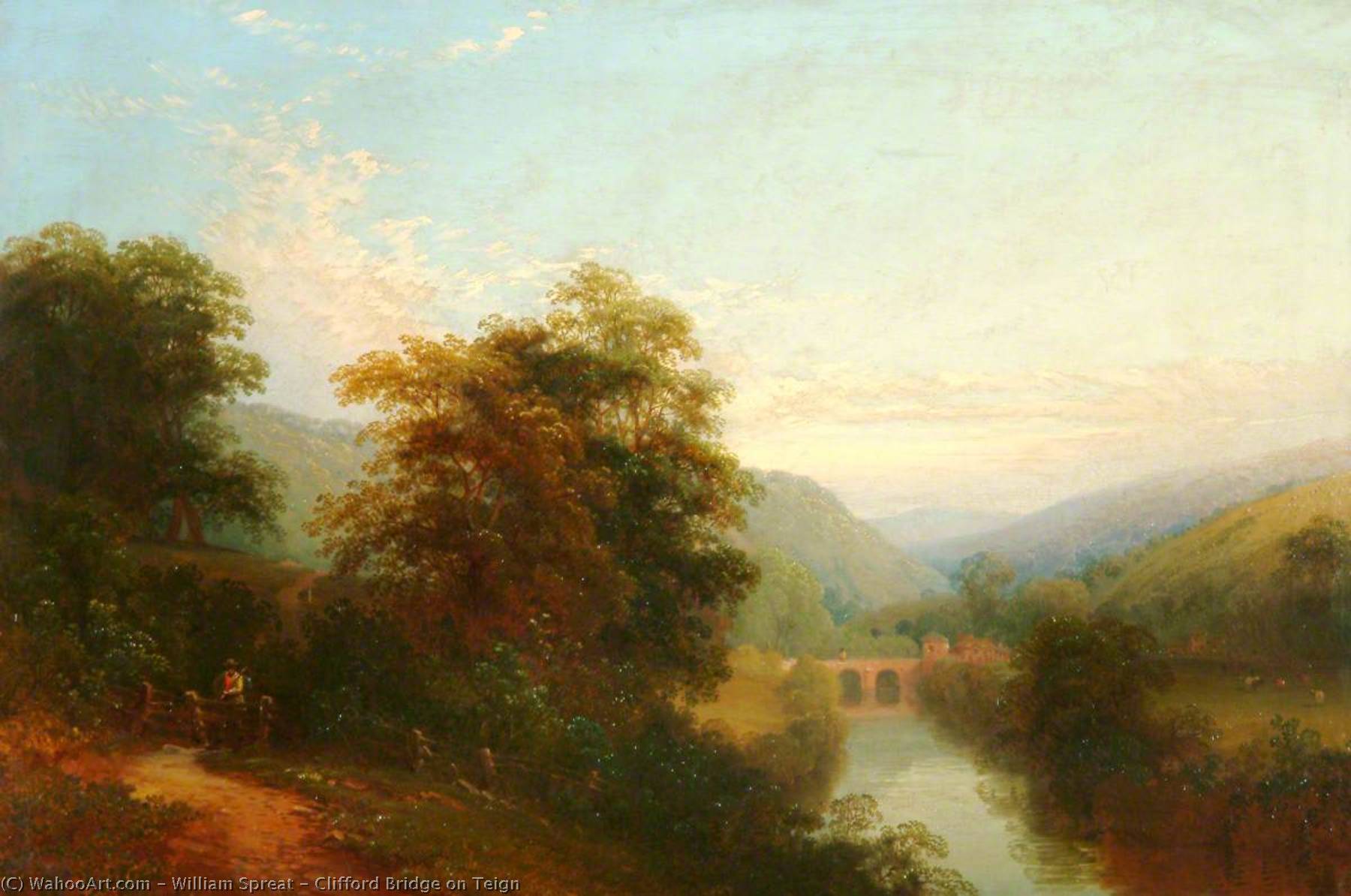
Clifford Bridge on Teign (1881) aut. William Spreat

Clifford Bridge on Teign

1881

The painting Clifford Bridge on Teign by William Spreat is a stunning representation of a tranquil landscape, showcasing the artist's mastery in capturing the essence of nature. Created in 1881, this oil on canvas piece measures 52 x 77 cm and is currently located at the Southampton City Art Gallery in the United Kingdom. Artistic Style and Composition The painting features a serene river flowing through the countryside, with mountains…

6
Dedham Bridge on Tavy (1881) aut. William Spreat

Dedham Bridge on Tavy

1881

The painting Dedham Bridge on Tavy by William Spreat is a beautiful representation of a tranquil landscape, showcasing the artist's mastery in capturing the essence of nature. Created in 1881, this oil on canvas piece measures 51 x 77 cm and is currently located at the Southampton City Art Gallery (United Kingdom). Composition and Style The composition of the painting depicts a picturesque scene of a river flowing through a…

Temos, kurios domino William Spreat

Ketverios temos, dažniausiai pasikrausto originaluose, kiekvienos su savo puikiausiu pavyzdžiu.

Muziejai, kuriuose saugomi William Spreat originalūs darbai

1 muziejai, kuriuose yra daugiausia šioje puslapyje esamų paveikslų.

Muzejaus Miestas William Spreat darbai Šiojo sąrašo paveikslai
Royal Albert Memorial Museum, ExeterRoyal Albert Memorial Museum Exeter 3 Ogwell Mill, Devon, Holy Street Mill on the Teign, Devon, Bradley Vale, Newton Abbot, Devon

William Spreat, pagrindiniai kiekvienų metų paveiksliai

35 metų William Spreat kūrybos, nuo 1847 iki 1881: galerija seka jų darbų eigą, pateikdama garsiausius kiekvienų metų originalus.

Darbai pagal metus

Pasirinkite metus, kad pamatytumėte originalus darbus.

William Spreat tapyiniai: galerijos atsakymai

Kuris William Spreat paveikslas yra pats garsiausias iš visų?Atsakymas

Clifford Bridge on Teign (1881). Toliausiai eina Ogwell Mill, Devon (1847) ir Evening on the River Walkham (1880).

Kiek metų buvo William Spreat, kai sukūrė Clifford Bridge on Teign?Atsakymas

65 metų amžiaus: Clifford Bridge on Teign sukurta 1881 m. Nr. William Spreat gimė 1816.

Kiek kūrinių sukūrė William Spreat?Atsakymas

Mūsų kataloge yra 7 William Spreat darbų, skirtų laikotarpiui nuo 1847 iki 1881.

Kur kabinami garsiausi William Spreat originalūs darbai?Atsakymas

Daugiausia – Royal Albert Memorial Museum (Exeter). Viršuje esančiame muziejų sąraše yra visi jie.

Kada William Spreat sukūrė savo garsiausias paveikslus?Atsakymas

1880 laikotarpiu: 2 iš 7 šioje pusėje esančių darbų buvo sukurtos tada, iš jų Evening on the River Walkham.

Kokie yra ankstyviausi ir vėliausi garsieji William Spreat kūriniai?Atsakymas

Šioje pusėje seniausias darbas yra Ogwell Mill, Devon (1847), o naujausias – Clifford Bridge on Teign (1881).

Kurią temą William Spreat kūrė dažniausiai?Atsakymas

Landscape painting (2) ir River valley scene (2) iš 7 šioje pusėje esamų darbų.

Su kokiu kierliu siejama William Spreat?Atsakymas

Romanticism, vadovaujantis šios puslapio originalais kūriniais.

Kurių William Spreat originalų turi Royal Albert Memorial Museum?Atsakymas

Ogwell Mill, Devon, Holy Street Mill on the Teign, Devon ir Bradley Vale, Newton Abbot, Devon: Royal Albert Memorial Museum, Exeter kolekcijoje yra 3 šioje pusėje esančių darbų.

William Spreat: menininkas

The Visionary Landscapes of William Spreat

William Spreat (1816–1897) stands as a singular figure in Victorian landscape painting, recognized for his deeply expressive canvases that captured the spirit of Britain’s dramatic countryside and infused them with philosophical contemplation. Unlike many of his contemporaries who prioritized meticulous realism, Sprend pursued an artistic vision rooted in Romantic ideals—a fascination with sublime beauty and a belief in art's capacity to convey profound emotional truths. His distinctive style cemented him as one of the foremost landscape artists of his era, leaving behind a legacy that continues to inspire admiration for its lyrical quality and psychological depth.

Born in Worcestershire, England, Spreat’s formative years were marked by an upbringing steeped in intellectual curiosity, fostered by a father who was a clergyman with a passion for geology and natural history. This early exposure instilled within him a profound appreciation for the grandeur of the natural world—a fascination that would profoundly shape his artistic endeavors. Despite familial expectations favoring a conventional academic path, Spreat defied convention and pursued independent study under the tutelage of John Ruskin, the influential Victorian critic and artist who championed the moral significance of art. Ruskin’s teachings instilled in Spreat a conviction that landscape painting should serve as a vehicle for conveying spiritual ideas and exploring the relationship between humanity and nature—a guiding principle throughout his artistic career.

A Mastery of Atmosphere and Emotion

Spreat's artistic style quickly distinguished itself from prevailing trends, prioritizing emotional resonance over photographic accuracy. He eschewed detailed topographical representations in favor of compositions that prioritized atmosphere and mood, employing subtle tonal gradations and expressive brushstrokes to evoke feelings of tranquility or awe. His work often features the lush, verdant landscapes of the English countryside, where light and shadow dance across riverbanks and valleys to create a sense of living, breathing nature.

In masterpieces such as Clifford Bridge on Teign and Dedham Bridge on Tavy, one can observe his remarkable ability to balance serene realism with Romantic sentiment. These works often depict:

  • Tranquil Waterways: Rivers flowing through peaceful valleys, serving as the lifeblood of his compositions.
  • Lush Vegetation: Detailed yet atmospheric depictions of trees, bushes, and grazing livestock that ground the viewer in the pastoral beauty of Britain.
  • Atmospheric Perspective: The use of soft light and distant mountains to create a profound sense of depth and dimensionality.

His technique, particularly in oil on canvas, allowed him to capture the fleeting qualities of light, making his scenes feel as though they were caught in a moment of eternal stillness. Whether depicting the industrious Holy Street Mill on the Teign or the quiet solitude of Landscape with River and Fishermen, Spreat’s brushwork remained sensitive to the textures of the natural world.

Legacy and Historical Significance

The historical significance of William Spreat lies in his ability to bridge the gap between the meticulous observation of the naturalist and the emotional depth of the Romantic poet. While some of his works lean toward the Realism movement through their accurate depiction of everyday life, they are never devoid of a certain spiritual or psychological weight. His paintings do not merely record a location; they interpret an experience.

Today, Spreat's contributions to the Victorian art canon are preserved in esteemed institutions such as the Southampton City Art Gallery. His ability to infuse the English landscape with a sense of the sublime ensures that his work remains more than just historical documentation; it remains a window into a period when art sought to find the divine within the earthly, and where every river, bridge, and mountain held the potential for profound human connection.