


1


Atnaujinta spalis 2026 · pagal mūsų populiarumumo koeficientą (paieškos, lankytojai ir užsakymai kiekvienam kūriniui) · 27 William Payne darbai mūsų kataloge
Trumpai tariant
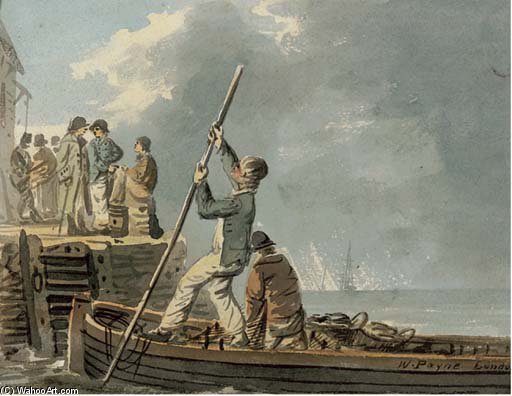
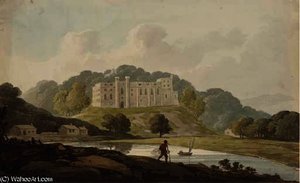
Galerijos akimais, garsiausias William Payne paveikslas yra View From Stonehouse Bridge, Plymouth. View Of Bury Castle, Near Totnes, Devon ir Casting Off From The Quay užbaia trio, kurį atpažįsta kiekvienas ž)/\ Iš 27 William Payne darbų mūsų kataloge, galerija žemiau pristato 27 garsiausius – kiekvienas yra originalus, su nurodytu metais, muziejumi bei unikaliu aprašymu.



 A Horse Drawn Carriage
12
 Combe Martin, Devon
13
 A landscape with castle
14
 Horses Grazing In A Rural Landscape With Castle Ruins Beyond
15
 A Gaff-rigged Cutter In A Coastal Inlet, Devon
16
 Tivoli
17
 View Near Cardigan, South Wales
18
 River In Devon
19
 Self Portrait
20
 Country Folk Fetching Water At A Stream
21
 Shipping Lying On The Tamar Before Pentillie Castle
22
 Near Plymouth, Devon
23
 A Wooded River Landscape With Figures In The Foreground, Traditionally Identified As 'on The Teign'
24
 Sarah webb
25
 Fisherfolk On The Banks Of The Tamar
26
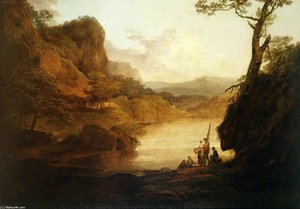 View On The Wye
27
 A Cowherd And Cattle On A Track In A Mountainous Landscape
Ketverios temos, dažniausiai pasikrausto originaluose, kiekvienos su savo puikiausiu pavyzdžiu.
1 muziejai, kuriuose yra daugiausia šioje puslapyje esamų paveikslų.
| Muzejaus | Miestas | William Payne darbai | Šiojo sąrašo paveikslai |
|---|---|---|---|
 National Library of Wales |
Aberystwyth | 1 | Swallow Falls |
View From Stonehouse Bridge, Plymouth. Toliausiai eina View Of Bury Castle, Near Totnes, Devon ir Casting Off From The Quay.
View From Stonehouse Bridge, Plymouth, View Of Bury Castle, Near Totnes, Devon, Casting Off From The Quay, Swallow Falls, Belle Vue From The Passage At Cap Down, River Tamar, Cornwall, Travellers Crossing A Bridge, Children before a rustic cottage; and smugglers' cove, Travellers Gossiping At The Wayside, Caernarvon Castle, Wales ir Smugglers Conversing. Viršuje esančioje reitingo sąraše nurodyta kiekvieno kūrinio metis ir muziejus.
Mūsų kataloge yra 27 darbų autoriaus William Payne.
Daugiausia – National Library of Wales (Aberystwyth). Viršuje esančiame muziejų sąraše yra visi jie.
Landscape (6), Buildings (4) ir Rural scene (2) iš 27 šioje pusėje esamų darbų.
Romanticism, vadovaujantis šios puslapio originalais kūriniais.
In the quiet annals of art history, certain names resonate not through the sheer volume of their fame, but through the profound chemical and technical shifts they introduced to the canvas. William Payne (1760–1830) was such a figure—a man whose hands did more than merely guide a brush; they redefined the very vocabulary of watercolor. Born in Devon, England, Payne’s journey began far from the prestigious drawing rooms of London. His early professional life was rooted in the precision of engineering and draughtsmanship, serving as a skilled hand within the Board of Ordnance at the Tower of London. This rigorous training in mathematics and perspective provided him with a structural foundation that would later allow him to master the more ephemeral elements of the natural world.
As he transitioned from the meticulous duties of a draughtsman to the expressive freedom of a landscape painter, Payne sought to move beyond the era's obsession with mere topography. While many of his contemporaries were content to produce literal, almost clinical records of landmarks, Payne looked toward the Picturesque. Influenced by the aesthetic theories of William Gilpin, he began to view the landscape not as a collection of static objects, but as a living, breathing entity shaped by light, moisture, and shadow. His move to London in 1790 marked the beginning of his ascent as the city's most fashionable drawing master, where he taught a new generation how to capture the emotional essence of a scene rather than just its physical boundaries.
The true genius of Payne lay in his experimental spirit, particularly his ability to manipulate pigments to mimic the elusive qualities of the English sky. His most enduring contribution to the artist's palette remains the invention of Payne’s Grey. This subtle, neutral tint—a sophisticated marriage of indigo, raw sienna, and lake—offered watercolorists a way to render deep shadows and stormy atmospheres without the muddying effect of traditional blacks. Through this single innovation, he provided a tool that could capture the nuanced transition from twilight to dusk, or the heavy, moisture-laden clouds of a coastal storm.
Beyond his palette, Payne revolutionized the physical application of watercolor. He abandoned the rigid reliance on pen outlines, favoring instead a method of building depth through layers of translucent washes. His techniques were nothing short of revolutionary for the time:
These methods allowed him to achieve a sense of atmospheric perspective that was previously difficult to sustain in the medium. His work possessed a tactile quality, where the viewer could almost feel the dampness of the Devonshire air or the warmth of sunlight breaking through a canopy.
Though his name may not carry the immediate weight of a Turner or a Constable in popular consciousness, Payne’s influence was foundational to the development of the Romantic landscape movement. By shifting the focus from the topographical to the poetic, he paved the way for an art form that prioritized feeling and atmosphere over factual accuracy. His success as a teacher ensured that his "tricky" and innovative methods were disseminated throughout the British art scene, influencing notable pupils such as John Glover.
Ultimately, William Payne stands as a bridge between the disciplined draughtsmanship of the eighteenth century and the expressive, emotive watercolor traditions of the nineteenth. He transformed a medium once used for mere documentation into a powerful vehicle for poetic expression. Every time a modern artist reaches for that deep, moody blue-grey to depict a twilight sky, they are participating in a visual legacy that began with the inquisitive mind and steady hand of this Devon-born innovator.


