


1


Atnaujinta lapkritis 2026 · pagal mūsų populiarumumo koeficientą (paieškos, lankytojai ir užsakymai kiekvienam kūriniui) · 5 William Henry Powell darbai mūsų kataloge
Trumpai tariant
Iš visų paliktų originalų kūrinių William Henry Powell garsiausias yra DR. WILLLIAM SMITH (1841), esantis Cincinnati Art Museum kolekcijoje, Sinciatiati. Tiesiog už jų seka Discovery of the Mississippi by De Soto (1847) ir Portrait of Alexandre Dumas (1855). Mūsų kataloge yra 5 darbų autoriaus William Henry Powell; galerija išsaugojo 4 labiausiai pasaulyje žyminiausių kūrinių – kiekvienas jų pateikiamas su datos, muziejaus ir istorijos aprašymu.
3 muziejai, kuriuose saugoma daugiausia šioje pusėje esamų paveikslų.
| Muzejaus | Miestas | William Henry Powell darbai | Šiojo sąrašo paveikslai |
|---|---|---|---|
 Cincinnati Art Museum |
Sinciatiati | 1 | DR. WILLLIAM SMITH |
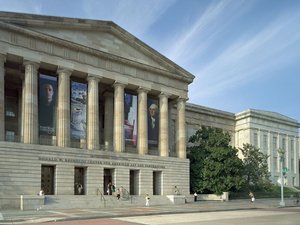 Smithsonian American Art Museum |
Vašingtonas | 1 | Portrait of Alexandre Dumas |
 Jungtinių Valstijų Kapitolijus |
Vašingtonas | 1 | Battle of Lake Erie |
Pasirinkite dešimtmetį, kad pamatytėte jį apibrėžusį originalą.


DR. WILLLIAM SMITH (1841), Cincinnati Art Museum, Sinciatiati. Toliau seka Discovery of the Mississippi by De Soto (1847) ir Portrait of Alexandre Dumas (1855).
18 metų amžiaus: DR. WILLLIAM SMITH sukurta 1841 m. Nr. William Henry Powell gimė 1823.
Mūsų kataloge yra 5 William Henry Powell darbų, skirtų laikotarpiui nuo 1841 iki 1873.
Daugiausia – Cincinnati Art Museum (Sinciatiati), Smithsonian American Art Museum (Vašingtonas) ir Jungtinių Valstijų Kapitolijus (Vašingtonas). Viršuje esančiame muziejų sąraše yra visi jie.
1840s laikotarpiu: 2 iš 4 šioje pusėje esančių darbų buvo sukurtos tada, iš jų DR. WILLLIAM SMITH.
Šioje pusėje seniausias darbas yra DR. WILLLIAM SMITH (1841), o naujausias – Battle of Lake Erie (1873).
New York City, 1823. William Henry Powell enters the world on February 14. He remains tied to this urban landscape throughout his life, a city that provides both his beginning and his end. Before he becomes a fixture in the American art scene, he seeks out the guidance of Henry Inman. Under Inman’s instruction in New York City, Powell develops the technical foundation required for the large-scale historical subjects that would later define his career.
The trajectory of his professional life moves toward institutional recognition. His skill earns him an election into the National Academy of Design, a significant milestone in his development as an American painter. He navigates the competitive circles of the mid-19th century, establishing himself within the formal structures of the art world. He remains active in the creative community until his death in New York City on October 6, 1879.
The trajectory of Powell's career shifts in 1847 when the United States Congress issues a specific commission. They task him with painting the final large historical work for the Capitol rotunda. He settles on the subject of the discovery of the Mississippi River by Hernando de Soto. By 1853, the work is complete. Its reception across the nation triggers a new wave of interest in his ability to render historical drama.
This momentum leads the Ohio legislature to request a depiction of Oliver Hazard Perry's victory during the War of 1812. The resulting work, Perry’s Victory on Lake Erie, gains immense popularity. The scale of the success prompts the United States Congress to request a second version in 1865. This copy is destined for a stairwell in the north side of the Capitol building. Powell works from a temporary studio in Washington, D.C., to finish this larger iteration by 1873.
History provides the primary engine for Powell's brush. He turns toward the monumental, capturing the scale of national turning points. In 1853, he completed Discovery of the Mississippi by De Soto A.D. 1541, a work that secured his standing after a major commission from the United States Congress. This focus on significant historical events continued with his depiction of the Battle of Lake Erie. The scale of this subject was so immense that it required multiple iterations; one copy of the Battle of Lake Erie resides in the Ohio state capitol building, while another hangs within the United States Capitol.
Beyond the grand theater of war and exploration, Powell also captured the quiet, human friction found in social settings. In 1860, he produced an oil sketch titled Two Central Figures in "Derby Day". This work shifts the focus from the public spectacle to a private, intimate moment. A man and a woman are isolated from the surrounding crowd, their interaction defined by a gentle gaze and the play of light on clothing. It offers a stark contrast to the sweeping narratives of his larger historical compositions.
The legacy of William Henry Powell remains anchored in the halls of American governance. His large-scale historical depictions occupy significant spaces within the United States Capitol, where one copy of the Battle of Lake Erie hangs. This same work finds another home in the Ohio state capitol building. In the United States Capitol Rotunda, his painting The Discovery of the Mississippi by De Soto A.D. 1541 remains on display.
Beyond these monumental public commissions, more intimate studies of his technique exist in private collections and major museums. The Metropolitan Museum of Art holds an oil sketch titled Two Central Figures in "Derby Day." This smaller work offers a glimpse into the artist's process, capturing a private moment between two figures that contrasts with his larger, more public historical compositions.
