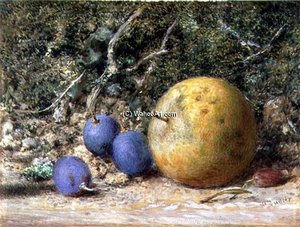
William Henry Hunt portretas

100 garsiausių William Henry Hunt paveikių – kiekvienas yra unikalus

Atnaujinta lapkritis 2026 · pagal mūsų populiarumumo koeficientą (paieškos, lankytojai ir užsakymai kiekvienam kūriniui) · 102 William Henry Hunt darbai mūsų kataloge

Trumpai tariant

Still Life Of A Dead Goose With A Basket, (1835) yra William Henry Hunt paveikslas, kuriuo gausiausia žmonių žavisi. Po to akmuo patenka į The gardener (1825) ir A Sportsman with a Boy, a Pony and a Dog (1827). Iš 102 William Henry Hunt darbų mūsų kataloge šios 100 yra garsiausios – kiekvienas yra unikali originali dai̇lia, pateikta su jos metais, muziejumi ir priežastimi, kodėl ji išlieka per amžius.

1827 – 1910, Čipsaidas Naturalism Daugiausia darbų: Birmingham Museum and Art Gallery

10 geriausių William Henry Hunt paveikslų: galerijos akimais

1
Still Life Of A Dead Goose With A Basket, (1835) aut. William Henry Hunt

Still Life Of A Dead Goose With A Basket,

1835 · Watercolor

A single goose rests within a basket, its form settled deeply into a bed of hay. The bird appears motionless, its presence defined by a quietude that borders on sleep. This composition focuses on the textures of the natural world: the coarse weave of the basket, the dry, scattered stalks of hay, and the soft, organic contours of the bird. The scene captures a moment of profound stillness, stripping away…

2
The gardener (1825) aut. William Henry Hunt

The gardener

1825 · Watercolor

A man stands in profile, his weight settled against the steady rhythm of rural labor. He is a gardener, captured in the soft, diffused light of a day that feels neither bright nor dark, but merely present. His silhouette is defined by a simple waistcoat and a tall hat, the attire of a man whose life is measured by the seasons and the soil. Across his shoulders, two heavy baskets…

3
A Sportsman with a Boy, a Pony and a Dog (1827) aut. William Henry Hunt

A Sportsman with a Boy, a Pony and a Dog

1827 · Oil On Canvas

In A Sportsman with a Boy, a Pony and a Dog, William Henry Hunt captures a quiet moment from 19th-century rural life. The scene unfolds with a sportsman walking alongside a young boy, accompanied by a sturdy pony and a loyal dog. They move through a landscape that feels lived-in and breathing, a world where the pace of life follows the rhythms of the countryside. This gathering of figures suggests…

4
Sunday morning (1831) aut. William Henry Hunt

Sunday morning

1831 · Watercolor

In "Sunday morning" by William Henry Hunt, the composition centers on a single female figure. Positioned slightly off-center, she anchors the domestic scene. A large window dominates the background, establishing the primary architectural boundary of the room. Around the woman, various furniture elements—including a chair, a table, and a dresser—are arranged to define the intimate interior space.

5
The farmers daughter (1837) aut. William Henry Hunt

The farmers daughter

1837 · Watercolor

The farmers daughter, painted by William Henry Hunt about 1837, presents a quiet study of youth and rural life. The subject is a young girl, likely from an agricultural background, as suggested by the title. She is positioned centrally, seated in a chair and facing the viewer directly. Her expression is marked by a sense of quiet introspection or a slight melancholy, lending a wistful quality to the portrait.

6
Mrs Gurney Hoare (1837) aut. William Henry Hunt

Mrs Gurney Hoare

1837 · Oil On Canvas

In Mrs Gurney Hoare, William Henry Hunt positions the subject slightly off-center to the right, creating a balanced tension with the fireplace situated on the left. The woman is seated within an interior setting, her attention entirely absorbed by a book. This quiet, domestic arrangement focuses the viewer's eye on her contemplative posture. The composition relies on a series of intersecting lines, where the verticality of the architectural elements and…

7
Slumber (1840) aut. William Henry Hunt

Slumber

1840 · Oil On Canvas · Birmingham Museum and Art Gallery, Birminghamas

In the artwork Slumber by William Henry Hunt, a young girl is shown asleep within the confines of a rustic barn or shed. The subject matter focuses on a quiet moment of rural life, centered on the figure of the child resting amidst hay. This scene, painted about 1840, captures a period of stillness and innocence through its depiction of a child in a simple, agricultural setting.

8
Boy and goat (1836) aut. William Henry Hunt

Boy and goat

1836 · Watercolor · Victoria and Albert Museum, Londonas

William Henry Hunt's “Boy and Goat,” painted in 1836, isn’t merely a depiction of rural life; it’s a carefully constructed tableau brimming with quiet observation and a subtle yearning for simpler times. The watercolor captures a young boy, seemingly lost in contemplation, standing beside a sturdy black goat within a sun-drenched field. The scene unfolds with an immediacy that draws the viewer into its gentle embrace – a feeling of…

9
A Primula And A Bird's Nest On A Mossy Bank aut. William Henry Hunt

A Primula And A Bird's Nest On A Mossy Bank

Watercolor

A quiet corner of the English countryside is distilled into a concentrated study of life and fragility. In this composition, a bird's nest containing three eggs rests within a lush, mossy embankment, tucked away from the wider landscape. Nearby, a cluster of primula flowers provides a soft counterpoint to the structural complexity of the nest. The scene focuses on the minute details of the natural world, where the texture of…

žinomi William Henry Hunt paveikslai, nuo 11 iki 100 numerio

11An Oysterman, (1827) aut. William Henry HuntAn Oysterman,1827 12Barn Interior, (1836) aut. William Henry HuntBarn Interior,1836 13Boy And Goat, (1836) aut. William Henry HuntBoy And Goat,1836 14The Turnip Lantern, (1838) aut. William Henry HuntThe Turnip Lantern,1838 15Still Life of a dead goose with a Basket (1835) aut. William Henry HuntStill Life of a dead goose with a Basket1835 16Old Mill and Lock Gates (St.Catherine's) (1840) aut. William Henry HuntOld Mill and Lock Gates (St.Catherine's)1840 17A Young Woman Sewing aut. William Henry HuntA Young Woman Sewing 18Study Of A Young Girl aut. William Henry HuntStudy Of A Young Girl 19Astonishment, Lithograph aut. William Henry HuntAstonishment, Lithograph 20A Woman Sewing In A Cottage Garden, Edgware aut. William Henry HuntA Woman Sewing In A Cottage Garden, Edgware 21Head Of A Bearded Man aut. William Henry HuntHead Of A Bearded Man 22A Study Of A Boy With A Dog aut. William Henry HuntA Study Of A Boy With A Dog 23Christmas Pie aut. William Henry HuntChristmas Pie 24Interior Of A Barn With Chickens aut. William Henry HuntInterior Of A Barn With Chickens 25A Boy With A Begging Dog aut. William Henry HuntA Boy With A Begging Dog 26Mother and child aut. William Henry HuntMother and child 27Morris river landscape aut. William Henry HuntMorris river landscape 28Fancy Dress aut. William Henry HuntFancy DressNacionalinis muziejus Varšuvoje 29Cottages At St. Albans aut. William Henry HuntCottages At St. Albans 30Study From Nature At Twickenham aut. William Henry HuntStudy From Nature At Twickenham 31A Young Lady, Seated On A Chair, Seen From The Back aut. William Henry HuntA Young Lady, Seated On A Chair, Seen From The Back 32Still Life aut. William Henry HuntStill Life 33Still Life_2 aut. William Henry HuntStill Life_2 34A Mulatto Boy aut. William Henry HuntA Mulatto Boy 35Grapes And Peaches, 19th Century aut. William Henry HuntGrapes And Peaches, 19th Century 36Roses And Bird's Nest aut. William Henry HuntRoses And Bird's Nest 37The Frugal Meal aut. William Henry HuntThe Frugal Meal 38Primulas And A Bird's Nest On A Mossy Bank aut. William Henry HuntPrimulas And A Bird's Nest On A Mossy Bank 39Bubbles aut. William Henry HuntBubbles 40Wild Roses And Birds' Nests aut. William Henry HuntWild Roses And Birds' Nests 41Long Tailed Tits' Nest aut. William Henry HuntLong Tailed Tits' Nest 42Still Life With Fruit In A Basket And A Peony aut. William Henry HuntStill Life With Fruit In A Basket And A Peony 43The Broken Pitcher aut. William Henry HuntThe Broken Pitcher 44A Field On The Outskirts Of Bushey, Hertfordshire aut. William Henry HuntA Field On The Outskirts Of Bushey, Hertfordshire 45Schoolboys With A Stolen Nest aut. William Henry HuntSchoolboys With A Stolen Nest 46The butcher's boy aut. William Henry HuntThe butcher's boy 47The Eavesdropper aut. William Henry HuntThe Eavesdropper 48Hearing Lessons aut. William Henry HuntHearing Lessons 49Still Life Of A Shell And Berries On A Mossy Bank aut. William Henry HuntStill Life Of A Shell And Berries On A Mossy Bank 50The silver lining aut. William Henry HuntThe silver lining 51Still Life With Bird's Nest aut. William Henry HuntStill Life With Bird's Nest 52Magnum Bonum And Orleans Plums aut. William Henry HuntMagnum Bonum And Orleans Plums 53Head Of A Gypsy Boy aut. William Henry HuntHead Of A Gypsy Boy 54Portrait Of One Of The Swain Brothers Holding A Pitcher aut. William Henry HuntPortrait Of One Of The Swain Brothers Holding A Pitcher 55Still Life With Fruit aut. William Henry HuntStill Life With Fruit 56Still-life With White And Black Grapes And Redcurrents aut. William Henry HuntStill-life With White And Black Grapes And Redcurrents 57A Young Boy Viewing A Picture By Candlelight aut. William Henry HuntA Young Boy Viewing A Picture By Candlelight 58Study Of A Young Girl Reclining On A Sofa aut. William Henry HuntStudy Of A Young Girl Reclining On A Sofa 59Still-life Of Rosehips, Blackberries And Plums, On A Mossy Bank aut. William Henry HuntStill-life Of Rosehips, Blackberries And Plums, On A Mossy Bank 60The Faithful Old Servant aut. William Henry HuntThe Faithful Old Servant 61Still-life With Basket, Nest, Egg, Red Currants And Ladybird aut. William Henry HuntStill-life With Basket, Nest, Egg, Red Currants And Ladybird 62The Barber aut. William Henry HuntThe Barber 63The Finishing Touches aut. William Henry HuntThe Finishing Touches 64Still Life With Plums And Hazelnuts On A Mossy Bank aut. William Henry HuntStill Life With Plums And Hazelnuts On A Mossy Bank 65Plumsplums aut. William Henry HuntPlumsplums 66Still Life Of Grapes, A Tankard And A Sprig Of Holly aut. William Henry HuntStill Life Of Grapes, A Tankard And A Sprig Of Holly 67Three Grapes And An Apple aut. William Henry HuntThree Grapes And An Apple 68The Faggot-gatherers Meal aut. William Henry HuntThe Faggot-gatherers Meal 69Still-life With Birds Nest And Hawthorne On A Mossy Bank aut. William Henry HuntStill-life With Birds Nest And Hawthorne On A Mossy Bank 70Still Life With Birds' Nests aut. William Henry HuntStill Life With Birds' Nests 71Still Life With Two Apples And A Snail Shell aut. William Henry HuntStill Life With Two Apples And A Snail Shell 72Landscape With Elm Trees And A Farm, Near Bayswater aut. William Henry HuntLandscape With Elm Trees And A Farm, Near Bayswater 73New Court aut. William Henry HuntNew Court 74Asking For Trouble aut. William Henry HuntAsking For Trouble 75Grapes And A Pineapple aut. William Henry HuntGrapes And A Pineapple 76Chaffinch Nest And May Blossom aut. William Henry HuntChaffinch Nest And May Blossom 77The Young Connoisseur aut. William Henry HuntThe Young Connoisseur 78The Musical Conversation - aut. William Henry HuntThe Musical Conversation - 79Still Life Of Flowers And Nest aut. William Henry HuntStill Life Of Flowers And Nest 80Girl in Candlelight aut. William Henry HuntGirl in Candlelight 81A Lady Reading, called Mrs William Hunt, c.1835 aut. William Henry HuntA Lady Reading, called Mrs William Hunt, c.1835 82The Musical Conversation aut. William Henry HuntThe Musical Conversation 83A Gardener In His Potting Shed aut. William Henry HuntA Gardener In His Potting Shed 84Farmyard With Pond aut. William Henry HuntFarmyard With Pond 85A Lady At Her Toilette aut. William Henry HuntA Lady At Her Toilette 86Portrait of a boy, bust-length, wearing a hat aut. William Henry HuntPortrait of a boy, bust-length, wearing a hat 87Branch Of Apple Blossom And Bird's Nest aut. William Henry HuntBranch Of Apple Blossom And Bird's Nest 88A Distant View Of Windsor Castle aut. William Henry HuntA Distant View Of Windsor CastleAnglesey Abbey 89Still Life Of A Dead Bird; And Still Life Of Two Shells On A Mossy Bank aut. William Henry HuntStill Life Of A Dead Bird; And Still Life Of Two Shells On A Mossy Bank 90Still Life With A Pineapple And Three Plums aut. William Henry HuntStill Life With A Pineapple And Three Plums 91Still Life Of Fruit aut. William Henry HuntStill Life Of Fruit 92Self Portrait - aut. William Henry HuntSelf Portrait -National Portrait Gallery 93Glass Vase And Flowers aut. William Henry HuntGlass Vase And Flowers 94Self Portrait aut. William Henry HuntSelf Portrait 95Head Study Of A Gentleman, Traditionally Identified As The Artist's Uncle aut. William Henry HuntHead Study Of A Gentleman, Traditionally Identified As The Artist's Uncle 96The Green Drawing Room Of The Earl Of Essex At Cassiobury aut. William Henry HuntThe Green Drawing Room Of The Earl Of Essex At Cassiobury 97Plucking The Fowl aut. William Henry HuntPlucking The Fowl 98Still life with greengages and plums on a mossy bank aut. William Henry HuntStill life with greengages and plums on a mossy bank 99Still Life With roses In A vase And A Birds Nest aut. William Henry HuntStill Life With roses In A vase And A Birds Nest 100Still life with sea shells on a mossy bank aut. William Henry HuntStill life with sea shells on a mossy bank

žymios William Henry Hunt tapiojamos, pagal laikotarpį

Temos, kurios domino William Henry Hunt

Ketverios temos, dažniausiai pasikrausto originaluose, kiekvienos su savo puikiausiu pavyzdžiu.

Muziejai, kuriuose saugomi William Henry Hunt originalūs darbai

5 muziejai, kuriuose saugoma daugiausia šioje pusėje esamų paveikslų.

Muzejaus Miestas William Henry Hunt darbai Šiojo sąrašo paveikslai
Birmingham Museum and Art Gallery, BirminghamasBirmingham Museum and Art Gallery Birminghamas 2 Slumber, Lobster, Crab and Cucumber
Victoria and Albert Museum, LondonasVictoria and Albert Museum Londonas 1 Boy and goat
Nacionalinis muziejus Varšuvoje, VaršuvaNacionalinis muziejus Varšuvoje Varšuva 1 Fancy Dress
Anglesey AbbeyAnglesey Abbey 1 A Distant View Of Windsor Castle
National Portrait Gallery, LondrasNational Portrait Gallery Londras 1 Self Portrait -

William Henry Hunt darbai per metus: kiekvieno unikalūs originalūs kūriniai

Tarp 1835 ir 1840 metų, iš viso 6 metų, William Henry Hunt sukūrė kiekvieną čia rodomą originalų, datuotumą turinčią tapetą: trumpas laikotarpis, kurio metu darbai kūrėsi metis po metų.

Darbai pagal metus

Pasirinkite metus, kad pamatytumėte originalus darbus.

William Henry Hunt tapų klausimai galerijai

Koks yra garsiausias William Henry Hunt kūrinys?Atsakymas

Still Life Of A Dead Goose With A Basket, (1835). Toliausiai eina The gardener (1825) ir A Sportsman with a Boy, a Pony and a Dog (1827).

Kuriuo amžiaus atσταση William Henry Hunt sukūrė Still Life Of A Dead Goose With A Basket,?Atsakymas

8 metų amžiaus: Still Life Of A Dead Goose With A Basket, sukurta 1835 m. Nr. William Henry Hunt gimė 1827.

Kurios William Henry Hunt dešimt paveikslų yra garsiausi?Atsakymas

Still Life Of A Dead Goose With A Basket,, The gardener, A Sportsman with a Boy, a Pony and a Dog, Sunday morning, The farmers daughter, Mrs Gurney Hoare, Slumber, Boy and goat, A Primula And A Bird's Nest On A Mossy Bank ir Lobster, Crab and Cucumber. Viršuje esančioje reitingo sąraše nurodyta kiekvieno kūrinio metis ir muziejus.

Kiek žinoma William Henry Hunt darbų?Atsakymas

Mūsų kataloge yra 102 William Henry Hunt darbų, skirtų laikotarpiui nuo 1835 iki 1840.

Kur galima pamatyti garsiausių William Henry Hunt originalų?Atsakymas

Daugiausia – Birmingham Museum and Art Gallery (Birminghamas), Victoria and Albert Museum (Londonas) ir Nacionalinis muziejus Varšuvoje (Varšuva). Viršuje esančiame muziejų sąraše yra visi jie.

Kuriuo laikotarpiu William Henry Hunt sukūrė savo žymiausias paveikslus?Atsakymas

1836 laikotarpiu: 3 iš 100 šioje pusėje esančių darbų buvo sukurtos tada, iš jų Boy and goat.

Kuris iš garsių William Henry Hunt paveikslų yra pirmasis, o kuris – paskutinis?Atsakymas

Šioje pusėje seniausias darbas yra Still Life Of A Dead Goose With A Basket, (1835), o naujausias – Slumber (1840).

Kokia temos William Henry Hunt mėgavosi?Atsakymas

Life (19), Animals (8) ir Flowers (6) iš 100 šioje pusėje esamų darbų.

Kuriomis medžiagomis William Henry Hunt tapė dažniausiai?Atsakymas

Watercolor, iš 100 šios puslapio darbų – 6.

Kelią meno kryžkelę priklauso William Henry Hunt kūryba?Atsakymas

Naturalism, vadovaujantis šios puslapio originalais kūriniais.

Kurius William Henry Hunt originalius galėčiau pamatyti Birmingham Museum and Art Gallery?Atsakymas

Slumber ir Lobster, Crab and Cucumber: Birmingham Museum and Art Gallery, Birminghamas kolekcijoje yra 2 šioje pusėje esančių darbų.

William Henry Hunt: meno kūrinys – autoportretas

Šviesus William Henry Hunt palikimas

Britų akvarelio auksinėje éra nedaug rankų turėjo tokios subtilios tikslybės ir sielingo stebėjimo, kokias turėjo William Henry Hunt. Gimęs triukšmingame Londone, Cheapside, Hunt tapo viena svarbiausių Viktorijos éros figūra – laikotarpiu, kai gamtos intymumas dažnai buvo fiksuojamas per gilios dvasinės ir estetinės jautrumo prizmę. Jo kelionė į šviesos ir pigmento meistriškę prasidėjo po gerbiamojo John Varley vadovavimu, santykiai, kurie buvo kur kas daugiau nei tiesiog mokomybė. Per Varley Hunt susipažino su vizionieriška mįslėmis, giliai susijusiomis su tokių menininkų kaip William Blake mistinėmis ir simbolinėmis tradicijų linija. Šis ankstyvas susidūrimas įsidiegė jame visam gyvenimui šviesėti už objekto paviršių, rasant tylią, kvapuojantį esmę paprastame paukščių lizde ar laukinių gėlių klustere.

Maturuojant techniniam meistriškumui, Hunt tapo neatsiejama Londono meno scenos dalimi, ypač dėl savo garsaus dalyvavimo Society of Painters in Watercolors bendrijoje. Jo kilimas prestižinėje institucijoje – nuo asociacijos nario iki pilno narybos gavėjo iki 1827 metų – patvirtino jį kaip pirmaujančią balsą tarp samtvorių. Skirtingai nei griežtos akademinės stiliai, dominavę didžiąją šio laikotarpio dalį, Hunto darbai priėmė skystas, emocines šio meio išraiškos galimybes. Jis išmokėjo sluoksniuoti skaidrius glazūrus, kad sukurtų vidinę švieslumą, dažnai žaidždamas su grubia popieriaus tekstūra, siekdamas atkartoti organizinę gamtos pasaulio sudėtingumą. Jo kompozicijos niekada nebuvo tik dekoratyvios; jos buvo kruopščiai suorganizuotos tekstūros ir atmosferos studijos.

Gamtos ir natūralaus mirtv玩的 meistriškumas

Tikroji Hunto kūrybos magija slypi jo gebėjime kasdienybę pakelti į aukštumas ir padaryti ją grandingą. Jis turėjo išskirtinį talentą natūralaus mirtvų mazo menui, ypač susikoncentruodamas į botaniką ir ornitologiją. Jo darbai, tokie kaip kvapaudintys Primulas And A Bird's Nest On A Mossy Bank, demonstruoja beveik mokslinį dėmesį detalėms, derinamą su romantiška, sapnių įtvirtinta atmosfera. Šiuose paveiksluose galima pastebėti trapias petalsės veną ar trapią lizdo architektūrą – viską atvaizduota tokia švelnumu, kuris primena trumpalaikę paties gyvenimo prigimtį. Šis susidomėjimas mažaisiais, dažnai nepastabiliais žemės stebuklais leido jam sukurti intymumo jausmą, kuris giliai rezonavo su Viktorijos éros susidomėjimu gamtos istorija ir namų grožiu.

Be botaninių studijų, Hunto repertuaras išsiplėtė į žavingančias naratyvines scenas, vaizduojančias XIX amžiaus gyvenimo kaimo ritmus. Ar tai būtų tyli bendrystė paveiksluose Boy and Goat, ar darbštus, realistiškas vaizdas A Gardener In His vengimo Potting Shed, jo darbai visada išlaikė šilumą ir prieinamumą. Jo technika leido jam sklandžiai pereiti tarp:

  • Atmosferinių krašt맵ų: Naudojant laisvus traukius ir švelnius lavinimus, kad atkartotų migoti, kintantys Anglijos kaimo šviesos pokyčiai.
  • Išsamios botaninės studijos: Taikant smulkias, tikslias linijas, kad išdidintų sudėtingą floros grožį.
  • Naratyvinės žanrinės scenos: Į šimtmetį įterpiant kasdienius kaimo veiksmus su orumu ir tyliu emociniu prisutama.

Istorinė reikšmė ir meninė įtaka

William Henry Hunt istorinė svarba kertasi daug toli už jo techninių pasiekimų. Jis stebėjo romantizmo ir augančiojo midten XIX amžiaus realizmo sankryžą. Atmetęs sunkias, neperskaitomas tradicinio tapybos aliejaus konvencijas ir pasirinkęs akvarelio skaidrumą bei šviesą, jis padėjo perdefinuoti ribas того, ką gali pasiekti ši technika. Jo darbas tarnavo kaip tiltas tarp jo mokytojų vizioneriškų, simbolinių tradicijų ir vėlesnių stebėjimo, naturalistinių judėjimų.

Šiandien Hunto palikimas išsaugotas tylioje išlikusių jo darbų grožėje, kurie toliau užburia tiek kolekcionierius, tiek meno istorikus. Jis išlieka Anglijos mokyklos pamatu, prisimintinas ne tik kaip meistriškas rangas, bet ir kaip miniatiūros poetas – menininkas, kuris galėjo rasti visą evoliuciją vienoje pigmento lazdos ar melsvo melsvo krūmo lėkštėje. Jo gebėjimas į gamtos pasaulį įkvėpti nuolatinumo ir elegancijos jausmą užtikrina, kad jo indėlis į britų meną išlieka taip pat šviesus, kaip ir akvareliai, kuriuos jis taip meistriškai sukurė.