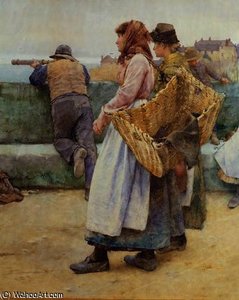
Valteris Langlis portretas

59 garsiausių Valteris Langlis paveikių – kiekvienas yra unikalus

Atnaujinta lapkritis 2026 · pagal mūsų populiarumumo koeficientą (paieškos, lankytojai ir užsakymai kiekvienam kūriniui) · 59 Valteris Langlis darbai mūsų kataloge

Trumpai tariant

Old Market Hall and Fountain, Birmingham (1880) yra viena矚 most žiūrėlių pritraukiančių Valteris Langlis tapierių; originalas saugomas Birmingham Museum and Art Gallery, Birminghamas. Po to akmuo patenka į Memories (1885) ir But Men Must Work and Women Must Weep (1883). Iš 59 Valteris Langlis darbų mūsų kataloge šios 59 yra garsiausios – kiekvienas yra unikali originali dai̇lia, pateikta su jos metais, muziejumi ir priežastimi, kodėl ji išlieka per amžius.

1852 – 1922, Birmingamas Social realism Daugiausia darbų: Birmingham Museum and Art Gallery

10 geriausių Valteris Langlis paveikslų: galerijos akimais

1
Old Market Hall and Fountain, Birmingham (1880) aut. Valteris Langlis

Old Market Hall and Fountain, Birmingham

1880 · Watercolor · Birmingham Museum and Art Gallery, Birminghamas

The interior of the Old Market Hall in Birmingham stretches upward, a vast shell of iron and glass. High above, a skylight filters the daylight, casting a soft, diffused glow over the architecture. At the heart of this space sits an ornate bronze fountain, its presence anchored by a heavy base of Yorkshire sandstone. A solitary woman, draped in dark, Victorian-era clothing, moves past the basin. Her silhouette provides a…

2
Memories (1885) aut. Valteris Langlis

Memories

1885 · Oil On Canvas · Birmingham Museum and Art Gallery, Birminghamas

In this 1885 oil on canvas, three generations of women occupy a rustic interior, their presence anchored by a heavy visual weight on the left. A seated elderly woman and a young girl reading create a focal point of stillness, while a third figure stands near a window on the right. The composition relies on an asymmetrical balance, using the verticality of the standing figure to counter the seated group.…

3
But Men Must Work and Women Must Weep (1883) aut. Valteris Langlis

But Men Must Work and Women Must Weep

1883 · Oil On Canvas · Birmingham Museum and Art Gallery, Birminghamas

The composition centers on two female figures within a dimly lit, enclosed interior. A younger woman sits slumped forward, her head resting heavily in her hands. Her posture suggests a state of profound exhaustion or sorrow. Standing behind her, an older woman observes the scene, her features weathered and her expression somber. The lighting originates from a single source to the left, casting soft shadows across the heavy folds of…

4
In Memoriam (1882) aut. Valteris Langlis

In Memoriam

1882 · Oil · Birmingham Museum and Art Gallery, Birminghamas

In In Memoriam, Walter Langley presents an oil painting of an elderly woman captured in a moment of profound grief or exhaustion. The subject is seated slightly to the left of the center, her head resting heavily upon her hand near a table. This posture, combined with the stillness of the figure, suggests themes of mourning, loss, or weary reflection. The work, dating from about 1882, focuses on the quietude…

5
Disaster Scene in a Cornish Fishing Village (1889) aut. Valteris Langlis

Disaster Scene in a Cornish Fishing Village

1889 · Oil · Birmingham Museum and Art Gallery, Birminghamas

In this oil painting, titled Disaster Scene in a Cornish Fishing Village, the artist Walter Langley explores the heavy emotional toll of life on the coast. Created about 1889, the work focuses on the immediate human impact of a maritime disaster. Rather than focusing on the sea itself, the subject matter centers on the communal grief found within the village. It is a quiet, somber study of how a single…

6
Study of an Old Fisherwoman (1889) aut. Valteris Langlis

Study of an Old Fisherwoman

1889 · Watercolor · Birmingham Museum and Art Gallery, Birminghamas

A single figure sits anchored in the dim light of an interior. She is an old fisherwoman, her body slumped in a posture of heavy, settled weariness. The light enters from a window to the left, a soft and diffused glow that traces the deep folds of her clothing and the weathered topography of her skin. She does not look at the viewer. Her gaze is turned inward, lost in…

7
But O For the Touch of a Vanished Hand (1888) aut. Valteris Langlis

But O For the Touch of a Vanished Hand

1888 · Oil · Birmingham Museum and Art Gallery, Birminghamas

In this 1888 work, titled But O For the Touch of a Vanished Hand, we encounter the quiet, observational style of Walter Langley. Born in Birmingham, United Kingdom, Langley developed a perspective deeply rooted in the realities of the working class, a focus that would define much of his career. This piece emerged during a period when he was establishing himself as a significant figure within the Newlyn School of…

8
An Old Cornish Woman (1891) aut. Valteris Langlis

An Old Cornish Woman

1891 · Oil On Canvas · Birmingham Museum and Art Gallery, Birminghamas

An Old Cornish Woman is a portrait by Walter Langley, executed about 1891. The subject is an elderly woman seated within a dimly lit interior. This portrait utilizes a vertical orientation to emphasize her presence against the sparse surroundings of the room. The depiction follows the conventions of late 19th-century realism, focusing on a truthful and unidealized representation of everyday life and character.

9
Never Morning Wore to Evening but Some Heart Did Break (1894) aut. Valteris Langlis

Never Morning Wore to Evening but Some Heart Did Break

1894 · Oil · Birmingham Museum and Art Gallery, Birminghamas

Painted in 1894, this work reflects the social realism that defined much of the period's interest in the working class. The subject matter avoids embellishment, choosing instead to honor the humanity found within quiet struggles. There is a palpable sense of shared sorrow in the way the figures interact, suggesting a narrative of loss that extends beyond the frame. The composition uses the receding perspective of the coastline to provide…

10
Expert Opinion (1905) aut. Valteris Langlis

Expert Opinion

1905 · Oil On Canvas · Birmingham Museum and Art Gallery, Birminghamas

In Expert Opinion by Walter Langley, a quiet moment unfolds by the seaside. Painted about 1905, this genre scene captures a pause in the rhythm of coastal life. Three figures occupy the space, arranged in a way that draws the eye across their silent interaction. An older man sits on the left, his presence grounded and steady. In the center, a young boy becomes the focal point of the group,…

žinomi Valteris Langlis paveikslai, nuo 11 iki 59 numerio

žymios Valteris Langlis tapiojamos, pagal laikotarpį

Temos, kurios domino Valteris Langlis

Ketverios temos, dažniausiai pasikrausto originaluose, kiekvienos su savo puikiausiu pavyzdžiu.

Muziejai, kuriuose saugomi Valteris Langlis originalūs darbai

1 muziejai, kuriuose yra daugiausia šioje puslapyje esamų paveikslų.

Muzejaus Miestas Valteris Langlis darbai Šiojo sąrašo paveikslai
Birmingham Museum and Art Gallery, BirminghamasBirmingham Museum and Art Gallery Birminghamas 10 Old Market Hall and Fountain, Birmingham, Memories, But Men Must Work and Women Must Weep

Valteris Langlis per dešimtmečius: vieniškas originalas kiekvienam

Darbai pagal dešimtmečius

Pasirinkite dešimtmetį, kad pamatytėte jį apibrėžusį originalą.

Valteris Langlis tapų klausimai galerijai

Koks yra garsiausias Valteris Langlis kūrinys?Atsakymas

Old Market Hall and Fountain, Birmingham (1880), Birmingham Museum and Art Gallery, Birminghamas. Toliau seka Memories (1885) ir But Men Must Work and Women Must Weep (1883).

Kuriuo amžiaus atσταση Valteris Langlis sukūrė Old Market Hall and Fountain, Birmingham?Atsakymas

28 metų amžiaus: Old Market Hall and Fountain, Birmingham sukurta 1880 m. Nr. Valteris Langlis gimė 1852.

Kurios Valteris Langlis dešimt paveikslų yra garsiausi?Atsakymas

Old Market Hall and Fountain, Birmingham, Memories, But Men Must Work and Women Must Weep, In Memoriam, Disaster Scene in a Cornish Fishing Village, Study of an Old Fisherwoman, But O For the Touch of a Vanished Hand, An Old Cornish Woman, Never Morning Wore to Evening but Some Heart Did Break ir Expert Opinion. Viršuje esančioje reitingo sąraše nurodyta kiekvieno kūrinio metis ir muziejus.

Kiek žinoma Valteris Langlis darbų?Atsakymas

Mūsų kataloge yra 59 Valteris Langlis darbų, skirtų laikotarpiui nuo 1880 iki 1905.

Kur galima pamatyti garsiausių Valteris Langlis originalų?Atsakymas

Daugiausia – Birmingham Museum and Art Gallery (Birminghamas). Viršuje esančiame muziejų sąraše yra visi jie.

Kuriuo laikotarpiu Valteris Langlis sukūrė savo žymiausias paveikslus?Atsakymas

1880s laikotarpiu: 7 iš 59 šioje pusėje esančių darbų buvo sukurtos tada, iš jų Old Market Hall and Fountain, Birmingham.

Kuris iš garsių Valteris Langlis paveikslų yra pirmasis, o kuris – paskutinis?Atsakymas

Šioje pusėje seniausias darbas yra Old Market Hall and Fountain, Birmingham (1880), o naujausias – Expert Opinion (1905).

Kokia temos Valteris Langlis mėgavosi?Atsakymas

Woman (9), Elderly woman (5) ir Interior (4) iš 59 šioje pusėje esamų darbų.

Kuriomis medžiagomis Valteris Langlis tapė dažniausiai?Atsakymas

Oil, iš 59 šios puslapio darbų – 5.

Kelią meno kryžkelę priklauso Valteris Langlis kūryba?Atsakymas

Social realism ir Newlyn school, vadovaujantis šios puslapio originalais kūriniais.

Kurius Valteris Langlis originalius galėčiau pamatyti Birmingham Museum and Art Gallery?Atsakymas

Old Market Hall and Fountain, Birmingham, Memories ir But Men Must Work and Women Must Weep: Birmingham Museum and Art Gallery, Birminghamas kolekcijoje yra 10 šioje pusėje esančių darbų.

Valteris Langlis: meno kūrinys – autoportretas

A Cornish Voice in Victorian Realism

Walter Langley (1852–1922) stands as a pivotal figure within the Newlyn School of plein air painters, representing a significant strand of British art history at the turn of the century. Born in Birmingham, his upbringing instilled in him a deep connection to the working class—a formative influence that would permeate his artistic vision and profoundly shape his depictions of Cornish life. His father was a journeyman tailor, providing Langley with an early understanding of craftsmanship and manual labor, values he carried throughout his life and subsequently translated into his paintings. This foundational respect for the dignity of toil became the heartbeat of his creative output.

At fifteen, Langley embarked on an apprenticeship with a lithographer, honing skills crucial for capturing detail and texture—skills that would prove invaluable in his later watercolor renderings. By twenty-one, he secured a scholarship to South Kensington Art School, where he studied designing alongside fellow artists like Frederic Leighton, absorbing the stylistic conventions of academic art while simultaneously nurturing his burgeoning artistic sensibilities. This dual exposure fostered a distinctive blend of technical proficiency and imaginative exploration, allowing him to bridge the gap between formal training and raw, observational truth.

The Soul of Newlyn

Langley’s artistic breakthrough arrived in 1881 when he was awarded £500 for a year's work by Mr. Thrupp, a Birmingham photographer—a generous patronage that enabled him to relocate his family to Newlyn, Cornwall. This move cemented Langley’s commitment to documenting the daily lives of Cornish fishermen and their families, establishing him as one of the earliest artists to settle in this burgeoning artistic community. His decision to prioritize painting over photography reflects a dedication to capturing the essence of human experience through visual art rather than photographic reproduction.

As a consummate watercolorist, Langley possessed an unsurpassed ability to capture the human form and the subtle nuances of light within the medium. His work often moved beyond mere landscape, focusing instead on the intimate domesticity and the quiet struggles of the coastal inhabitants. Whether through the muted tones of In The Firelight or the poignant narratives found in The Letter, his brushwork conveyed a profound empathy for his subjects. He was not merely an observer of the Newlyn coast; he was its chronicler, weaving the social fabric of the fishing village into every wash of color.

Social Realism and Lasting Legacy

Politically aligned with socialist ideals—particularly supporting Charles Bradlaugh, a radical politician—Langley’s work consistently championed social realism. He skillfully portrayed the hardships and the quiet resilience of the working class, making his art a vehicle for social observation. This commitment to truth earned him international recognition; notably, the great writer Leo Tolstoy cited Langley's work as an exemplary instance of good, meaningful art. His paintings did not seek to embellish poverty but to honor the humanity within it.

The historical significance of Walter Langley lies in his role as a founder of the artistic community at Newlyn and his ability to elevate the mundane struggles of rural life to the level of high art. His legacy is defined by several key contributions:

  • Pioneering Social Realism: He brought a political and empathetic depth to the Newlyn School, moving beyond pure aesthetics to address the human condition.
  • Mastery of Watercolor: He is remembered as one of the finest watercolorists the United Kingdom has ever produced, particularly for his ability to render texture and emotion in a delicate medium.
  • Cultural Documentation: His oeuvre serves as a vital visual record of the Cornish fishing industry and the social structures of late Victorian and Edwardian Britain.

Through his dedication to en plein air painting and his unwavering focus on the dignity of labor, Walter Langley ensured that the voices of the Cornish fisherfolk would resonate far beyond the shores of Newlyn, leaving an indelible mark on the landscape of British Realism.