


1

The Death of Cato of Utica
The Death of Cato of Utica is an oil on canvas by Jean-Paul Laurens. Created about 1863, the work measures 158 x 204 cms.

Atnaujinta lapkritis 2026 · pagal mūsų populiarumumo koeficientą (paieškos, lankytojai ir užsakymai kiekvienam kūriniui) · 81 Žanas Polas Lorenas darbai mūsų kataloge
Trumpai tariant
Galerijos akimais, garsiausias Žanas Polas Lorenas paveikslas yra The Death of Cato of Utica. The Last Moments of Maximilian (1882) ir The Judgment of Pope Formosus (1870) užbaia trio, kurį atpažįsta kiekvienas ž)/\ Iš 81 Žanas Polas Lorenas darbų mūsų kataloge, galerija žemiau pristato 78 garsiausius – kiekvienas yra originalus, su nurodytu metais, muziejumi bei unikaliu aprašymu.
The Death of Cato of Utica is an oil on canvas by Jean-Paul Laurens. Created about 1863, the work measures 158 x 204 cms.

The air in the painting feels heavy, thick with the scent of dust and impending silence. A man kneels, his posture a quiet surrender to the inevitable. He is Maximilian, the Emperor of Mexico, caught in the fragile space between life and the end. His head is bowed low, a gesture of profound resignation that avoids the gaze of his executioners. Beside him, the presence of a priest offers a…

The Judgment of Pope Formosus is an oil on canvas painting by Jean-Paul Laurens. Created about 1870, the work captures a heavy ecclesiastical trial. The scene focuses on a moment of judgment, where the weight of religious law meets the stillness of a courtroom. A single, sharp accusation hangs in the air like dust in a shaft of light.

In this work, titled The Cardinal, Jean-Paul Laurens presents a somber and dignified academic portrait. Created about 1874, the painting focuses on an elderly man dressed in ecclesiastical attire. The subject is captured in a moment of quiet contemplation, absorbed in the act of reading a letter. This singular focus on the man's introspection provides a sense of historical weight to the composition.

The air feels heavy and still in this somber oil sketch. A Merovingian woman stands as the central pillar of the composition, her head tilted upward toward a light that remains unseen, as if she is searching for a sign or a divine presence. Her expression carries a weight of longing or perhaps a quiet apprehension that pulls at the viewer. Beside her, the scene unfolds with a delicate, melancholic…

To look upon this preparatory sketch is to witness the quiet, intense labor of a mind preparing for a monumental task. Created in 1876, this work functions as a structural blueprint for a larger mural, organized through a series of architectural panels. Four fluted Corinthian columns divide the composition, creating a rhythmic, frontal perspective that mimics the interior of a sacred space. The palette is restrained, relying on earthy tones,…

A Victim of the Borgia is an oil on canvas work by the French painter and sculptor Jean-Paul Laurens. Executed about 1875, the painting belongs to the French Academic style, a movement Laurens helped define during the final flowering of the tradition. The piece captures a somber moment of aftermath following a crime, suggesting themes of betrayal and political intrigue characteristic of the Borgia era.


 The Last Moments of Maximilian, Emperor of Mexico
12
 The Death of Baudin1902 · Musée Victor Hugo
13
 L'attente1900 · Musée Des Beaux Arts
14
 La Musique (also known as Hommage à Beethoven)1902
15
 La Délivrance des emmurés de Carcassonne1879 · Musée d'Orsay
16
 The Security Committee of the City of Paris and the Department of the Seine, during the war of 1914-19181918 · Carnavalet muziejus
17
 The Parting of King Robert and Bertha1883 · Philadelphia Museum of Art
18
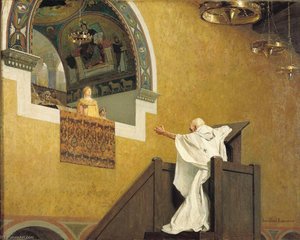 Saint John Chrysostom and the Empress Eudoxia
19
 Columbus before IsabellaYale University Art Gallery
20
 Excommunication of Robert the Pious in 9981875
21
 The Walls of the Holy Office1883 · Musée des Augustins
22
 Tales of Merovingian Times: A Slave1883 · Petit Palais
23
 The Late Empire Honorius1880 · Chrysler Museum of Art
24
 Proclamation of the Republic on February 24, 18481902 · Petit Palais
25
 FaustRio Grande do Sul Museum of Art
26
 Portrait présumé de Mme Daguerre
27
 Faust sitting
28
 The garden
29
 Margaret buried by the angelNational Museum of Art, Architecture and Design
30
 The archangel Raphael and Mephistopheles
31
 Medieval figures on a ballustrade
32
 Medieval figures on a balcony, with boats in the distance
33
 Head Study
34
 Project for the steel vault at the Hotel de Ville, Paris
35
 Study for the Excommunication of Robert the Pious
36
 The Judgement of Chilperic
37
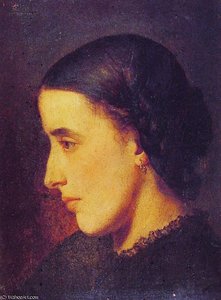 Portrait de Madeleine Villemsens
38
 Madame John Paul Laurens, born Madeleine Willemsens
39
 Death of Saint Genevieve
40
 The expectation of a Merovingian queen
41
 Project for the ceiling of the Odeon Theatre
42
 Unknown
43
 The Late Empire Honorius
44
 The Cardinal
45
 La solitude
46
 Portrait de Rodin
47
 Pope Formosa and Stephen VII
48
 The Excommunication of Robert the Pious in 998
49
 LE DUC D'ENGHIEN DANS LES FOSSES DE VINCENNESCondé muziejus
50
 Le pape et l'InquisiteurMusée Bonnat-Helleu
51
 The Old Savant or The Alchemist
52
 Répudiation de la reine Berthe
53
 Portrait of a womanPetit Palais
54
 Un conseiller au parlement
55
 Le pape Formose et Etienne VIIMusée d'Arts de Nantes
56
 L'agitateur du Languedoc
57
 L'excommunication de Robert le Pieux
58
 Portrait of JeanPierre Laurens
59
 The Judgement of Chilperic1881 · The Ashmolean Museum of Art And Archaeology
60
 Emperor Maximilian of Mexico before the ExecutionErmitažas
61
 Autoportrait
62
 The Death of the Duc d'Enghien
63
 The Late Empire: HonoriusChrysler Museum of Art
64
 Study of horse and rider
65
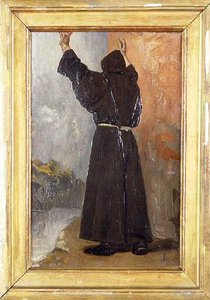 Moine prêchant
66
 The interdict
67
 Barques au pied d'une falaise en Normandie
68
 LExcommunication de Robert le Pieux
69
 Funerailles de Guillaume le ConquerantMusee des Beaux-Arts
70
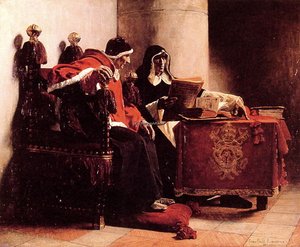 The Pope and the Inquisitor, known as Sixtus IV and Torquema
71
 Portrait of Rodin
72
 A Soldier
73
 LAgitateur du LanguedocMusée des Augustins
74
 The Excommunication of Robert the Pious1875 · Musée d'Orsay
75
 Les otagesLyon grožio mokslų muziejus
76
 La Mort de Tibere
77
 Mort de Caton d'UtiqueMusée des Augustins
78
 Saint Jean Chrysostome et l'imperatrice EudoxieMusée des Augustins
Ketverios temos, dažniausiai pasikrausto originaluose, kiekvienos su savo puikiausiu pavyzdžiu.
8 muziejai, kuriuose saugoma daugiausia šioje pusėje esamų paveikslų.
| Muzejaus | Miestas | Žanas Polas Lorenas darbai | Šiojo sąrašo paveikslai |
|---|---|---|---|
 Petit Palais |
Paris | 11 | The Judgment of Pope Formosus, The Cardinal, Detail Sketch for the Panthéon: Merovingian Woman and Two Children |
 Musée des Augustins |
Tuluza | 4 | The Walls of the Holy Office, LAgitateur du Languedoc, Mort de Caton d'Utique |
 Musée d'Orsay |
Paris | 2 | La Délivrance des emmurés de Carcassonne, The Excommunication of Robert the Pious |
 Chrysler Museum of Art |
Norfolkas | 2 | The Late Empire Honorius, The Late Empire: Honorius |
 Musée Victor Hugo |
Paris | 1 | The Death of Baudin |
 Musée Des Beaux Arts |
Mulha | 1 | L'attente |
 Carnavalet muziejus |
Paris | 1 | The Security Committee of the City of Paris and the Department of the Seine, during the war of 1914-1918 |
 Philadelphia Museum of Art |
Filadelfija | 1 | The Parting of King Robert and Bertha |
Pasirinkite dešimtmetį, kad pamatytėte jį apibrėžusį originalą.
The Judgment of Pope Formosus is an oil on canvas painting by Jean-Paul Laurens. Created about 1870, the work captures a heavy ecclesiastical trial. The scene focuses on a moment of judgment, where the weight of religious law meets the stillness of a courtroom. A single, sharp accusation hangs in the air like dust in a shaft of light.
The air in the painting feels heavy, thick with the scent of dust and impending silence. A man kneels, his posture a quiet surrender to the inevitable. He is Maximilian, the Emperor of Mexico, caught in the fragile space between life and the end. His head is bowed low, a gesture of profound resignation that avoids the gaze of his executioners. Beside him, the presence of a priest offers a…


The Death of Cato of Utica. Toliausiai eina The Last Moments of Maximilian (1882) ir The Judgment of Pope Formosus (1870).
The Death of Cato of Utica, The Last Moments of Maximilian, The Judgment of Pope Formosus, The Cardinal, Detail Sketch for the Panthéon: Merovingian Woman and Two Children, Sketch for the Panthéon: The Death of Saint Genevieve, A Victim of the Borgia, Detail Sketch for the Hôtel de Ville de Paris: The Steel Vault, Figure of a Parisian Magistrate with Raised Arm, Holding a Sword, Detail Sketch for the Hôtel de Ville de Paris: The Steel Vault, Silhouette of the Marquis de Lafayette ir Detail Sketch for the Hôtel de Ville de Paris: Etienne Marcel Protects the Dauphin. Viršuje esančioje reitingo sąraše nurodyta kiekvieno kūrinio metis ir muziejus.
Mūsų kataloge yra 81 Žanas Polas Lorenas darbų, skirtų laikotarpiui nuo 1870 iki 1918.
Daugiausia – Petit Palais (Paris), Musée des Augustins (Tuluza) ir Musée d'Orsay (Paris). Viršuje esančiame muziejų sąraše yra visi jie.
1880s laikotarpiu: 9 iš 78 šioje pusėje esančių darbų buvo sukurtos tada, iš jų The Last Moments of Maximilian.
Šioje pusėje seniausias darbas yra The Judgment of Pope Formosus (1870), o naujausias – The Security Committee of the City of Paris and the Department of the Seine, during the war of 1914-1918 (1918).
Man (6), Woman (5) ir Portrait (5) iš 78 šioje pusėje esamų darbų.
Oil On Canvas, iš 78 šios puslapio darbų – 10.
Academicism, vadovaujantis šios puslapio originalais kūriniais.
The Judgment of Pope Formosus, The Cardinal ir Detail Sketch for the Panthéon: Merovingian Woman and Two Children: Petit Palais, Paris kolekcijoje yra 11 šioje pusėje esančių darbų.
Jean-Paul Laurens (1838–1921) iškyla kaip monumentali figūra paskutinėje prancūziškos akademinės menėjo žiedėjimo laikotarpio, įkūnijant tiek jos didybę, tiek ir prigimtines prieštaras. Prancūzijoje, Fourques miestelyje gimęs menininkas augo Léon Cogniet ir Alexandre Bida mokyme, paveldėdamas tvirtą respublikoninį dvasią, kuris buvo suderintas su nekliudoma atsidavimu meninei tradicįjai. Laurens’o pasaulėžiūra buvo giliai įformuota jo priešinstavimo monarchinei valdzy ir kunigystės dogmoms—temų, kurios nuolat persmelkė jo kūrybą, tarnuodamos kaip kanalai karštam tikėjimui socialinę teisybe ir laisve. Formavimo metai jam įsidėmėjo kruopštus dėmesys detalėms bei gilus anatomijos ir perspektyvos supratimas – įgūdžiai, išugdyti per griežtą savi discipliną ir skatinami intelektualiu smalsumu, apimtančiu klasikinę literatūrą ir filosofiją.
Laurens’o menas niekada nebuvo tik vizualinis vaizdinimas; tai buvo intelektinis siekis, siekiantis istorinius momentus pakelti į moralinių naratyvų lygmenį. Jo stiliaus evoliucija atspindėjo platesnes romantizmo sroves, tačiau jis tvirtai gynė disciplinuotą požiūrį į techniką, teikdamas pirmenybę realizmui kartu su teatraline didybe. Šis unikalus sintezis leido jam įkvėpti praeitį gyvybe, paversdamas šaltus istorinius įrašus prisivelgančia, emocine patirtimi savo žiūrėtojams. Nesvarbu, ar per liūdną traginės nuobodies, ar per švęstą religinės ikonos šviesą, Laurens naudoja šviesą ir kompoziciją, kad nukreiptų žiūrovą link gilesnio žmogaus likimo ir politinių pasekmių apmąstymo.
Gausi Laurens’o kūryba apima monumentalias damos, kurios apibrėžė Trejosios Respublikos estetiką. Jo gebėjimas manevruoti tarp šventybės ir pasaulinio reikalų leido jam užimti prestižiausias Prancūzijos erdvės. Vienas iš jo garsiausių pasiekimų yra religiniai darbai, tokie kaip Šv. Genovefa apsacho katedros Panthéon apsotne, kur jis panaudojo majestinišką mastą, kad sukeltų susimąryjimą. Simultaniškai jis buvo istorinės tragedijos meistras, įtrapindamas gilius politinius suirutus su realizmu, kuris atrodo kartu ir aktualus, ir amžinas.
Jo svarbių darbų repertuaras demonstruoja stebėtiną emocinį gębę:
Be didelio masto aliejinės tapybos, Laurens parodė neįtikėtiną pasakojimo gebėją per savo iliustracijas. Darbas Augustinui Thierry'je Récrits des Temps Mérovingiens pademonstravo refinavotą gebėjimą istorinį tekstą išversti į evokuojantį vaizdinį, įrodant, kad jo talentas detalėms buvo taip pat efektyvus intymioje iliustracijos medžiagoje, kaip ir masinėse Paryžiaus salių drobėse.
Jean-Paul Laurens reikšmingumas išsiekia daug toli už meno galerijų ribų. Kaip Trečiosios Respublikos užsakytas menininkas, jo darbai papuošė ikonines Paryžiaus vietas, tokias kaip Rotušė ir Odėjeno teatras, užtvirtindami jo reputaciją kaip nacionalinio menininko, atsidavusio piliečių pareigoms. Jis ne tik tapė istoriją; jis padėjo sukonstruoti šalies vizualinį identitetą, siekiančią save apibrėžti per laisvės ir respublikonizmo vertybes.
Jo palikimas išlieka įrašytas meno istorijos metuose kaip tiltas tarp griežtos Akademos tradicijų ir pradinio modernios eros realizmo. Įtraukdamas klasikinę techniką į šiuolaikinį politinį sąmoningumą, Laurens užtikrino, kad jo paveikslai tarnautų daugiau nei tik dekoracijoms; jie tapo neįtikėtiniais monumentais žmogaus kovai už teisybę. Šiandien jo darbai toliau užburia tiek kolekcionerius, tiek istorikus, atverdami langą transformatyviam Prancūzijos istorijos laikotarpiui per meistro akis, kuris kiekvienėje traukės matė gilią dramą.


