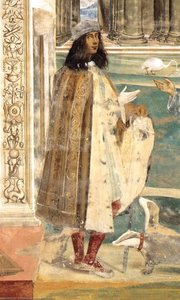
Sodoma portretas

71 garsiausių Sodoma paveikių rinkinys: galerijos išboru

Atnaujinta spalis 2026 · pagal mūsų populiarumumo koeficientą (paieškos, lankytojai ir užsakymai kiekvienam kūriniui) · 71 Sodoma darbai mūsų kataloge

Trumpai tariant

Iš visų paliktų originalų kūrinių Sodoma garsiausias yra Sabinės Šaltukas (1506), esantis Galleria Nazionale d’Arte Antica kolekcijoje, Roma. Tiesiog už jų seka Head of Christ (1537) ir The Holy Family with Saint Elizabeth and the Infant Saint John the Baptist (1527). Mūsų kataloge yra 71 darbų autoriaus Sodoma; galerija išsaugojo 71 labiausiai pasaulyje žyminiausių kūrinių – kiekvienas jų pateikiamas su datos, muziejaus ir istorijos aprašymu.

1477 – 1549, Verčelis Renesansas Daugiausia darbų: Szépművészeti Múzeum

Sodoma geriausios 10 paveikslų: galerijos pasirinkimas

1
Sabinės Šaltukas (1506) aut. Sodoma

Sabinės Šaltukas

1506 · Aliejus ant drobės · Galleria Nazionale d’Arte Antica, Roma

„Sabijonų Žmogės“ – Il Sodomos Šedevras: Romos Galerijos Šlovingė ir Renesanso Dramiška Širdis Štai vienas iš Italijos renesansinės dailės žymiausių kūrinių – „Sabijonų Žmogės“, kurią sukūrė Giovanni Antonio Bazzi, plačiau žinomas kaip Il Sodoma. Šioje drobėje, pagražinta aliejumi 1506 metais, įsikėlė Siena šlovingumo galerijoje Romoje ir užima išmatuotą dydį – 76 x 170 cm. Štai ką vertėtų žinoti apie šį įvykį istoriją įvykdantį meno pasaulį. Il Sodoma, kaip dailės meistras,…

2
Head of Christ (1537) aut. Sodoma

Head of Christ

1537 · Oil · National Gallery, Londonas

In "Head of Christ" by Giovanni Gerolamo Savoldo, the viewer is met with a close-up portrait that focuses tightly on the face and upper shoulders. The subject is framed by long, dark, wavy hair and a full beard. A crown of thorns rests upon the brow, rendered through textured, dark lines that press against the skin. The eyes are cast downward, heavy with a sense of sadness or exhaustion. This…

3
The Holy Family with Saint Elizabeth and the Infant Saint John the Baptist (1527) aut. Sodoma

The Holy Family with Saint Elizabeth and the Infant Saint John the Baptist

1527 · Oil · Walters Art Museum, Baltimore

Within the circular confines of this tondo, a quiet intimacy unfolds. The air feels heavy with the warmth of a Mediterranean afternoon, filtered through a soft, directional light that carves the figures out of the surrounding landscape. We find ourselves watching a tender moment of familial connection, where the boundaries between the divine and the human seem to blur. The Holy Family gathers closely, their forms wrapped in heavy, tactile…

4
The Ecstasy of Saint Catherine of Siena (1532) aut. Sodoma

The Ecstasy of Saint Catherine of Siena

1532 · Oil · Yale University Art Gallery, Niū Hevenas

The spiritual intensity of The Ecstasy of Saint Catherine of Siena unfolds before us through the hand of Il Sodoma. This religious art piece captures a profound moment of divine connection, centering entirely on the figure of Catherine of Siena. The scene invites a sense of wonder as the saint experiences a celestial encounter, her presence anchoring the composition amidst a swirling, sacred atmosphere. Every brushstroke seeks to translate the…

5
The Holy Family and St. John (1477) aut. Sodoma

The Holy Family and St. John

1477 · Oil On Panel · Detroito meno institutas, Detroitas

The Holy Family and St. John is a devotional work by the Italian artist Il Sodoma. This oil on wood panel depicts a sacred grouping of figures, centering on the intimate connection between Mary, Joseph, and the young Saint John the Baptist. The composition focuses on the quiet, tender interactions shared between the holy figures, presented in a manner that invites a sense of spiritual closeness.

6
The Madonna and Child with Saints and a Donor (1530) aut. Sodoma

The Madonna and Child with Saints and a Donor

1530 · Oil On Panel · National Gallery, Londonas

Step closer to observe the way the light settles upon these figures. In this composition from around 1530, we find a sense of stability born from a pyramidal arrangement. At the apex sits the Virgin Mary, her presence anchoring the group. She holds the Christ Child with a natural, unforced tenderness that grounds the divine subject in something deeply human. The palette relies on deep ultramarine blue in her mantle…

7
Saint Jerome in Penitence (1540) aut. Sodoma

Saint Jerome in Penitence

1540 · Oil On Canvas · National Gallery, Londonas

A muscular, semi-nude figure occupies the center of this 1540 oil painting, captured in a dynamic, crouching pose that cuts a diagonal path across the canvas. The subject, Saint Jerome, is immersed in a moment of intense religious devotion and physical hardship. Deep, earthy tones of brown and dark green dominate the composition, grounded by the heavy textures of a rugged, rocky landscape. A strong directional light source, characteristic of…

8
Death of Lucretia (1515) aut. Sodoma

Death of Lucretia

1515 · Oil On Panel · Galleria Sabauda, Turinas

In this work, we find ourselves witnessing the final, harrowing moments of Lucretia, a woman whose life is being extinguished in a flash of steel and sorrow. The scene freezes a moment of profound tragedy, capturing the climactic end of a Roman noblewoman whose life was defined by virtue and ended by violence. The composition is thick with tension; the stillness of her form contrasts sharply with the looming presence…

9
Holy Family with St. John the Baptist as child (1525) aut. Sodoma

Holy Family with St. John the Baptist as child

1525 · Oil · Kunsthistorisches Museum, Viena

This oil painting, dated 1525, is presented within an arched lunette format. The scene focuses on a group of four figures: the Virgin Mary, the Christ Child, Saint Joseph, and a young Saint John the Baptist. Mary is positioned centrally, wearing a red tunic beneath a deep blue mantle. Her pale skin and the skin of the infants are illuminated by a soft, directional light that emerges from the side,…

10
The Madonna and Child (1525) aut. Sodoma

The Madonna and Child

1525 · Oil On Panel · National Gallery, Londonas

The composition centers on the Virgin Mary and the infant Jesus, set against an atmospheric landscape of distant hills and trees. A soft, directional light illuminates the faces of the subjects and the child's body, while much of the background remains in shadow. This use of chiaroscuro creates a sense of three-dimensionality, sculpting the figures through subtle gradations of tone.

Sodoma darba rinkinys tęsiamas, nuo 11 iki 71

11The Road to Calvary (1510) aut. SodomaThe Road to Calvary1510 · Szépművészeti Múzeum 12charity (1504) aut. Sodomacharity1504 · Gemäldegalerie 13Benedict Presents the Olivetan Monks with His Rule (1505) aut. SodomaBenedict Presents the Olivetan Monks with His Rule1505 14Life of St Benedict, Scene 13: Benedict Frees a Monk (1505) aut. SodomaLife of St Benedict, Scene 13: Benedict Frees a Monk1505 15Life of St Benedict, Scene 12: Benedict Receives Maurus and Placidus (1505) aut. SodomaLife of St Benedict, Scene 12: Benedict Receives Maurus and Placidus1505 16Life of St Benedict, Scene 32: Benedict Appears in the Dreams of Two Monks (1505) aut. SodomaLife of St Benedict, Scene 32: Benedict Appears in the Dreams of Two Monks1505 17Holy Family with young Saint John (1525) aut. SodomaHoly Family with young Saint John1525 18Terrestrial Venus with Eros and Celestial Venus with Anteros and Two Cupids (1525) aut. SodomaTerrestrial Venus with Eros and Celestial Venus with Anteros and Two Cupids1525 19St Sebastian (1525) aut. SodomaSt Sebastian1525 · Palazzo Pitti 20Christ Carrying the Cross (1545) aut. SodomaChrist Carrying the Cross1545 · Gemäldegalerie 21The Crucifixion (1549) aut. SodomaThe Crucifixion1549 · Cleveland Museum of Art 22The Presentation of the Virgin in the Temple (1518) aut. SodomaThe Presentation of the Virgin in the Temple1518 · Oratory of San Bernardino 23The Holy Family (1511) aut. SodomaThe Holy Family1511 · Bavarijos valstybinės paveikslų kolekcijos 24The Death of Lucretia (1513) aut. SodomaThe Death of Lucretia1513 · Szépművészeti Múzeum 25The Mystic Marriage of St Catherine (1539) aut. SodomaThe Mystic Marriage of St Catherine1539 · Galleria Nazionale d’Arte Antica 26Pietà (1540) aut. SodomaPietà1540 · Galleria Borghese 27Holy Family with the Infant Saint John the Baptist (1530) aut. SodomaHoly Family with the Infant Saint John the Baptist1530 28Ecce Homo (1510) aut. SodomaEcce Homo1510 · Pinacoteca di Brera 29The Taking of Christ (1510) aut. SodomaThe Taking of Christ1510 · Szépművészeti Múzeum 30The Confirmation of the Olivetan Order by the Bishop of Arezzo (1503) aut. SodomaThe Confirmation of the Olivetan Order by the Bishop of Arezzo1503 31Man of Sorrow (1505) aut. SodomaMan of Sorrow1505 32Life of St Benedict, Scene 5: The Devil Destroys the Little Bell (1505) aut. SodomaLife of St Benedict, Scene 5: The Devil Destroys the Little Bell1505 33The Road to Calvary (1510) aut. SodomaThe Road to Calvary1510 · Szépművészeti Múzeum 34Life of St Benedict, Scene 6: A Priest Shares His Easter Meal with Benedict (1505) aut. SodomaLife of St Benedict, Scene 6: A Priest Shares His Easter Meal with Benedict1505 35Life of St Benedict, Scene 3: Benedict Repairs a Broken Colander through Prayer (detail) (1505) aut. SodomaLife of St Benedict, Scene 3: Benedict Repairs a Broken Colander through Prayer (detail)1505 36Deposition from the Cross (detail) (1510) aut. SodomaDeposition from the Cross (detail)1510 · Pinacoteca Nazionale 37Life of St Benedict, Scene 8: Benedict is Tempted (detail) (1505) aut. SodomaLife of St Benedict, Scene 8: Benedict is Tempted (detail)1505 38Life of St Benedict, Scene 19: Benedict Sends away the Harlots (1505) aut. SodomaLife of St Benedict, Scene 19: Benedict Sends away the Harlots1505 39Life of St Benedict, Scene 4: The Monk Romanus Dresses Benedict (detail) (1505) aut. SodomaLife of St Benedict, Scene 4: The Monk Romanus Dresses Benedict (detail)1505 40The Women of Darius's Family before Alexander the Great (1517) aut. SodomaThe Women of Darius's Family before Alexander the Great1517 · Villa Farnesina 41Life of St Benedict, Scene 19: Benedict Sends away the Harlots (detail) (1505) aut. SodomaLife of St Benedict, Scene 19: Benedict Sends away the Harlots (detail)1505 42Life of St Benedict, Scene 3: Benedict Repairs a Broken Colander through Prayer (1505) aut. SodomaLife of St Benedict, Scene 3: Benedict Repairs a Broken Colander through Prayer1505 43Life of St Benedict, Scene 15: Benedict Fishes the Pieces of a Broken Ax (detail) (1505) aut. SodomaLife of St Benedict, Scene 15: Benedict Fishes the Pieces of a Broken Ax (detail)1505 44Deposition from the Cross (1510) aut. SodomaDeposition from the Cross1510 · Pinacoteca Nazionale 45Life of St Benedict, Scene 1: Benedict Leaves His Parent's House (1505) aut. SodomaLife of St Benedict, Scene 1: Benedict Leaves His Parent's House1505 46Life of St Benedict, Scene 12: Benedict Receives Maurus and Placidus (detail) (1505) aut. SodomaLife of St Benedict, Scene 12: Benedict Receives Maurus and Placidus (detail)1505 47Life of St Benedict, Scene 11: Benedict Founds Twelve Monasteries (1505) aut. SodomaLife of St Benedict, Scene 11: Benedict Founds Twelve Monasteries1505 48Life of St Benedict, Scene 33: Benedict Gives Posthumous Absolution to Two Nuns (1505) aut. SodomaLife of St Benedict, Scene 33: Benedict Gives Posthumous Absolution to Two Nuns1505 49Life of St Benedict, Scene 31: Benedict Feeds the Monk (1505) aut. SodomaLife of St Benedict, Scene 31: Benedict Feeds the Monk1505 50Life of St Benedict, Scene 30: Benedict Foretells the Destruction of Montecassino (1505) aut. SodomaLife of St Benedict, Scene 30: Benedict Foretells the Destruction of Montecassino1505 51Life of St Benedict, Scene 30: Benedict Foretells the Destruction of Montecassino (detail) (1505) aut. SodomaLife of St Benedict, Scene 30: Benedict Foretells the Destruction of Montecassino (detail)1505 52Life of St Benedict, Scene 7: Benedict Instructs the Peasants (1505) aut. SodomaLife of St Benedict, Scene 7: Benedict Instructs the Peasants1505 53Saint George and the Dragon (1518) aut. SodomaSaint George and the Dragon1518 · National Gallery of Art 54The Beheading of Niccolò di Tuldo (1526) aut. SodomaThe Beheading of Niccolò di Tuldo1526 · San Domenico 55View of the Oratory (1520) aut. SodomaView of the Oratory1520 · Oratory of San Bernardino 56View of the Cappella di Santa Caterina (1526) aut. SodomaView of the Cappella di Santa Caterina1526 · San Domenico 57Wedding of Alexander and Roxane (detail) (1517) aut. SodomaWedding of Alexander and Roxane (detail)1517 · Villa Farnesina 58The Death of Lucretia (1535) aut. SodomaThe Death of Lucretia1535 · Szépművészeti Múzeum 59Cupid in a Landscape (1510) aut. SodomaCupid in a Landscape1510 · Ermitažas 60Kristaus Šventė (1510) aut. SodomaKristaus Šventė1510 · Szépművészeti Múzeum 61Mary Magdalene aut. SodomaMary Magdalene 62Christ Carrying the Cross aut. SodomaChrist Carrying the CrossPalazzo d'Arco 63St George and the Dragon aut. SodomaSt George and the DragonNational Gallery of Art 64A Scene from the Vita of Saint Catherine of Siena / The Execution of Niccolò Tuldo aut. SodomaA Scene from the Vita of Saint Catherine of Siena / The Execution of Niccolò TuldoGemäldegalerie 65self-portrait aut. Sodomaself-portrait 66Allegory of Celestial Love aut. SodomaAllegory of Celestial LoveChigi Saracini Collection 67Christ Presented to the People (Ecce Homo) (1544) aut. SodomaChrist Presented to the People (Ecce Homo)1544 · Metropolitano meno muziejus 68Wedding of Alexander and Roxane (1517) aut. SodomaWedding of Alexander and Roxane1517 · Villa Farnesina 69Man of Sorrows (1500) aut. SodomaMan of Sorrows1500 70Holy Family with Saint John the Baptist and an Angel (1530) aut. SodomaHoly Family with Saint John the Baptist and an Angel1530 · Strasburgos gražiųjų rūšų muziejus 71Pietà (1533) aut. SodomaPietà1533

žymios Sodoma tapiojamos, pagal laikotarpį

Temos, kurios domino Sodoma

Ketverios temos, dažniausiai pasikrausto originaluose, kiekvienos su savo puikiausiu pavyzdžiu.

Muziejai, kuriuose saugomi Sodoma originalūs darbai

8 muziejai, kuriuose saugoma daugiausia šioje pusėje esamų paveikslų.

Muzejaus Miestas Sodoma darbai Šiojo sąrašo paveikslai
Szépművészeti Múzeum, BudapeštasSzépművészeti Múzeum Budapeštas 6 The Road to Calvary, The Death of Lucretia, The Taking of Christ
National Gallery, LondonasNational Gallery Londonas 4 Head of Christ, The Madonna and Child with Saints and a Donor, Saint Jerome in Penitence
Gemäldegalerie, BerlynasGemäldegalerie Berlynas 3 charity, Christ Carrying the Cross, A Scene from the Vita of Saint Catherine of Siena / The Execution of Niccolò Tuldo
Villa Farnesina, RomaVilla Farnesina Roma 3 The Women of Darius's Family before Alexander the Great, Wedding of Alexander and Roxane (detail), Wedding of Alexander and Roxane
Galleria Nazionale d’Arte Antica, RomaGalleria Nazionale d’Arte Antica Roma 2 Sabinės Šaltukas, The Mystic Marriage of St Catherine
Oratory of San Bernardino, SienaOratory of San Bernardino Siena 2 The Presentation of the Virgin in the Temple, View of the Oratory
Pinacoteca Nazionale, SienaPinacoteca Nazionale Siena 2 Deposition from the Cross (detail), Deposition from the Cross
National Gallery of Art, VašingtonasNational Gallery of Art Vašingtonas 2 Saint George and the Dragon, St George and the Dragon

Sodoma dešimtmetėms po dešimtmetės: originalus kūrinys, apibūdinantis kiekvieną iš jų

Darbai pagal dešimtmečius

Pasirinkite dešimtmetį, kad pamatytėte jį apibrėžusį originalą.

Kolekcjonerų klausimai apie Sodoma paveikslus

Kuriu darbu Sodoma yra labiausiai garsus?Atsakymas

Sabinės Šaltukas (1506), Galleria Nazionale d’Arte Antica, Roma. Toliau seka Head of Christ (1537) ir The Holy Family with Saint Elizabeth and the Infant Saint John the Baptist (1527).

Kokia buvo Sodoma amžius, kai buvo sukurtas Sabinės Šaltukas?Atsakymas

29 metų amžiaus: Sabinės Šaltukas sukurta 1506 m. Nr. Sodoma gimė 1477.

Kokie yra 10 garsiausių Sodoma paveikslų?Atsakymas

Sabinės Šaltukas, Head of Christ, The Holy Family with Saint Elizabeth and the Infant Saint John the Baptist, The Ecstasy of Saint Catherine of Siena, The Holy Family and St. John, The Madonna and Child with Saints and a Donor, Saint Jerome in Penitence, Death of Lucretia, Holy Family with St. John the Baptist as child ir The Madonna and Child. Viršuje esančioje reitingo sąraše nurodyta kiekvieno kūrinio metis ir muziejus.

Kiek paveikslų paliko Sodoma?Atsakymas

Mūsų kataloge yra 71 Sodoma darbų, skirtų laikotarpiui nuo 1500 iki 1549.

Kuriuose muziejuose eksponuojami Sodoma šedevrai?Atsakymas

Daugiausia – Szépművészeti Múzeum (Budapeštas), National Gallery (Londonas) ir Gemäldegalerie (Berlynas). Viršuje esančiame muziejų sąraše yra visi jie.

Kuriomis metais Sodoma tapo savo garsiausius kūrinius?Atsakymas

1500s laikotarpiu: 26 iš 71 šioje pusėje esančių darbų buvo sukurtos tada, iš jų Sabinės Šaltukas.

Kokie yra pirmasis ir paskutinis garsieji Sodoma originalūs darbai?Atsakymas

Šioje pusėje seniausias darbas yra Man of Sorrows (1500), o naujausias – The Crucifixion (1549).

Kurią temą Sodoma rinkosi dažniausiai?Atsakymas

Saints (18), Scenes (18) ir Life (17) iš 71 šioje pusėje esamų darbų.

Kurią techniką Sodoma naudojo dažniausiai?Atsakymas

Oil, iš 71 šios puslapio darbų – 8.

Kelią meno kryptį priklauso Sodoma?Atsakymas

Renesansas, judging by the originals on this page.

Kurių Sodoma darbai eksponuojami Szépművészeti Múzeum?Atsakymas

The Road to Calvary, The Death of Lucretia ir The Taking of Christ: Szépművészeti Múzeum, Budapeštas kolekcijoje yra 6 šioje pusėje esančių darbų.

Ar galiu užsisakyti Sodoma paveikslą-reprodukciją?Atsakymas

Taip, kaip reprodukcija: originalas lieka savo muziejuje, tačiau bet kurį šio puslapio paveikslą galite užsisakyti rankinio darbo versiją – unikali, pagal jūsų užsakymą atlikta kopija, kurią galite užsisakyti iš pat pagrindinės paveikslai puslapio.

Sodoma: gyvenimas ir kūryba

Enigmatiška Sienos Renesanso siela

Gyvybingame Italijos Renesanso audinyje nedidelis skaičius asmenybių pasižymi tokia provokuojančia varde ar tokia daugiasluoksne palika, kaip Giovanni Antonio Bazzi, istorijai žinomą evokuojančiu pseudonimu Il Sodoma. Gimęs Vercelli apie 1477 metus, Bazzi pasirodė ne tik kaip paveikslėlis, bet kaip transformatyvi jėga, užpildanti prarastą atstumą tarp šviesaus, subalansuoto Aukštojo Renesanso idealizmo ir emocingo, dažnai nerado dramatiškumo, būdingo manierizmo. Jo meninė kelionė buvo gilaus sintezės procesas, kuriame disciplinuotos Sienos mokyklos tradicijos susitiko su platžiais, atmosferiniais Lombardijos stiliaus naujovėmis bei subtiliu psichologiniu gyliu, įkvėptu Leonardo da Vinci.

Bazzio gyvenimo ankstyvieji metai buvo pažymėti griežta mokytoju, kuri padėjo pagrindus jo techniniam meistriškumui. Vadovaujamas tokių meistrų kaip „archajiškasis” Martino Spanzotti ir Giovenone, jis įsisavino pagrindinį formos ir spalvos suvokimą. Persikeliėjęs į kultūrinį Sienos epicentrą, jo kūryba pradėjo atspindėti unikalią stiliaus evoliuciją. Jis turėjo retą gebėjimą 16 amžiaus pradžios Romos išrafinuotą, klasikinę eleganciją apjungti su provincuesnėmis, dekoratyvinėmis Toskanos tradicijomis. Šis sujungimas leido jam kurti darbus, kurie kartu buvo įtvirtinti vietinėje paveldėjime ir yra didelės, visos Italijos meninės revoliucijos dalimi.

Šviesos, emocijų ir formos meistriškumas

Stebėti Il Sodoma kūrinį yra tarsi liudyti subtilų šokį tarp ramybės ir įtampos. Jo technika pasižymėjo meistrišku sfumato valdymu ir turtingu, emociniu spalvų naudojimu, kuris galėjo persigerti nuo švelnaus Madonos skauso šilumos iki dramatiškų mitologinių kovų šešėlių. Šis universalumas yra ypač akivaizdus jo įvairiuose temų spektruose, kurie su tokiu pat dideliu aštriumu apimė tiek šventuosius, tiek pasaulinius motyvus.

Jo indėlis į freskos tradiciją yra niekur mažiau nei monumentalus. Sienoje eskančiame San Bernardino oratoriije Bazzi pademonstravo gebėjimą valdyti platias architektūrines erdves, itin sudėtingas naracijas itin susietas per subalansuotas kompozicijas, kurios vis dėlto pulsavo žmogiška emocija. Jo religiniai darbai, tokie kaip Draudimas Švč. Mergelės prie Šventyklos, atskleidžia gilią dvasinę švelnumą, o pasauliniai ir mitologiniai kūriniai, pavyzdžiui, užburiantis Kupido peizažas, atskleidžia susižavėjimą sensualumu ir idiliškumu. Šiuose peizažuose randame ramią Italijos vaizdą, kuris tarnauja kaip scena dieviškumui ar mitologijai, atvaizduotas tokį skaidriai, kad kviečia žiūrovą į sapnių būseną.

Perėjimo meistro palikimas

Istorinė Il Sodoma reikšmė slypi jo vaidmenyje kaip stiliaus tiltuke. Jis ne tik sekė savo laikmečio tendencijas; jis padėjo suformuoti perėjimą nuo harmoningos Aukštojo Renesanso stabilumo prie eksperimentingo, iškraipyto ir išraiškmingo manierizmo kalbos. Įvedęs perdėtus gestus ir padidintą emocionalumą į established Sienos rėminį, jis paruošė kelią kitai menininkų kartai tyrinėti sudėtingą žmogaus psichiką.

Net ir kai jo vardas nešė tam tikrą skandalą, jo kūrybinė veikla išliko techninio išminties ir intelektualinio gylio įrodymu. Gebėjimas valdyti prestižinius popiežių ir galingų rėmėjų užsakymus – įskaitant ryšius su įtakingu Agostino Chigi – užtikrino, kad jo įtaka pasiektų toli už Sienos sienų. Šiandien Bazzi laikomas svarbiu veikėju, kurio darbai ir toliau sužavi, primindami mums laikotarpį, kai menas buvo gilus tiek žemės grožio, tiek dvasinių žmogaus būklės paslapčių tyrimas.

Visi 71 Sodoma darbai →