Luca Della Robbia portretas

79 garsiausių Luca Della Robbia paveikių – kiekvienas yra unikalus

Atnaujinta lapkritis 2026 · pagal mūsų populiarumumo koeficientą (paieškos, lankytojai ir užsakymai kiekvienam kūriniui) · 80 Luca Della Robbia darbai mūsų kataloge

Trumpai tariant

Madonna ir Imgleikis (1445) yra viena矚 most žiūrėlių pritraukiančių Luca Della Robbia tapierių; originalas saugomas Metropolitano meno muziejus, Niujorkas. Po to akmuo patenka į Cantoria: third bottom relief (1431) ir Bronze Doors of the New Sacristy (1446). Iš 80 Luca Della Robbia darbų mūsų kataloge šios 79 yra garsiausios – kiekvienas yra unikali originali dai̇lia, pateikta su jos metais, muziejumi ir priežastimi, kodėl ji išlieka per amžius.

1399 – 1482, Florencija Renaissance Daugiausia darbų: Museo dell'Opera del Duomo

10 geriausių Luca Della Robbia paveikslų: galerijos akimais

1
Madonna ir Imgleikis (1445) aut. Luca Della Robbia

Madonna ir Imgleikis

1445 · Terakota · Metropolitano meno muziejus, Niujorkas

To gaze upon this depiction of the Madonna and Child is to step directly into the luminous heart of the early Italian Renaissance. It captures not merely a portrait, but an eternal moment of divine connection—a quiet communion between mother and son that has resonated with humanity for centuries. The composition itself is masterfully arranged, centering the Virgin Mary in a posture of gentle support as she cradles the infant…

2
Cantoria: third bottom relief (1431) aut. Luca Della Robbia

Cantoria: third bottom relief

1431 · Marble · Museo dell'Opera del Duomo, Firenka

To gaze upon this relief is to step directly into the vibrant heart of the early Italian Renaissance. Depicting six youthful male figures, perhaps muses or celestial beings, these forms are captured in a moment of exquisite, shared resonance. The composition itself feels alive, a tightly woven tapestry of flesh and gesture rendered in pale beige-grey marble. One senses not merely stone, but the lingering warmth of human connection—a celebration…

3
Bronze Doors of the New Sacristy (1446) aut. Luca Della Robbia

Bronze Doors of the New Sacristy

1446 · Bronze · Duomo, Florencija

Luca della Robbia’s “Bronze Doors of the New Sacristy,” crafted in 1446, stands as a testament to the burgeoning artistic spirit of early Florence. This extraordinary work, now meticulously reproduced at 420 x 200 cm, offers a captivating glimpse into the heart of the Renaissance – a period defined by an unprecedented reverence for classical antiquity and a profound exploration of human experience. More than just decorative panels, these doors…

4
Cantoria: second top relief (1431) aut. Luca Della Robbia

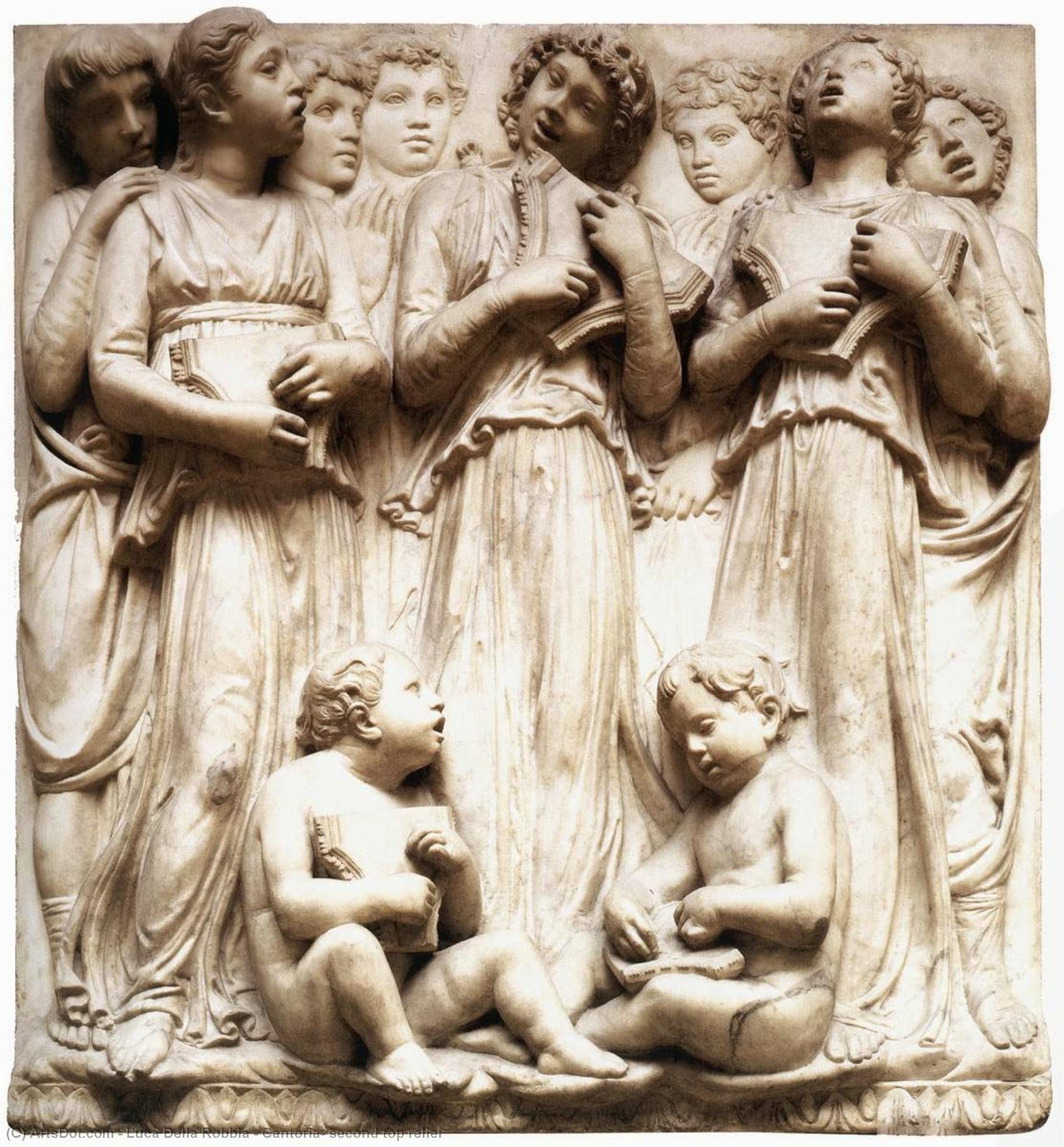
Cantoria: second top relief

1431 · Marble · Museo dell'Opera del Duomo, Firenka

To stand before Cantoria: second top relief is to step directly into the vibrant intellectual atmosphere of early Quattrocento Florence. This magnificent marble work, executed by the master craftsman Luca della Robbia in 1431, is far more than a mere sculptural grouping; it is a tangible echo of Renaissance humanism itself. The scene unfolds with an arresting sense of community, depicting a gathering of figures whose very presence speaks to…

5
Cantoria: first bottom relief (1431) aut. Luca Della Robbia

Cantoria: first bottom relief

1431 · Marble · Museo dell'Opera del Duomo, Firenka

In the heart of the Italian Renaissance, where the revival of classical antiquity met a new, profound humanism, Luca della Robbia breathed life into cold stone with his Cantoria: first bottom relief. Created in 1431, this exquisite marble masterpiece transcends its medium to capture a fleeting moment of pure, unadulterated jubilation. At first glance, the viewer is swept into a whirlwind of movement, as a group of nude male children—putti—engage…

6
Cantoria: second top relief (1431) aut. Luca Della Robbia

Cantoria: second top relief

1431 · Ceramics · Museo dell'Opera del Duomo, Firenka

To gaze upon Luca della Robbia's Cantoria: second top relief is to step directly into the vibrant, sun-drenched heart of Quattrocento Florence. This work is not merely a depiction of musicians; it is an effervescent portrait of community, artistry, and shared human joy. The scene unfolds with remarkable vitality, capturing a moment where music acts as the invisible thread weaving together a gathering of souls. One can almost hear the…

7
Cantoria: first top relief (1431) aut. Luca Della Robbia

Cantoria: first top relief

1431 · Marble · Museo dell'Opera del Duomo, Firenka

In the heart of the Florentine Renaissance, where the rebirth of classical ideals met a newfound passion for human emotion, Luca della Robbia carved a moment of eternal celebration into marble. His Cantoria: first top relief, completed in 1431, is not merely a sculpture but a rhythmic explosion of life captured in stone. To gaze upon this masterpiece is to be transported to a period of profound artistic awakening, where…

8
Madonna and Child (1445) aut. Luca Della Robbia

Madonna and Child

1445 · Ceramics · Spedale degli Innocenti, Florencija

The air feels heavy with a quiet, holy peace as we gaze upon the Virgin Mary and her infant son. She cradles the child in a posture of gentle support, her presence radiating a soft, maternal warmth that seems to pull the viewer into her private world of devotion. The figures emerge from their medium with a peculiar, celestial glow, appearing almost as if they are made of light itself…

9
Madonna of the Apple (1455) aut. Luca Della Robbia

Madonna of the Apple

1455 · Terracotta · Museo Nazionale del Bargello, Firenka

The Madonna of the Apple, crafted in exquisite terracotta by Luca della Robbia around 1455, is more than simply a depiction of the Virgin Mary cradling her Christ Child; it's a profound meditation on humanity’s relationship with divine grace, temptation, and redemption. Housed within the Museo Nazionale del Bargello in Florence, this sculpture stands as a testament to Della Robbia’s revolutionary technique – his masterful application of vibrant glazes to…

10
Cantoria: right side relief (1431) aut. Luca Della Robbia

Cantoria: right side relief

1431 · Marble · Museo dell'Opera del Duomo, Firenka

To stand before Cantoria: right side relief is to step directly into the vibrant heart of the early Italian Renaissance. This breathtaking marble sculpture, executed by the prodigious hands of Luca Della Robbia in 1431, is far more than a decorative panel; it is a frozen moment of profound human expression. It captures the very essence of communal artistry—the joy, devotion, and skill inherent in music. The scene unfolds with…

žinomi Luca Della Robbia paveikslai, nuo 11 iki 79 numerio

11Cantoria: second bottom relief (1431) aut. Luca Della RobbiaCantoria: second bottom relief1431 · Museo dell'Opera del Duomo 12Cantoria (1431) aut. Luca Della RobbiaCantoria1431 · Museo dell'Opera del Duomo 13Deliverance of St Peter from Prison (1439) aut. Luca Della RobbiaDeliverance of St Peter from Prison1439 · Museo Nazionale del Bargello 14Ceiling decoration (1461) aut. Luca Della RobbiaCeiling decoration1461 · San Miniato al Monte 15Crucifixion of St Peter (1439) aut. Luca Della RobbiaCrucifixion of St Peter1439 · Museo Nazionale del Bargello 16Cantoria: fourth top relief (1431) aut. Luca Della RobbiaCantoria: fourth top relief1431 · Museo dell'Opera del Duomo 17Cantoria (1431) aut. Luca Della RobbiaCantoria1431 · Museo dell'Opera del Duomo 18Cantoria: fourth bottom relief (1431) aut. Luca Della RobbiaCantoria: fourth bottom relief1431 · Museo dell'Opera del Duomo 19Madonna in a Rose-Garden (Madonna del Roseto) (1450) aut. Luca Della RobbiaMadonna in a Rose-Garden (Madonna del Roseto)1450 · Museo Nazionale del Bargello 20North Sacristy Doors with the Resurrection (1442) aut. Luca Della RobbiaNorth Sacristy Doors with the Resurrection1442 · Duomo 21Labours of the Months: June (1450) aut. Luca Della RobbiaLabours of the Months: June1450 · Victoria and Albert Museum 22The Peretola Tabernacle (1441) aut. Luca Della RobbiaThe Peretola Tabernacle1441 · Santa Maria Novella 23Christ and Thomas (1465) aut. Luca Della RobbiaChrist and Thomas1465 · Szépművészeti Múzeum 24Ascension of Christ (1446) aut. Luca Della RobbiaAscension of Christ1446 · Duomo 25Nativity (1460) aut. Luca Della RobbiaNativity1460 26Madonna and Child with Scroll (1455) aut. Luca Della RobbiaMadonna and Child with Scroll1455 · Metropolitano meno muziejus 27Saint Michael the Archangel (1475) aut. Luca Della RobbiaSaint Michael the Archangel1475 · Metropolitano meno muziejus 28Tondo Portrait of a Lady (1465) aut. Luca Della RobbiaTondo Portrait of a Lady1465 · Museo Nazionale del Bargello 29Visitation (1445) aut. Luca Della RobbiaVisitation1445 · San Giovanni Fuorcivitas 30Resurrection (1442) aut. Luca Della RobbiaResurrection1442 · Duomo 31Cantoria: left side relief (1431) aut. Luca Della RobbiaCantoria: left side relief1431 · Museo dell'Opera del Duomo 32Labours of the Months: January (1450) aut. Luca Della RobbiaLabours of the Months: January1450 · Victoria and Albert Museum 33Cantoria: fourth top relief (1431) aut. Luca Della RobbiaCantoria: fourth top relief1431 · Museo dell'Opera del Duomo 34Madonna and Child between Two Angels (1450) aut. Luca Della RobbiaMadonna and Child between Two Angels1450 · Museo Nazionale del Bargello 35St James the Great (1440) aut. Luca Della RobbiaSt James the Great1440 36Monument to Bishop Benozzo Federighi (1453) aut. Luca Della RobbiaMonument to Bishop Benozzo Federighi1453 · Santa Trinità 37Cantoria: first bottom relief (detail) (1431) aut. Luca Della RobbiaCantoria: first bottom relief (detail)1431 · Museo dell'Opera del Duomo 38Cantoria: first bottom relief (detail) (1431) aut. Luca Della RobbiaCantoria: first bottom relief (detail)1431 · Museo dell'Opera del Duomo 39Cantoria: first top relief (detail) (1431) aut. Luca Della RobbiaCantoria: first top relief (detail)1431 · Museo dell'Opera del Duomo 40Cantoria: third bottom relief (detail) (1431) aut. Luca Della RobbiaCantoria: third bottom relief (detail)1431 · Museo dell'Opera del Duomo 41Cantoria (1431) aut. Luca Della RobbiaCantoria1431 · Museo dell'Opera del Duomo 42Cantoria: second top relief (detail) (1431) aut. Luca Della RobbiaCantoria: second top relief (detail)1431 · Museo dell'Opera del Duomo 43Cantoria: fourth bottom relief (detail) (1431) aut. Luca Della RobbiaCantoria: fourth bottom relief (detail)1431 · Museo dell'Opera del Duomo 44Cantoria: second bottom relief (detail) (1431) aut. Luca Della RobbiaCantoria: second bottom relief (detail)1431 · Museo dell'Opera del Duomo 45Cantoria: first bottom relief (1431) aut. Luca Della RobbiaCantoria: first bottom relief1431 · Museo dell'Opera del Duomo 46Cantoria: third top relief (1431) aut. Luca Della RobbiaCantoria: third top relief1431 · Museo dell'Opera del Duomo 47Cupola of the Portico (1440) aut. Luca Della RobbiaCupola of the Portico1440 48Visitation (detail) (1445) aut. Luca Della RobbiaVisitation (detail)1445 · San Giovanni Fuorcivitas 49Interior (1440) aut. Luca Della RobbiaInterior1440 50Madonna and Child between Saints (1449) aut. Luca Della RobbiaMadonna and Child between Saints1449 · Galleria Nazionale delle Marche 51Madonna and Child (9) (1440) aut. Luca Della RobbiaMadonna and Child (9)1440 52The Peretola Tabernacle (detail) (1441) aut. Luca Della RobbiaThe Peretola Tabernacle (detail)1441 · Santa Maria Novella 53Logic (or Philosophy) (1437) aut. Luca Della RobbiaLogic (or Philosophy)1437 · Museo dell'Opera del Duomo 54Madonna and Child (1455) aut. Luca Della RobbiaMadonna and Child1455 · Museo Nazionale del Bargello 55Madonna of the Apple (detail) (1455) aut. Luca Della RobbiaMadonna of the Apple (detail)1455 · Museo Nazionale del Bargello 56Monument to Bishop Benozzo Federighi (detail) (1453) aut. Luca Della RobbiaMonument to Bishop Benozzo Federighi (detail)1453 · Santa Trinità 57Madonna and Child (1465) aut. Luca Della RobbiaMadonna and Child1465 · Santa Maria 58Monument to Bishop Benozzo Federighi (detail) (1453) aut. Luca Della RobbiaMonument to Bishop Benozzo Federighi (detail)1453 · Santa Trinità 59Ceiling decoration (1461) aut. Luca Della RobbiaCeiling decoration1461 · San Miniato al Monte 60Crucifixion (detail) (1465) aut. Luca Della RobbiaCrucifixion (detail)1465 · Santa Maria 61Madonna and Child (11) (1455) aut. Luca Della RobbiaMadonna and Child (11)1455 · Orsanmichele 62Crucifixion (1465) aut. Luca Della RobbiaCrucifixion1465 · Santa Maria 63Madonna and Child aut. Luca Della RobbiaMadonna and Child 64Cantoria (detail)4 aut. Luca Della RobbiaCantoria (detail)4 65Tabernacle aut. Luca Della RobbiaTabernacle 66Cantoria (detail) aut. Luca Della RobbiaCantoria (detail) 67Madonna and Child between Angels (1475) aut. Luca Della RobbiaMadonna and Child between Angels1475 · Museo Nazionale del Bargello 68Candelabrum-Bearing Angel (1448) aut. Luca Della RobbiaCandelabrum-Bearing Angel1448 · Duomo 69Cantoria (1431) aut. Luca Della RobbiaCantoria1431 · Museo dell'Opera del Duomo 70Cantoria: fourth top relief (detail) (1431) aut. Luca Della RobbiaCantoria: fourth top relief (detail)1431 · Museo dell'Opera del Duomo 71Candelabrum-Bearing Angel (1448) aut. Luca Della RobbiaCandelabrum-Bearing Angel1448 · Duomo 72Grammar (1437) aut. Luca Della RobbiaGrammar1437 · Museo dell'Opera del Duomo 73Madonna with Two Angels in Adoration (1450) aut. Luca Della RobbiaMadonna with Two Angels in Adoration1450 74Cantoria (detail)6 aut. Luca Della RobbiaCantoria (detail)6 75Madonna of Roses aut. Luca Della RobbiaMadonna of Roses 76Meeting of Mary and Elisabeth aut. Luca Della RobbiaMeeting of Mary and Elisabeth 77Christ and Thomas aut. Luca Della RobbiaChrist and ThomasSzépművészeti Múzeum 78Madonna with Child and Angels aut. Luca Della RobbiaMadonna with Child and AngelsPalazzo di Parte Guelfa 79Cappuccini tondo aut. Luca Della RobbiaCappuccini tondo

žymios Luca Della Robbia tapiojamos, pagal laikotarpį

Temos, kurios domino Luca Della Robbia

Ketverios temos, dažniausiai pasikrausto originaluose, kiekvienos su savo puikiausiu pavyzdžiu.

Muziejai, kuriuose saugomi Luca Della Robbia originalūs darbai

8 muziejai, kuriuose saugoma daugiausia šioje pusėje esamų paveikslų.

Muzejaus Miestas Luca Della Robbia darbai Šiojo sąrašo paveikslai
Museo dell'Opera del Duomo, FirenkaMuseo dell'Opera del Duomo Firenka 27 Cantoria: third bottom relief, Cantoria: second top relief, Cantoria: first bottom relief
Museo Nazionale del Bargello, FirenkaMuseo Nazionale del Bargello Firenka 9 Madonna of the Apple, Deliverance of St Peter from Prison, Crucifixion of St Peter
Duomo, FlorencijaDuomo Florencija 6 Bronze Doors of the New Sacristy, North Sacristy Doors with the Resurrection, Ascension of Christ
Metropolitano meno muziejus, NiujorkasMetropolitano meno muziejus Niujorkas 3 Madonna ir Imgleikis, Madonna and Child with Scroll, Saint Michael the Archangel
Santa Trinità, FlorencijaSanta Trinità Florencija 3 Monument to Bishop Benozzo Federighi, Monument to Bishop Benozzo Federighi (detail), Monument to Bishop Benozzo Federighi (detail)
Santa Maria, ImprunetaSanta Maria Impruneta 3 Madonna and Child, Crucifixion (detail), Crucifixion
San Miniato al Monte, FirenaSan Miniato al Monte Firena 2 Ceiling decoration, Ceiling decoration
Victoria and Albert Museum, LondonasVictoria and Albert Museum Londonas 2 Labours of the Months: June, Labours of the Months: January

Luca Della Robbia per dešimtmečius: vieniškas originalas kiekvienam

Darbai pagal dešimtmečius

Pasirinkite dešimtmetį, kad pamatytėte jį apibrėžusį originalą.

Luca Della Robbia tapų klausimai galerijai

Koks yra garsiausias Luca Della Robbia kūrinys?Atsakymas

Madonna ir Imgleikis (1445), Metropolitano meno muziejus, Niujorkas. Toliau seka Cantoria: third bottom relief (1431) ir Bronze Doors of the New Sacristy (1446).

Kuriuo amžiaus atσταση Luca Della Robbia sukūrė Madonna ir Imgleikis?Atsakymas

46 metų amžiaus: Madonna ir Imgleikis sukurta 1445 m. Nr. Luca Della Robbia gimė 1399.

Kurios Luca Della Robbia dešimt paveikslų yra garsiausi?Atsakymas

Madonna ir Imgleikis, Cantoria: third bottom relief, Bronze Doors of the New Sacristy, Cantoria: second top relief, Cantoria: first bottom relief, Cantoria: second top relief, Cantoria: first top relief, Madonna and Child, Madonna of the Apple ir Cantoria: right side relief. Viršuje esančioje reitingo sąraše nurodyta kiekvieno kūrinio metis ir muziejus.

Kiek žinoma Luca Della Robbia darbų?Atsakymas

Mūsų kataloge yra 80 Luca Della Robbia darbų, skirtų laikotarpiui nuo 1431 iki 1475.

Kur galima pamatyti garsiausių Luca Della Robbia originalų?Atsakymas

Daugiausia – Museo dell'Opera del Duomo (Firenka), Museo Nazionale del Bargello (Firenka) ir Duomo (Florencija). Viršuje esančiame muziejų sąraše yra visi jie.

Kuriuo laikotarpiu Luca Della Robbia sukūrė savo žymiausias paveikslus?Atsakymas

1430s laikotarpiu: 29 iš 79 šioje pusėje esančių darbų buvo sukurtos tada, iš jų Cantoria: third bottom relief.

Kuris iš garsių Luca Della Robbia paveikslų yra pirmasis, o kuris – paskutinis?Atsakymas

Šioje pusėje seniausias darbas yra Cantoria: third bottom relief (1431), o naujausias – Saint Michael the Archangel (1475).

Kokia temos Luca Della Robbia mėgavosi?Atsakymas

Sculpture (14), Terracotta sculpture (12) ir Terracotta (12) iš 79 šioje pusėje esamų darbų.

Kuriomis medžiagomis Luca Della Robbia tapė dažniausiai?Atsakymas

Terracotta, iš 79 šios puslapio darbų – 25.

Kelią meno kryžkelę priklauso Luca Della Robbia kūryba?Atsakymas

Renaissance, vadovaujantis šios puslapio originalais kūriniais.

Kurius Luca Della Robbia originalius galėčiau pamatyti Museo dell'Opera del Duomo?Atsakymas

Cantoria: third bottom relief, Cantoria: second top relief ir Cantoria: first bottom relief: Museo dell'Opera del Duomo, Firenka kolekcijoje yra 27 šioje pusėje esančių darbų.

Luca Della Robbia: meno kūrinys – autoportretas

Spalvotos žemės meistras: Luca della Robbia gyvenimas ir palikimas

Florentinijos Renesanso širdyje, laikotarpyje, apibūdiname klasikinų idealų atgimimu ir anatominio tobulumo siekiu, Luca della Robbia iškilo kaip vizionierius, pakeitęs pačią skulptūros medžiagą. Kol jo samtarpriečiai dažnai ieškojo šlovės sunkiame marmuro amžinyje ar spindinčiące bronzos prestižė, Luca rado gilią, šviesią grožį papらčio žemėje. Jo gyvenimas, trukęs nuo 1399 iki 1482 metų, buvo skertotas ciniacijos terakotos tobulinimui – technikai, kuri ne tik apibrėžė jo asmeninį palikimą, bet ir suteikė gyvą, spalvingą balsą religiniam bei civiliniam Italijos kraštui.

Gimęs Florencijoje, meistrių šeimoje, Luca ankstyvasieji metai buvo įmerkti į griežtas florentininių dirbtuvių tradicijas. Nors didžioji jo formavimo laikotarpio dalis išlieka slėptas istorijos miglotų šešėlių, jo meninis DNR neabejotinai buvo suformuotas didžiųjų jo eras gigantų. Jis dalyvavo tais pačiais intelektiniais ir kūrybiniais ratuose kaip Donatello ir , visur įsisavinęs augantį humanistinį dvasią, siekį sujungti krikščionišką atsidavimą su klasikinės antikos elegancija. Jo ankstyvasis bendradarbiavimas, ypač darbas prie monumentalių Florencijos Krikto baptisterijos projektų, leido jam asmeniškai stebėti naturalizmo evoliuciją – judėjimą link žmogaus emocijų subtilių atspalvių ir švelnių gyvenimo tekstūrų įtvirtinimo.

Inovacija spalva ir molyje

Tikrasis Luca della Robbia genijus slystė jo gebėjime inovatyviai pritaikyti medžiagą, kuri anksčiau buvo laikoma antraoriente nei akmuo. Sukūręs specialią ciniacijos glazūrą, jis pasiekė ryškų, atsparingą aplinkai apdailą, leidžiančią naudoti stulbinančią baltųjų ir mėlynųjų spalvų paletę. Ši technika, dažnai vadinama della Robbia keramika, suteikė skulptūrinėms reljefams nepaprastą švieslumą. Skirtingai nei monchromatinė marmuro asketiškumas, Luca kūriniai pasižymėjo dangiškas šviesa, todėl jie idealiai tiko bažnyčių altariams ir apimtinėms erdvėms, kur šviesa vaidino esminę vaidmenį dvasinėje kontemplacija.

Jo techninis meistriškumas leido jam užpildyti atotrūkį tarp aukštojo meno ir dekoratyvinio meistriškumo. Šis procesas reikalavo gilių chemijos ir krosnių temperatūros žinių, kad glazūra tobai priliptų prie molio be įtrūkimų ar spindesio praradimo. Ši inovacija turėjo didelę įtaką meno prieinamumui; nors marmuras buvo rezervuotas aukščiausiai elitinei užsakymams, Luca spalvota terakota galėjo būti gaminama su tam tikru meistriškumo lygmeniu, leidžiant jo estetikai persiglaistyti tiek didelėse katedralose, tiek mažesniuose, intymniuose maldos erdvėse.

Dvasinis vizija: temos ir pasiekimai

Luca kūrybos tema buvo giliai į šaknis įsišaknijusi Quattrocento religinėme ištikimybėje. Jo skulptūros tarnavo kaip vizualios pamokos, sukurtos suėdinti švelnumą, pietybę ir susižengimą. Per jo rankas pačios šventiausios krikščioniškos tradicijos figūros buvo atvaizduojamos su žmogišku šilmu, kuris giliai rezonavo su tikintiesi.

Svarbiausi jo karjeros akcentai apima:

  • Gimimas: Meistriškas kūrinys, baigtas apie 1460 metus, kuris parodo jo gebėjimą sujungti monumentalią Renesanso kompozicijos mastą su intymiu, švelniu Šventosios šeimos vaizdu.
  • Madona su Šventu Kūdikiu: Įvairios šios temos interpretacijos demonstruoja „saldaus“ stiliaus meistriškumą, kuriame dieviškumas tampa artimas žmogui per švelnius veido trauklarını ir elegantiškas, sklandžias audinio ričių.
  • Reljefiniai paneliai: Jo gebėjimas naudoti ploktumatą terakotoje siekiant sukurti gylį ir naratyvinį judėjimą, dažnai sukuriamą sudėtingomis vaisių ir lapų girlandomis, tapusiomis jo dirbtuvių stiliaus žyminiu ženklu.

Be individualių techninių triumfų, Luca della Robbia istorinė reikšmė slysti kūrybinės dinastijos įtvirtinime. Jo dirbtuvai tapo florentininko meistriškumo švyturiu, įtakodami daugybei skulptorių ir dekoratorių visoje Europoje. Pakėlęs terakotą iš utilitarinės medžiagos į aukšto meno formą, jis išplėtė Renesanso kalbą, užtikrindamas, kad jo spalvotos žemės spindesys tęktų šviesėti dar ilgai po to, kai meistrų era pasibaigė.