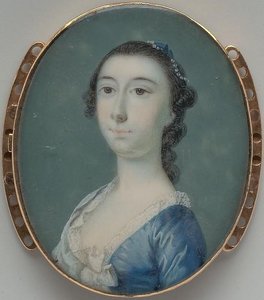
Jeremiah Theus portretas

Jeremiah Theus tapiai: 28 garsiausi πίναšiai, galerijos akimis

Atnaujinta lapkritis 2026 · pagal mūsų populiarumumo koeficientą (paieškos, lankytojai ir užsakymai kiekvienam kūriniui) · 29 Jeremiah Theus darbai mūsų kataloge

Trumpai tariant

Galerijos akimais, garsiausias Jeremiah Theus tapas yra Captain William Richardson (1743-1786) (1757), kurio originalas eksponuojamas Yale University Art Gallery, Niū Hevenas. William Wragg (1750) ir Portrait of Amarinthia Elliott (1748) užbaia trio, kurį atpažįsta kiekvienas ž)/\ Iš 29 Jeremiah Theus darbų mūsų kataloge, galerija žemiau pristato 28 garsiausius – kiekvienas yra originalus, su nurodytu metais, muziejumi bei unikaliu aprašymu.

1716 – 1774, Chur Rococo Daugiausia darbų: Metropolitano meno muziejus

10 geriausių galerijos Jeremiah Theus paveikslų

1
Captain William Richardson (1743-1786) (1757) aut. Jeremiah Theus

Captain William Richardson (1743-1786)

1757 · Oil On Canvas · Yale University Art Gallery, Niū Hevenas

A formal 18th-century portrait of a young man, presented within an oval vignette against a dark, monochromatic background. Captain William Richardson is depicted from the waist up, positioned at a slight angle while looking toward the viewer. The composition relies on a restrained color palette, dominated by the creamy white of his waistcoat and jacket, which contrasts sharply against a deep blue trim. This trim features intricate silver or gold…

2
William Wragg (1750) aut. Jeremiah Theus

William Wragg

1750 · Watercolor · Detroito meno institutas, Detroitas

In this intimate portrait of William Wragg, the sitter meets our gaze from a time long passed. Painted around 1750, the work captures a man of status through a refined, oval-shaped bust-length composition. He sits slightly off-center, his body turned toward the right while his eyes remain fixed forward, creating a sense of quiet presence. The subject wears a cool lavender-grey frock coat that contrasts against the warm, shimmering gold…

3
Portrait of Amarinthia Elliott (1748) aut. Jeremiah Theus

Portrait of Amarinthia Elliott

1748 · Painting · Detroito meno institutas, Detroitas

Portrait of Amarinthia Elliott, painted by Jeremiah Theus in 1748, captures a young woman in a formal, medium close-up composition. The subject is positioned slightly off-center, holding a small sprig of blue flowers against a muted, atmospheric background. This work originates from the mid-18th century, a period when Theus was establishing his presence within the colonial social hierarchy.

4
Mrs. Thomas Lynch (Elizabeh Allston Lynch) (1755) aut. Jeremiah Theus

Mrs. Thomas Lynch (Elizabeh Allston Lynch)

1755 · Oil On Canvas

In this oil on canvas portrait, we encounter Mrs. Thomas Lynch (Elizabeth Allston Lynch), a figure captured by the Swiss-American painter Jeremiah Theus. Created in 1755, the work offers a direct look at a woman of the colonial era. Theus, who established himself in Charleston, South Carolina, brought a refined sensibility to his depictions of the local elite. This specific piece reflects the quiet dignity of his portraiture from that…

5
Mrs. Peter Manigault (1757) aut. Jeremiah Theus

Mrs. Peter Manigault

1757 · Oil On Canvas

In this 1757 portrait, we encounter Elizabeth Wragg Manigault, a woman whose presence defines the social hierarchy of colonial South Carolina. She is captured in a full-length vertical composition, her figure positioned with a poised, slight offset that suggests both grace and a quiet, commanding authority. The light, descending from the upper left, catches the luminous sheen of her white and silver satin gown, creating a play of light and…

6
Portrait of John Faucheraud Grimké (1762) aut. Jeremiah Theus

Portrait of John Faucheraud Grimké

1762 · Oil · John and Mable Ringling Museum of Art, Sarazota

The mid-18th century in Charleston was a time of burgeoning commercial and social complexity. Theus arrived in the colony from Switzerland, contributing to a growing artistic community that sought to mirror European sophistication. His work provides a visual record of the individuals who shaped the social fabric of South Carolina. This portrait remains a specific window into the life of a man who navigated the legal and political intricacies of…

7
Portrait of Mrs. John Champneys (Anne Livingston, born 1746) (1763) aut. Jeremiah Theus

Portrait of Mrs. John Champneys (Anne Livingston, born 1746)

1763 · Oil On Canvas · Houston meno muziejus, Hjustonas

In this 1763 oil portrait, we encounter Mrs. John Champneys, known to history as Anne Livingston, captured in a moment of quiet contemplation. She is presented in a three-quarter view, her form emerging from a deep, atmospheric brown background that lends a sense of weight and presence to her figure. The lighting, descending softly from the upper left, traces the contours of her face and neck, creating a gentle play…

8
Mrs. Lionel Chalmers (Martha Logan) (1756) aut. Jeremiah Theus

Mrs. Lionel Chalmers (Martha Logan)

1756 · Oil On Canvas · Museum of Fine Arts, Bostonas

Jeremiah Theus presents Mrs. Lionel Chalmers (Martha Logan) within a formal oval composition. The arrangement focuses on the subject's head and upper torso, utilizing a straight-on, medium close-up perspective to establish a sense of intimacy. The single female figure is captured with a calm, dignified expression, projecting an air of poise and social standing. This portrait, executed about 1756, centers the viewer's attention on the sitter's steady gaze and composed…

9
Dr. Lionel Chalmers (1756) aut. Jeremiah Theus

Dr. Lionel Chalmers

1756 · Oil On Canvas · Museum of Fine Arts, Bostonas

The gaze of Dr. Lionel Chalmers meets the viewer from across the centuries, preserved within this 1756 oil portrait. Jeremiah Theus, a Swiss-born American painter, captures the man in a moment of quiet, professional dignity. The subject sits with a composed presence, his features rendered with a clarity that suggests a life of intellect and social standing. Every line of his expression seems to hold a silent story of the…

10
Mrs. Samuel Carne (1740-1805) (1765) aut. Jeremiah Theus

Mrs. Samuel Carne (1740-1805)

1765 · Oil On Canvas · New York Historical Society, Niujorkas

The sitter gazes out from an oval frame, her presence steady and quiet against a dark, muted background. She is a woman of the mid-eighteenth century, captured in a moment of formal repose. Her attire speaks of a specific social standing, defined by the delicate translucency of a lace collar that rests against her neck. A dark choker encircles her throat, drawing the eye upward toward the soft features of…

Jeremiah Theus tapiai, rangos nuo 11 iki 28

Temos, kurios domino Jeremiah Theus

Ketverios temos, dažniausiai pasikrausto originaluose, kiekvienos su savo puikiausiu pavyzdžiu.

Muziejai, kuriuose saugomi Jeremiah Theus originalūs darbai

8 muziejai, kuriuose saugoma daugiausia šioje pusėje esamų paveikslų.

Muzejaus Miestas Jeremiah Theus darbai Šiojo sąrašo paveikslai
Metropolitano meno muziejus, NiujorkasMetropolitano meno muziejus Niujorkas 4 Mrs. Jacob Motte (Rebecca Brewton), Mrs. John Dart, Gabriel Manigault
National Gallery of Art, VašingtonasNational Gallery of Art Vašingtonas 3 James Cuthbert (?), Mr. Motte, Mrs. Cuthbert
Gibbes Museum of Art, CharlestonGibbes Museum of Art Charleston 3 Benjamin Smith, Kolonas Barnardas Eliotas jaunesasis, Mrs. Barnard Elliott, Jr. (Mary Elizabeth Bellinger Elliott)
Detroito meno institutas, DetroitasDetroito meno institutas Detroitas 2 William Wragg, Portrait of Amarinthia Elliott
Museum of Fine Arts, BostonasMuseum of Fine Arts Bostonas 2 Mrs. Lionel Chalmers (Martha Logan), Dr. Lionel Chalmers
New York Historical Society, NiujorkasNew York Historical Society Niujorkas 2 Mrs. Samuel Carne (1740-1805), Samuel Carne, MD (1725-1780)
Yale University Art Gallery, Niū HevenasYale University Art Gallery Niū Hevenas 1 Captain William Richardson (1743-1786)
John and Mable Ringling Museum of Art, SarazotaJohn and Mable Ringling Museum of Art Sarazota 1 Portrait of John Faucheraud Grimké

Jeremiah Theus, po vieno ikoninio paveikslio kiekvienam dešimtmenės laikotarpiui

Darbai pagal dešimtmečius

Pasirinkite dešimtmetį, kad pamatytėte jį apibrėžusį originalą.

Jeremiah Theus tapyiniai: galerijos atsakymai

Kuris Jeremiah Theus paveikslas yra pats garsiausias iš visų?Atsakymas

Captain William Richardson (1743-1786) (1757), Yale University Art Gallery, Niū Hevenas. Toliau seka William Wragg (1750) ir Portrait of Amarinthia Elliott (1748).

Kiek metų buvo Jeremiah Theus, kai sukūrė Captain William Richardson (1743-1786)?Atsakymas

41 metų amžiaus: Captain William Richardson (1743-1786) sukurta 1757 m. Nr. Jeremiah Theus gimė 1716.

Kuriose yra 10 geriausių Jeremiah Theus paveikslų?Atsakymas

Captain William Richardson (1743-1786), William Wragg, Portrait of Amarinthia Elliott, Mrs. Thomas Lynch (Elizabeh Allston Lynch), Mrs. Peter Manigault, Portrait of John Faucheraud Grimké, Portrait of Mrs. John Champneys (Anne Livingston, born 1746), Mrs. Lionel Chalmers (Martha Logan), Dr. Lionel Chalmers ir Mrs. Samuel Carne (1740-1805). Viršuje esančioje reitingo sąraše nurodyta kiekvieno kūrinio metis ir muziejus.

Kiek kūrinių sukūrė Jeremiah Theus?Atsakymas

Mūsų kataloge yra 29 Jeremiah Theus darbų, skirtų laikotarpiui nuo 1748 iki 1772.

Kur kabinami garsiausi Jeremiah Theus originalūs darbai?Atsakymas

Daugiausia – Metropolitano meno muziejus (Niujorkas), National Gallery of Art (Vašingtonas) ir Gibbes Museum of Art (Charleston). Viršuje esančiame muziejų sąraše yra visi jie.

Kada Jeremiah Theus sukūrė savo garsiausias paveikslus?Atsakymas

1760s laikotarpiu: 13 iš 28 šioje pusėje esančių darbų buvo sukurtos tada, iš jų Portrait of John Faucheraud Grimké.

Kokie yra ankstyviausi ir vėliausi garsieji Jeremiah Theus kūriniai?Atsakymas

Šioje pusėje seniausias darbas yra Portrait of Amarinthia Elliott (1748), o naujausias – Mrs. John Dart (1772).

Kurią temą Jeremiah Theus kūrė dažniausiai?Atsakymas

Woman (8), Man (7) ir 18th century (4) iš 28 šioje pusėje esamų darbų.

Kurią techniką Jeremiah Theus naudojo dažniausiai?Atsakymas

Oil On Canvas, iš 28 šios puslapio darbų – 16.

Su kokiu kierliu siejama Jeremiah Theus?Atsakymas

Rococo, vadovaujantis šios puslapio originalais kūriniais.

Kurių Jeremiah Theus originalų turi Metropolitano meno muziejus?Atsakymas

Mrs. Jacob Motte (Rebecca Brewton), Mrs. John Dart ir Gabriel Manigault: Metropolitano meno muziejus, Niujorkas kolekcijoje yra 4 šioje pusėje esančių darbų.

Jeremiah Theus: menininkas

Jeremiah Theus: Charleston’s Rococo Portraitist

Jeremiah Theus (1716 – 1774) stands as a singular figure in the annals of early American art, primarily recognized for his prolific output of portraits executed during the flourishing Rococo period in Charleston, South Carolina. Born in Chur, Switzerland, he arrived in America with his family around 1740, driven by the promise of land grants and colonial opportunity offered by the British Crown. This migration marked the beginning of a career dedicated to capturing the elegance and sophistication of Charleston’s elite society—a remarkable feat considering the artistic landscape of the time.
  • Early Life & Training: Little is definitively known about Theus' formative years beyond his Swiss birthplace. However, circumstantial evidence suggests exposure to European artistic traditions, particularly Rococo style, which would profoundly influence his subsequent work.
  • Charleston Studio & Patronage: By 1740, Theus established a studio in Charleston’s bustling commercial district—a strategic location that ensured access to influential patrons and fueled his artistic endeavors. Advertisements in the South Carolina Gazette showcased his skills as a “limner,” or portrait painter, highlighting his commitment to serving the burgeoning colonial community.

A Master of Rococo Style & Technique

Theus’ distinctive style is characterized by its adherence to Rococo principles—a movement originating in France that prioritized grace, ornamentation, and pastel hues. He skillfully adapted English artistic conventions prevalent during the era, resulting in portraits imbued with a sense of refined elegance and meticulous detail. His canvases frequently employed geometric shapes and subtle tonal variations to create atmospheric depth and convey emotion—techniques honed through observation and experience.
  • Notable Commissions: Theus undertook numerous commissions throughout his career, demonstrating versatility and responsiveness to client needs. Among his accomplishments were the gilded steeple of St. Michael’s Episcopal Church (1756), a testament to his craftsmanship and artistic vision; the weather vane for Charleston’s City Hall; and contributions towards the construction of St. Michael's Cathedral.
  • Teaching & Artistic Legacy: Recognizing the importance of fostering artistic talent, Theus opened an evening drawing school in 1744—a pioneering initiative that nurtured aspiring artists within Charleston’s intellectual circles. This dedication to education solidified his legacy as not only a celebrated painter but also as a catalyst for artistic development.

Iconic Portraits & Charleston Society

Jeremiah Theus achieved enduring fame through his portraits of prominent Charlestonians—individuals who shaped the social, economic, and cultural fabric of the colony. Works such as “Mrs. Gabriel Manigault” (1757), “Captain John Reynolds” (c. 1758) and “Mrs. John Dart” (1772) exemplify his mastery of Rococo style and offer invaluable insights into Charleston’s aristocratic milieu during the mid-18th century. These paintings are treasured for their technical precision, expressive quality, and ability to convey the dignity and refinement associated with colonial leadership.

Historical Significance & Enduring Influence

Jeremiah Theus' contribution to American art history extends beyond his individual achievements; he represents a crucial link between European artistic traditions and the nascent cultural identity of the United States. His work serves as a compelling visual record of Charleston’s social landscape—a testament to the dynamism and sophistication of colonial America. Today, reproductions of his portraits continue to captivate audiences worldwide, ensuring that Theus' legacy persists as one of Charleston’s most distinguished artistic figures.