Henry Fuseli portretas

Henry Fuseli tapiai: 100 garsiausi πίναšiai, galerijos akimis

Atnaujinta lapkritis 2026 · pagal mūsų populiarumumo koeficientą (paieškos, lankytojai ir užsakymai kiekvienam kūriniui) · 161 Henry Fuseli darbai mūsų kataloge

Trumpai tariant

Galerijos akimais, garsiausias Henry Fuseli tapas yra Pesniojimas (1781), kurio originalas eksponuojamas Detroito meno institutas, Detroitas. Titania ir Bottom su šaršio galva ir Kabusė (1790) užbaia trio, kurį atpažįsta kiekvienas ž)/\ Iš 161 Henry Fuseli darbų mūsų kataloge, galerija žemiau pristato 100 garsiausius – kiekvienas yra originalus, su nurodytu metais, muziejumi bei unikaliu aprašymu.

1741 – 1825, Ciurichas Romantic gothic horror Daugiausia darbų: Kunsthaus Zürich

10 geriausių galerijos Henry Fuseli paveikslų

1
Pesniojimas (1781) aut. Henry Fuseli

Pesniojimas

1781 · Aliejus ant drobės · Detroito meno institutas, Detroitas

Henry Fuseli kūrinys „Naktų košmaras“ yra ikoninė paseka, įtrapinanti gotikines siaudų ir romantizmo esmę. Šis 1781 metais sukurtas aliejaus dažų paveikslas yra gilus vartotojo nežinomybės ir padavėjo tyrimas, derinantis dramatišką kompoziciją su turtingu simbolizmu, kad sukurtų nerimo ir fascinacijos jausmą.

2
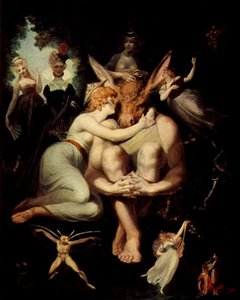
Titania ir Bottom su šaršio galva aut. Henry Fuseli

Titania ir Bottom su šaršio galva

Aliejus ant drobės

Šiaudringame, mėnesino apšvietime skundančiame senovės miško gilumuose, Johanas Heinrichas Fiisslis kviečia mus į karštą realmą, kuriame ribos tarp žmogaus ir supernaturalinio visiškai išnyksta. Jo šedevras, Titania ir Bottom su asiaus galva, įamžina esminį transformacijos momentą iš Williamo Shakespeare'io dramos Midsummer Night's Dream (Vasaros naktis). Kompozicija yra kvapą griebiantis judėjimo ir misterijos smūgis, kurio centre yra eterinė karalienė Titania, laikaianti apsivytiusi tarp skraidančių fėzių jūros. Šalia jos sėdi groteskiška, tačiau keitngai…

3
Kabusė (1790) aut. Henry Fuseli

Kabusė

1790 · Aliejus ant drobės · Goethe-Museum, Frankfurtas

In the shadowy realm of Johann Heinrich Füssli, the boundaries between sleep and wakefulness dissolve into a haunting spectacle of terror and desire. His seminal work, The Nightmare, stands as a profound exploration of the human psyche, capturing that breathless moment when the terrors of the unconscious manifest in the physical world. The painting presents a woman lying prostrate in bed, her limbs cast downward in a state of vulnerable,…

4
Lady Macbeth with the Daggers (1812) aut. Henry Fuseli

Lady Macbeth with the Daggers

1812 · Oil On Canvas · Tate Gallery, Londonas

To stand before this depiction of Lady Macbeth is to confront the very precipice of human ambition curdled by guilt. Johann Heinrich Friesli’s masterful rendering captures not merely a scene from Shakespeare, but the suffocating aftermath of moral transgression. The air in the painting feels thick, heavy with unspoken secrets and the metallic tang of spilled blood. It is an intensely dramatic tableau, steeped in the Romantic fascination with the…

6
The Artist Moved by the Grandeur of Antique Fragments (1778) aut. Henry Fuseli

The Artist Moved by the Grandeur of Antique Fragments

1778 · Chalk · Kunsthaus Zürich, Žūrichas

The paper holds a heavy silence. In red chalk and sepia wash, a fragmented body lies in repose, its stone limbs severed from a whole. The torso and limbs of a classical male figure occupy the space with a quiet, heavy presence. Strong hatching and cross-hatching define the musculature, mimicking the rough, weathered texture of ancient stone. Light falls from above, casting shadows that carve out the volume of the…

7
Hamlet and his father's Ghost (1785) aut. Henry Fuseli

Hamlet and his father's Ghost

1785 · Drawing

In this drawing from 1785, we find ourselves drawn into a moment of profound psychological unrest. The scene captures a dramatic encounter, likely inspired by the tension of Shakespearean tragedy, where the boundary between the living and the supernatural dissolves. A central figure, arms outstretched, appears caught in a state of sudden, violent realization. Around this focal point, other figures react with a mixture of struggle and silent observation, their…

8
The Night-Hag Visiting Lapland Witches (1796) aut. Henry Fuseli

The Night-Hag Visiting Lapland Witches

1796 · Oil On Canvas · Metropolitano meno muziejus, Niujorkas

Henry Fuseli's "The Night-Hag Visiting Lapland Witches," painted in 1796, isn’t merely a depiction of a scene; it’s an immersion into the shadowed heart of human psychology. This arresting oil on canvas, currently residing within the hallowed halls of The Metropolitan Museum of Art in New York City, pulsates with a potent blend of gothic horror and nascent Romanticism – a visual embodiment of fear, superstition, and the unsettling allure…

9
Portrait of a Young Woman (1781) aut. Henry Fuseli

Portrait of a Young Woman

1781 · Oil On Canvas · Detroito meno institutas, Detroitas

The Portrait of a Young Woman by Henry Fuseli is a formal portrait of a woman that captures a quiet, contemplative presence. Painted in 1781, this oil on canvas work presents the subject in a way that invites a closer, more personal inspection of her features and expression. It is a piece that reflects the artist's specific interest in the psychological nuances of his sitters.

10
Scene of Witches, from The Masque of Queens by Ben Jonson (1785) aut. Henry Fuseli

Scene of Witches, from The Masque of Queens by Ben Jonson

1785 · Painting · Yale Center for British Art, New Haven

In the shadowy corridors of art history, few names evoke as much intrigue and nocturnal wonder as Johann Heinrich Füssli. Known to the English-speaking world as Henry Fuseli, this Swiss master was a pioneer of the Romantic movement, a painter who dared to venture into the deepest recesses of the human psyche. His work, particularly his depictions of the supernatural, serves as a bridge between the rational Enlightenment and the…

Henry Fuseli tapiai, rangos nuo 11 iki 100

11Head of a Damned Soul from Dante's "Inferno," (verso) (1774) aut. Henry FuseliHead of a Damned Soul from Dante's "Inferno," (verso)1774 · Art Institute of Chicago 12The insane Kate (1807) aut. Henry FuseliThe insane Kate1807 13Deutsch Titania liebkost den eselköpfigen Bottom (1794) aut. Henry FuseliDeutsch Titania liebkost den eselköpfigen Bottom1794 · Kunsthaus Zürich 14Leonora Discovers Alonzo’s Dagger (1792) aut. Henry FuseliLeonora Discovers Alonzo’s Dagger1792 · Nationalmuseum 15Celadon and Amelia (1801) aut. Henry FuseliCeladon and Amelia1801 · Staatliche Kunsthalle Karlsruhe 16John Milton's Paradise Lost, Satan and the Birth of Sin (Book II, 746-758)  Painting no. 6 from The Milton Gallery (1785) aut. Henry FuseliJohn Milton's Paradise Lost, Satan and the Birth of Sin (Book II, 746-758) Painting no. 6 from The Milton Gallery1785 · Dallas Museum of Art 17Study for the three witches in Macbeth (1783) aut. Henry FuseliStudy for the three witches in Macbeth1783 · Auckland Art Gallery Toi o Tāmaki 18Euphrosyne before the Imagination and the Temperance (1800) aut. Henry FuseliEuphrosyne before the Imagination and the Temperance1800 · Kurpfälzisches Museum 19Sketch for "Oath on the Rütli," Female Figure (verso) (1779) aut. Henry FuseliSketch for "Oath on the Rütli," Female Figure (verso)1779 · Art Institute of Chicago 20The Dream of Queen Katherine (from William Shakespeare's 'Henry VIII', Act IV, Scene 2) (1781) aut. Henry FuseliThe Dream of Queen Katherine (from William Shakespeare's 'Henry VIII', Act IV, Scene 2)1781 · Victoria and Albert Museum 21Prince Arthur and the Fairy Queen. (1788) aut. Henry FuseliPrince Arthur and the Fairy Queen.1788 · Kunstmuseum Basel 22Tekemessa and Eurysake (1805) aut. Henry FuseliTekemessa and Eurysake1805 · Yale Center for British Art 23Thetis asks Hephaistos to forge armor for her son Achilles (1803) aut. Henry FuseliThetis asks Hephaistos to forge armor for her son Achilles1803 · Kunsthaus Zürich 24Satan and Death with Sin Intervening (1792) aut. Henry FuseliSatan and Death with Sin Intervening1792 · Bavarijos valstybinės paveikslų kolekcijos 25Ariadne Watching the Struggle of Theseus with the Minotaur (1820) aut. Henry FuseliAriadne Watching the Struggle of Theseus with the Minotaur1820 · Yale Center for British Art 26Erotic Scene with a man and three women aut. Henry FuseliErotic Scene with a man and three women 27Danaë and Perseus on Seriphos (?) (1787) aut. Henry FuseliDanaë and Perseus on Seriphos (?)1787 · Yale University Art Gallery 28The Erinyes Drive Alcmaeon from the Corpse of his Mother, Eriphyle, Whom He Has Killed. (1821) aut. Henry FuseliThe Erinyes Drive Alcmaeon from the Corpse of his Mother, Eriphyle, Whom He Has Killed.1821 · Kunsthaus Zürich 29Satan Starting from the Touch of Ithuriels Spear aut. Henry FuseliSatan Starting from the Touch of Ithuriels Spear 30The Weird Sisters -The Three Witches aut. Henry FuseliThe Weird Sisters -The Three Witches 31Christ Disappearing at Emmaus (1792) aut. Henry FuseliChrist Disappearing at Emmaus1792 · Yale Center for British Art 32A Shakespearean Subject (1785) aut. Henry FuseliA Shakespearean Subject1785 33Psyche walks past the Fates undeterred (1780) aut. Henry FuseliPsyche walks past the Fates undeterred1780 34Laying Nude and piano player (1799) aut. Henry FuseliLaying Nude and piano player1799 · Kunstmuseum Basel 35Paolo Malatesta and Francesca da Polenta surprised by Gianciotto Malatesta (1785) aut. Henry FuseliPaolo Malatesta and Francesca da Polenta surprised by Gianciotto Malatesta1785 · Aargauer Kunsthaus 36The Three Conspirators Swear an Oath on the Rüthli Meadow (1779) aut. Henry FuseliThe Three Conspirators Swear an Oath on the Rüthli Meadow1779 · Kunsthaus Zürich 37Portrait of Joseph Priestley (1783) aut. Henry FuseliPortrait of Joseph Priestley1783 38The nightmare, Detroit Institute of (1781) aut. Henry FuseliThe nightmare, Detroit Institute of1781 39Selling of Cupids (1776) aut. Henry FuseliSelling of Cupids1776 · Yale Center for British Art 40The Daughters of Pandareos (1795) aut. Henry FuseliThe Daughters of Pandareos1795 · Kunsthaus Zürich 41The Vision of the Deluge (1800) aut. Henry FuseliThe Vision of the Deluge1800 42The loneliness at dawn (1796) aut. Henry FuseliThe loneliness at dawn1796 43A Scene from 'The Wife of Bath's Tale' (from Geoffrey Chaucer's, 'Canterbury Tales') (recto); Falstaff in the Laundry Basket mocked by Five Women (?) (verso) (1812) aut. Henry FuseliA Scene from 'The Wife of Bath's Tale' (from Geoffrey Chaucer's, 'Canterbury Tales') (recto); Falstaff in the Laundry Basket mocked by Five Women (?) (verso)1812 · Petworth House 44Puck (1810) aut. Henry FuseliPuck1810 45Untitled (AQR9W9) (1812) aut. Henry FuseliUntitled (AQR9W9)1812 46Kriemhild sees the dead Siegfried in a dream (1805) aut. Henry FuseliKriemhild sees the dead Siegfried in a dream1805 47Portrait of a Lady (1781) aut. Henry FuseliPortrait of a Lady1781 · Detroito meno institutas 48The Serpent tempting Eve (Satan's first address to Eve) (1802) aut. Henry FuseliThe Serpent tempting Eve (Satan's first address to Eve)1802 · Auckland Art Gallery Toi o Tāmaki 49Henry V' Act II Scene 2 Discovering the Conspirators (1790) aut. Henry FuseliHenry V' Act II Scene 2 Discovering the Conspirators1790 · Royal Shakespeare Company Collection 50The Infant Shakespeare Between Tragedy and Comedy (1805) aut. Henry FuseliThe Infant Shakespeare Between Tragedy and Comedy1805 · University of London 51Ezzelin and Meduna (1779) aut. Henry FuseliEzzelin and Meduna1779 · Sir John Soane's Museum 52Silence (1799) aut. Henry FuseliSilence1799 · Kunsthaus Zürich 53Titania, Bottom and the Fairies (1794) aut. Henry FuseliTitania, Bottom and the Fairies1794 · Kunsthaus Zürich 54The Shepherd's Dream (1793) aut. Henry FuseliThe Shepherd's Dream1793 · Tate Gallery 55The Incubus Leaving Two Sleeping Women (1793) aut. Henry FuseliThe Incubus Leaving Two Sleeping Women1793 56Macbeth' Act I Scene 3 The Weird Sisters (1783) aut. Henry FuseliMacbeth' Act I Scene 3 The Weird Sisters1783 · Royal Shakespeare Company Collection 57Woman Sitting, Curled up (1778) aut. Henry FuseliWoman Sitting, Curled up1778 · National Gallery of Denmark 58The Shepherd (1786) aut. Henry FuseliThe Shepherd1786 · Albertina 59Portrait of the Artist (1790) aut. Henry FuseliPortrait of the Artist1790 · Szépművészeti Múzeum 60Dante and Virgil on the Ice of Kocythos (1774) aut. Henry FuseliDante and Virgil on the Ice of Kocythos1774 · Kunsthaus Zürich 61Untitled (AQR9WB) (2006) aut. Henry FuseliUntitled (AQR9WB)2006 62The Death of Cardinal Beaufort aut. Henry FuseliThe Death of Cardinal Beaufort 63Huon and Amanda with the Dead Alphonso aut. Henry FuseliHuon and Amanda with the Dead Alphonso 64Teiresias Foretells the Future to Odysseus, 1780-1785 (1785) aut. Henry FuseliTeiresias Foretells the Future to Odysseus, 1780-17851785 · Albertina 65Bust Portrait of a Woman with Bonnet aut. Henry FuseliBust Portrait of a Woman with BonnetKupferstichkabinett 66Swiss; practiced in England, ) (1741) aut. Henry FuseliSwiss; practiced in England, )1741 67Deutsch Der Feuerkönig English The Fire King Русский Король огня (1810) aut. Henry FuseliDeutsch Der Feuerkönig English The Fire King Русский Король огня1810 68The Great Father and Ancient Night aut. Henry FuseliThe Great Father and Ancient Night 69King Lear Banishing Cordelia (1784) aut. Henry FuseliKing Lear Banishing Cordelia1784 70Dispute between Hotspur, Glendower, Mortimer and Worcester (from Shakespeare's Henry IV Part 1) (1784) aut. Henry FuseliDispute between Hotspur, Glendower, Mortimer and Worcester (from Shakespeare's Henry IV Part 1)1784 · Birmingham Museums And Art Gallery 71The Italian Count (also known as Ezzelin Bracciaferro, Musing over Meduna, Destroyed by him for Disloyalty) (1780) aut. Henry FuseliThe Italian Count (also known as Ezzelin Bracciaferro, Musing over Meduna, Destroyed by him for Disloyalty)1780 72Untitled (AQR9VM) (1790) aut. Henry FuseliUntitled (AQR9VM)1790 · Museum of All Saints 73Hagen and the Nymphs of the Danube (1802) aut. Henry FuseliHagen and the Nymphs of the Danube1802 · Metropolitano meno muziejus 74German Gertrud, Hamlet und der Geist des Vaters (1793) aut. Henry FuseliGerman Gertrud, Hamlet und der Geist des Vaters1793 75Milton Dictating to His Daughter (1794) aut. Henry FuseliMilton Dictating to His Daughter1794 · Art Institute of Chicago 76The Elf Queen Titania and labels, the weavers with donkey's head (1794) aut. Henry FuseliThe Elf Queen Titania and labels, the weavers with donkey's head1794 77Macbeth, Banquo and the Witches ('Macbeth' Act I Scene 3) (1794) aut. Henry FuseliMacbeth, Banquo and the Witches ('Macbeth' Act I Scene 3)1794 · Petworth House 78Mamillius Conjuring up Sprites and Goblins for His Mother (1786) aut. Henry FuseliMamillius Conjuring up Sprites and Goblins for His Mother1786 79Deutsch Belindas Traum English Dream of Belinda Русский Сон Белинды (1790) aut. Henry FuseliDeutsch Belindas Traum English Dream of Belinda Русский Сон Белинды1790 80Titania is leevtallig met Bottom met de daare Eselkopp (1794) aut. Henry FuseliTitania is leevtallig met Bottom met de daare Eselkopp1794 81Deutsch Das Erwachen der Elfenkönigin Titania English The Awakening of the Fairy Queen Titania (1790) aut. Henry FuseliDeutsch Das Erwachen der Elfenkönigin Titania English The Awakening of the Fairy Queen Titania1790 82Milton When a Boy Instructed by His Mother (1799) aut. Henry FuseliMilton When a Boy Instructed by His Mother1799 83The Ladies of Hastings (1800) aut. Henry FuseliThe Ladies of Hastings1800 84Horseman attacked by a giant snake (1800) aut. Henry FuseliHorseman attacked by a giant snake1800 85Deutsch Das Schweigen English The Silence Русский Тишина (1801) aut. Henry FuseliDeutsch Das Schweigen English The Silence Русский Тишина1801 86Kriemhild is haunted by her remorse (1805) aut. Henry FuseliKriemhild is haunted by her remorse1805 87La débutante (1807) aut. Henry FuseliLa débutante1807 88Brunhilde Observing Gunther, Whom She Has Tied to the Ceiling (1807) aut. Henry FuseliBrunhilde Observing Gunther, Whom She Has Tied to the Ceiling1807 · City Museum and Art Gallery 89Kriemhild zeigt Gunther im Gefängnis den Nibelungenring (1807) aut. Henry FuseliKriemhild zeigt Gunther im Gefängnis den Nibelungenring1807 90The fairy queen Titania finds the magic ring on the beach (1805) aut. Henry FuseliThe fairy queen Titania finds the magic ring on the beach1805 91Kriemhild zeigt Hagen das Haupt Gunthers (1805) aut. Henry FuseliKriemhild zeigt Hagen das Haupt Gunthers1805 92The Fire King (1810) aut. Henry FuseliThe Fire King1810 93Deutsch Cerasimus und Huon fliehen vor dem Elfenkönig Oberon (1805) aut. Henry FuseliDeutsch Cerasimus und Huon fliehen vor dem Elfenkönig Oberon1805 94Kriemhild throws herself on the dead Siegfried (1817) aut. Henry FuseliKriemhild throws herself on the dead Siegfried1817 95Leonore Discovering the Dagger Left by Alonzo aut. Henry FuseliLeonore Discovering the Dagger Left by Alonzo 96Portrait of Magdalena Hess from Zurich aut. Henry FuseliPortrait of Magdalena Hess from Zurich 97The Enchanted Island. Before the Cell of Prospero aut. Henry FuseliThe Enchanted Island. Before the Cell of Prospero 98PERSEUS RETURNING THE EYE OF THE GRAII aut. Henry FuseliPERSEUS RETURNING THE EYE OF THE GRAII 99Die Hexe aut. Henry FuseliDie Hexe 100Puck aut. Henry FuseliPuck

žymios Henry Fuseli tapiojamos, pagal laikotarpį

Temos, kurios domino Henry Fuseli

Ketverios temos, dažniausiai pasikrausto originaluose, kiekvienos su savo puikiausiu pavyzdžiu.

Muziejai, kuriuose saugomi Henry Fuseli originalūs darbai

8 muziejai, kuriuose saugoma daugiausia šioje pusėje esamų paveikslų.

Muzejaus Miestas Henry Fuseli darbai Šiojo sąrašo paveikslai
Kunsthaus Zürich, ŽūrichasKunsthaus Zürich Žūrichas 12 The Artist Moved by the Grandeur of Antique Fragments, Deutsch Titania liebkost den eselköpfigen Bottom, Thetis asks Hephaistos to forge armor for her son Achilles
Yale Center for British Art, New HavenYale Center for British Art New Haven 7 Scene of Witches, from The Masque of Queens by Ben Jonson, Tekemessa and Eurysake, Ariadne Watching the Struggle of Theseus with the Minotaur
Detroito meno institutas, DetroitasDetroito meno institutas Detroitas 3 Pesniojimas, Portrait of a Young Woman, Portrait of a Lady
Art Institute of Chicago, ČikagosArt Institute of Chicago Čikagos 3 Head of a Damned Soul from Dante's "Inferno," (verso), Sketch for "Oath on the Rütli," Female Figure (verso), Milton Dictating to His Daughter
Metropolitano meno muziejus, NiujorkasMetropolitano meno muziejus Niujorkas 3 The Night-Hag Visiting Lapland Witches, Hagen and the Nymphs of the Danube
Tate Gallery, LondonasTate Gallery Londonas 2 Lady Macbeth with the Daggers, The Shepherd's Dream
Auckland Art Gallery Toi o Tāmaki, AucklandasAuckland Art Gallery Toi o Tāmaki Aucklandas 2 Study for the three witches in Macbeth, The Serpent tempting Eve (Satan's first address to Eve)
Kunstmuseum Basel, BazelisKunstmuseum Basel Bazelis 2 Prince Arthur and the Fairy Queen., Laying Nude and piano player

Henry Fuseli, po vieno ikoninio paveikslio kiekvienam dešimtmenės laikotarpiui

Darbai pagal dešimtmečius

Pasirinkite dešimtmetį, kad pamatytėte jį apibrėžusį originalą.

Henry Fuseli tapyiniai: galerijos atsakymai

Kuris Henry Fuseli paveikslas yra pats garsiausias iš visų?Atsakymas

Pesniojimas (1781), Detroito meno institutas, Detroitas. Toliau seka Titania ir Bottom su šaršio galva ir Kabusė (1790).

Kiek metų buvo Henry Fuseli, kai sukūrė Pesniojimas?Atsakymas

40 metų amžiaus: Pesniojimas sukurta 1781 m. Nr. Henry Fuseli gimė 1741.

Kuriose yra 10 geriausių Henry Fuseli paveikslų?Atsakymas

Pesniojimas, Titania ir Bottom su šaršio galva, Kabusė, Lady Macbeth with the Daggers, The incubus leaving two young women, The Artist Moved by the Grandeur of Antique Fragments, Hamlet and his father's Ghost, The Night-Hag Visiting Lapland Witches, Portrait of a Young Woman ir Scene of Witches, from The Masque of Queens by Ben Jonson. Viršuje esančioje reitingo sąraše nurodyta kiekvieno kūrinio metis ir muziejus.

Kiek kūrinių sukūrė Henry Fuseli?Atsakymas

Mūsų kataloge yra 161 Henry Fuseli darbų, skirtų laikotarpiui nuo 1774 iki 1821.

Kur kabinami garsiausi Henry Fuseli originalūs darbai?Atsakymas

Daugiausia – Kunsthaus Zürich (Žūrichas), Yale Center for British Art (New Haven) ir Detroito meno institutas (Detroitas). Viršuje esančiame muziejų sąraše yra visi jie.

Kada Henry Fuseli sukūrė savo garsiausias paveikslus?Atsakymas

1790s laikotarpiu: 25 iš 100 šioje pusėje esančių darbų buvo sukurtos tada, iš jų Kabusė.

Kokie yra ankstyviausi ir vėliausi garsieji Henry Fuseli kūriniai?Atsakymas

Šioje pusėje seniausias darbas yra Head of a Damned Soul from Dante's "Inferno," (verso) (1774), o naujausias – The Erinyes Drive Alcmaeon from the Corpse of his Mother, Eriphyle, Whom He Has Killed. (1821).

Kurią temą Henry Fuseli kūrė dažniausiai?Atsakymas

Woman (23), Man (19) ir Shadows (17) iš 100 šioje pusėje esamų darbų.

Kurią techniką Henry Fuseli naudojo dažniausiai?Atsakymas

Oil On Canvas, iš 100 šios puslapio darbų – 37.

Su kokiu kierliu siejama Henry Fuseli?Atsakymas

Romantic gothic horror, vadovaujantis šios puslapio originalais kūriniais.

Kurių Henry Fuseli originalų turi Kunsthaus Zürich?Atsakymas

The Artist Moved by the Grandeur of Antique Fragments, Deutsch Titania liebkost den eselköpfigen Bottom ir Thetis asks Hephaistos to forge armor for her son Achilles: Kunsthaus Zürich, Žūrichas kolekcijoje yra 9 šioje pusėje esančių darbų.

Henry Fuseli: menininkas

Ankstyvasis gyvenimas, šeima ir mokslas

Henry Fuseli gimė 1741 m. vasario 7 d. Šveicarijoje, Ciuriche. Jis augo kalnabūroje šeimelyje, buvo antras iš aštuoniolikos vaikų. Jo tėvas, Johanas Kasparas Fiisslis, buvo žmogus, kurio gyvenimą lydėjo tiek meno šerpus, tiek rašymo mokslas – jis dirbo portretų ir kraštoilandžių tapybininku bei rašė knygą Lives of the Helvetic Painters. Tokia aplinka suteikė jam stabilią, nors ir labai užtemptą, gyvenimo fono pavyzdį ankstyvojiems metų laikotarpui.

Jo išsilavinimas vyko pagal griežtą tvarką Ciuriche, Collegium Carolinum, kur jis studijavo klasikos mokslus. Šis oficialus kalbų ir istorijos mokslų pagrindas vėliau suteikė ypatingą spalvą jo kūrybai bei būdui, kaip jis interpretavo savo kūrybos temas. Tačiau gyvenimas nepažadėjo jam tiesioginio kelio prie drobos. 1761 metais jis priimė apsięmimus ir tam tiką laikotarpį tarnavo kaip pastorikas.

Pastoriko kelias nebuvo jo galutinė paskirties. Ankstyvieji metai buvo apžvelgiami įtampa tarp religinio gyvenimo, kuriam jis buvo pasiruošęs, ir vizualaus pasaulio, kurį kūrė jo tėvas. Šis studijų ir tarnystės laikotarpis padėjo intelektinę pamatą, kuris vėliau tapo pagrindu jo dramatiškiausiems meninei interesams.

Meninis kelias Anglijoje ir Italijoje

1765 metais jis atvyko į Angliją, kur privalėjo ieškoti įvairių būdų savo išlaikai, užsiimdamas įvairiais rašymo darbus. Būtent šiuo laikotarpiu jis susitiko su Sir Joshua Reynolds. Peržiūrėjęs jo piešinius, Reynolds pasiūlė jam palikti kitus užsiėmimus ir visiškai apsikirčinti tapybai. Šis patarimas tapo esminiu lūžiu jo gyvenimo bei kūrybinės krypties tvirtavimo metu.

1770 metais jis išvyko į meninę kelionę po Europą, kur atsidavė Italijai iki 1778 metų. Gyveldamas Romoje, jis praleido daug laiko kontempluodamas Michelangelo kūrinius bei Monte Cavallo marmuro skulptūras. Būtent per šiuos Italijos metus jis nusprendė pakeisti savo pavardę iš Füssli į labiau itališkai skambantį Fuseli.

Karjera Britanijoje ir Karališkoji akademija

Grįžęs į Britaniją 1779 metų pradžioje, Henry Fuseli rado savo vietą Londono meno aplinkoje dėki komandai iš aldermano Johno Boydello. Šis užduotis apimė dalyvavimą Šekspyro galerijos kūrybinio procese – ambicingojeame projekte, kuris jam suteikė galimybę dramatišką literatūrą paversti į gyvą vizualinę formą. Jo svarba mieste nuolatos augo, kol jis žingsnis po žingsnio užėmė aukščiausius institucinius laipsnius Karaliardoje akademijoje. 1788 metais jis buvo paskelbtas asociatu, o iki 1790 metų tapo pilnomete akademiku, įtvirtindamas savo poziciją menininkų elito tarpo.

Jo įtaka akademijoje neapsiribojo tik savo paveikslų kūrimu. Henry Fuseli užėmė svarbias administracines ir mokomosias pareigas, tarnavo kaip kolekcionerų vadovas, o vėliau tapo tapybos profesoriumi. Šios pareigos padarė jį britų meno mokymo širdimi. Jo gyvenimą Londone apėmė šios oficialios pareigos bei santuoka su Sophia Rawlins, kuri prieš tai buvo viena iš jo modelių. Jis daugybę metų išliko neatsiejama Karaliaros akademijos struktūros dalimi, formuojantis būsimių kartų menininkų suvokimą.

Pagrindiniai darbai ir tematikos platybė

Dauguma jo kūrinių nukreipta į žmogaus psichikos šešėlius. Pirme apie 1781 metus sukurtas paveikslas „Ką sapnai atneša“ atskleidžia sunkų, neramų sapnų ir paslaptis bei nežinomią sąnaudą. Henry Fuseli dažnai savo dėmę skiedė dramatiškai įtampai, kurią rasite literatūroje. Jis sukūrė kelis kūrinius Johno Boydello Šekspyro galerijai, ypač akcentuodamas Williamo Shakespeare’o dramas. Domėjimas didžiajam Bardu paskubino jį įtvirtinti tokias scenas kaip Makbethas, kuriose jis meistriškai perteikė psichologinę veiklių vidinę įtampą.

Beyond teatro scenos, jis kūrybai žaidė su senovės ir šventybės motyvais. Jo plėtniniai dažnai interpretuoja mitologinius bei Biblijos pasakojimus, dažnai pasitelkiant idealizuotą mastą, kad sustipintų fantastikos pojūtį. Henry Fuseli taip pat skverbėsi į Johno Miltono kūrybą, kurioje siekė epines poeto vizijas išversti į vizualinę formą. Šios temos leido jam swingerioti tarp dieviškojo ir groteskiškojo pasaulių.

Palikimas ir įtaka

Henry Fuseli ne tik dalyvavo romantizmo epochoje – jis padėjo įžvėlgą jos ugnies pūskui. Jo kūryba atsidavė nuo griežtos Šviesos laikotakių logikos, pasisveikinant intuicijos, vidinio jausmo ir emocijų dominancioms sūdvirtėms. Šis estetinės paradigmos posūkis padėjo pagrąžintą naujo vizualinio kalbos tipui Britanijoje, palikdama neištrinokamą žtarką Britanijos meno peizažui. Jo obsesija pasaudoone ir iracionaliame paveikė tai, kokį kelią artistiškai pasirinkta daugybė jaunų kūrybininkų keliais dešimtmečiais, kurie žvelgė į jo darbus kaip į įkvėpimą.

Jo šešėlis permatomas dar tokiame meistro kaip William Blake kūryboje, kuris dalijosi panašiu susidomėjimu vizionieriškumu ir intensyvumu. Henry Fuseli gebėjimas išgriebinti temas iš sapnių gelmių ir supersnaturalistinių sferų suteikė modelį, kaip per spalvas ir formą galima tyrinėti žmogaus psichiką. Net ir šiandien jo dėmesys neįprastai šiurkiems, šiurkiems ir fantastiniams motyvams neustogiai traukia žiūrovus. Jo gebėjimas perteikti ne tik to, kaip košmaras atrodo, bet ir tai, kokį baimę ar jaudulį jis sukelia, išlieka esminiu jo vaidmeniu meningės istorijoje.

  • The Nightmare
  • Dante and Virgil on the Ice of Kocythos
  • Lady Macbeth with the Daggers