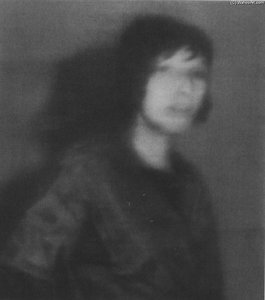
Gerhard Richter portretas

The 100 Most Famous Gerhard Richter Paintings, a Gallery Selection

Atnaujinta spalis 2026 · pagal mūsų populiarumumo koeficientą (paieškos, lankytojai ir užsakymai kiekvienam kūriniui) · 134 Gerhard Richter darbai mūsų kataloge

In short

Of all the originals Gerhard Richter left, the most famous is Abstrakti kūrinis Nr. 780-1 (1992). Close behind it come Abstrakti Tapyba 805-4 and Betty (1988). Our catalog holds 134 works by Gerhard Richter; the gallery has kept the 100 the world admires most, each shown with its date, its museum and its story.

gimęs 1932, Dresdenas Šiuolaikinis realizmas Daugiausia darbų: Art Institute of Chicago

Gerhard Richter's top 10 paintings: the gallery's choice

1
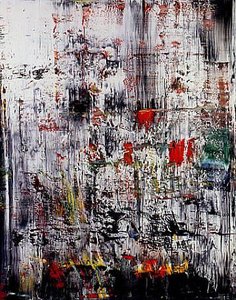
Abstrakti kūrinis Nr. 780-1 (1992) aut. Gerhard Richter

Abstrakti kūrinis Nr. 780-1

1992 · Aliejus ant drobės

Gerhardo Richtero „Abstraktus kūrinys Nr. 780-1“ yra užburiantis spalvos, tekstūros ir judesio tyrimas. Sukurtas 1992 metais, šis darbas yra ypatingas Richterio abstrakčiosios ekspresijos meistriškumo pavyzdys, siūlantis dinamišką vizualinę patirtį, kuri žavi žiūrovą drąsia naudojant spalvas ir impasto techniką.

2
Abstrakti Tapyba 805-4 aut. Gerhard Richter

Abstrakti Tapyba 805-4

Aliejus ant drobės

Apžvalga: Gerhard Richterio „Abstrakčioji drobė 805-4“ – spalvų ir tekstūros simfonija Šis darbas, pavadintas „Abstrakčioji drobė 805-4“, yra tarsi spalvų ir judesio šokis ant drobės. Tai Gerhard Richterio kūrinys, atspindintis abstraktaus ekspresionizmo esmę – ne aiškios formos, o emocijų ir pojūčių išraiška per spalvas bei tekstūras. Žiūrovas patenka į dinamišką pasaulį, kuriame netenkamas orientyras, o akis laisvai keliauja po drobės paviršių, pasinerdama į begalybę abstraktaus meno. Drobė dominuoja šilta spalvų…

3
Betty (1988) aut. Gerhard Richter

Betty

1988 · Acrylic On Canvas

Gerhard Richter's 'Betty,' painted in 1988, isn’t merely a portrait; it’s an exquisitely layered meditation on memory, perception, and the elusive nature of representation. This arresting work, currently residing within the esteemed collection of the Saint Louis Art Museum, immediately draws the viewer into its quiet intensity. Richter, a titan of contemporary art, masterfully employs a deceptively simple composition – the back of his daughter’s head – to conjure a…

4
Motorboat (1965) aut. Gerhard Richter

Motorboat

1965 · Acrylic On Canvas

Gerhard Richter’s “Motorboat,” created in 1965, stands as a pivotal emblem of the burgeoning postmodern art movement. Born amidst the fracturing realities of post-war Germany – specifically Düsseldorf's embrace of Western artistic sensibilities following the Berlin Wall’s construction – Richter’s oeuvre reflects this transformative period with remarkable precision.

5
1024 Colours (1973) aut. Gerhard Richter

1024 Colours

1973 · Oil On Canvas

Gerhard Richter, a titan of contemporary art, continues to captivate audiences with his singular vision—a masterful blend of abstraction and conceptual inquiry. Among his most iconic creations is '1024 Colours', painted in 1973, which stands as a cornerstone of Conceptual Art and exemplifies Richter’s unwavering commitment to challenging conventional artistic paradigms.

6
Candles aut. Gerhard Richter

Candles

Acrylic On Canvas

Gerhard Richter, arguably the most influential figure in contemporary art, crafted a series of paintings titled *Candles*, which transcend mere visual representation to embody profound philosophical concepts – hope and mortality. Created in 1983, *Kertz*—as it’s known in German—holds its place within The Art Institute of Chicago's collection, attracting considerable attention from art connoisseurs like Frances Outred during the Christie Auction House’s Post-War & Contemporary Art gallery in 2011. Outred…

7
Reading (1994) aut. Gerhard Richter

Reading

1994 · Acrylic On Canvas

Gerhard Richter's 'Reading,' painted in 1994, isn’t merely a portrait; it’s an exploration of the very act of looking, of absorption, and of the subtle dance between reality and representation. The work immediately draws you into a quiet intimacy, centered around Sabine Moritz, a woman whose presence is both strikingly present and profoundly elusive. Richter masterfully employs a technique that leans heavily on photo-realism, yet deliberately softens the edges, creating…

8
Debesai (1982) aut. Gerhard Richter

Debesai

1982 · Aliejus ant drobės

A Symphony of Abstraction: Exploring Gerhard Richter’s “Clouds” Gerhardo Richtero 1982 metų meistras, „Debesis“, yra svarbus darbas dabarties mene, išraiškiantis jo visišką tyrimą apie atvaizdavimo ir abstrakcijos ribų. Ši didžiulė tapyba nėra tiesiog *debesių* paveiksliarši; tai tyrimas į suvokimą, matymo veiksmą ir piešinio pačią esmę. Ji kviečia mus kelti klausimus apie tai, ko tikimės nuo kraštovaizdžio, ir mėgautis švaria vizualia patirtimi. Dekonstruojant Realumą: Stilius ir Technika „Debesis“ iliustruoja Richtero unikalų…

9
Abstract Picture aut. Gerhard Richter

Abstract Picture

Oil On Canvas

To stand before an Abstract Picture by Gerhard Richter is to enter a realm where the boundaries between reality and illusion dissolve into a vibrant, textured haze. This masterpiece does not merely present a scene; it orchestrates a sensory experience that challenges the very nature of sight. At first glance, the eye is drawn to a kaleidoscopic explosion of color—deep, resonant reds, sun-drenched yellows, and cool, tranquil blues that dance…

10
Wallace Bournes aut. Gerhard Richter

Wallace Bournes

Akrilas ant drobės

Daugiau informacijos apie Gerhardą Richterį ir jo kūrinius rasite Tate Modern arba ieškokdami AllPaintingsStore.com rankų darbo aliejinės imitacijos kolekcijos.

The Gerhard Richter selection continues, 11 to 100

11Lucernos ežeras aut. Gerhard RichterLucernos ežeras 12Abstrakto paveikslas (1994) aut. Gerhard RichterAbstrakto paveikslas1994 13Liliai (2000) aut. Gerhard RichterLiliai2000 · Kanados Nacionalinė galerija 14July (1983) aut. Gerhard RichterJuly1983 15Abstract Picture aut. Gerhard RichterAbstract Picture 16Phantom Interceptors (1964) aut. Gerhard RichterPhantom Interceptors1964 17Brigid Polk (1971) aut. Gerhard RichterBrigid Polk1971 18Ludorff aut. Gerhard RichterLudorff 19Abstrakti paveikslėlė Nr. 780-1 aut. Gerhard RichterAbstrakti paveikslėlė Nr. 780-1 20Fuji aut. Gerhard RichterFuji 21Group of People (1965) aut. Gerhard RichterGroup of People1965 22Ella (2007) aut. Gerhard RichterElla2007 23Medžioklės draugija (Jagdgesellschaft) (1966) aut. Gerhard RichterMedžioklės draugija (Jagdgesellschaft)1966 · Art Institute of Chicago 24Seascape (Cloudy) (1969) aut. Gerhard RichterSeascape (Cloudy)1969 25Townscape Madrid (1968) aut. Gerhard RichterTownscape Madrid1968 26Red Blue Yellow (1972) aut. Gerhard RichterRed Blue Yellow1972 27Ema (1992) aut. Gerhard RichterEma1992 28Abstract Painting (1978) aut. Gerhard RichterAbstract Painting1978 29Curtain II (soft) (1966) aut. Gerhard RichterCurtain II (soft)1966 · Bavarijos valstybinės paveikslų kolekcijos 30Abstract Painting (849-3) (1997) aut. Gerhard RichterAbstract Painting (849-3)1997 · Izraelio muziejus 31Forest (7) (2005) aut. Gerhard RichterForest (7)2005 32Untitled (1968) aut. Gerhard RichterUntitled1968 33Abstract Painting 610-1 aut. Gerhard RichterAbstract Painting 610-1 34Uncle Rudi (1965) aut. Gerhard RichterUncle Rudi1965 35ELLA aut. Gerhard RichterELLA 36Ice 2 aut. Gerhard RichterIce 2 37Jungle Image aut. Gerhard RichterJungle Image 38George (1975) aut. Gerhard RichterGeorge1975 39Miesto peizažas F (1968) aut. Gerhard RichterMiesto peizažas F1968 · Staatliche Kunsthalle Karlsruhe 40180 Colors aut. Gerhard Richter180 Colors 4150% undivided interest in "Abstraktes Bild (825-7)" (1995) aut. Gerhard Richter50% undivided interest in "Abstraktes Bild (825-7)"1995 · Museum of Fine Arts 42Townscape (P1) [Stabtbild (P1)] (1968) aut. Gerhard RichterTownscape (P1) [Stabtbild (P1)]1968 · Art Institute of Chicago 43Eight Student Nurses (1966) aut. Gerhard RichterEight Student Nurses1966 44I.G. (1993) aut. Gerhard RichterI.G.1993 45S. with Child (1995) aut. Gerhard RichterS. with Child1995 46Abstraktes Bild (753 7) aut. Gerhard RichterAbstraktes Bild (753 7) 47Juoda, raudona, auksinė (1998) aut. Gerhard RichterJuoda, raudona, auksinė1998 · Statens Museum For Kunst 48Abstraktes Bild (Rot Blau Gelb) (1973) aut. Gerhard RichterAbstraktes Bild (Rot Blau Gelb)1973 49Davos (1981) aut. Gerhard RichterDavos1981 · Art Institute of Chicago 50Pyramide (1966) aut. Gerhard RichterPyramide1966 51Stadtbild SA (219/1) aut. Gerhard RichterStadtbild SA (219/1)MAXXI Nacionalinis XXI amžiaus meno muziejus 52Courbet aut. Gerhard RichterCourbet 53Confrontation 1 (1988) aut. Gerhard RichterConfrontation 11988 54Wolken (Clouds) aut. Gerhard RichterWolken (Clouds) 55Venecija (Laiptai) [Venedig (Treppe)] (1985) aut. Gerhard RichterVenecija (Laiptai) [Venedig (Treppe)]1985 · Art Institute of Chicago 56Untitled (167) aut. Gerhard RichterUntitled (167) 57Star Picture (1969) aut. Gerhard RichterStar Picture1969 58The Schmidt Family (1964) aut. Gerhard RichterThe Schmidt Family1964 · Hamburger Kunsthalle 59I.G. (1993) aut. Gerhard RichterI.G.1993 60Seascape (1975) aut. Gerhard RichterSeascape1975 61Untitled (D2WVMP) (2005) aut. Gerhard RichterUntitled (D2WVMP)2005 62Self-portrait (1996) aut. Gerhard RichterSelf-portrait1996 63Flow (2013) aut. Gerhard RichterFlow2013 64Star Picture (1969) aut. Gerhard RichterStar Picture1969 65Abstract Painting (1976) aut. Gerhard RichterAbstract Painting1976 66Star Picture (1969) aut. Gerhard RichterStar Picture1969 67Alps (1968) aut. Gerhard RichterAlps1968 68Grey (Bark) (1973) aut. Gerhard RichterGrey (Bark)1973 · Museum Het Valkhof 69Moritz (2000) aut. Gerhard RichterMoritz2000 70Firenze (2000) aut. Gerhard RichterFirenze2000 71Moritz (2000) aut. Gerhard RichterMoritz2000 72Administrative Building (1964) aut. Gerhard RichterAdministrative Building1964 73I.G. (1993) aut. Gerhard RichterI.G.1993 745 Nov. 1995 aut. Gerhard Richter5 Nov. 1995 75Untitled (484) aut. Gerhard RichterUntitled (484) 76Juist (2005) aut. Gerhard RichterJuist2005 77Dark (1968) aut. Gerhard RichterDark1968 78Vermalung (Braun) aut. Gerhard RichterVermalung (Braun) 79Abstract Painting (2009) aut. Gerhard RichterAbstract Painting2009 80Mediation aut. Gerhard RichterMediation 81Skull (1983) aut. Gerhard RichterSkull1983 82Stadtbild M 6 aut. Gerhard RichterStadtbild M 6 83Untitled (D2X7FK) (2007) aut. Gerhard RichterUntitled (D2X7FK)2007 84Betty (1977) aut. Gerhard RichterBetty1977 85Kitchen Chair (1965) aut. Gerhard RichterKitchen Chair1965 86Station aut. Gerhard RichterStation 87Basel 2 aut. Gerhard RichterBasel 2 88Rot Blau Gelb (338 42) aut. Gerhard RichterRot Blau Gelb (338 42) 89D.Z aut. Gerhard RichterD.Z 9019.3.92 (1992) aut. Gerhard Richter19.3.921992 91Untitled (500) aut. Gerhard RichterUntitled (500) 9217.3.92 aut. Gerhard Richter17.3.92 93Untitled (828) aut. Gerhard RichterUntitled (828) 94Valery aut. Gerhard RichterValery 95Abstraktes Bild, 21. Nov. 43 (715 5) aut. Gerhard RichterAbstraktes Bild, 21. Nov. 43 (715 5) 96S. with Child (1995) aut. Gerhard RichterS. with Child1995 97Untitled aut. Gerhard RichterUntitled 98S. with Child (1995) aut. Gerhard RichterS. with Child1995 99Abstract Bilding (1992) aut. Gerhard RichterAbstract Bilding1992 100Korn (1982) aut. Gerhard RichterKorn1982

Gerhard Richter's famous paintings, period by period

The subjects that held Gerhard Richter's eye

The four subjects that come back most often in these originals, each with its finest example.

The museums that keep Gerhard Richter's originals

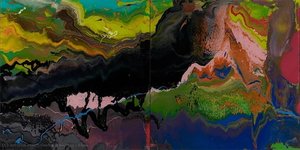
8 muziejai, kuriuose saugoma daugiausia šioje pusėje esamų paveikslų.

Muzejaus Miestas Gerhard Richter darbai Šiojo sąrašo paveikslai
Art Institute of Chicago, ČikagosArt Institute of Chicago Čikagos 4 Medžioklės draugija (Jagdgesellschaft), Townscape (P1) [Stabtbild (P1)], Davos
Museum of Fine Arts, BostonasMuseum of Fine Arts Bostonas 2 50% undivided interest in "Abstraktes Bild (825-7)"
Kanados Nacionalinė galerija, OtavaKanados Nacionalinė galerija Otava 1 Liliai
Bavarijos valstybinės paveikslų kolekcijos, MiunchasBavarijos valstybinės paveikslų kolekcijos Miunchas 1 Curtain II (soft)
Izraelio muziejus, JeruzalėIzraelio muziejus Jeruzalė 1 Abstract Painting (849-3)
Staatliche Kunsthalle Karlsruhe, KarlsruheStaatliche Kunsthalle Karlsruhe Karlsruhe 1 Miesto peizažas F
Statens Museum For Kunst, KopenhagaStatens Museum For Kunst Kopenhaga 1 Juoda, raudona, auksinė
MAXXI Nacionalinis XXI amžiaus meno muziejus, RomaMAXXI Nacionalinis XXI amžiaus meno muziejus Roma 1 Stadtbild SA (219/1)

Gerhard Richter decade by decade: the original that defines each

Darbai pagal dešimtmečius

Pick a decade to see the original that defines it.

Collectors' questions about Gerhard Richter's paintings

Which work is Gerhard Richter most famous for?Reveal the answer

Abstrakti kūrinis Nr. 780-1 (1992). Abstrakti Tapyba 805-4 and Betty (1988) come next.

What age was Gerhard Richter when Abstrakti kūrinis Nr. 780-1 was made?Reveal the answer

60 years old: Abstrakti kūrinis Nr. 780-1 dates from 1992, and Gerhard Richter was born in 1932.

What are the ten most famous Gerhard Richter paintings?Reveal the answer

Abstrakti kūrinis Nr. 780-1, Abstrakti Tapyba 805-4, Betty, Motorboat, 1024 Colours, Candles, Reading, Debesai, Abstract Picture ir Wallace Bournes. The ranking above gives each one's year and museum.

How many paintings did Gerhard Richter leave?Reveal the answer

Our catalog holds 134 works by Gerhard Richter, dated from 1964 to 2013.

In which museums do Gerhard Richter's masterpieces hang?Reveal the answer

Mostly in Art Institute of Chicago (Čikagos), Museum of Fine Arts (Bostonas) ir Kanados Nacionalinė galerija (Otava). The museum table above lists them all.

In which years did Gerhard Richter paint the most famous works?Reveal the answer

In 1960s: 21 of the 100 works on this page were made then, Motorboat among them.

What are the first and the last famous originals of Gerhard Richter?Reveal the answer

On this page, the earliest is Phantom Interceptors (1964) and the latest Flow (2013).

Which subjects did Gerhard Richter choose most often?Reveal the answer

Landscape (15), Photography (13) ir Geometric shapes (12), across the 100 works on this page.

Which technique did Gerhard Richter use most?Reveal the answer

Acrylic On Canvas, for 37 of the 100 works on this page.

To which art movement does Gerhard Richter belong?Reveal the answer

Šiuolaikinis realizmas ir Ekspresionizmas, judging by the originals on this page.

Which Gerhard Richter works hang at the Art Institute of Chicago?Reveal the answer

Medžioklės draugija (Jagdgesellschaft), Townscape (P1) [Stabtbild (P1)] ir Davos: the Art Institute of Chicago, Čikagos holds 4 of the works on this page.

Gerhard Richter: life and work

The Early Life of Gerhard Richter

Dresden, Germany, 1932. The setting is the Hospital Dresden-Neustadt. Gerhard Richter enters a world defined by the tightening grip of National Socialism. His father, Horst Richter, navigates the academic rigor of the Technische Hochschule in Dresden as a student of mathematics and physics. His mother, Hildegard Schönfelder, works as a bookseller. The household is shaped by these disparate intellectual and commercial pursuits. In 1936, the family expands with the birth of his sister, Gisela.

War and political upheaval fracture the family's stability. The shadow of the regime extends into the most private spheres of existence. Richter’s aunt, Marianne, becomes a victim of the Nazi euthanasia program, a casualty of the state's systematic violence against those deemed undesirable. This period of displacement and loss leaves a mark on the family's history, as the realities of the Third Reich permeate the domestic landscape of his childhood.

Artistic Training and Early Career

The path to formal training is rarely linear. After dropping out of school at age fifteen, Richter enters the industrial landscape of post-war Germany. He finds work as a sign painter in a factory, a pragmatic step in a period of survival. By 1948, having graduated from trade school, he secures his first paid work as a painter. The years that follow are defined by manual labor and technical apprenticeship; he works as an advertising and stage-set painter, learning the mechanics of representation through the lens of commercial and theatrical utility.

Ambition meets resistance in 1950. Richter applies to the Dresden Art Academy, but the institution rejects him. He does not stay away for long. In 1951, he begins formal studies at the Dresden Academy of Fine Arts. This period is marked by the heavy influence of socialist realism, the state-mandated style of East Germany. He navigates the tension between these ideological requirements and his own developing technical mastery. From 1957 to 1961, he remains within the academy's structure, working as a master trainee.

Escape to West Germany and Düsseldorf

The year 1961 marks a sharp fracture in Richter’s life. Two months before the construction of the Berlin Wall, he makes the decision to leave East Germany behind. He moves to West Germany alongside his wife, Marianne Eufinger. This is more than a change of geography; it is a flight from the ideological constraints of the East toward the experimental freedom of the West.

In Düsseldorf, the atmosphere is thick with the energy of a burgeoning art scene. Richter enrolls at the Staatliche Kunstakademie, entering a space where the rigid traditions of socialist realism no longer hold sway. He studies under a group of instructors, including Karl von Appen, Heinz Lohmar, Will Grohmann, and Karl Otto Götz. The academic setting provides the technical foundation for what is to come, but the real shifts happen in the company of his peers. Alongside Sigmar Polke and Konrad Lueg, Richter becomes part of a circle of students navigating a landscape of rapid cultural change.

The Emergence of Capitalist Realism

Düsseldorf becomes a crucible of tension. The post-war landscape is shifting, moving away from austerity toward the bright, pervasive influence of consumer culture and mass media. Richter finds himself at the center of this friction, navigating the intersection of the Fluxus and Pop Art movements. He is not merely observing this change; he is actively dismantling established artistic norms alongside a circle of peers.

The year 1963 marks a sharp departure from traditional practice. Richter, Sigmar Polke, and Konrad Fischer stage a provocative happening titled Living with Pop. The scene unfolds within a Düsseldorf department store. They present themselves as living sculptures amidst furniture displays, a gesture that blurs the boundaries between art, commerce, and everyday existence. This act helps define the term 'Capitalist Realism,' a deliberately ambiguous label used by Richter and Polke to reflect their shared skepticism toward the aesthetics and ideologies of a consumer-driven society.

Techniques of Photorealism and Abstraction

The canvas becomes a site of tension between the sharp clarity of a photograph and the chaotic movement of paint. In his photorealistic works, Richter often employs a signature blurring effect, a technique that distorts the subject and creates a sense of detachment. He builds these images through a layering process, applying thin glazes of paint to create depth and a sense of filtered memory. This method allows him to recreate the appearance of a photographic print while simultaneously questioning the reliability of the image itself.

The approach shifts radically when he moves toward abstraction. Here, the controlled application of paint gives way to a more visceral, unpredictable process. He uses squeegees to drag thick layers of paint across the surface, manipulating the medium in ways that invite chance and spontaneity. This technique breaks the surface into textured, gestural marks that defy the precision of his figurative work. Beyond the traditional canvas, his experimentation extends into other forms, including the creation of monotypes and glass sculpture.

Exploration of Color and Form

The investigation into color moves away from the emotional toward the systematic. Between 1966 and 2008, Richter produced his Color Charts (*Farbtafeln*), a series defined by the rigorous arrangement of colored squares. These works strip away the spontaneity of the brushstroke, replacing it with a controlled, grid-like logic. The focus shifts to the inherent properties of the pigment itself, organized into a repetitive, almost clinical structure that challenges the traditional expectation of what a painting should communicate.

This pursuit of neutrality extends into the monochromatic. From 1966 to 2014, the Gray Paintings (*Graue Bilder*) explored the subtle tonal nuances found within a single hue. Here, the complexity lies in the minute shifts of light and shadow across a gray surface. It is a study of perception, where the absence of varied color forces a confrontation with the texture and depth of the medium. This disciplined approach to the spectrum finds an unexpected application in the sacred. In 2007, Richter applied his understanding of color and geometry to a stained-glass window for the Cologne Cathedral, translating his modern sensibilities into a traditional architectural medium.

Significant Works and Major Paintings

The market and the canvas often collide in Richter's career. In 2015, his 1986 work Abstraktes Bild sold for over $44.5 million. This piece belongs to a body of work that moves between the precision of a photograph and the chaotic layering of paint. While some works focus on the mechanics of color, others turn toward the personal. In 1988, he produced Betty, an oil painting of his daughter looking toward one of his abstract works. It remains one of his most frequently cited pieces, appearing in the top three of his most requested reproductions.

History and memory provide the weight for his more somber investigations. The 1988 series October 18, 1977 addresses the Baader-Meinhof group, a controversial German terrorist organization. This period of work sits alongside his more recent large-scale endeavors. In 2014, he created the Birkenau cycle, consisting of four large-scale abstract paintings. These works confront the trauma of the Holocaust through abstraction rather than literal depiction. Even his landscapes carry a sense of distance; Fuji, painted in 2013, uses a muted palette of red, orange, and blue to suggest a faded memory of the Japanese mountain.

Legacy and Global Influence

The scale of Richter’s presence in the contemporary landscape is measured by sheer frequency. He has presented his work at Documenta more times than any other artist, a record that tracks his persistent engagement with the evolution of modern painting. In 1972, he represented West Germany at the Venice Biennale, a moment that solidified his standing on the international stage. His canvases have moved from the experimental spaces of Düsseldorf to the permanent collections of the Museum of Modern Art in New York.

His influence reaches into the very definition of the medium. He has been called the 'Picasso of the 21st century,' a title reflecting a career that refuses to settle into a single mode. He moves between the precision of the photographic and the chaos of the abstract, never allowing one to fully replace the other. This refusal to be categorized has made him a central figure in the discourse of contemporary art, influencing how subsequent generations approach the tension between reality and representation.

Where to See His Works Today

The physical presence of Richter’s practice spans major institutional collections across Europe. In Essen, Germany, the Museum Folkwang maintains works from his extensive output. The reach of his imagery extends to Rome, where the MAXXI National Museum of XXI Century Arts holds pieces within its permanent collection. These locations offer a direct encounter with the tension between his photographic and abstract methods.

In London, the Tate features his paintings, placing his visual language within the context of British institutional history. The Kunstmuseum Winterthur also maintains works in its collection, ensuring his influence remains visible in Switzerland. These museums act as repositories for the various stages of his career, from early experiments to large-scale canvases.

Visi 134 Gerhard Richter darbai →