Gerard van Spaendonck portretas

Gerard van Spaendonck tapiai: 18 garsiausi πίναšiai, galerijos akimis

Atnaujinta spalis 2026 · pagal mūsų populiarumumo koeficientą (paieškos, lankytojai ir užsakymai kiekvienam kūriniui) · 18 Gerard van Spaendonck darbai mūsų kataloge

Trumpai tariant

Galerijos akimais, garsiausias Gerard van Spaendonck paveikslas yra Miniature still life with flowers in a stone vase on a carved pedestal, with a basket of flowers and a nest. Grapes with Insects on a Marble Top (1791) ir Flower Still-life with an Alabaster Vase (1783) užbaia trio, kurį atpažįsta kiekvienas ž)/\ Iš 18 Gerard van Spaendonck darbų mūsų kataloge, galerija žemiau pristato 18 garsiausius – kiekvienas yra originalus, su nurodytu metais, muziejumi bei unikaliu aprašymu.

1746 – 1822, Tilburg Rococo Daugiausia darbų: Noordbrabants Museum

10 geriausių galerijos Gerard van Spaendonck paveikslų

1
Miniature still life with flowers in a stone vase on a carved pedestal, with a basket of flowers and a nest aut. Gerard van Spaendonck

Miniature still life with flowers in a stone vase on a carved pedestal, with a basket of flowers and a nest

Oil

The painting is titled Miniature still life with flowers in a stone vase on a carved pedestal, with a basket of flowers and a nest. This work is attributed to the Dutch painter Gerard van Spaendonck. The artist was born in 1746 in Tilburg, Netherlands, and spent much of his career in France. He died in Paris in 1822.

2
Grapes with Insects on a Marble Top (1791) aut. Gerard van Spaendonck

Grapes with Insects on a Marble Top

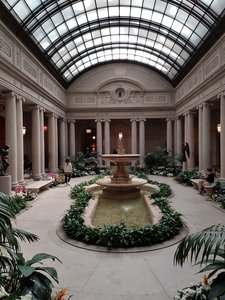
1791 · Oil · The Frick Collection, Niujorkas

To gaze upon Gerard van Spaendonck's "Grapes with Insects on a Marble Top" is to step into a moment suspended between lush abundance and the quiet drama of natural life. This exquisite still life, dating from 1791, transcends a mere depiction of fruit; it is a vibrant meditation on the cycle of growth, decay, and enduring beauty. The composition immediately draws the eye to the generous clusters of grapes, rendered…

3
Flower Still-life with an Alabaster Vase (1783) aut. Gerard van Spaendonck

Flower Still-life with an Alabaster Vase

1783 · Oil On Canvas · Rijksmuseum, Amsterdamas

Flower Still-life with an Alabaster Vase is a notable oil on canvas by Gerard van Spaendonck. Created in 1783, this work is also recognized by the title Still Life of Flowers and Alabaster Vase. The artist, Gerard van Spaendonck, was a figure of significant standing in the Parisian art world, having been appointed as a miniature painter at the court of Louis XVI. His ability to render botanical forms with…

Gerard van Spaendonck tapiai, rangos nuo 11 iki 18

Temos, kurios domino Gerard van Spaendonck

Ketverios temos, dažniausiai pasikrausto originaluose, kiekvienos su savo puikiausiu pavyzdžiu.

Muziejai, kuriuose saugomi Gerard van Spaendonck originalūs darbai

7 muziejai, kuriuose saugoma daugiausia šioje pusėje esamų paveikslų.

Muzejaus Miestas Gerard van Spaendonck darbai Šiojo sąrašo paveikslai
Noordbrabants Museum, 's-HertogenboschNoordbrabants Museum 's-Hertogenbosch 2 Still life of flowers on a marble table, Des fleurs dans un vase en albâtre avec des fruits posés sur un plateau en marbre
The Frick Collection, NiujorkasThe Frick Collection Niujorkas 1 Grapes with Insects on a Marble Top
Rijksmuseum, AmsterdamasRijksmuseum Amsterdamas 1 Flower Still-life with an Alabaster Vase
Het Prinsenhof, DelftHet Prinsenhof Delft 1 Still Life with Fruit
Bowes Museum, Barnard CastleBowes Museum Barnard Castle 1 Flowers And Fruit
Fitzwilliam MuseumFitzwilliam Museum 1 A Vase Of Flowers
Ashmolean Museum, OksfordasAshmolean Museum Oksfordas 1 Vase of Flowers

Gerard van Spaendonck, po vieno ikoninio paveikslio kiekvienam dešimtmenės laikotarpiui

Darbai pagal dešimtmečius

Pasirinkite dešimtmetį, kad pamatytėte jį apibrėžusį originalą.

Gerard van Spaendonck tapyiniai: galerijos atsakymai

Kuris Gerard van Spaendonck paveikslas yra pats garsiausias iš visų?Atsakymas

Miniature still life with flowers in a stone vase on a carved pedestal, with a basket of flowers and a nest. Toliausiai eina Grapes with Insects on a Marble Top (1791) ir Flower Still-life with an Alabaster Vase (1783).

Kuriose yra 10 geriausių Gerard van Spaendonck paveikslų?Atsakymas

Miniature still life with flowers in a stone vase on a carved pedestal, with a basket of flowers and a nest, Grapes with Insects on a Marble Top, Flower Still-life with an Alabaster Vase, Still-life With Flowers And Insects On Marble Plinth, Still life of flowers on a marble table, Des fleurs dans un vase en albâtre avec des fruits posés sur un plateau en marbre, Still Life with Fruit, Tulip gardens, Flowers And Fruit ir Bouquet. Viršuje esančioje reitingo sąraše nurodyta kiekvieno kūrinio metis ir muziejus.

Kiek kūrinių sukūrė Gerard van Spaendonck?Atsakymas

Mūsų kataloge yra 18 Gerard van Spaendonck darbų, skirtų laikotarpiui nuo 1773 iki 1820.

Kur kabinami garsiausi Gerard van Spaendonck originalūs darbai?Atsakymas

Daugiausia – Noordbrabants Museum ('s-Hertogenbosch), The Frick Collection (Niujorkas) ir Rijksmuseum (Amsterdamas). Viršuje esančiame muziejų sąraše yra visi jie.

Kada Gerard van Spaendonck sukūrė savo garsiausias paveikslus?Atsakymas

1780s laikotarpiu: 2 iš 18 šioje pusėje esančių darbų buvo sukurtos tada, iš jų Flower Still-life with an Alabaster Vase.

Kokie yra ankstyviausi ir vėliausi garsieji Gerard van Spaendonck kūriniai?Atsakymas

Šioje pusėje seniausias darbas yra Still life of flowers on a marble table (1773), o naujausias – Still Life with Fruit (1820).

Kurią temą Gerard van Spaendonck kūrė dažniausiai?Atsakymas

Flowers (11), Vase (4) ir Life (4) iš 18 šioje pusėje esamų darbų.

Kurią techniką Gerard van Spaendonck naudojo dažniausiai?Atsakymas

Oil, iš 18 šios puslapio darbų – 2.

Su kokiu kierliu siejama Gerard van Spaendonck?Atsakymas

Rococo, judging by the originals on this page.

Kurių Gerard van Spaendonck originalų turi Noordbrabants Museum?Atsakymas

Still life of flowers on a marble table ir Des fleurs dans un vase en albâtre avec des fruits posés sur un plateau en marbre: Noordbrabants Museum, 's-Hertogenbosch kolekcijoje yra 2 šioje pusėje esančių darbų.

Ar galėčiau užsisakyti rankinį Gerard van Spaendonck paveikslą?Atsakymas

Taip, kaip reprodukcija: originalas lieka savo muziejuje, tačiau bet kurį šio puslapio paveikslą galite užsisakyti rankinio darbo versiją – unikali, pagal jūsų užsakymą atlikta kopija, kurią galite užsisakyti iš pat pagrindinės paveikslai puslapio.

Gerard van Spaendonck: menininkas

Gerard van Spaendonck: A Life in Bloom

Early Life and Education

  • Born: 1746 in Tilburg, Netherlands.
  • Van Spaendonck came from an artistic family; his younger brother, Cornelis van Spaendonck, also became a successful painter.
  • In the 1760s, he began his formal training with decorative painter Willem Jacob Herreyns (also known as Guillaume-Jacques Herreyns) in Antwerp. This early exposure shaped his meticulous attention to detail and refined technique.

Move to Paris and Royal Appointment

  • In 1769, Van Spaendonck relocated to Paris, a pivotal move that launched his international career.
  • 1774: He was appointed as a miniature painter at the court of Louis XVI, marking a significant step in his recognition and patronage.
  • This position allowed him access to aristocratic circles and further refined his skills in delicate floral depictions.

Professor at Jardin des Plantes & Académie Membership

  • 1780: Van Spaendonck succeeded Madeleine Françoise Basseporte as professor of floral painting at the prestigious Jardin des Plantes.
  • Shortly after, he was elected a member of the Académie des Beaux-Arts, solidifying his status within the French art establishment.
  • He became an influential teacher, mentoring notable artists like Pierre-Joseph Redouté and Henriette Vincent.

Artistic Style & Major Works

  • Van Spaendonck excelled in both oil painting and watercolor techniques.
  • He contributed over fifty works to Les Vélins du Roi, a renowned collection of botanical watercolors commissioned by the French royal family. These pieces demonstrate his exceptional skill in capturing the nuances of floral forms.
  • Fleurs Dessinees d'apres Nature (Flowers Drawn from Life): Published between 1799 and 1801, this series of twenty-four engraved plates served as a valuable resource for students of floral painting. It remains a highly treasured book on the subject today.
  • His paintings often feature intricate details of flowers alongside insects, adding another layer of naturalism to his compositions.

Recognition and Legacy

  • 1788: Appointed as an advisor to the Académie.
  • 1795: Became a founding member of the Institut de France.
  • 1804: Received the Légion d'honneur and was ennobled by Napoleon Bonaparte, acknowledging his contributions to French art and culture.
  • Van Spaendonck died in Paris in 1822 and is buried in Père Lachaise Cemetery.
  • Historical Significance: Gerard van Spaendonck’s meticulous botanical illustrations and refined floral paintings played a crucial role in the development of botanical art. His work bridged the gap between scientific accuracy and artistic beauty, influencing generations of artists and botanists alike.

Visi 18 Gerard van Spaendonck darbai →