George Henry portretas

55 garsiausių George Henry paveikių – kiekvienas yra unikalus

Atnaujinta spalis 2026 · pagal mūsų populiarumumo koeficientą (paieškos, lankytojai ir užsakymai kiekvienam kūriniui) · 55 George Henry darbai mūsų kataloge

Trumpai tariant

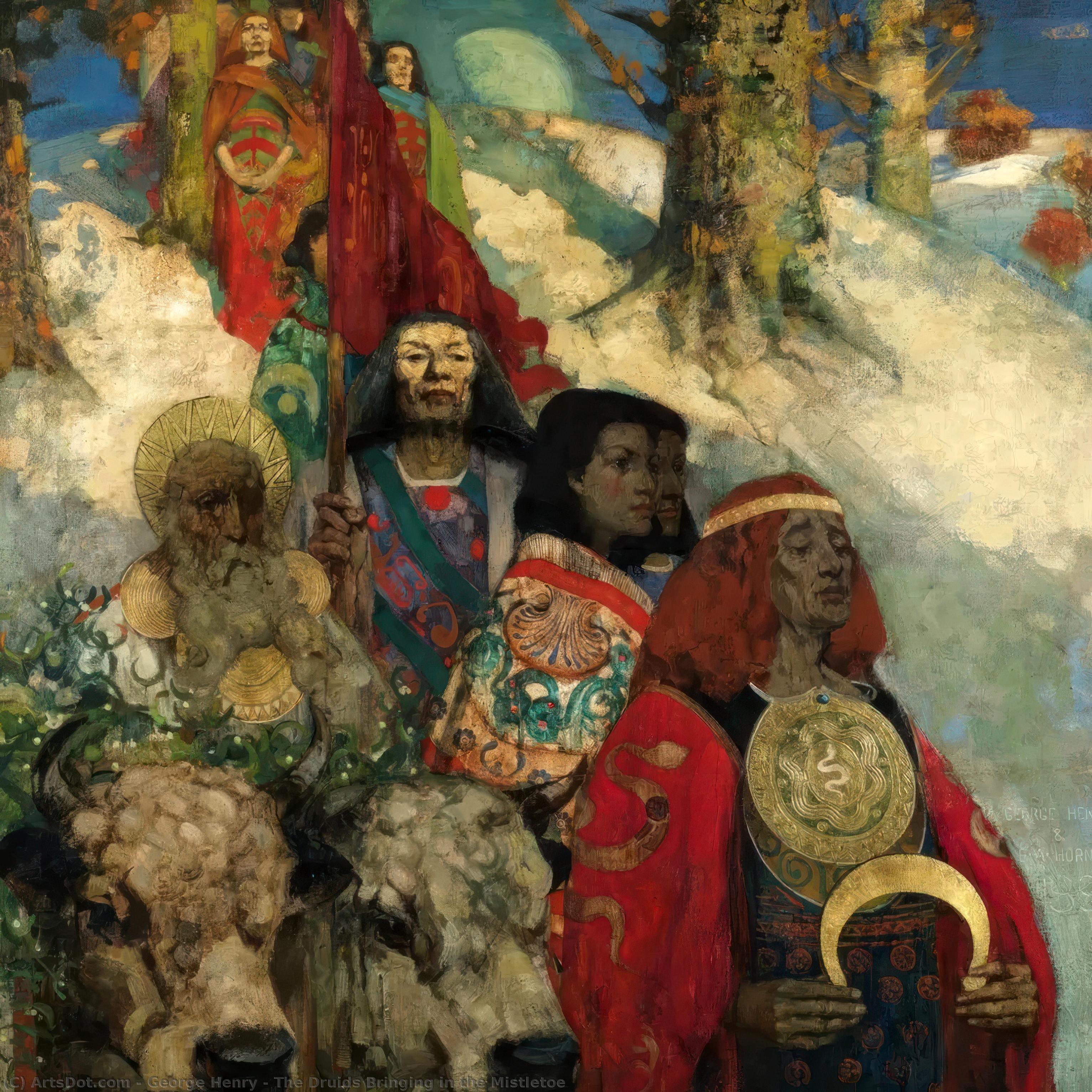
Japanese Lady with a Fan (1894) yra George Henry paveikslas, kuriuo gausiausia žmonių žavisi. Po to akmuo patenka į A Galloway Landscape (1889) ir The Druids Bringing in the Mistletoe (1890). Iš 55 George Henry darbų mūsų kataloge šios 55 yra garsiausios – kiekvienas yra unikali originali dai̇lia, pateikta su jos metais, muziejumi ir priežastimi, kodėl ji išlieka per amžius.

1828 – 1895 Impressionism Daugiausia darbų: Škotijos Nacionalinė galerija

10 geriausių George Henry paveikslų: galerijos akimais

1
Japanese Lady with a Fan (1894) aut. George Henry

Japanese Lady with a Fan

1894 · Oil On Canvas

The oil painting presents a close-up portrait of a woman dressed in traditional Japanese attire. The subject is positioned vertically, with the focus centered on her headwear, face, and upper body. She holds a fan, which is integrated into the arrangement of her robes and posture. The color palette relies on warm browns, ochres, and muted purples, accented by touches of red and gold. A sense of depth is achieved…

žinomi George Henry paveikslai, nuo 11 iki 55 numerio

žymios George Henry tapiojamos, pagal laikotarpį

Late Medieval

1889 – 1894 · 3 darbai šiame sąraše

Temos, kurios domino George Henry

Ketverios temos, dažniausiai pasikrausto originaluose, kiekvienos su savo puikiausiu pavyzdžiu.

Muziejai, kuriuose saugomi George Henry originalūs darbai

7 muziejai, kuriuose saugoma daugiausia šioje pusėje esamų paveikslų.

Muzejaus Miestas George Henry darbai Šiojo sąrašo paveikslai
Škotijos Nacionalinė galerija, EdinburgasŠkotijos Nacionalinė galerija Edinburgas 2 Geisha Girl, East and West
Sheffield City Art Galleries, ŠefildasSheffield City Art Galleries Šefildas 1 Hikers at Goodwood Downs, West Sussex
Mcmanus: Dundee's Art Galleries And Museums, DundeeMcmanus: Dundee's Art Galleries And Museums Dundee 1 The Feather Boa
The Royal Conservatoire of Scotland, EdinburgasThe Royal Conservatoire of Scotland Edinburgas 1 The Grey Hat
Laing Art Gallery, New South WalesLaing Art Gallery New South Wales 1 Lady Margaret Sackville
Atkinson Art Gallery Collection, SouthportAtkinson Art Gallery Collection Southport 1 The Lark
Manchester Art Gallery, MančesterisManchester Art Gallery Mančesteris 1 Landscape with Rainbow

George Henry darbai per metus: kiekvieno unikalūs originalūs kūriniai

Tarp pirmosios ir paskutinės čia rodomos George Henry originalių datų skirtas 14 metų skirtumas, 1882 ir 1895: kiekvieni metai nurodyti žemiau.

Darbai pagal metus

Pasirinkite metus, kad pamatytumėte originalus darbus.

George Henry tapų klausimai galerijai

Koks yra garsiausias George Henry kūrinys?Atsakymas

Japanese Lady with a Fan (1894). Toliausiai eina A Galloway Landscape (1889) ir The Druids Bringing in the Mistletoe (1890).

Kuriuo amžiaus atσταση George Henry sukūrė Japanese Lady with a Fan?Atsakymas

66 metų amžiaus: Japanese Lady with a Fan sukurta 1894 m. Nr. George Henry gimė 1828.

Kurios George Henry dešimt paveikslų yra garsiausi?Atsakymas

Japanese Lady with a Fan, A Galloway Landscape, The Druids Bringing in the Mistletoe, The Hedgecutter, Marion N. Parker, Lieutenant Colonel Sir Cecil Bingham Levita, Hikers at Goodwood Downs, West Sussex, The Geisha Girl, Head of the Holy Loch ir Eyemouth. Viršuje esančioje reitingo sąraše nurodyta kiekvieno kūrinio metis ir muziejus.

Kiek žinoma George Henry darbų?Atsakymas

Mūsų kataloge yra 55 George Henry darbų, skirtų laikotarpiui nuo 1882 iki 1895.

Kur galima pamatyti garsiausių George Henry originalų?Atsakymas

Daugiausia – Škotijos Nacionalinė galerija (Edinburgas), Sheffield City Art Galleries (Šefildas) ir Mcmanus: Dundee's Art Galleries And Museums (Dundee). Viršuje esančiame muziejų sąraše yra visi jie.

Kuriuo laikotarpiu George Henry sukūrė savo žymiausias paveikslus?Atsakymas

1894 laikotarpiu: 7 iš 55 šioje pusėje esančių darbų buvo sukurtos tada, iš jų Japanese Lady with a Fan.

Kuris iš garsių George Henry paveikslų yra pirmasis, o kuris – paskutinis?Atsakymas

Šioje pusėje seniausias darbas yra Head of the Holy Loch (1882), o naujausias – In a Tokyo Garden (1895).

Kokia temos George Henry mėgavosi?Atsakymas

Elegant woman (4), Portraiture (2) ir 19th century art (2) iš 55 šioje pusėje esamų darbų.

Kelią meno kryžkelę priklauso George Henry kūryba?Atsakymas

Impressionism ir Post-impressionism, judging by the originals on this page.

Kurius George Henry originalius galėčiau pamatyti Škotijos Nacionalinė galerija?Atsakymas

Geisha Girl ir East and West: Škotijos Nacionalinė galerija, Edinburgas kolekcijoje yra 2 šioje pusėje esančių darbų.

George Henry: meno kūrinys – autoportretas

The Visionary of the Glasgow Style

George Henry stands as a luminous figure in the annals of British art, a painter whose brush captured the shifting light and soulful atmosphere of the late nineteenth century. Born in Irvine, Scotland, in 1858, Henry became a cornerstone of the influential Glasgow Boys movement, a group of rebellious young artists who sought to break free from the stifling constraints of academic realism. His journey was one of profound transformation, moving away from traditionalist rigidity toward a more emotive, sensory experience of the world. Through his work, the rugged beauty of the Ayrshire landscape and the quiet dignity of his subjects were elevated into something much more poetic and enduring.

The foundations of Henry’s aesthetic were laid during his formative years at the Glasgow School of Art. It was here that he forged deep connections with contemporaries such as John Singer Sargent, creating a shared intellectual space where new ideas could flourish. His training was not merely technical but deeply philosophical, as he began to absorb the revolutionary currents of Impressionism and the delicate, flattened perspectives of Japonisme. This fascination with Japanese art prints introduced a decorative elegance to his compositions, allowing him to balance the raw energy of light with a structured, almost rhythmic sense of design.

A Symphony of Light and Color

Henry’s mastery lay in his ability to translate the ephemeral qualities of nature into permanent pigment. His landscapes are far more than mere topographical records; they are psychological evocations of place. He utilized loose, expressive brushstrokes and a vibrant palette to capture the fleeting moments of the day, from the golden warmth of afternoon sun to the melancholic descent of dusk. One of his most evocative triumphs, "Gloamin'" (1889), serves as a masterclass in atmosphere, where the artist uses color and texture to invite the viewer into a state of quiet contemplation and intimacy.

Beyond the sweeping vistas of the Scottish countryside, Henry’s portraiture revealed a different facet of his genius. In his depictions of individuals, he moved beyond simple likeness to capture an inner essence. His portraits are characterized by:

  • A sensitive approach to light that softens the features and emphasizes mood.
  • An empathetic gaze that honors the psychological depth of his subjects.
  • A seamless integration of subject and setting, often using decorative elements to frame the sitter.
This duality—the ability to be both a bold experimentalist and a meticulous observer—is what defines his unique contribution to the Glasgow Style.

Legacy and Historical Significance

While George Henry may have experienced periods of relative obscurity during his lifetime, the historical significance of his work has undergone a profound resurgence. He is now recognized not just as a regional painter, but as a pioneer who helped bridge the gap between traditional Scottish painting and the modern European avant-garde. His ability to fuse the ruggedness of his native landscape with the sophisticated decorative motifs of international trends created a visual language that was entirely his own.

Today, the legacy of George Henry lives on through the enduring charm of his canvases, which continue to resonate with modern audiences seeking beauty, emotion, and a connection to the natural world. His life’s work remains a testament to the power of artistic rebellion—a reminder that by challenging the conventions of the past, one can illuminate the path toward a new and breathtaking way of seeing.