Donatelo portretas

Donatelo tapiai: 100 garsiausi πίναšiai, galerijos akimis

Atnaujinta spalis 2026 · pagal mūsų populiarumumo koeficientą (paieškos, lankytojai ir užsakymai kiekvienam kūriniui) · 148 Donatelo darbai mūsų kataloge

Trumpai tariant

Galerijos akimais, garsiausias Donatelo tapas yra Madonna and Child between St Francis and St Anthony (1448), kurio originalas eksponuojamas Sant'Antonio bazilika, Paduva. Cantoria (1439) ir Entombment (1447) užbaia trio, kurį atpažįsta kiekvienas ž)/\ Iš 148 Donatelo darbų mūsų kataloge, galerija žemiau pristato 100 garsiausius – kiekvienas yra originalus, su nurodytu metais, muziejumi bei unikaliu aprašymu.

1386 – 1466, Florencija Early renaissance Daugiausia darbų: Museo dell'Opera del Duomo

10 geriausių galerijos Donatelo paveikslų

1
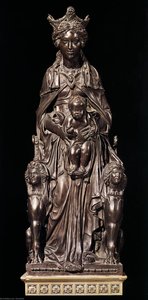
Madonna and Child between St Francis and St Anthony (1448) aut. Donatelo

Madonna and Child between St Francis and St Anthony

1448 · Bronze · Sant'Antonio bazilika, Paduva

In the heart of the Italian Renaissance, where the shadows of antiquity met the burgeoning light of humanism, Donatello breathed life into metal with his masterpiece, Madonna and Child between St Francis and St Anthony. Created around 1448, this profound bronze sculpture serves as a window into a period of unparalleled spiritual and artistic transformation. The composition is a masterclass in symmetrical grace; at its center, the Virgin Mary cradles…

2
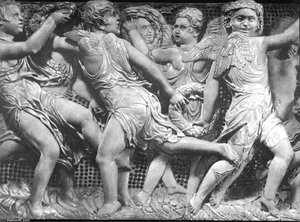
Cantoria (1439) aut. Donatelo

Cantoria

1439 · Marble · Museo dell'Opera del Duomo, Firenka

To stand before Donatello’s Cantoria is to witness the very moment the Renaissance found its pulse. Completed around 1439 for the Cathedral of Santa Maria del Fiore in Florence, this monumental marble relief is far more than a functional singers' gallery; it is a breathtaking explosion of movement and spiritual ecstasy. While much of the era’s sculpture remained tethered to the static, formal traditions of the Byzantine style, Donatello broke…

3
Entombment (1447) aut. Donatelo

Entombment

1447 · Oil On Canvas · Sant'Antonio bazilika, Paduva

To stand before Donatello's depiction of the Entombment is to be enveloped in an atmosphere so thick with grief, it feels almost palpable. This scene transcends mere narrative illustration; it is a profound meditation on loss, sacrifice, and the solemn weight of human devotion. The composition draws the viewer into the immediate aftermath of unimaginable tragedy. Jesus Christ lies within the tomb, not merely as a subject, but as the…

4
Miracle of the Repentant Son (1447) aut. Donatelo

Miracle of the Repentant Son

1447 · Acrylic · Sant'Antonio bazilika, Paduva

Donatello’s bronze sculpture, "Miracle of the Repentant Son," transcends mere representation; it's a profound meditation on faith, remorse, and divine grace. Created in 1447 during the apex of his artistic maturity, this work embodies the burgeoning humanism and emotional depth that defined the Early Renaissance in Florence. More than just a depiction of a biblical miracle – the restoration of a severed limb by St. Anthony – it’s a study…

5
Crucifix (1412) aut. Donatelo

Crucifix

1412 · Acrylic On Canvas · Santa Croce, Florencija

Donatello's 1412 Crucifix, housed within the Basilica of Santa Croce in Florence, isn’t merely a depiction of Christ on the cross; it’s a visceral experience. This early Renaissance masterpiece transcends simple representation, plunging the viewer into the heart of Christian theology and embodying the profound tension between suffering and redemption. Crafted from richly-toned pearwood, the sculpture immediately commands attention with its remarkably realistic portrayal of the human form – a…

6
Annunciation (1435) aut. Donatelo

Annunciation

1435 · Acrylic On Canvas · Santa Croce, Florencija

Donatello’s 1435 Annunciation, housed within the Basilica di Santa Croce in Florence, isn’t merely a depiction of a biblical moment; it’s a profound meditation on grace, humility, and the transformative power of faith. Commissioned during a pivotal period of artistic innovation – bridging the Gothic and Renaissance eras – this sculpture embodies Donatello's revolutionary approach to humanism and his masterful command of classical forms. The scene unfolds with an arresting…

7
St George (detail) (1416) aut. Donatelo

St George (detail)

1416 · Marble · Museo Nazionale del Bargello, Firenka

The marble figure of St. George, sculpted by Donatello around 1416, stands as more than just a depiction of a saint; it's a pivotal moment in the evolution of Renaissance sculpture – a testament to the artist’s innovative spirit and his profound understanding of human form and narrative. Originally gracing the north wall of Orsanmichele, Florence’s imposing guildhall, this statue immediately captivated viewers with its dynamic energy and strikingly realistic…

8
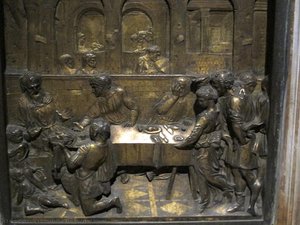
Herod's Banquet (1427) aut. Donatelo

Herod's Banquet

1427 · Bronze · Sienos krikščytojų namai, Siena

Donatello's Herod’s Banquet, crafted around 1427 for the baptismal font of Siena’s San Giovanni Baptistery, isn’t merely a depiction of a biblical episode; it’s a profound meditation on power, betrayal, and the chilling consequences of unchecked ambition. Commissioned amidst the competitive fervor of Renaissance Florence and Siena, this bronze relief stands as a testament to Donatello's burgeoning mastery – a pivotal work that showcases his innovative approach to sculpture and…

9
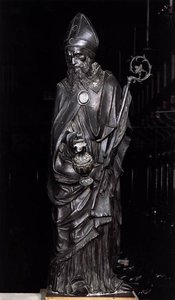
Bearded Prophet (1418) aut. Donatelo

Bearded Prophet

1418 · Bronze · Museo dell'Opera del Duomo, Firenka

In the heart of the Florentine Renaissance, where the shadows of antiquity began to dance with the light of new humanism, Donatello breathed life into bronze with his Bearded Prophet. Created around 1418, this monumental figure is far more than a mere sculpture; it is a profound meditation on the weight of divine knowledge and the solemnity of faith. As one gazes upon the weathered surface of the bronze, there…

10
St. John the Evangelist (1415) aut. Donatelo

St. John the Evangelist

1415 · Marble

St. John the Evangelist is a marble sculpture created by the artist Donatello. Dated 1410, this work depicts one of the twelve apostles of Jesus. The subject is rendered as an elderly man, presented with a face etched with lines and a gaze that suggests a state of contemplation and wisdom. This choice of representation presents the figure as a philosopher-like individual.

Donatelo tapiai, rangos nuo 11 iki 100

11St Mark (1411) aut. DonateloSt Mark1411 · Orsanmichele 12Prophet with Scroll (detail) (1418) aut. DonateloProphet with Scroll (detail)1418 · Museo dell'Opera del Duomo 13St John on Patmos (1428) aut. DonateloSt John on Patmos1428 14David (detail) (1409) aut. DonateloDavid (detail)1409 · Museo Nazionale del Bargello 15Pietà (1447) aut. DonateloPietà1447 · Sant'Antonio bazilika 16Pulpit (on the right) (1465) aut. DonateloPulpit (on the right)1465 · San Lorenzo 17Prophet Jeremiah (1423) aut. DonateloProphet Jeremiah1423 · Museo dell'Opera del Duomo 18Prophet Habakkuk (1427) aut. DonateloProphet Habakkuk1427 · Museo dell'Opera del Duomo 19Pulpit (1438) aut. DonateloPulpit1438 · Museum of the Cathedral 20Miracle of the New-born Child (detail) (1447) aut. DonateloMiracle of the New-born Child (detail)1447 · Sant'Antonio bazilika 21Miracle of the Ass (1447) aut. DonateloMiracle of the Ass1447 · Sant'Antonio bazilika 22Cantoria (detail) (1439) aut. DonateloCantoria (detail)1439 · Museo dell'Opera del Duomo 23Evangelist Luke (1428) aut. DonateloEvangelist Luke1428 24Pulpit (detail) (1438) aut. DonateloPulpit (detail)1438 · Museo dell'Opera del Duomo 25Christ before Pilate and Caiaphas (1460) aut. DonateloChrist before Pilate and Caiaphas1460 · San Lorenzo 26David (1409) aut. DonateloDavid1409 · Museo Nazionale del Bargello 27St George and the Dragon (1416) aut. DonateloSt George and the Dragon1416 · Museo Nazionale del Bargello 28Saint George (1417) aut. DonateloSaint George1417 · Museo Nazionale del Bargello 29St John the Evangelist (detail) (1410) aut. DonateloSt John the Evangelist (detail)1410 · Museo dell'Opera del Duomo 30St John the Evangelist (1410) aut. DonateloSt John the Evangelist1410 · Museo dell'Opera del Duomo 31Deposition (detail) (1465) aut. DonateloDeposition (detail)1465 · San Lorenzo 32Equestrian Statue of Gattamelata (8) (1447) aut. DonateloEquestrian Statue of Gattamelata (8)1447 · Piazza del Santo 33North pulpit (1460) aut. DonateloNorth pulpit1460 · San Lorenzo 34Prophet (left of the Porta della Mandorla) (1406) aut. DonateloProphet (left of the Porta della Mandorla)1406 · Duomo 35David (1430) aut. DonateloDavid1430 · Museo Nazionale del Bargello 36Tombstone of Bishop Giovanni Pecci (1426) aut. DonateloTombstone of Bishop Giovanni Pecci1426 · Duomo 37Miracle of the Avaricious Man's Heart (1447) aut. DonateloMiracle of the Avaricious Man's Heart1447 · Sant'Antonio bazilika 38Allegoric Figure of a Boy (Atys), rear view (1430) aut. DonateloAllegoric Figure of a Boy (Atys), rear view1430 · Museo Nazionale del Bargello 39St George (detail) (1416) aut. DonateloSt George (detail)1416 · Museo Nazionale del Bargello 40Cantoria (detail) (1439) aut. DonateloCantoria (detail)1439 · Museo dell'Opera del Duomo 41Equestrian Statue of Gattamelata (11) (1447) aut. DonateloEquestrian Statue of Gattamelata (11)1447 · Piazza del Santo 42Equestrian Statue of Gattamelata (1447) aut. DonateloEquestrian Statue of Gattamelata1447 · Piazza del Santo 43Marzocco (1419) aut. DonateloMarzocco1419 · Museo Nazionale del Bargello 44Prophet Jeremiah (detail) (1423) aut. DonateloProphet Jeremiah (detail)1423 · Museo dell'Opera del Duomo 45Cantoria (detail) (1439) aut. DonateloCantoria (detail)1439 · Museo dell'Opera del Duomo 46Herod's Banquet (detail) (1427) aut. DonateloHerod's Banquet (detail)1427 · Sienos krikščytojų namai 47Miracle of the Avaricious Man's Heart (detail) (1447) aut. DonateloMiracle of the Avaricious Man's Heart (detail)1447 · Sant'Antonio bazilika 48Bearded Prophet (detail) (1418) aut. DonateloBearded Prophet (detail)1418 · Museo dell'Opera del Duomo 49Cantoria (detail) (1439) aut. DonateloCantoria (detail)1439 · Museo dell'Opera del Duomo 50Prophet Jeremiah (1423) aut. DonateloProphet Jeremiah1423 · Museo dell'Opera del Duomo 51South pulpit (1460) aut. DonateloSouth pulpit1460 · San Lorenzo 52Deposition (1465) aut. DonateloDeposition1465 · San Lorenzo 53St George (1416) aut. DonateloSt George1416 · Museo Nazionale del Bargello 54Cantoria (1439) aut. DonateloCantoria1439 · Museo dell'Opera del Duomo 55Faith (1427) aut. DonateloFaith1427 · Sienos krikščytojų namai 56Old Sacristy (1428) aut. DonateloOld Sacristy1428 · San Lorenzo 57Annunciation (detail) (1435) aut. DonateloAnnunciation (detail)1435 · Santa Croce 58Pulpit (on the left) (1465) aut. DonateloPulpit (on the left)1465 · San Lorenzo 59Prophet with Scroll (1418) aut. DonateloProphet with Scroll1418 · Museo dell'Opera del Duomo 60St John the Evangelist (1410) aut. DonateloSt John the Evangelist1410 · Museo dell'Opera del Duomo 61Prophet Habakkuk (1427) aut. DonateloProphet Habakkuk1427 · Museo dell'Opera del Duomo 62Entombment (1465) aut. DonateloEntombment1465 · San Lorenzo 63Cantoria (9) (1439) aut. DonateloCantoria (9)1439 · Museo dell'Opera del Duomo 64Lamentation over the Dead Christ aut. DonateloLamentation over the Dead ChristVictoria and Albert Museum 65St George (1416) aut. DonateloSt George1416 · Museo Nazionale del Bargello 66St John the Baptist (1438) aut. DonateloSt John the Baptist1438 · Santa Maria Gloriosa dei Frari 67Madonna with the Child (1448) aut. DonateloMadonna with the Child1448 · Sant'Antonio bazilika 68Chellini Madonna, verso aut. DonateloChellini Madonna, versoVictoria and Albert Museum 69St Cosmas and St Damian (1428) aut. DonateloSt Cosmas and St Damian1428 70St Mary Magdalen (1457) aut. DonateloSt Mary Magdalen1457 · Museo dell'Opera del Duomo 71Bust of Niccolo da Uzzano (1430) aut. DonateloBust of Niccolo da Uzzano1430 · Museo Nazionale del Bargello 72Crucifixion (1465) aut. DonateloCrucifixion1465 · Museo Nazionale del Bargello 73Delivery of the Keys to St Peter and the Ascension of Christ (1430) aut. DonateloDelivery of the Keys to St Peter and the Ascension of Christ1430 74Prophet Habbakuk (1426) aut. DonateloProphet Habbakuk1426 75The Feast of Herod (1427) aut. DonateloThe Feast of Herod1427 76St Stephen and St Lawrence (1428) aut. DonateloSt Stephen and St Lawrence1428 77Evangelist Mark (1428) aut. DonateloEvangelist Mark1428 78Herod's Banquet (1435) aut. DonateloHerod's Banquet1435 · Palais des Beaux-Arts de Lille 79Pulpit (1438) aut. DonateloPulpit1438 · Cathedral 80Agony in the Garden (1465) aut. DonateloAgony in the Garden1465 · San Lorenzo 81Funeral Monument to John XXIII (detail) (1435) aut. DonateloFuneral Monument to John XXIII (detail)1435 · Baptistery 82Chellini Madonna, recto aut. DonateloChellini Madonna, rectoVictoria and Albert Museum 83Hope (1427) aut. DonateloHope1427 · Sienos krikščytojų namai 84St Mark (1411) aut. DonateloSt Mark1411 · Orsanmichele 85St Louis (1413) aut. DonateloSt Louis1413 · Museo dell'Opera di Santa Croce 86St Rossore (1425) aut. DonateloSt Rossore1425 · Museo Nazionale di San Matteo 87Putti of the trabeation (1428) aut. DonateloPutti of the trabeation1428 88The Sacrifice of Isaac (1418) aut. DonateloThe Sacrifice of Isaac1418 · Museo dell'Opera del Duomo 89Candelabra Angels (1430) aut. DonateloCandelabra Angels1430 90Musician Angels (1447) aut. DonateloMusician Angels1447 · Sant'Antonio bazilika 91Virgin and Child (1420) aut. DonateloVirgin and Child1420 · Museo Bardini 92Door with the representation of Apostles (1440) aut. DonateloDoor with the representation of Apostles1440 93Door with the representation of Martyrs (1440) aut. DonateloDoor with the representation of Martyrs1440 94Funeral Monument to John XXIII (detail) (1435) aut. DonateloFuneral Monument to John XXIII (detail)1435 · Baptistery 95Miracle of the Ass (detail) (1447) aut. DonateloMiracle of the Ass (detail)1447 · Sant'Antonio bazilika 96Funeral Monument to John XXIII (detail) (1435) aut. DonateloFuneral Monument to John XXIII (detail)1435 · Baptistery 97Equestrian Statue of Gattamelata (9) (1447) aut. DonateloEquestrian Statue of Gattamelata (9)1447 · Piazza del Santo 98Equestrian Statue of Gattamelata (detail) (1447) aut. DonateloEquestrian Statue of Gattamelata (detail)1447 · Piazza del Santo 99Equestrian Statue of Gattamelata (detail) (1447) aut. DonateloEquestrian Statue of Gattamelata (detail)1447 · Piazza del Santo 100Protome Carafa (1465) aut. DonateloProtome Carafa1465

žymios Donatelo tapiojamos, pagal laikotarpį

Temos, kurios domino Donatelo

Ketverios temos, dažniausiai pasikrausto originaluose, kiekvienos su savo puikiausiu pavyzdžiu.

Muziejai, kuriuose saugomi Donatelo originalūs darbai

8 muziejai, kuriuose saugoma daugiausia šioje pusėje esamų paveikslų.

Muzejaus Miestas Donatelo darbai Šiojo sąrašo paveikslai
Museo dell'Opera del Duomo, FirenkaMuseo dell'Opera del Duomo Firenka 22 Cantoria, Bearded Prophet, Prophet with Scroll (detail)
Museo Nazionale del Bargello, FirenkaMuseo Nazionale del Bargello Firenka 13 St George (detail), David (detail), David
Sant'Antonio bazilika, PaduvaSant'Antonio bazilika Paduva 12 Madonna and Child between St Francis and St Anthony, Entombment, Miracle of the Repentant Son
San Lorenzo, FlorencijaSan Lorenzo Florencija 12 Pulpit (on the right), Christ before Pilate and Caiaphas, Deposition (detail)
Piazza del Santo, PaduvaPiazza del Santo Paduva 6 Equestrian Statue of Gattamelata (8), Equestrian Statue of Gattamelata (11), Equestrian Statue of Gattamelata
Sienos krikščytojų namai, SienaSienos krikščytojų namai Siena 4 Herod's Banquet, Herod's Banquet (detail), Faith
Baptistery, FlorencijaBaptistery Florencija 4 Funeral Monument to John XXIII (detail), Funeral Monument to John XXIII (detail), Funeral Monument to John XXIII (detail)
Santa Croce, FlorencijaSanta Croce Florencija 3 Crucifix, Annunciation, Annunciation (detail)

Donatelo, po vieno ikoninio paveikslio kiekvienam dešimtmenės laikotarpiui

Darbai pagal dešimtmečius

Pasirinkite dešimtmetį, kad pamatytėte jį apibrėžusį originalą.

Donatelo tapyiniai: galerijos atsakymai

Kuris Donatelo paveikslas yra pats garsiausias iš visų?Atsakymas

Madonna and Child between St Francis and St Anthony (1448), Sant'Antonio bazilika, Paduva. Toliau seka Cantoria (1439) ir Entombment (1447).

Kiek metų buvo Donatelo, kai sukūrė Madonna and Child between St Francis and St Anthony?Atsakymas

62 metų amžiaus: Madonna and Child between St Francis and St Anthony sukurta 1448 m. Nr. Donatelo gimė 1386.

Kuriose yra 10 geriausių Donatelo paveikslų?Atsakymas

Madonna and Child between St Francis and St Anthony, Cantoria, Entombment, Miracle of the Repentant Son, Crucifix, Annunciation, St George (detail), Herod's Banquet, Bearded Prophet ir St. John the Evangelist. Viršuje esančioje reitingo sąraše nurodyta kiekvieno kūrinio metis ir muziejus.

Kiek kūrinių sukūrė Donatelo?Atsakymas

Mūsų kataloge yra 148 Donatelo darbų, skirtų laikotarpiui nuo 1406 iki 1465.

Kur kabinami garsiausi Donatelo originalūs darbai?Atsakymas

Daugiausia – Museo dell'Opera del Duomo (Firenka), Museo Nazionale del Bargello (Firenka) ir Sant'Antonio bazilika (Paduva). Viršuje esančiame muziejų sąraše yra visi jie.

Kada Donatelo sukūrė savo garsiausias paveikslus?Atsakymas

1430s laikotarpiu: 22 iš 100 šioje pusėje esančių darbų buvo sukurtos tada, iš jų Cantoria.

Kokie yra ankstyviausi ir vėliausi garsieji Donatelo kūriniai?Atsakymas

Šioje pusėje seniausias darbas yra Prophet (left of the Porta della Mandorla) (1406), o naujausias – Pulpit (on the right) (1465).

Kurią temą Donatelo kūrė dažniausiai?Atsakymas

Donatello (36), Sculpture (35) ir Marble (18) iš 100 šioje pusėje esamų darbų.

Kurią techniką Donatelo naudojo dažniausiai?Atsakymas

Marble, iš 100 šios puslapio darbų – 30.

Su kokiu kierliu siejama Donatelo?Atsakymas

Early renaissance, judging by the originals on this page.

Kurių Donatelo originalų turi Museo dell'Opera del Duomo?Atsakymas

Cantoria, Bearded Prophet ir Prophet with Scroll (detail): Museo dell'Opera del Duomo, Firenka kolekcijoje yra 21 šioje pusėje esančių darbų.

Ar galėčiau užsisakyti rankinį Donatelo paveikslą?Atsakymas

Taip, kaip reprodukcija: originalas lieka savo muziejuje, tačiau bet kurį šio puslapio paveikslą galite užsisakyti rankinio darbo versiją – unikali, pagal jūsų užsakymą atlikta kopija, kurią galite užsisakyti iš pat pagrindinės paveikslai puslapio.

Donatelo: menininkas

The Life and Identity of Donatello

Born as Donato di Niccolò di Betto Bardi, the man known to history as Donatello spent his life within the walls of Florence, Italy. He arrived in the world around 1386, a time when the city was beginning to reshape its own image through stone and bronze. His presence in the Florentine landscape was constant, marked by a steady hand and a focus on the physical reality of his subjects. He was an Italian Renaissance sculptor who understood the weight of the materials he handled, from the hardness of marble to the fluidity of wax.

His work was not a solitary pursuit of perfection but a series of responses to the needs of his time. He moved through the streets of Florence, working in various mediums and leaving behind a trail of figures that captured a specific, human presence. While he was known to be amiable and well-liked by those around him, he struggled with the practicalities of running a business. He often took on more work than his hands could finish in a timely manner, sometimes leaving the final touches to others or delivering pieces later than expected. This tendency toward over-commitment suggests a man more concerned with the act of creation than the management of a workshop.

Donatello died in Florence on December 13, 1466. He left behind a body of work that changed how sculptors approached the human form, moving away from the rigid traditions of the past toward something more grounded and expressive. His life was tied to the city, and his identity remains inseparable from the Florentine soil where he lived and worked.

Early Life and Artistic Training

Born in Florence, Italy, Donatello grew up in a city that acted as the primary epicenter for the burgeoning Renaissance. This environment provided the essential cultural energy for his development. He spent his early years immersed in the local atmosphere, where the shift away from rigid medieval traditions was already taking hold. His connection to the Florentine landscape was deep, as the city's evolving values shaped his early approach to form and figure.

His training involved a close study of classical sculpture. This focus on antiquity helped him move toward a new style that prioritized realism and humanism. Before finding his own voice, he learned the International Gothic style from Lorenzo Ghiberti. This period of learning allowed him to master the technical skills of his craft before he began to deviate from those established traditions. He worked with various materials, including stone, bronze, wood, clay, stucco, and wax, often using glass in inventive ways to achieve specific effects.

Patrons, Workshop and Commissions

Donatello’s hands were often full. He had a habit of accepting more work than his schedule could hold, a tendency that sometimes meant projects were finished late or handed off to others to complete. This heavy workload required a steady presence in his workshop, where he worked alongside several assistants. A group of four was a typical number for his studio, helping him manage the physical demands of stone, bronze, and clay.

The Medici family provided steady support, offering the kind of patronage that allowed him to work through different phases of his life. His reach extended far beyond the streets of Florence; he traveled to work on commissions in Rome, Padua, and Siena. This movement between cities meant his practice was never confined to a single place, as he carried his methods and his assistants to various centers of activity.

Innovative Techniques and Artistic Style

Donatello’s approach to sculpture moved away from the rigid traditions of the International Gothic style. He developed an Early Renaissance style that favored a new kind of realism. This was often achieved through a deep understanding of the human form and the way light hits a surface. He was not limited to a single medium, working instead with stone, bronze, wood, clay, stucco, and wax. He even found ways to use glass in inventive ways to add detail to his figures.

One of his most specific technical contributions was the development of rilievo stiacciato. This is a very shallow type of bas-relief where the carving is so slight that it creates an illusion of depth through subtle shifts in thickness. By using this method, he could suggest perspective and distance on a nearly flat surface. His work often shows a tension between the physical weight of the material and the expressive movement of the subject. He could make marble appear as soft as skin or bronze carry a sense of heavy, muscular energy.

Key Sculptural Masterpieces

In 1416, he finished Saint George, a marble figure that captures a sense of resolute courage. The sculpture depicts the knight in armor, balancing on the balls of his feet rather than standing in a traditional contrapposto. There is a palpable sense of the muscular body working beneath the surface of the stone. This work was one of many commissioned by the guilds of Florence to decorate the external niches of the Orsanmichele Church.

His bronze David remains a significant point in the history of sculpture. It is the first freestanding nude male sculpture produced since antiquity. The figure is depicted with an enigmatic smile, standing with a foot placed upon the severed head of Goliath. While the marble version of this subject was an early commission, the bronze version is noted for its delicate, androgynous physique and the way it uses the youth's nakedness to contrast with the heavy sword in hand.

Later in his career, he moved toward different materials and scales. The Equestrian Monument of Gattamelata, created in 1453, is a massive bronze work located in Padua. Around 1440, he produced the Penitent Magdalene, a wooden sculpture carved from white poplar. This figure is gaunt and emaciated, departing from the typical depictions of a beautiful young woman. The carving is stark and highly detailed, showing a different side of his technical skill.

  • Saint George, 1416
  • David (bronze), c. 1440
  • Penitent Magdalene, c. 1440
  • Equestrian Monument of Gattamelata, 1453

Legacy and Artistic Influence

Donatello's approach to form did not find immediate acceptance within his community. His work moved through distinct phases, starting with a focus on classical monumentality and a growing sense of expressiveness. As his career progressed, this style gained traction, eventually becoming the most popular way of working in the region. His influence reached far beyond the borders of Florence, spreading to other Italian courts and affecting artists across Europe.

The way he handled materials allowed for a range of emotional depths. He moved from the heavy, solid presence of his early marble figures to more stark, even brutal works in his later years. This shift showed a willingness to explore the human condition through varied textures, from the smooth surfaces of stone to the textured, emaciated wood of his later religious carvings. His ability to capture a sense of movement and psychological weight changed how sculptors approached the human figure.

Visi 148 Donatelo darbai →