


1


Atnaujinta spalis 2026 · pagal mūsų populiarumumo koeficientą (paieškos, lankytojai ir užsakymai kiekvienam kūriniui) · 11 Bernard Buffet darbai mūsų kataloge
Trumpai tariant
Untitled (634) yra Bernard Buffet paveikslas, kuriuo gausiausia žmonių žavisi. Po to akmuo patenka į Provence Landscape (1952) ir Quatre Zinnias (1967). Iš 11 Bernard Buffet darbų mūsų kataloge šios 11 yra garsiausios – kiekvienas yra unikali originali dai̇lia, pateikta su jos metais, muziejumi ir priežastimi, kodėl ji išlieka per amžius.


2 muziejai, kuriuose saugoma daugiausia šioje pusėje esamų paveikslų.
| Muzejaus | Miestas | Bernard Buffet darbai | Šiojo sąrašo paveikslai |
|---|---|---|---|
 Rhode Island School of Design Museum of Art |
Providence | 1 | Provence Landscape |
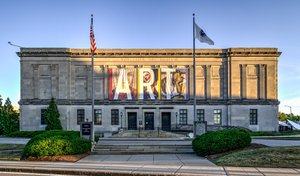 Worcester Art Museum |
Worcester | 1 | Quatre Zinnias |
Ilgi16 metų karjera, nuo 1952 iki 1967: garsiausi Bernard Buffet originalūs darbai, pateikiami metais po metų.
Pasirinkite metus, kad pamatytumėte originalus darbus.
Untitled (634). Toliausiai eina Provence Landscape (1952) ir Quatre Zinnias (1967).
Untitled (634), Provence Landscape, Quatre Zinnias, Untitled (154), Untitled (175), Untitled (498), Untitled (612), Untitled (360), Untitled (917) ir Untitled (410). Viršuje esančioje reitingo sąraše nurodyta kiekvieno kūrinio metis ir muziejus.
Mūsų kataloge yra 11 Bernard Buffet darbų, skirtų laikotarpiui nuo 1952 iki 1967.
Daugiausia – Rhode Island School of Design Museum of Art (Providence) ir Worcester Art Museum (Worcester). Viršuje esančiame muziejų sąraše yra visi jie.
Šioje pusėje seniausias darbas yra Provence Landscape (1952), o naujausias – Quatre Zinnias (1967).
Expressionism, judging by the originals on this page.
Bernard Buffet (1928–1999) remains one of the most evocative and polarizing figures in twentieth-century French art. Born in Paris during a period of profound global upheaval, his very existence was shaped by the shadows of the Second World War. This early exposure to the fragility of life left an indelible mark on his psyche, manifesting in a style that many critics famously labeled miserabilist. Yet, to reduce his work to mere despair is to overlook the profound technical mastery and the quiet, structural elegance that define his oeuvre. Buffet did not merely paint sadness; he constructed it through a rigorous, almost architectural application of line and form, creating a visual language that spoke to the collective anxieties of a post-war generation.
His formative years were marked by both artistic awakening and personal tragedy. A student at the École Nationale Supérieure des Beaux-Arts, Buffet was deeply influenced by the stark realism of Gustave Courbet, whose presence could be felt in Buffet’s later tributes to the master. However, it was the loss of his mother to cancer in 1945 that perhaps most significantly anchored his artistic preoccupation with mortality and decay. This personal grief found a voice in his early works, where the sharp, angular lines and muted palettes began to coalesce into a signature style—one that captured the skeletal essence of his subjects, whether they were lonely figures or decaying still lifes.
Buffet’s rise to international prominence in the 1950s was nothing short of meteoric. He emerged as a central figure of the L'homme témoin (The Witness Man) movement, a group that embraced the raw, emotional intensity of Expressionism to reflect the disillusionment of the era. His work during this period often featured a hauntingly beautiful tension between order and chaos. Through his meticulous use of fine, nervous lines, he could transform a simple arrangement of flowers or a piece of meat into a meditation on the passage of time. This technique allowed him to bridge the gap between the figurative tradition and a modern, psychological depth that resonated with a public seeking meaning in a fractured world.
The influence of masters like Edvard Munch and Giorgio Morandi is evident in his ability to evoke profound solitude through minimalist compositions. His paintings often possess a rhythmic, almost musical quality, where the starkness of the subject matter is balanced by a sophisticated sense of space. This period of his career saw him achieving a level of fame that drew frequent comparisons to Pablo Picasso, making him a household name and a dominant force in the Parisian art scene. His ability to command both the attention of the avant-garde and the broader public was a rare feat in an era increasingly divided between abstraction and figuration.
Despite his immense success, Buffet’s journey was not without its tribulations. By the late 1950s, shifting artistic tides toward total abstraction and criticisms regarding his prolific output and lavish lifestyle led to a period of professional alienation. The very qualities that had made him a star—his accessibility and his commitment to the figurative—became targets for a changing art establishment. Nevertheless, Buffet’s dedication to his craft never wavered. He continued to produce an astonishing volume of work, including paintings, prints, and sculptures, ensuring that his artistic vision remained a constant, even when the spotlight dimmed.
In recent decades, a profound reassessment of his importance has taken place within the art historical community. Collectors and curators are rediscovering the nuanced complexity of his later works and recognizing the enduring power of his early masterpieces. His significance lies not only in his role as a chronicler of post-war malaise but also in his ability to find a haunting, structural beauty within the themes of loss and decay. Today, Bernard Buffet is remembered as an artist who dared to look directly at the uncomfortable truths of existence, leaving behind a legacy that continues to haunt and inspire the modern imagination.
