Ambrogio Lorenzetti portretas

53 garsiausių Ambrogio Lorenzetti paveikių rinkinys: galerijos išboru

Atnaujinta lapkritis 2026 · pagal mūsų populiarumumo koeficientą (paieškos, lankytojai ir užsakymai kiekvienam kūriniui) · 54 Ambrogio Lorenzetti darbai mūsų kataloge

Trumpai tariant

Iš visų paliktų originalų kūrinių Ambrogio Lorenzetti garsiausias yra Bad Government and the Effects of Bad Government on the City Life (1338), esantis Palazzo Pubblico kolekcijoje, Siena. Tiesiog už jų seka Allegory of the Good Government (detail) (1338) ir Good and Bad-Effects of Good Government on the City Life (detail)5. Mūsų kataloge yra 54 darbų autoriaus Ambrogio Lorenzetti; galerija išsaugojo 53 labiausiai pasaulyje žyminiausių kūrinių – kiekvienas jų pateikiamas su datos, muziejaus ir istorijos aprašymu.

1290 – 1348, Siena Proto-renaissance Daugiausia darbų: Palazzo Pubblico

Ambrogio Lorenzetti geriausios 10 paveikslų: galerijos pasirinkimas

1
Bad Government and the Effects of Bad Government on the City Life (1338) aut. Ambrogio Lorenzetti

Bad Government and the Effects of Bad Government on the City Life

1338 · Fresco · Palazzo Pubblico, Siena

The fresco cycle titled Bad Government and the Effects of Bad Government on the City Life was created by Ambrogio Lorenzetti in 1338. This work is part of a larger series known as the Allegory of Good and Bad Government. The paintings occupy the walls of the Sala dei Nove, also referred to as the Council Room, within the Palazzo Pubblico in Siena, Italy. The commission for these murals originated…

2
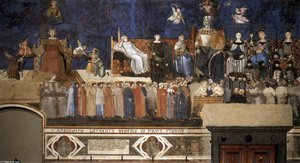
Allegory of the Good Government (detail) (1338) aut. Ambrogio Lorenzetti

Allegory of the Good Government (detail)

1338 · Fresco · Palazzo Pubblico, Siena

Within the hallowed, quiet halls of the Palazzo Pubblico in Siena, Italy, the Allegory of the Good Government (detail) unfolds. Created by the Sienese painter Ambrogio Lorenzetti, this work emerges from the year 1338. It breathes with the spirit of the Sienese School, capturing a moment where the rigid traditions of the medieval era begin to meet the fresh, burgeoning light of the Early Renaissance. The scene focuses on the…

3
Good and Bad-Effects of Good Government on the City Life (detail)5 aut. Ambrogio Lorenzetti

Good and Bad-Effects of Good Government on the City Life (detail)5

Fresco

In the heart of Siena, within the hallowed walls of the Palazzo Pubblico, lies a fragment of a much larger, breathtaking vision: Ambrogio Lorenzetti’s Good and Bad-Effects of Good Government on the City Life. This particular detail serves as a mesmerizing portal into the 14th century, capturing a moment of ceremonial grandeur that transcends time. As we gaze upon this fresco, we are not merely looking at paint on plaster;…

5
Effects of Good Government on the City Life (detail) (1338) aut. Ambrogio Lorenzetti

Effects of Good Government on the City Life (detail)

1338 · Fresco · Palazzo Pubblico, Siena

To gaze upon this exquisite detail from Ambrogio Lorenzetti’s 1338 masterpiece, Effects of Good Government on the City Life, is to step through a portal into the vibrant, beating heart of medieval Siena. This fragment of the monumental fresco cycle, housed within the Palazzo Pubblico, transcends mere decoration; it serves as a breathtakingly vivid chronicle of a civilization at its zenith. The scene unfolds with an extraordinary sense of movement…

6
The Effects of Good Government in the Countryside (detail) (1338) aut. Ambrogio Lorenzetti

The Effects of Good Government in the Countryside (detail)

1338 · Acrylic On Canvas · Palazzo Pubblico, Siena

Ambrogio Lorenzetti's “The Effects of Good and Bad Government” – specifically, the panel depicting “The Effects of Good Government in the Countryside” – is more than just a beautiful fresco; it’s a meticulously crafted visual argument for civic virtue. Painted between 1338 and 1340 for Siena’s Palazzo Pubblico, this monumental work offers a rare glimpse into the political philosophy of a thriving medieval republic. Lorenzetti, a pivotal figure bridging the…

8
The Effects of Good Government in the Countryside (detail) (1338) aut. Ambrogio Lorenzetti

The Effects of Good Government in the Countryside (detail)

1338 · Fresco · Palazzo Pubblico, Siena

Ambrogio Lorenzetti's “The Effects of Good and Bad Government” – a monumental fresco cycle executed between 1338 and 1340 within the Palazzo Pubblico in Siena, Italy – isn’t merely a depiction of a rural landscape; it’s a meticulously crafted allegory of civic virtue and its consequences. Commissioned by the Council of Nine, the governing body of the Republic of Siena, this artwork served as a potent visual reminder to its…

10
Allegory of the Good Government (left view, detail) (1338) aut. Ambrogio Lorenzetti

Allegory of the Good Government (left view, detail)

1338 · Fresco · Palazzo Pubblico, Siena

Within the quiet, hallowed halls of the Palazzo Pubblico in Siena, Italy, the Allegory of the Good Government (left view, detail) unfolds before the eyes. This work, created in 1338, emerges from the Sala della Pace. It is a monumental achievement of Sienese Gothic art. The frescoes were commissioned by the Consiglio dei Nove, also known as the Council of Nine, to decorate their civic space. Ambrogio Lorenzetti, the artist…

Ambrogio Lorenzetti darba rinkinys tęsiamas, nuo 11 iki 53

11The Crucifixion, the Nativity and Saints (1322) aut. Ambrogio LorenzettiThe Crucifixion, the Nativity and Saints1322 · Städel Museum 12Saint Martin of Tours Dividing His Cloak with a Beggar (1340) aut. Ambrogio LorenzettiSaint Martin of Tours Dividing His Cloak with a Beggar1340 · Yale University Art Gallery 13St. John the Baptist (1337) aut. Ambrogio LorenzettiSt. John the Baptist1337 · Statens Museum For Kunst 14Madonna and Child (1330) aut. Ambrogio LorenzettiMadonna and Child1330 15Saint Agnes (1330) aut. Ambrogio LorenzettiSaint Agnes1330 · Harvard Art Museums 16Saint Elizabeth of Hungary (1333) aut. Ambrogio LorenzettiSaint Elizabeth of Hungary1333 · Isabella Stewart Gardner Museum 17Madonna and Child Enthroned (fragment of an altarpiece) (1341) aut. Ambrogio LorenzettiMadonna and Child Enthroned (fragment of an altarpiece)1341 · Szépművészeti Múzeum 18Madonna and Child Enthroned (fragment of an altarpiece) (1340) aut. Ambrogio LorenzettiMadonna and Child Enthroned (fragment of an altarpiece)1340 · Szépművészeti Múzeum 19Madonna and Child (1333) aut. Ambrogio LorenzettiMadonna and Child1333 · Metropolitano meno muziejus 20Effect of Good Government on the City (1 aut. Ambrogio LorenzettiEffect of Good Government on the City (1 21Madonna and Child with Mary Magdalene and St Dorothea (1325) aut. Ambrogio LorenzettiMadonna and Child with Mary Magdalene and St Dorothea1325 · Pinacoteca Nazionale 22The Presentation in the Temple (1342) aut. Ambrogio LorenzettiThe Presentation in the Temple1342 · Galleria degli Uffizi 23The Oath of St Louis of Toulouse (1324) aut. Ambrogio LorenzettiThe Oath of St Louis of Toulouse1324 · San Francesco 24The Effects of Good Government in the Countryside (detail) (1338) aut. Ambrogio LorenzettiThe Effects of Good Government in the Countryside (detail)1338 · Palazzo Pubblico 25Scenes of the Life of St Nicholas (1332) aut. Ambrogio LorenzettiScenes of the Life of St Nicholas1332 · Galleria degli Uffizi 26Allegory of the Good Government (detail) (1338) aut. Ambrogio LorenzettiAllegory of the Good Government (detail)1338 · Palazzo Pubblico 27Scenes of the Life of St Nicholas (1332) aut. Ambrogio LorenzettiScenes of the Life of St Nicholas1332 · Galleria degli Uffizi 28The Effects of Good Government in the Countryside (detail) (1338) aut. Ambrogio LorenzettiThe Effects of Good Government in the Countryside (detail)1338 · Palazzo Pubblico 29St Michael (1330) aut. Ambrogio LorenzettiSt Michael1330 · Museo d'Arte Sacra 30Scenes of the Life of St Nicholas (10) (1332) aut. Ambrogio LorenzettiScenes of the Life of St Nicholas (10)1332 · Galleria degli Uffizi 31Scenes of the Life of St Nicholas (12) (1332) aut. Ambrogio LorenzettiScenes of the Life of St Nicholas (12)1332 · Galleria degli Uffizi 32Allegory of the Good Government (1338) aut. Ambrogio LorenzettiAllegory of the Good Government1338 · Palazzo Pubblico 33Scenes of the Life of St Nicholas (1332) aut. Ambrogio LorenzettiScenes of the Life of St Nicholas1332 · Galleria degli Uffizi 34Virgin and Child aut. Ambrogio LorenzettiVirgin and ChildMuseum of Fine Arts 35Good and Bad-View of the frescoes aut. Ambrogio LorenzettiGood and Bad-View of the frescoes 36Scenes of the Life of St Nicholas (11) (1332) aut. Ambrogio LorenzettiScenes of the Life of St Nicholas (11)1332 · Galleria degli Uffizi 37Suckling Madonna (1330) aut. Ambrogio LorenzettiSuckling Madonna1330 · Palazzo Arcivescovile 38Small Maestà (1335) aut. Ambrogio LorenzettiSmall Maestà1335 · Pinacoteca Nazionale 39Allegory of the Good Government, Palazzo aut. Ambrogio LorenzettiAllegory of the Good Government, Palazzo 40Good and Bad-Allegory of Bad Government (detail) aut. Ambrogio LorenzettiGood and Bad-Allegory of Bad Government (detail) 41Good and Bad-Effects of Bad Government on the Countryside (detail) aut. Ambrogio LorenzettiGood and Bad-Effects of Bad Government on the Countryside (detail) 42The Effects of Bad Government (detail), aut. Ambrogio LorenzettiThe Effects of Bad Government (detail), 43Good and Bad-Effects of Good Government on the City Life (detail)2 aut. Ambrogio LorenzettiGood and Bad-Effects of Good Government on the City Life (detail)2 44A Group of Poor Clares aut. Ambrogio LorenzettiA Group of Poor ClaresNational Gallery 45Madonna and Child (1340) aut. Ambrogio LorenzettiMadonna and Child1340 · Pinacoteca di Brera 46Annunciation (1344) aut. Ambrogio LorenzettiAnnunciation1344 · Pinacoteca Nazionale 47Stories of Saint Nicholas (1330) aut. Ambrogio LorenzettiStories of Saint Nicholas1330 48Madonna with Angels and Saints (Maestà) (1335) aut. Ambrogio LorenzettiMadonna with Angels and Saints (Maestà)1335 · Municipio 49Madonna of Vico l'Abate (1319) aut. Ambrogio LorenzettiMadonna of Vico l'Abate1319 · Museo di Arte Sacra 50Altarpiece of St Proculus (1332) aut. Ambrogio LorenzettiAltarpiece of St Proculus1332 · Galleria degli Uffizi 51Maestà of Sant'Agostino (1337) aut. Ambrogio LorenzettiMaestà of Sant'Agostino1337 · Sant'Agostino 52The Charity of St. Nicholas of Bari (1330) aut. Ambrogio LorenzettiThe Charity of St. Nicholas of Bari1330 53Painted crucifix aut. Ambrogio LorenzettiPainted crucifixPinacoteca Nazionale

žymios Ambrogio Lorenzetti tapiojamos, pagal laikotarpį

Temos, kurios domino Ambrogio Lorenzetti

Ketverios temos, dažniausiai pasikrausto originaluose, kiekvienos su savo puikiausiu pavyzdžiu.

Muziejai, kuriuose saugomi Ambrogio Lorenzetti originalūs darbai

8 muziejai, kuriuose saugoma daugiausia šioje pusėje esamų paveikslų.

Muzejaus Miestas Ambrogio Lorenzetti darbai Šiojo sąrašo paveikslai
Palazzo Pubblico, SienaPalazzo Pubblico Siena 13 Bad Government and the Effects of Bad Government on the City Life, Allegory of the Good Government (detail), Effects of Good Government on the City Life (detail)
Galleria degli Uffizi, FlorencijaGalleria degli Uffizi Florencija 8 The Presentation in the Temple, Scenes of the Life of St Nicholas, Scenes of the Life of St Nicholas
Pinacoteca Nazionale, SienaPinacoteca Nazionale Siena 4 Madonna and Child with Mary Magdalene and St Dorothea, Small Maestà, Annunciation
Szépművészeti Múzeum, BudapeštasSzépművészeti Múzeum Budapeštas 2 Madonna and Child Enthroned (fragment of an altarpiece), Madonna and Child Enthroned (fragment of an altarpiece)
Städel Museum, FrankfurtasStädel Museum Frankfurtas 1 The Crucifixion, the Nativity and Saints
Yale University Art Gallery, Niū HevenasYale University Art Gallery Niū Hevenas 1 Saint Martin of Tours Dividing His Cloak with a Beggar
Statens Museum For Kunst, KopenhagaStatens Museum For Kunst Kopenhaga 1 St. John the Baptist
Harvard Art Museums, KembrižasHarvard Art Museums Kembrižas 1 Saint Agnes

Ambrogio Lorenzetti dešimtmetėms po dešimtmetės: originalus kūrinys, apibūdinantis kiekvieną iš jų

Darbai pagal dešimtmečius

Pasirinkite dešimtmetį, kad pamatytėte jį apibrėžusį originalą.

Kolekcjonerų klausimai apie Ambrogio Lorenzetti paveikslus

Kuriu darbu Ambrogio Lorenzetti yra labiausiai garsus?Atsakymas

Bad Government and the Effects of Bad Government on the City Life (1338), Palazzo Pubblico, Siena. Toliau seka Allegory of the Good Government (detail) (1338) ir Good and Bad-Effects of Good Government on the City Life (detail)5.

Kokia buvo Ambrogio Lorenzetti amžius, kai buvo sukurtas Bad Government and the Effects of Bad Government on the City Life?Atsakymas

48 metų amžiaus: Bad Government and the Effects of Bad Government on the City Life sukurta 1338 m. Nr. Ambrogio Lorenzetti gimė 1290.

Kokie yra 10 garsiausių Ambrogio Lorenzetti paveikslų?Atsakymas

Bad Government and the Effects of Bad Government on the City Life, Allegory of the Good Government (detail), Good and Bad-Effects of Good Government on the City Life (detail)5, Effects of Good Government on the City Life (detail), Effects of Good Government on the City Life (detail), The Effects of Good Government in the Countryside (detail), Effects of Good Government on the City Life (detail), The Effects of Good Government in the Countryside (detail), Effects of Good Government on the City Life (detail) ir Allegory of the Good Government (left view, detail). Viršuje esančioje reitingo sąraše nurodyta kiekvieno kūrinio metis ir muziejus.

Kiek paveikslų paliko Ambrogio Lorenzetti?Atsakymas

Mūsų kataloge yra 54 Ambrogio Lorenzetti darbų, skirtų laikotarpiui nuo 1319 iki 1344.

Kuriuose muziejuose eksponuojami Ambrogio Lorenzetti šedevrai?Atsakymas

Daugiausia – Palazzo Pubblico (Siena), Galleria degli Uffizi (Florencija) ir Pinacoteca Nazionale (Siena). Viršuje esančiame muziejų sąraše yra visi jie.

Kuriomis metais Ambrogio Lorenzetti tapo savo garsiausius kūrinius?Atsakymas

1330s laikotarpiu: 32 iš 53 šioje pusėje esančių darbų buvo sukurtos tada, iš jų Bad Government and the Effects of Bad Government on the City Life.

Kokie yra pirmasis ir paskutinis garsieji Ambrogio Lorenzetti originalūs darbai?Atsakymas

Šioje pusėje seniausias darbas yra Madonna of Vico l'Abate (1319), o naujausias – Annunciation (1344).

Kurią temą Ambrogio Lorenzetti rinkosi dažniausiai?Atsakymas

Medieval art (14), Siena (8) ir Allegory (7) iš 53 šioje pusėje esamų darbų.

Kurią techniką Ambrogio Lorenzetti naudojo dažniausiai?Atsakymas

Fresco, iš 53 šios puslapio darbų – 14.

Kelią meno kryptį priklauso Ambrogio Lorenzetti?Atsakymas

Proto-renaissance, vadovaujantis šios puslapio originalais kūriniais.

Kurių Ambrogio Lorenzetti darbai eksponuojami Palazzo Pubblico?Atsakymas

Bad Government and the Effects of Bad Government on the City Life, Allegory of the Good Government (detail) ir Effects of Good Government on the City Life (detail): Palazzo Pubblico, Siena kolekcijoje yra 13 šioje pusėje esančių darbų.

Ambrogio Lorenzetti: gyvenimas ir kūryba

Sienos vizionierius: Ambrogio Lorenzetti gyvenimas ir kūryba

Ambrogio Lorenzetti, gimęs apie 1390 metus Italijos Sienos šimroje, tapo veikliusia figūra pereinamųjų laikų nuo viduramžių meno tradicijų iki pradinės Renesanso swornės. Nors periodais jis buvo prislėgtas tokių samtvorių kaip Duccio ar Simone Martini, o dažnai diskutuojamas kartu su savo broliu pavešliu Pietro Lorenzetti, Ambrogio iškovojo unikalią kelią – kelią, pasižymintį inovatyviu dvasia ir giliu ryšiu su aplinkine pasaulio aplinka. Detalus jo ankstyvojo gyvenimo aprašas išlieka retas; tikėtina, kad meninis mokslas Sienoje padėjo pagrindą, ant kurio jis sukūrė stilių, sujungiantį bizancinę eleganciją su augančiu naturalizmu – tai buvo jo evoliuojančios vizijos žymutė. Rafinuotą estetiką garsėjanti Sienos mokykla suteikė derlią Ambrogio talentams žiedėti, tačiau jis nedrobis buvo tiesiog atkartoti įsitvirtinusias konvencijas. Jis turėjo smalsią protą, traukiamą tiek italo-bizancinio meno dvasinės gylės, tiek klasikinųjų idealų, kurie tuo metu Italijos mąstyme pradėjo vėl atgimti.

Atsisakymas tradicijų: stilius ir inovacija

Ambrogio meninė kelionė buvo nuolatinio eksperimentavimo procesas. Ankstyvieji darbai, tokie kaip 1319 metų Madonna ir Child, atskleidžia aiškią skolą bizancinei tradicijai – ikoniškas frontalumą, auksinį fono naudojimą ir stilizuotą figūrų vaizdavimą – viskas kalba apie šią įtaką. Tačiau net ir šiose ankstyvose kūrybos dalyse atsiranda naujos krypties užuominos: subtilus formų šveltėjimas, pradinė susidomėjimo tūriu vaizdavimu ir bandymas savo temoms suteikti daugiau žmogiškumo. Ši trajektorija paspartėjo Ambrogiui brėstant, skatinama fascinacija antikvoje ir noru pasaulį atvaizduoti su didesniu tikslumu. Jis studijavo perspektyvą – nors ne visada pasiekė tobulus rezultatus – ir rodė ypatingą meistriškumą fiziognomijoje, siekdamas įamžinti individualius savo portretuotųjų bruožus. Kito garsiojo Sienos pavešlio Simone Martini įtarmas aiškiai juntamas Ambrogio elegantiškose kompozicijose ir rafinatuotėje spalvų paletėje, o kai kurie mokslininkai pastebi ryšį su Giotto natūralistiniu požiūriu, ypač vaizduojant žmogaus emocijas. Tačiau būtent Ambrogio sujungė šias įtakas į kažką išskirtinio – stilių, kuriame dekoratyvi žaizmes ir neįtikėtiną realizmo lygį suderino su harmonija.

Palazzo Pubblico: monumentali pasiekimas

Ambrogio Lorenzetti paliktas rykliausias paveldas slypi Sienos Palazzo Pubblico sienose, ypač Sala dei Nove – Tarybos salėje. Čia, tarp 1337 ir 1339 metų, jis pradėjo monumentalų freskų ciklą, vaizduojantį Gerio ir blogio valdovimo alegoriją. Šis darbas nėra tik gražių paveikslėlių rinkinys; tai gili meditacija apie piliečių dorybes, socialinę tvarką ir politinių pasirinkimų pasekmes. Gerio valdovimo poveikis miestui ir kaimui yra nepanašus vaizdo enciklopedija viduržemio gyvenimui – gyvybinga panorama, kupina veiklos: prekybininkai vykdo sandorius, darbininkai dirba žemėje, šokėjai štai празnuoja piazza. Tai harmonijos ir klestėjimo vizija, kur kiekvienas elementas prisideda prie bendruomenės gerovės. Kontrastuojanti Blogio valdovybės alegorija ir jos poveikis miestui bei kaimui pateikia visiškai kitokį vaizdą – skaudų kraštą, sunaikintą tyraniškumo, korupcijos ir nesumo skrodžiamą. Šiame cikle Ambrogio pasiekė keletą revoliucinių pasiekimų: jis iš vanguardinio metodų kūrybos: panaudojo realistiškus peizažus kaip savo figūrų foną, eksperimentavo su perspektyva siekdami sukelti gylio pojūtį ir suteikė savo veikėjams emocijų spektrą, kuris tuo laikais buvo neįtikėtinai išraiškingas. Pastebėta, kad Gerio valdovimo poveikyje yra tai, kas laikoma pirmuoju užfiksuotu smėlio laikrodžio vaizdu – laiko nenuolidosdo praėjimo ir atsakingos valdžios svarbos simboliu.

Ilgalaikė įtaka: paveldas ir istorinė reikšmė

Ambrogio Lorenzetti ankstyvas mirtis 1348 metais, tikėtina, tapusi Juodosios mirties, nukraužusios Europą, aukoj, nustabdė karjerą, kupiną potencialo. Tačiau jo inovacijos paliko neištrinčiam antspaudą Italijos menui. Jis buvo Renesanso priešdukurys, numatęs daugeliui tą erą apibrėžusių meninių problemų – atgimstantį susidomėjimą naturalizmu, perspektyvos meistriškumę ir dėmesį žmogaus emocijoms. Jo freskos Palazzo Pubblico stovi kaip ankstyvojo Renesanso pasaulinės tematos paveikslų šedevrai, atspindėdami augantį dėmesį į piliečių gyvenimą ir lyderystės atsakomybes. Be estetinio grožio, šie darbai suteikia neįvertinjamų įžvalgų viduržemio visuomenei, suteikdami detalų žvilgsnį į 14 amžiaus Sienos kasdienį gyvenimą, papročius ir vertybes. Ambrogio įtaka išsiplėtė į būsimas Sienos ir Italijos paveščių kartas, įkvėpdami jas plečiant meninės išraiškos ribas ir ieškoti naujų pasaulio vaizdavimo būdų. Jis išlieka įrodymu apie meno galią ne tik atspindėti visuomenę, bet ir ją formuoti – vizionierius, kurio kūryba ir po šimtmečiais kelia emocijas auditorijai.