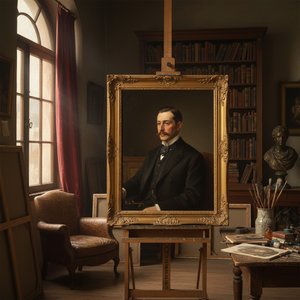
Tomás de Suría y Domínguez: Chronicler of the Pacific Frontier
Tomás de Suría y Domínguez (1761-1835) stands as a singular figure in Spanish art history—a painter, engraver, and explorer whose legacy resides primarily in his meticulous documentation of the 18th century’s voyages to the Northwest Coast of America. Born in Madrid, Spain, Suría's artistic journey began with formal training at the Royal Academy of Fine Arts of San Fernando, where he honed his skills under the tutelage of Jerónimo Antonio Gil, a renowned naturalist and fellow artist who would become instrumental in shaping Suría’s intellectual curiosity and adventurous spirit. This formative influence propelled him toward an expeditionary path that cemented his place among Spain's most distinguished scientific travelers.
Early Life & Artistic Training: Suría’s early years were marked by a dedication to artistic pursuits, mirroring the broader cultural ethos of the Enlightenment. His studies at San Fernando instilled in him a profound appreciation for observation and representation—qualities that would prove invaluable during his subsequent explorations.
The Malaspina Expedition (1789-1794): Suría’s most celebrated accomplishment was undoubtedly his participation in Alejandro Malaspina’s ambitious scientific expedition to the Pacific Northwest. Recognizing the importance of visual records, Suría undertook the daunting task of capturing the landscapes and peoples of British Columbia and Alaska with unparalleled accuracy. This undertaking demanded not only artistic talent but also logistical prowess—Suría successfully negotiated provisions for his salary, travel expenses, and continued seniority upon Malaspina’s return to Spain.
Engraving & Artistic Style: Suría's mastery extended beyond painting; he excelled as an engraver, producing stunningly detailed prints that served as invaluable visual aids for scientific publications. His engravings are characterized by a remarkable level of precision and realism—a testament to his meticulous attention to detail and his commitment to faithfully portraying the natural world.
Legacy & Influence: Suría’s contribution to Spanish art and science is undeniable. He embodies the spirit of the Age of Enlightenment, prioritizing empirical observation alongside artistic expression. His work continues to inspire admiration for its aesthetic beauty and historical significance—a reminder that art can serve as a powerful tool for advancing knowledge and documenting cultural encounters.
Notable Works: Documenting the Pacific Coast
Suría’s artistic output during the Malaspina Expedition yielded several remarkable engravings, notably “Cockfight,” which exemplifies his stylistic approach—characterized by crisp lines, subtle tonal gradations, and a masterful depiction of texture. These prints are not merely aesthetically pleasing; they constitute crucial visual records of the expedition's discoveries, capturing scenes of indigenous life, geological formations, and botanical specimens with breathtaking fidelity. The meticulousness of Suría’s engravings reflects his broader commitment to scientific accuracy—a hallmark of his artistic vision.
“Cockfight”: This engraving showcases Suría’s ability to convey dynamism and realism through precise linework and tonal shading, capturing the intensity of a traditional Mexican cockfight.
American Journeys Background: Suría's involvement in the American Journeys expedition—documented by Henry R Wagner—further solidified his reputation as a pioneering explorer and artist. The expedition’s meticulous journals and illustrations provide invaluable insights into the cultural landscape of North America during the late 18th century.
Beyond the Expedition: Artistic Career & Recognition
Following the Malaspina voyage, Suría continued his artistic career in Mexico City, where he established the Academia Nacional de San Carlos—a testament to his dedication to fostering artistic education and innovation. Despite facing opposition from his wife regarding his adventurous pursuits, Suría remained steadfast in his commitment to scientific exploration and artistic creation—a duality that defines his enduring legacy. His work was recognized by contemporaries as a triumph of observation and representation—a reflection of the intellectual currents shaping Spain’s cultural landscape during the Napoleonic era.
Concluding Thoughts: A Pioneer of Observation
Tomás de Suría y Domínguez remains an artist whose achievements transcend mere aesthetic beauty; he represents a pivotal figure in bridging art and science, embodying the spirit of the Enlightenment's quest for knowledge through empirical observation. His engravings—particularly “Cockfight”—stand as enduring symbols of his artistic prowess and his unwavering dedication to documenting the wonders of the natural world—a legacy that continues to inspire admiration for its historical significance and artistic excellence.
OriginalUniqueArt.com redakcijos komanda
Karo viktorina
Kiekviename klausime yra tik vienas teisingas atsakymas.
Klausimas 1:
What was Tomás de Suría y Domínguez known for?
Klausimas 2:
Where did Tomás de Suría y Domínguez study?
Klausimas 3:
With whom did Tomás de Suría y Domínguez accompany on a significant expedition?
Klausimas 4:
What role did Tomás de Suría y Domínguez hold in Mexico City?
Klausimas 5:
What was Tomás de Suría y Domínguez's contribution to the establishment of San Carlos Academy?
Explore the life & art of Rafael de Penagos, a leading Spanish Art Deco illustrator. Discover his iconic 'Penagos Woman', commercial work, and lasting legacy. Learn about this pivotal figure in 20th-century Spanish art history.
Explore the rich history of engraving with OriginalUniqueArt. Discover techniques, iconic artists like Dürer & Callot, collecting tips, and expert guidance for preserving your art investment. Learn about intaglio printing & more!
Atraskite 25 įspūdingiausius Francisco Goya šedevrus! Ispanų romantizmo meistro paveikslai, portretai ir juodoji tapyba. Įkvėpkite interjerui su aukštos kokybės Goya reprodukcijomis | OriginalUniqueArt.com