Thomas Walker Bretland portretas

8 garsiausių Thomas Walker Bretland paveikių – kiekvienas yra unikalus

Atnaujinta lapkritis 2026 · pagal mūsų populiarumumo koeficientą (paieškos, lankytojai ir užsakymai kiekvienam kūriniui) · 11 Thomas Walker Bretland darbai mūsų kataloge

Trumpai tariant

The Greyhound (1830) yra viena矚 most žiūrėlių pritraukiančių Thomas Walker Bretland tapierių; originalas saugomas Bristol Museum And Art Gallery, Bristol. Po to akmuo patenka į Gone Away (1838) ir Horse Owned by Mr Robert White (1838). Iš 11 Thomas Walker Bretland darbų mūsų kataloge šios 8 yra garsiausios – kiekvienas yra unikali originali dai̇lia, pateikta su jos metais, muziejumi ir priežastimi, kodėl ji išlieka per amžius.

1802 – 1874, Notingingas Romanticism Daugiausia darbų: National Trust

10 geriausių Thomas Walker Bretland paveikslų: galerijos akimais

1
The Greyhound (1830) aut. Thomas Walker Bretland

The Greyhound

1830 · Oil · Bristol Museum And Art Gallery, Bristol

A single dog occupies the center of the frame, its slender neck extended toward an unseen point beyond the canvas. The greyhound stands amidst the tall, unmanicured grass, its posture alert and poised. In the distance, the landscape stretches toward a heavy, clouded sky that presses down with atmospheric weight. Two horses move through the background, small silhouettes against the vastness of the field, while a lone figure stands near…

2
Gone Away (1838) aut. Thomas Walker Bretland

Gone Away

1838 · Oil

A group of men on horseback occupies a sprawling landscape, their presence marking a moment of social assembly within the natural world. Some riders are clad in red coats, while others wear black, creating a rhythmic contrast against the muted tones of the terrain. Below the horses, a dog rests upon the ground, a quiet observer to the movement above. The scene is animated by birds in flight, adding a…

3
Horse Owned by Mr Robert White (1838) aut. Thomas Walker Bretland

Horse Owned by Mr Robert White

1838 · Oil

The air in the stable feels heavy with the scent of hay and the quiet industry of farm life. At the center of this bustling scene, a white horse bows its head, its neck curving in a moment of stillness amidst the surrounding movement. This animal, belonging to Mr. Robert White, commands the space not through action, but through its sheer physical presence. To the right, two dogs linger, their…

4
Horse and Groom (1843) aut. Thomas Walker Bretland

Horse and Groom

1843 · Oil On Canvas · York Museums Trust, York

The scene unfolds in a quiet, indoor setting, perhaps a stable or a barn, where the air feels heavy with the presence of living creatures. Here, we find Horse and Groom, a work painted by Thomas Walker Bretland. The artist captures a specific moment in time, dating this particular creation to 1843. There is a stillness in the atmosphere, yet the subjects remain palpably present before us.

5
A Bay Hunter in a Landscape (1842) aut. Thomas Walker Bretland

A Bay Hunter in a Landscape

1842 · Oil On Canvas · National Trust, Derby

A brown horse occupies the center of this oil on canvas, positioned within a grassy field. The animal's coat is a deep bay color, and its head is turned toward an unseen point off-camera. In the background, trees rise against the landscape, providing a vertical element to the horizontal expanse of the field. Two human figures are present in the scene: one is located on the left side, while the…

6
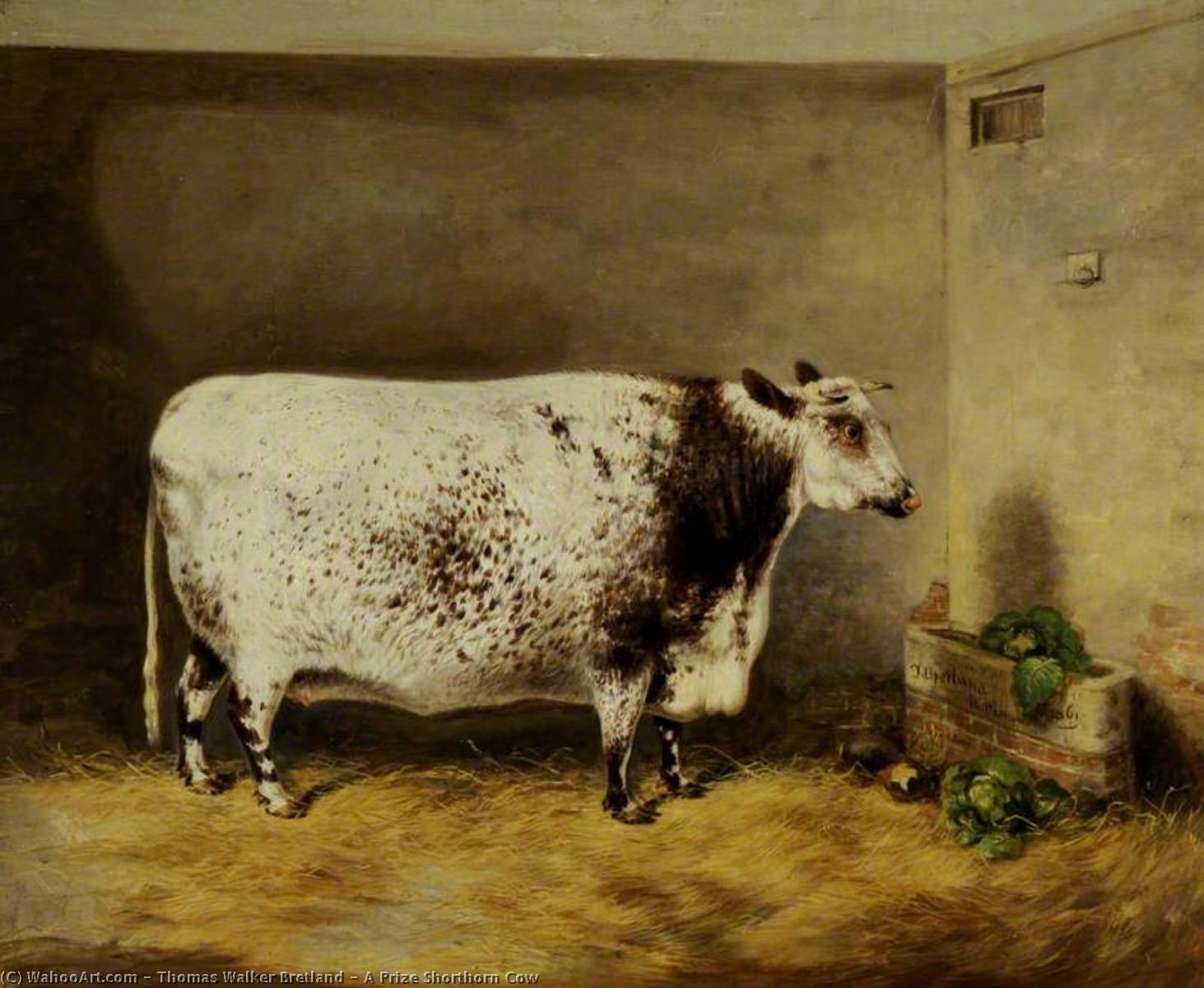
A Prize Shorthorn Cow (1861) aut. Thomas Walker Bretland

A Prize Shorthorn Cow

1861 · Oil · National Trust, Derby

The painting presents a black and white representation of a cow standing in front of a brick wall. The cow's body occupies most of the image, with its head positioned towards the right side of the frame, appearing to look at the camera. In the background, a building can be seen through the brick wall. The scene includes two birds: one located near the top left corner and another closer…

Temos, kurios domino Thomas Walker Bretland

Ketverios temos, dažniausiai pasikrausto originaluose, kiekvienos su savo puikiausiu pavyzdžiu.

Muziejai, kuriuose saugomi Thomas Walker Bretland originalūs darbai

5 muziejai, kuriuose saugoma daugiausia šioje pusėje esamų paveikslų.

Muzejaus Miestas Thomas Walker Bretland darbai Šiojo sąrašo paveikslai
National Trust, DerbyNational Trust Derby 2 A Bay Hunter in a Landscape, A Prize Shorthorn Cow
Bristol Museum And Art Gallery, BristolBristol Museum And Art Gallery Bristol 1 The Greyhound
York Museums Trust, YorkYork Museums Trust York 1 Horse and Groom
Shugborough Hall, Stoke-on-TrentShugborough Hall Stoke-on-Trent 1 Longhorn Cow
Nottingham Castle Museum And Art Gallery, NotinghamasNottingham Castle Museum And Art Gallery Notinghamas 1 Portrait of the Horse, Which Belonged to Major Burton at the Balaklava Charge

Thomas Walker Bretland per dešimtmečius: vieniškas originalas kiekvienam

Darbai pagal dešimtmečius

Pasirinkite dešimtmetį, kad pamatytėte jį apibrėžusį originalą.

Thomas Walker Bretland tapų klausimai galerijai

Koks yra garsiausias Thomas Walker Bretland kūrinys?Atsakymas

The Greyhound (1830), Bristol Museum And Art Gallery, Bristol. Toliau seka Gone Away (1838) ir Horse Owned by Mr Robert White (1838).

Kuriuo amžiaus atσταση Thomas Walker Bretland sukūrė The Greyhound?Atsakymas

28 metų amžiaus: The Greyhound sukurta 1830 m. Nr. Thomas Walker Bretland gimė 1802.

Kiek žinoma Thomas Walker Bretland darbų?Atsakymas

Mūsų kataloge yra 11 Thomas Walker Bretland darbų, skirtų laikotarpiui nuo 1830 iki 1864.

Kur galima pamatyti garsiausių Thomas Walker Bretland originalų?Atsakymas

Daugiausia – National Trust (Derby), Bristol Museum And Art Gallery (Bristol) ir York Museums Trust (York). Viršuje esančiame muziejų sąraše yra visi jie.

Kuriuo laikotarpiu Thomas Walker Bretland sukūrė savo žymiausias paveikslus?Atsakymas

1830s laikotarpiu: 3 iš 8 šioje pusėje esančių darbų buvo sukurtos tada, iš jų The Greyhound.

Kuris iš garsių Thomas Walker Bretland paveikslų yra pirmasis, o kuris – paskutinis?Atsakymas

Šioje pusėje seniausias darbas yra The Greyhound (1830), o naujausias – Longhorn Cow (1864).

Kokia temos Thomas Walker Bretland mėgavosi?Atsakymas

Horse (4), Dog (2) ir Grass (2) iš 8 šioje pusėje esamų darbų.

Kuriomis medžiagomis Thomas Walker Bretland tapė dažniausiai?Atsakymas

Oil, iš 8 šios puslapio darbų – 4.

Kelią meno kryžkelę priklauso Thomas Walker Bretland kūryba?Atsakymas

Romanticism, vadovaujantis šios puslapio originalais kūriniais.

Kurius Thomas Walker Bretland originalius galėčiau pamatyti National Trust?Atsakymas

A Bay Hunter in a Landscape ir A Prize Shorthorn Cow: National Trust, Derby kolekcijoje yra 2 šioje pusėje esančių darbų.

Thomas Walker Bretland: meno kūrinys – autoportretas

Thomas Walker Bretland: Kaimo gyvenimo ir žirgų elegancijos kronika

1802 m. gimęs Notingrame, Thomas Walker Bretland meninė kelionė prasidėjo ne formalioje studijoje, o triukšmingame savo tėvo vežimų ir kočių dažymo verslo pasaulyje. Nuo ankstyvo slapuko jaunasis Thomas turėjo aštrią detalumo jautrą ir gilią gyvūnų meilę – aistrą, kuri galiausiai ir apibrėžė jo karjerą. Pradėjęs mokytis savo tėvo šioje tradicionaliame amate, jis vis dėlto pajuto trauką į savo stebėtų gyvūnų esmės įtvirtinimą, piešdamas arkas, šunis ir karves tokia intensyvumu, kuris užsimino ateitį toli nuo heraldikos dizainų.

Bretlando ankstyvoji gyvenimo etapa buvo formuojamas įvairių įtakų sąveikos. XVIII amžiaus garsiojo anglojo gyvūnų dailininkas George Stubbs paliko ypatingai formaujančią betterį. Stubbs kruopstūs anatominiai tyrimai ir dramatiški arkų vaizdinimai įtenino Bretlando troškimį pakelti savo darbus virš papildomos iliustracijos, siekiant gilesnio arklių anatomijos ir judesio supratimo. Pradinio tėvo neigiamos pozicijos meninės veiklos atliekamai buvo nustatytos Lordo Middletono patarimai – išsamriausio globėjo, kuris pastebėjo augantį talentą jauname dailininkas. Šis lūkiškas susitikimas suteikė Bretlandui paskatą ir galimybę visiškai realizuoti savo aistrą.

Sportinio dailės gimimas

Vidurinio XIX amžiaus Britanijoje stebėtas sportinio dailės aušrinimas buvo tapęs itin stipriausiu tendenciju dėl augančio medžioklės, lenktybių ir jokių asortimento populiarumo tarp žemės savininkų aristokratijos. Bretland meistriškai įsilaužė į šią gyvybingą aplinką, tapdamas geidžiamu žirgų bei kaimo gyvenimo scenų paveislininku. Jo užsakimai dažniausiai krito iš turtingų žemės savininkų – Buccleuch ir Montrose kuniakų, Lordo Chesterfieldio, Barono Rothschildo – asmenų, kurie vertino tiek menišką meistriškumą, tiek ir socialinę padėtį. Šie rėmėjai užsakydavo savo brangiausių žirgų portretus, jaudžius medžioklės escenas, vaizduojančias menegvų persegiočius kaimo kraštuotvėje, bei evokuojantys pejzažus, į которых buvo įamžintas angliškų dvarų grožis.

Bretlando stilius laikui bėgant evoliucionavo, atspindėdamas prevailingus Viktorijos\|_{\text{era}} tendencijas, tačiau išlaikydamas itin išskirtą, individualų charakterį. Jo tapyba pasižymi ypatingu detalumu, turtingomis spalvomis bei neįtikėtinai gebėjimu perteikti tiek fizinį gyvūnų egzistavimą, tiek ir jų dvasinę esmę. Jis nebuvo tik žirgų vaizduotojas; jis įtraukė į savo ketus jų galią, eleganciją ir intelektą, suteikdamas kiekvienam płatinui gyvybingumo ir judesio pojūtį.

Pagrindiniai darbai ir meninės technikos

Among Bretland’s most celebrated works is “A Prize Shorthorn Cow,” a remarkably detailed depiction of a magnificent bovine specimen. This painting exemplifies his mastery of animal anatomy, capturing the cow's muscular form and expressive features with astonishing accuracy. Similarly, "A Bay Shorthorn Cow" showcases his ability to integrate animals seamlessly into evocative rural settings, creating scenes that are both visually stunning and emotionally resonant.

Bretland’s technique involved careful observation, preliminary sketches, and a methodical approach to layering paint. He employed a rich palette of colors – deep browns, greens, and blues – to create atmospheric effects and enhance the sense of depth in his compositions. His use of light and shadow was particularly effective in conveying the texture of fur and the sheen of horse coats.

Palikimas ir istorinė reikšmė

Thomas Walker Bretland mirė Notingheme 1874 m., palikdamas po savęs itin reikalingą kūrybos plėstą, kurį atspindi tiek to laiko meno tendencijos, tiek ir socialiniai papročiai. Jo tapyba šiandien saugoma įvairiuose Britanijos viešose kolekcijose, įskaitant Bristol Museum & Art Gallery, Notinghemo miesto muziejus ir galerijas bei Shugborough Hall. Bretland įtakos sporto menui (sporting art) suteikė ne tik techninis meistriškumas, bet ir gebėjimas įamžinti kaimo gyvenimo esmę – tradicijų, laisvalaikio ir glaudaus ryšio su gamta pasaulį.

Jo kūryba tarnauja kaip vertingas langas į Viktorijos Angliją, suteikdamas įžvalgų apie landų bajorų gyvenimą, jų aistrą medžioklei bei jaukėms ir meninę raišką grynamajam menui. Thomas Walker Bretland palikimas išlieka gyvuojantis kaip įrodymas neblėstančios gyvūnų portretų patrauklumui bei meno galimybei įamžinti gamtos pasaulio grožį ir dvasią.