


1


Atnaujinta lapkritis 2026 · pagal mūsų populiarumumo koeficientą (paieškos, lankytojai ir užsakymai kiekvienam kūriniui) · 38 Tomas Enderis darbai mūsų kataloge
Trumpai tariant
Iš visų paliktų originalų kūrinių Tomas Enderis garsiausias yra The Grossglockner with the Pasterze Glacier (1830), esantis Residenzgalerie kolekcijoje, Salzburgas. Tiesiog už jų seka The Cemetery Gate (Cemetery near Wien) (1820) ir Berchtesgaden with Watzmann (1818). Mūsų kataloge yra 38 darbų autoriaus Tomas Enderis; galerija išsaugojo 36 labiausiai pasaulyje žyminiausių kūrinių – kiekvienas jų pateikiamas su datos, muziejaus ir istorijos aprašymu.


 The Großglockner with the Pasterze1832
12
 Southern Landscape with Cacti1837
13
 View of Rio de Janeiro1837 · Vienos dailės akademija
14
 Schloss Cles in Nonntal in South Tyrol1846
15
 View of Lake Garda1840
16
 Schloss Tirol near Meran1843
17
 View of Athens1853
18
 The Pieniny Mountains with the Dunajec River1860 · Library of the Hungarian Academy of Sciences
19
 Orava Castle1860 · Library of the Hungarian Academy of Sciences
20
 Povážský Hrad and the Renaissance Mansion1860 · Library of the Hungarian Academy of Sciences
21
 Grotto of Sorrento with a View of Capo Mahea
22
 Overlooking the St. Stephen's Cathedral from Glacis
23
 Forest Landscape in the High Mountains
24
 View of Bítov Castle of Count Daun in Moravia
25
 The Morteratsch Glacier in Grisons with the Bernina Range
26
 Italian courtyard and church
27
 The Monastery of St Benedict in Subiaco
28
 Ischian landscapeNacionalinis muziejus Varšuvoje
29
 Look at the Zenoburg near Merano
30
 Ischian landscape (detail)
31
 View from Nussdorf on the Danube
32
 Marianne in the storm on the Black Sea
33
 Wooded River Landscape in the Alps
34
 View of the Residence of Archduke Johann in Gastein Hot Springs
35
 ViolasMuseu Carlos Gomes
36
 Seated with red cape in landscape
Ketverios temos, dažniausiai pasikrausto originaluose, kiekvienos su savo puikiausiu pavyzdžiu.
6 muziejai, kuriuose saugoma daugiausia šioje pusėje esamų paveikslų.
| Muzejaus | Miestas | Tomas Enderis darbai | Šiojo sąrašo paveikslai |
|---|---|---|---|
 Library of the Hungarian Academy of Sciences |
Budapeštas | 3 | The Pieniny Mountains with the Dunajec River, Orava Castle, Povážský Hrad and the Renaissance Mansion |
 Residenzgalerie |
Salzburgas | 1 | The Grossglockner with the Pasterze Glacier |
 Museu de Arte de São Paulo Assis Chateaubriand |
São Paulo | 1 | Landscape of Guanabara bay |
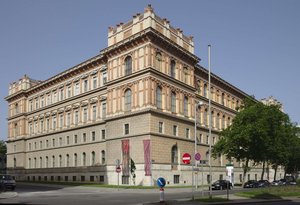 Vienos dailės akademija |
Viena | 1 | View of Rio de Janeiro |
 Nacionalinis muziejus Varšuvoje |
Varšuva | 1 | Ischian landscape |
 Museu Carlos Gomes |
Kampinas | 1 | Violas |
Pasirinkite dešimtmetį, kad pamatytėte jį apibrėžusį originalą.


The Grossglockner with the Pasterze Glacier (1830), Residenzgalerie, Salzburgas. Toliau seka The Cemetery Gate (Cemetery near Wien) (1820) ir Berchtesgaden with Watzmann (1818).
37 metų amžiaus: The Grossglockner with the Pasterze Glacier sukurta 1830 m. Nr. Tomas Enderis gimė 1793.
The Grossglockner with the Pasterze Glacier, The Cemetery Gate (Cemetery near Wien), Berchtesgaden with Watzmann, Near Sparbach, Niederösterreich, Seidelwinkel in der Rauris, Landscape of Guanabara bay, Rocky coast in Italy, Coast of Sorrento, Area near Ischl ir Large landscape with figures. Viršuje esančioje reitingo sąraše nurodyta kiekvieno kūrinio metis ir muziejus.
Mūsų kataloge yra 38 Tomas Enderis darbų, skirtų laikotarpiui nuo 1818 iki 1860.
Daugiausia – Library of the Hungarian Academy of Sciences (Budapeštas), Residenzgalerie (Salzburgas) ir Museu de Arte de São Paulo Assis Chateaubriand (São Paulo). Viršuje esančiame muziejų sąraše yra visi jie.
1810s laikotarpiu: 5 iš 36 šioje pusėje esančių darbų buvo sukurtos tada, iš jų Berchtesgaden with Watzmann.
Šioje pusėje seniausias darbas yra Berchtesgaden with Watzmann (1818), o naujausias – The Pieniny Mountains with the Dunajec River (1860).
Landscape (3) ir Alpine landscape (2) iš 36 šioje pusėje esamų darbų.
The Pieniny Mountains with the Dunajec River, Orava Castle ir Povážský Hrad and the Renaissance Mansion: Library of the Hungarian Academy of Sciences, Budapeštas kolekcijoje yra 3 šioje pusėje esančių darbų.