

1


Atnaujinta lapkritis 2026 · pagal mūsų populiarumumo koeficientą (paieškos, lankytojai ir užsakymai kiekvienam kūriniui) · 53 Thomasas Duncanas darbai mūsų kataloge
Trumpai tariant
Iš visų paliktų originalų kūrinių Thomasas Duncanas garsiausias yra Braan, a Celebrated Scottish Deerhound, esantis Škotijos Nacionalinė galerija kolekcijoje, Edinburgas. Tiesiog už jų seka A milkmaid in a landscape ir Reverend thomas chalmers. Mūsų kataloge yra 53 darbų autoriaus Thomasas Duncanas; galerija išsaugojo 53 labiausiai pasaulyje žyminiausių kūrinių – kiekvienas jų pateikiamas su datos, muziejaus ir istorijos aprašymu.


 Robert hepburn
12
 Reverend alexander pringle
13
 Portrait of an Unknown Man
14
 The spinning wheel
15
 MacNeill, Lord Colonsay, JudgeŠkotijos nacionalinė portretų galerija
16
 Robert barclay
17
 Sculpture
18
 George seton
19
 Salmon leistering
20
 Robert scott lauderŠkotijos nacionalinė portretų galerija
21
 Catherine Glover and Father Clement
22
 James miller
23
 The Friends – Child and Dog
24
 Margaret Catherine MacDuff, née Ross, of Bonhard
25
 Lieutenant colonel a. hope pattison
26
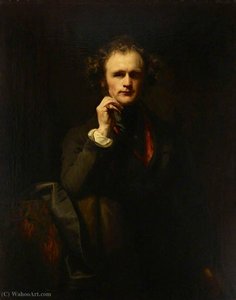 Self portraitŠkotijos Nacionalinė galerija
27
 Samson duncan
28
 The Entombment of ChristŠkotijos Nacionalinė galerija
29
 John Campbell, Marquis of Breadalbane
30
 Alexander MacDuff of Bonhard
31
 The Right Honourable Fox Maule-Ramsay
32
 Self portrait
33
 Jeanie Deans and the Robbers
34
 Sir theodore martinŠkotijos nacionalinė portretų galerija
35
 Portrait of an Unknown Man
36
 John McNeill of Colonsay and OronsayŠkotijos nacionalinė portretų galerija
37
 Mary monteith ferguson
38
 The Entrance of Prince Charles Edward Stuart to Edinburgh after Prestonpans
39
 Lord provost adam pringle
40
 The Marriage at CanaŠkotijos Nacionalinė galerija
41
 Robert Peddie, Town Clerk of Perth
42
 David morison
43
 Patrick Robertson, Lord Robertson, Judge and Dean of FacultyŠkotijos nacionalinė portretų galerija
44
 Christina Mitchell McNeil, the Mother of Ina, Dowager Duchess of Argyll
45
 Professor john wilsonŠkotijos nacionalinė portretų galerija
46
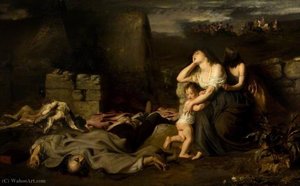 The Martyrdom of John Brown of Priesthill
47
 Self portraitŠkotijos Nacionalinė galerija
48
 David Beatson of Kirkpottie, Original Trustee of James Murray's Royal Asylum and Chairman of Directors
49
 Dog 'Braan'
50
 The Brother of Ina, Dowager Duchess of Argyll, as a Boy
51
 George Wishart Administering the Sacrament in the Prison of the Castle of St Andrews on the Day of his Execution
52
 Allegory of the Marques del VastoŠkotijos Nacionalinė galerija
53
 Interior of a Cottage with Figures
Ketverios temos, dažniausiai pasikrausto originaluose, kiekvienos su savo puikiausiu pavyzdžiu.
2 muziejai, kuriuose saugoma daugiausia šioje pusėje esamų paveikslų.
| Muzejaus | Miestas | Thomasas Duncanas darbai | Šiojo sąrašo paveikslai |
|---|---|---|---|
 Škotijos Nacionalinė galerija |
Edinburgas | 8 | Braan, a Celebrated Scottish Deerhound, Katherine Monro, Lady Steuart of Allanbank, Anne Page Inviting Slender to Dinner |
 Škotijos nacionalinė portretų galerija |
Edinburgas | 7 | Reverend thomas chalmers, MacNeill, Lord Colonsay, Judge, Robert scott lauder |
Braan, a Celebrated Scottish Deerhound, Škotijos Nacionalinė galerija, Edinburgas. Toliau seka A milkmaid in a landscape ir Reverend thomas chalmers.
Braan, a Celebrated Scottish Deerhound, A milkmaid in a landscape, Reverend thomas chalmers, The waefu' heart, Katherine Monro, Lady Steuart of Allanbank, Anne Page Inviting Slender to Dinner, Adam anderson, Bo Peep, Portrait of a Child, The entrance of prince charles edward stuart ir Prince Charles Edward Stuart's Entry to Edinburgh. Viršuje esančioje reitingo sąraše nurodyta kiekvieno kūrinio metis ir muziejus.
Mūsų kataloge yra 53 darbų autoriaus Thomasas Duncanas.
Daugiausia – Škotijos Nacionalinė galerija (Edinburgas) ir Škotijos nacionalinė portretų galerija (Edinburgas). Viršuje esančiame muziejų sąraše yra visi jie.
Portraits (6), Royalty (3) ir Scottish history (3) iš 53 šioje pusėje esamų darbų.
Braan, a Celebrated Scottish Deerhound, Katherine Monro, Lady Steuart of Allanbank ir Anne Page Inviting Slender to Dinner: Škotijos Nacionalinė galerija, Edinburgas kolekcijoje yra 8 šioje pusėje esančių darbų.
Born in Shotts, a small mining village nestled between Glasgow and Edinburgh in 1939, Thomas Duncan’s artistic journey began not within formal academies but amidst the detritus of urban life. His early childhood, spent in this industrial landscape, instilled a deep appreciation for discarded objects – remnants of industry, forgotten toys, and the cast-offs that whispered stories of lives lived and time passing. This fascination with the overlooked would become the cornerstone of his distinctive sculptural practice, transforming the mundane into evocative narratives.
Duncan’s formal artistic education began in New York City in 1964, where he attended both the Art Students League and the National Academy of Design. These institutions provided a foundation in traditional techniques, but it was his subsequent work for the New York Port Authority – designing intricate architectural models – that truly shaped his approach. Here, he honed his skills in construction, meticulous detail, and an understanding of spatial relationships, all while accumulating a vast collection of salvaged materials. This period marked a crucial shift; Duncan began to see potential not just in finished objects but in the inherent history embedded within their fragments.
Duncan's sculptural process is a remarkably protracted one, often spanning decades. He begins with an almost obsessive collection of materials – a constant scavenging of flea markets, junkyards, and discarded objects from city streets. This accumulation isn’t driven by aesthetic considerations initially; rather, it’s a gathering of potential narratives, fragments waiting to be assembled into something greater. He then meticulously cleans, repairs, and modifies these objects, often incorporating them into elaborate cabinetry or mechanical devices that add another layer of complexity to the sculptures.
The construction itself is a slow, deliberate process, reflecting Duncan’s deep respect for his materials and the stories they hold. He rarely sketches out detailed plans beforehand, preferring to allow the sculpture to emerge organically as he works. This intuitive approach results in pieces that are both meticulously crafted and wonderfully unpredictable – each one a unique testament to Duncan's singular vision.
Throughout his career, Duncan has created numerous significant sculptures, many of which have been exhibited internationally. Some notable examples include:
Thomas Duncan’s work stands as a powerful testament to the potential of found objects and the enduring power of memory. He challenged conventional notions of sculpture by embracing the imperfections and inherent histories of discarded materials, transforming them into evocative narratives that resonate with viewers on a deeply emotional level.
Duncan's influence extends beyond his own artistic output. He helped to elevate assemblage as a legitimate form of sculptural expression, paving the way for subsequent generations of artists who have embraced the beauty and complexity of the overlooked. His sculptures serve as poignant reminders that even in the most mundane objects lie stories waiting to be told – stories that Duncan masterfully brought to life.


